Webb Telescope Reveals Mysterious Changes In The Rings Of A Distant Solar System Body
The James Webb Space Telescope has revealed that Chariklo’s rings are changing far faster than expected, challenging theories on small-body ring stability.
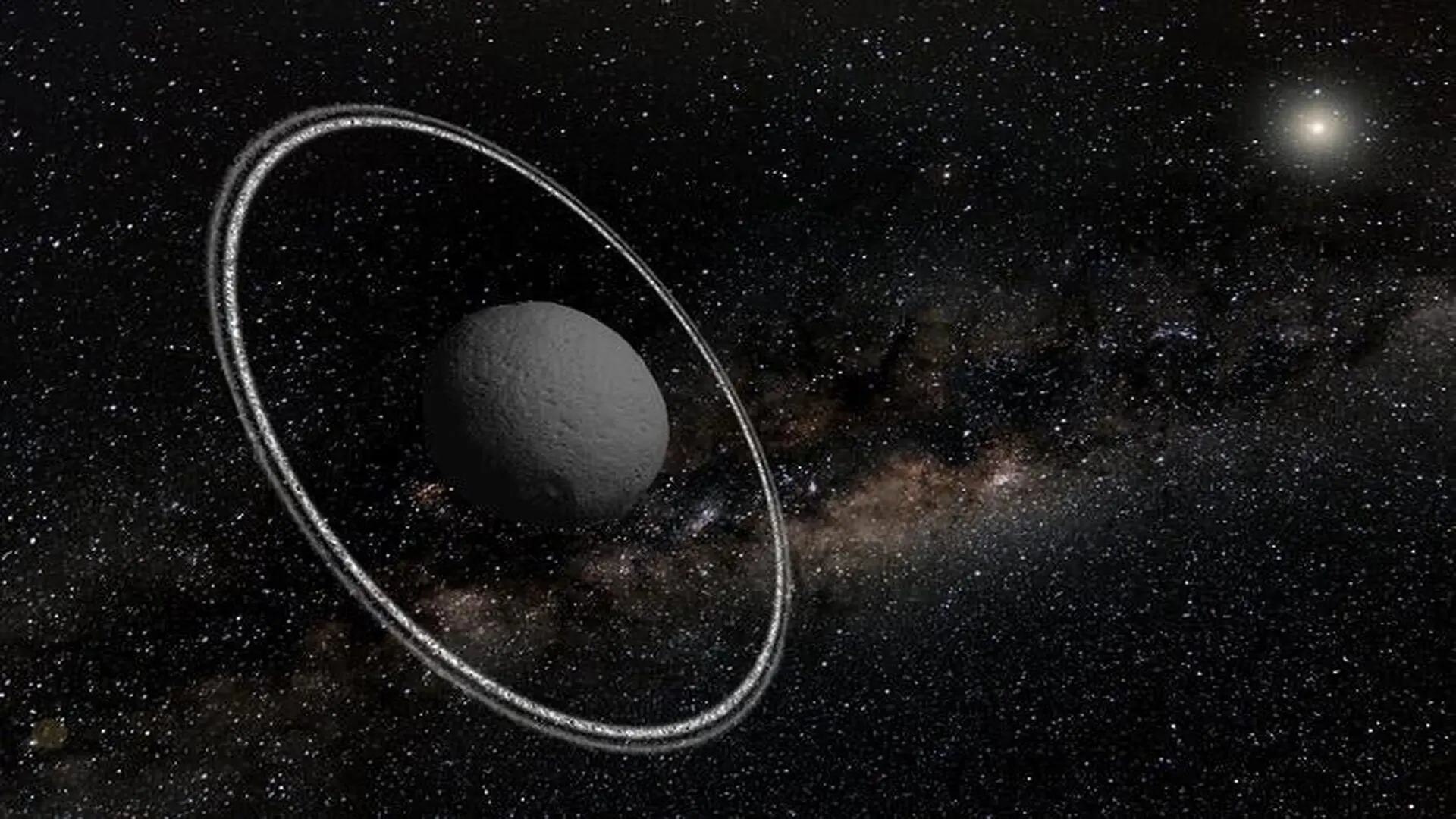
The small, ringed body Chariklo, located in the outer solar system between the orbits of Uranus and Saturn, is challenging long-held assumptions about the stability of ring systems. Recent data from the James Webb Space Telescope (JWST) suggest that the rings surrounding this minor planet are not the static structures researchers once envisioned, but are instead undergoing significant, rapid evolution.
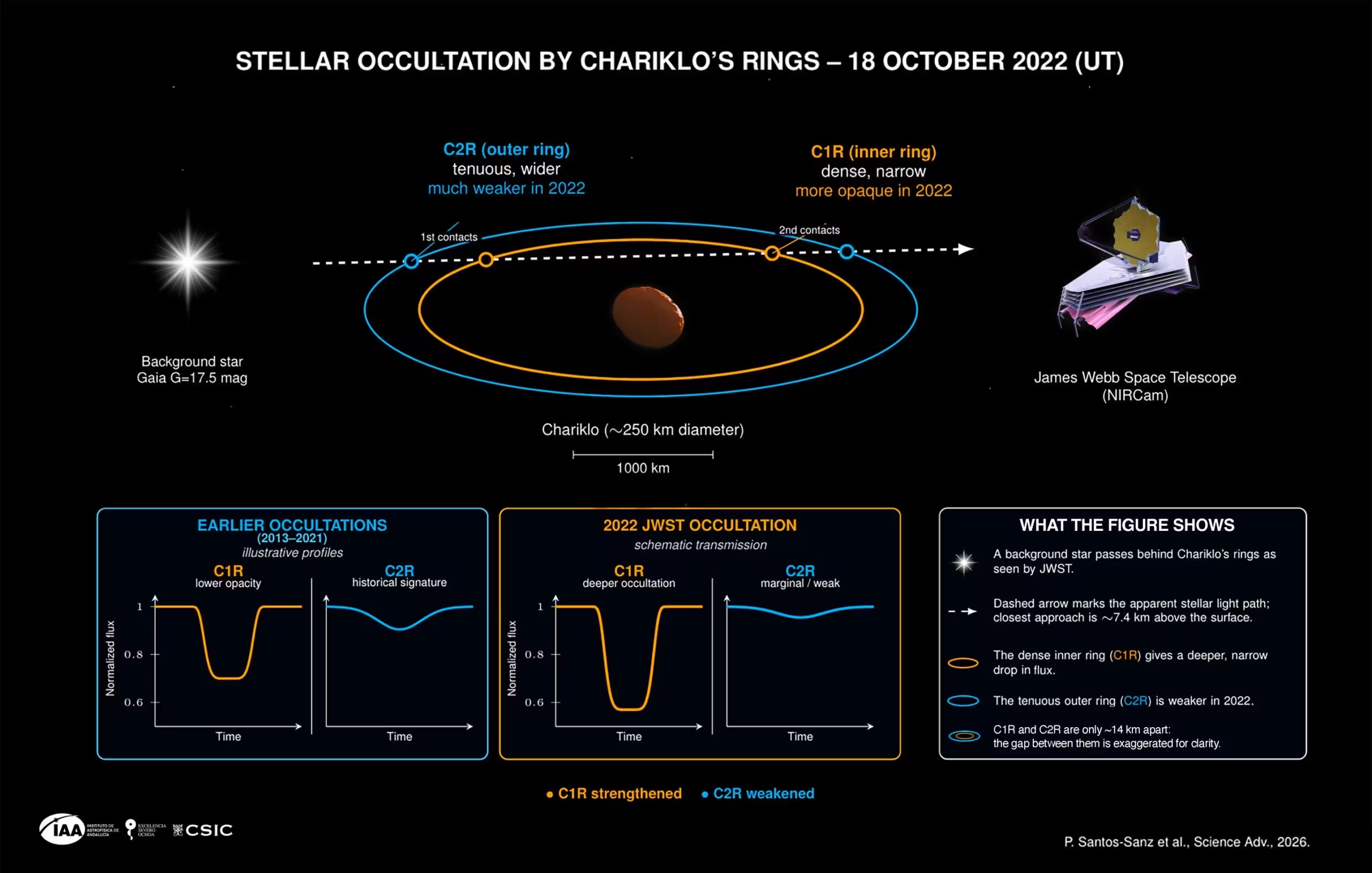
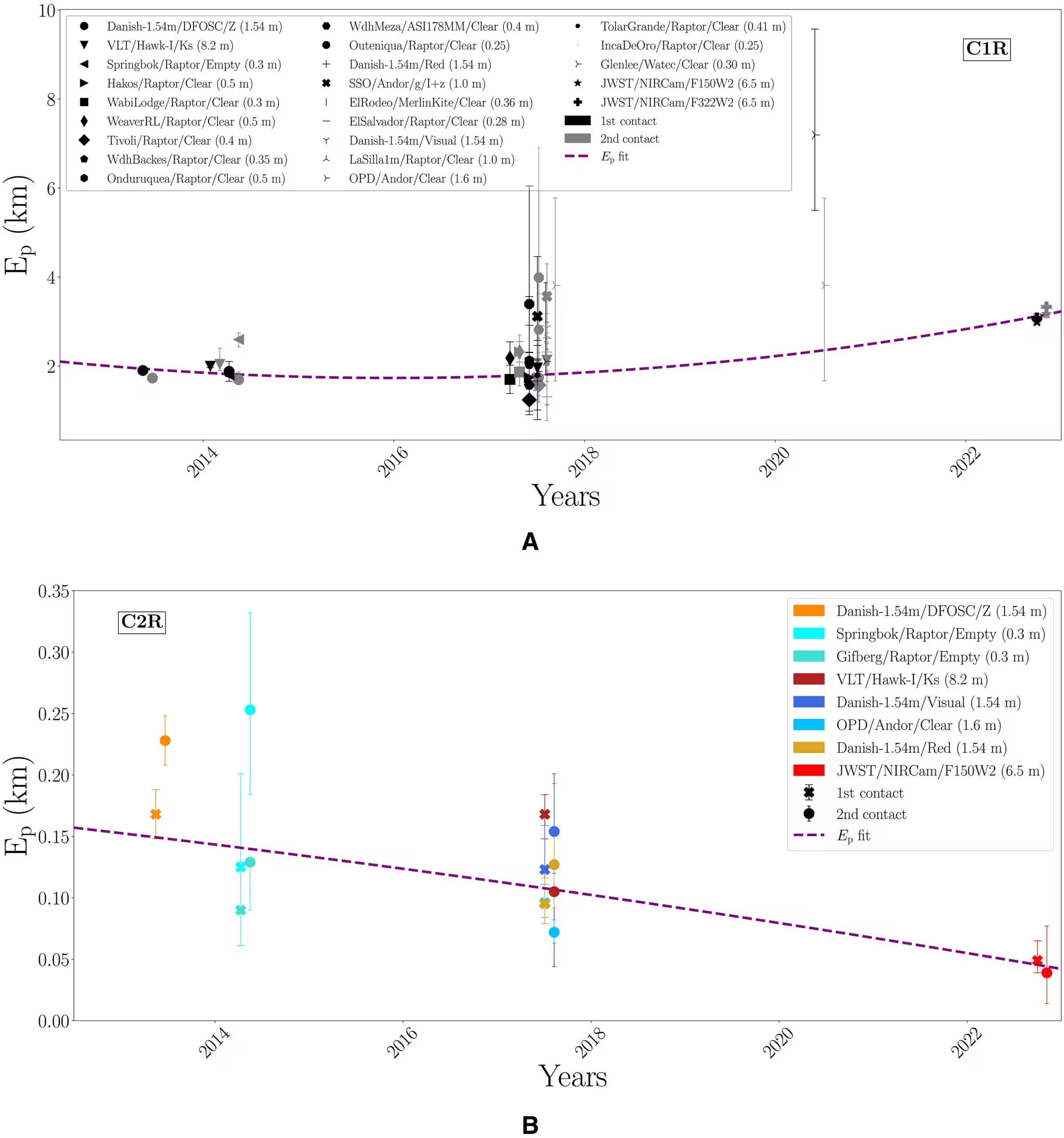
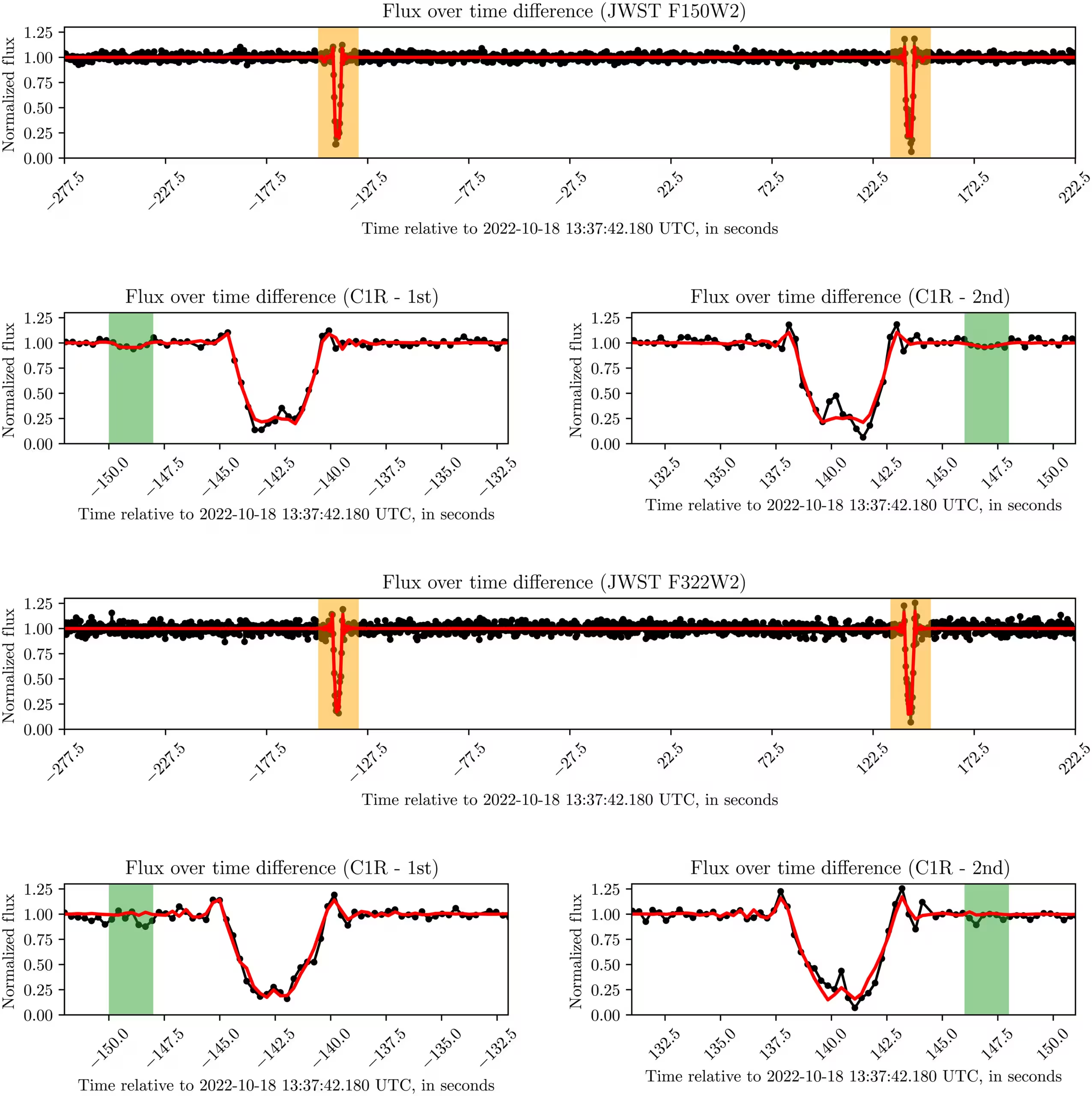
During a precisely timed stellar occultation on October 18, 2022, astronomers used the JWST to observe the rings as they passed in front of a background star. This event allowed researchers from the Institute of Astrophysics of Andalusia (IAA-CSIC) to probe the rings with unprecedented detail. The results revealed a striking transformation: the dense inner ring, known as C1R, has become markedly more opaque than it was in previous observations. Conversely, the outer ring, C2R, appears to have shed opacity, appearing significantly fainter than in records dating back to 2017.
A window into deep space
Chariklo is a modest object, spanning only about 250 kilometers in diameter. Its rings orbit at distances of roughly 390 and 405 kilometers from its center. Because these features are too narrow to resolve directly, even with the advanced capabilities of the JWST, astronomers rely on the light-blocking effect of the rings as they transit a distant star. The 2022 event was particularly advantageous because Chariklo’s slow relative velocity—approximately 2.5 kilometers per second—provided a high-resolution snapshot of the rings, offering spatial sampling of about 750 meters along the path of the star.
The Near-Infrared Camera aboard the telescope captured over 14,000 individual integrations, marking the first successful, predicted stellar occultation by a small solar system body documented by the observatory. This data provided a clear contrast to measurements taken between 2013 and 2017.
Shifting densities and structural puzzles
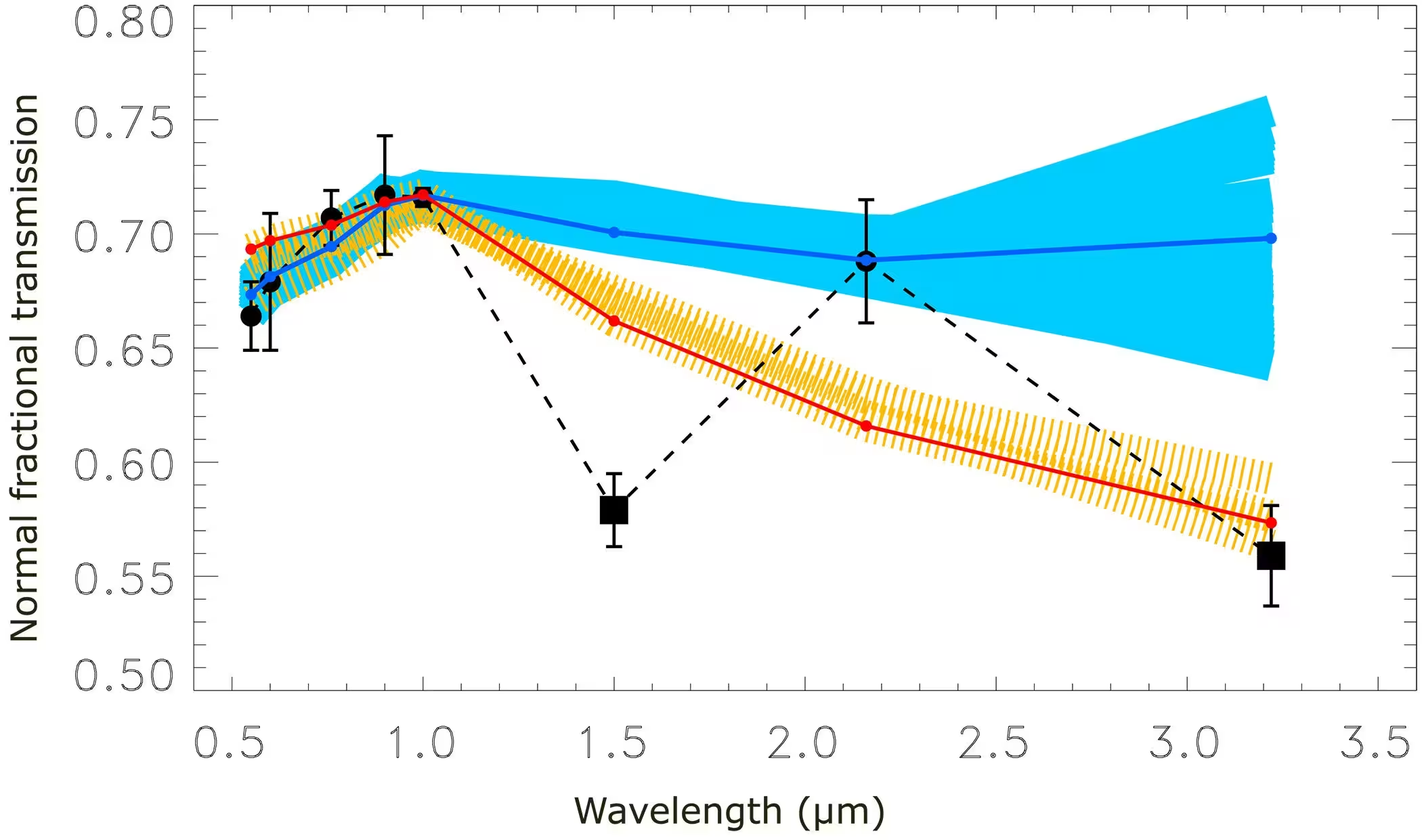
The darkening of the inner ring was profound. Quantitative analysis of the light transmission revealed that C1R was blocking significantly more starlight than in previous years. Statistical modeling indicates that these findings are unlikely to be the result of random chance or uneven distribution of material within the ring itself. While the team considered the possibility that particle size or composition at different wavelengths might be skewing the results, no current radiative-transfer model can fully account for the observed increase in opacity.
The outer ring, C2R, presents a different mystery. It was barely detectable at 1.5 micrometers and vanished entirely at 3.2 micrometers. The substantial decline in its equivalent width compared to 2017 suggests a dramatic change in its physical state, though scientists have yet to determine if this is a result of material loss, a shift in orbital dynamics, or the impact of collisions between ring particles.
The question of confinement
Perhaps the most perplexing aspect of these findings is that despite the volatile changes in opacity, the rings remain remarkably stable in their orbital positioning. This consistency suggests that some mechanism continues to keep the material confined, even as the density and visibility of the rings fluctuate. Researchers have hypothesized that an undiscovered shepherd satellite might be responsible for maintaining the structure of the rings, potentially serving as a source of fresh material for the system.
With an estimated spreading timescale of less than a year for the outer ring, the observed changes raise urgent questions about the lifespan and maintenance of these small-body ring systems. Future occultation events will be critical to determining whether these recent findings represent a transient phenomenon or a persistent cycle of change. The findings were detailed in the journal Science Advances.
This article has been fact checked for accuracy, with information verified against reputable sources. Learn more about us and our editorial process.
Last reviewed on .
Article history
- Latest version
Reference(s)
- Santos-Sanz, Pablo., et al. “JWST stellar occultation reveals unexpected changes in Chariklo’s ring system.” Science Advances, vol. 12, no. 37, September 11, 2026 American Association for the Advancement of Science (AAAS), doi: 10.1126/sciadv.aeh4794. <https://www.science.org/doi/10.1126/sciadv.aeh4794>.
Cite this page:
- Posted by Aisha Ahmed