Venus Is Currently Reaching Its Greatest Brilliancy As It Shines In The Evening Sky
Venus reaches its greatest brilliancy this week, offering a spectacular, easy-to-spot skywatching event visible to the naked eye.
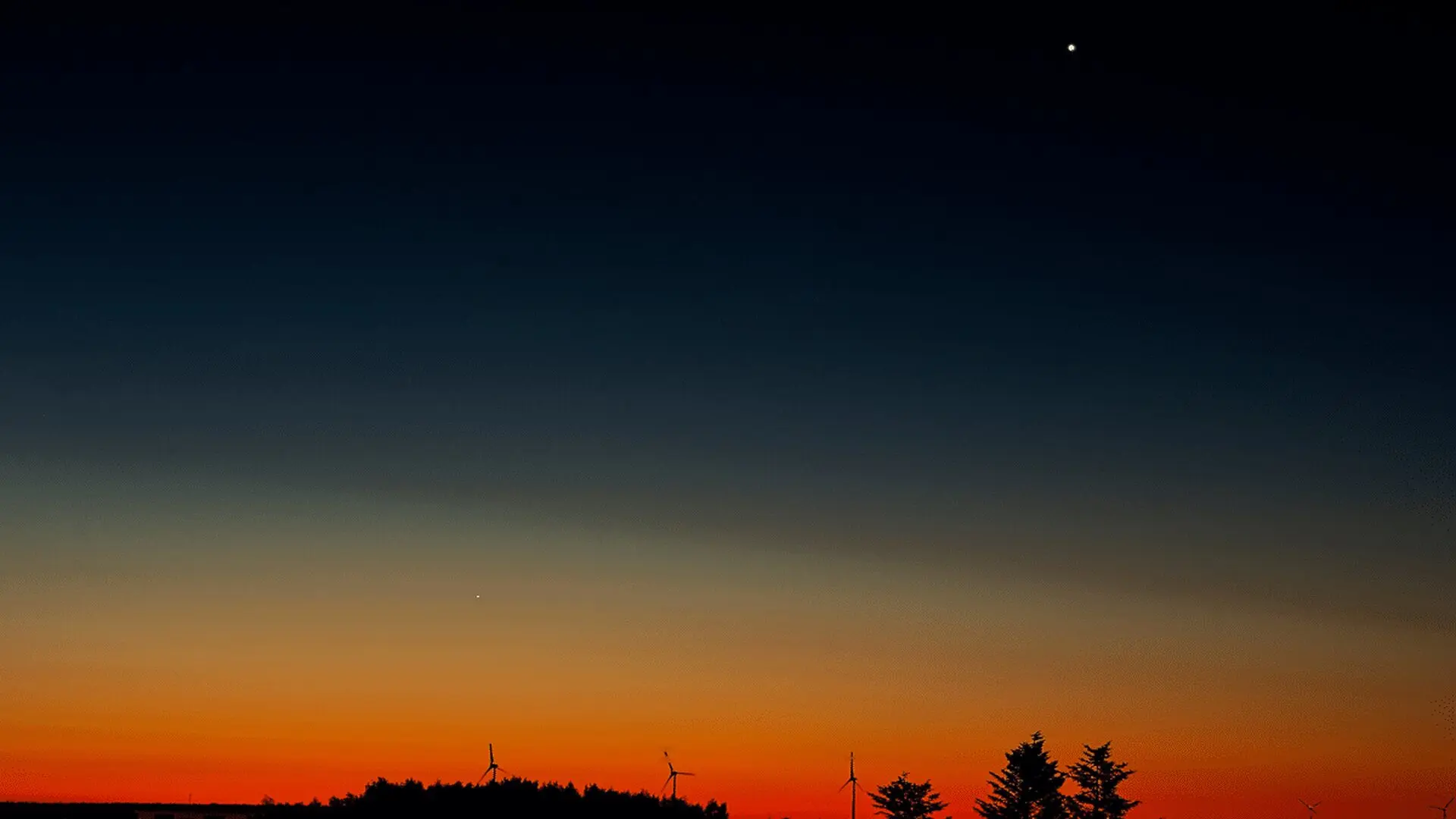
Skywatchers across the globe are currently witnessing a rare celestial display as Venus reaches its peak luminosity. Often referred to as the evening star, the planet is currently dominating the twilight sky, casting a brilliant, steady glow that remains visible even as the sun dips below the horizon.
A Peak in Planetary Luminosity
The intense radiance of Venus is not the result of internal combustion, but rather a perfect alignment of geometry and atmospheric reflection. While the planet is covered in a dense, opaque shroud of carbon dioxide and sulfuric acid clouds, this thick atmosphere serves as a highly efficient mirror, bouncing significant amounts of solar radiation back toward Earth. As the planet travels along its orbit, its distance from us and the percentage of its illuminated face visible from our perspective shift, resulting in cycles of varying brightness.
Currently, the planet is in a “greatest brilliancy” phase, a moment where the balance between its apparent size and the amount of sunlight reflected toward our vantage point reaches an optimal state. As reported by Space.com, this milestone was marked on September 18 at 7 p.m. EDT, though the planet remains a standout feature in the southwestern sky for the following days.
Understanding the Celestial Geometry
To the naked eye, Venus appears as an exceptionally bright, blue-white beacon, surpassed in the sky only by the Sun and the Moon. However, those using telescopes will note that the planet undergoes phases much like the Moon. Because Venus orbits closer to the Sun than Earth does, its crescent shape waxes and wanes depending on its position in the solar system.
According to data from In The Sky, observers can expect the planet to hit an apparent magnitude of -4.6 by September 22. This high magnitude makes it one of the most accessible targets for casual stargazers, as it requires absolutely no specialized equipment to identify.
Future Trajectory and Shifting Perspectives
This period of evening prominence is temporary. As Venus continues its trek along its orbit, it is steadily moving toward an event known as inferior conjunction, during which it will pass between the Earth and the Sun. As it approaches this transition, it will draw closer to the Sun from our perspective, eventually becoming lost in the solar glare.
Current projections suggest that Venus will fade from the evening sky around October 24. Following its passage through conjunction, the planet will re-emerge in the dawn sky throughout November, reclaiming its title as the morning star. This transition highlights the dynamic nature of our solar system, serving as a reminder that the views from Earth are in a constant state of flux driven by the rhythmic orbital mechanics of our neighbors.
This article has been fact checked for accuracy, with information verified against reputable sources. Learn more about us and our editorial process.
Last reviewed on .
Article history
- Latest version
Reference(s)
- Wood, Anthony. “That's no UFO! Don't miss Venus at its best tonight.”, September 18, 2026 Space <https://www.space.com/stargazing/thats-no-ufo-dont-miss-venus-at-its-best-tonight>.
Cite this page:
- Posted by Aisha Ahmed