AI Identifies 44 Hidden Star Systems That Could Host Earth Like Planets
Researchers have used a new AI algorithm to identify 44 promising star systems that could potentially host Earth-like planets for future study.
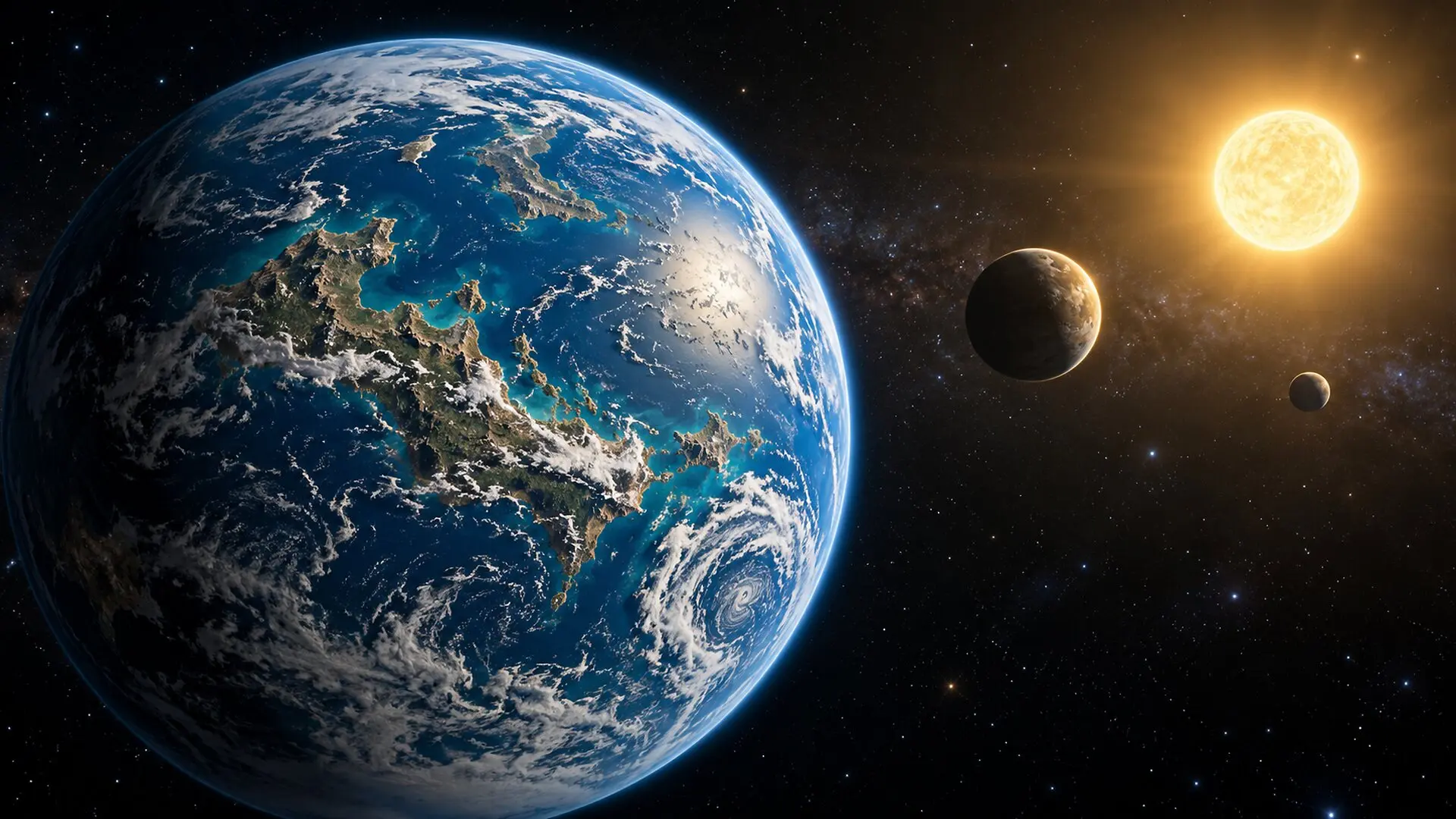
Astronomers may have a powerful new tool in the search for Earth-like worlds, thanks to a machine-learning algorithm that sifts through the architecture of known planetary systems to identify hidden candidates. By analyzing the mass and orbital placement of already detected planets, researchers at the University of Bern and the National Centre of Competence in Research PlanetS have pinpointed 44 star systems that likely harbor additional, as-yet-undetected terrestrial planets.
The study, published in Astronomy & Astrophysics, addresses a fundamental challenge in exoplanetary science: the “incompleteness” of our current observations. Because small, temperate planets are difficult to detect with existing technology, our census of the galaxy remains biased toward massive or closely orbiting giants. The new model seeks to fill those gaps by recognizing patterns that govern how planetary systems assemble and evolve.
Learning from Synthetic Universes
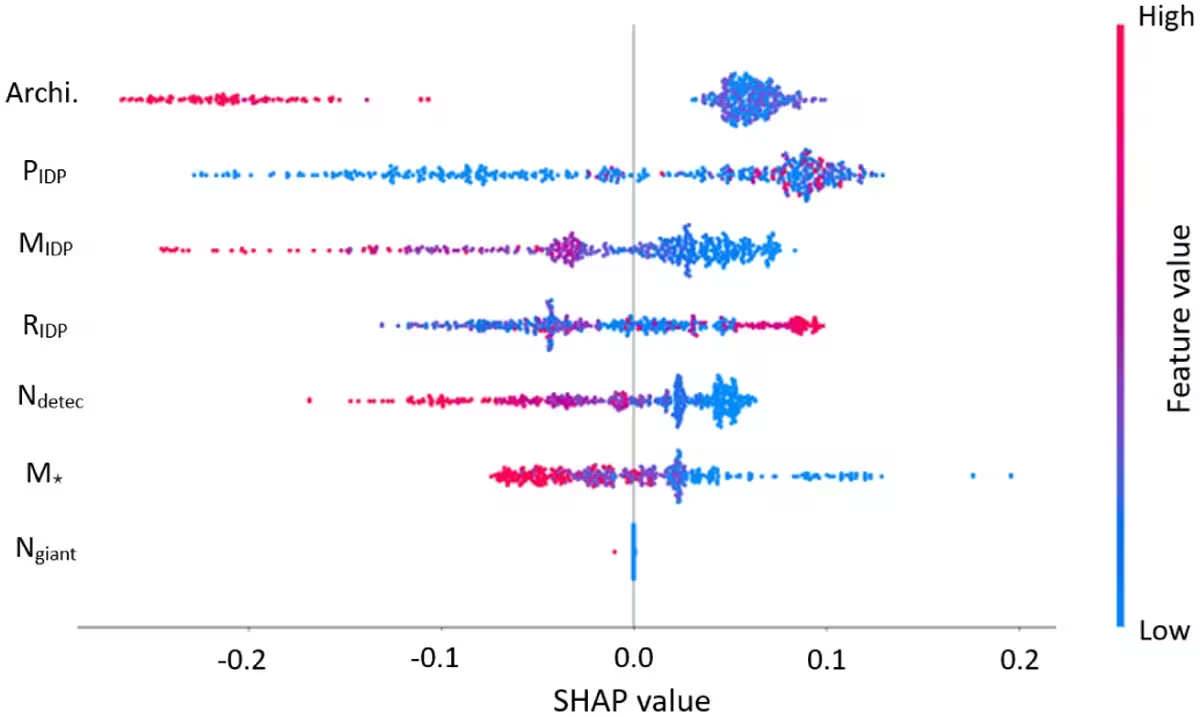
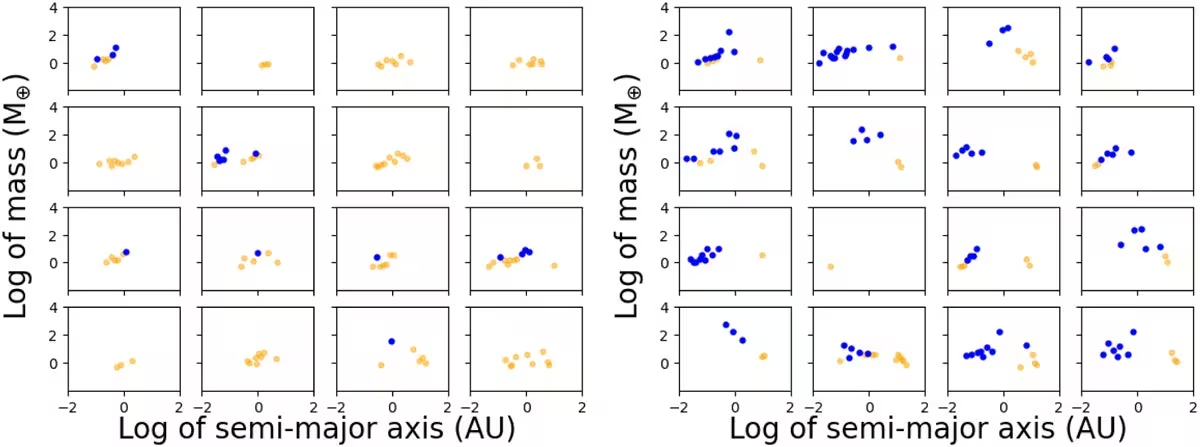
Training an artificial intelligence to find planets requires a massive, reliable dataset, but real-world observation logs are inherently limited. To overcome this, the research team—led by Jeanne Davoult—utilized the Bern Model of Planet Formation and Evolution. This sophisticated simulation tracked the birth, migration, and gravitational interactions of planets across tens of thousands of synthetic systems over 10 billion years.
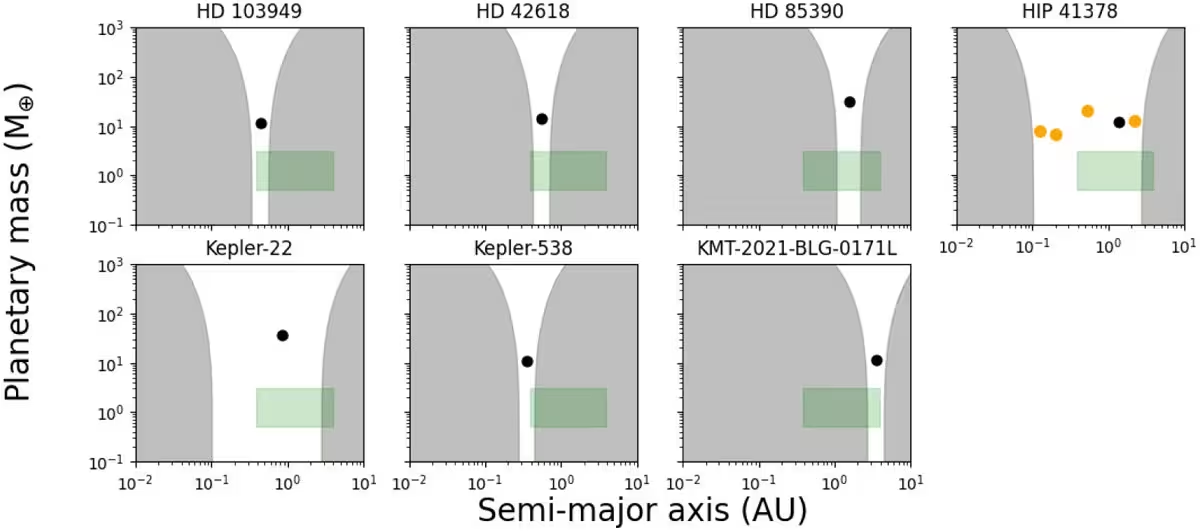
To ensure the model learned to recognize systems as a human observer would, the researchers applied a “detection filter” to their simulations. They intentionally hid planets whose gravitational signals were too faint to be detected by current radial-velocity methods. The algorithm was then tasked with predicting the presence of “Earth-like” worlds—defined as planets between 0.5 and 3 times the mass of Earth with temperate equilibrium temperatures—based only on the observable data points.
When tested against the remaining synthetic data, the model achieved a precision of up to 99% for systems orbiting Sun-like and mid-sized stars, demonstrating that the layout of a planetary system often acts as a reliable fingerprint for its hidden members.
Targeting the Next Generation of Searches
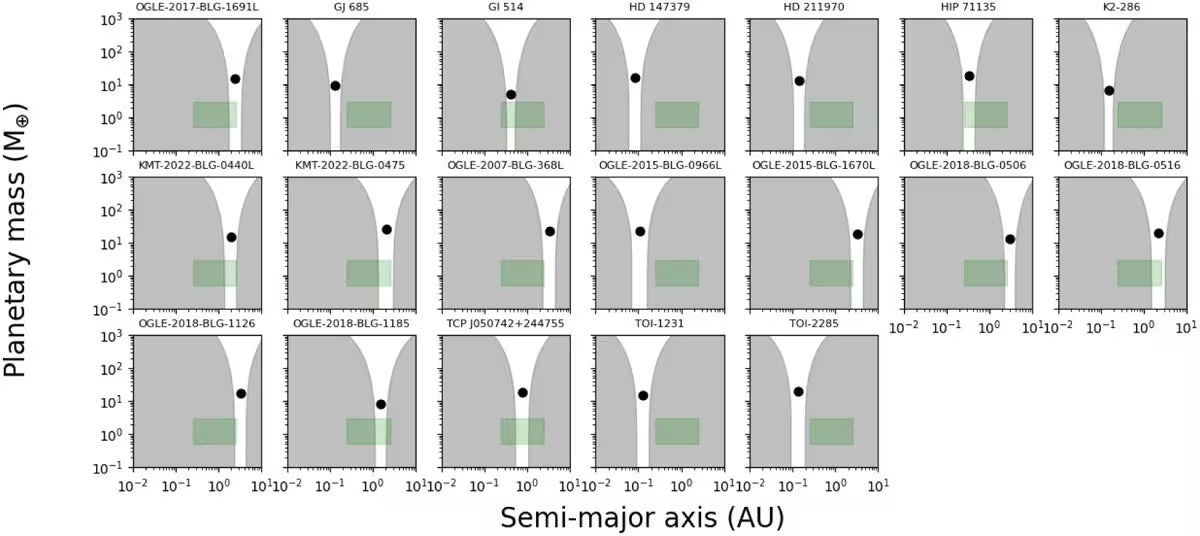
Applying the model to 1,567 actual, observed planetary systems resulted in a list of 44 high-priority candidates. After filtering out binary-star systems—which were not included in the original training set—and conducting a stability analysis, the team confirmed that 42 of these 44 systems could theoretically support stable orbits for Earth-like planets in the spaces currently left blank by our telescopes.
While this list does not provide a direct discovery, it offers a strategic roadmap for upcoming missions. Instruments like PLATO and the proposed LIFE (Large Interferometer for Exoplanets) space mission require precise targeting to optimize their limited observation time. By prioritizing systems where an Earth-like planet is statistically expected, astronomers may significantly increase the efficiency of their search for potentially habitable worlds.
Limitations and the Path Forward
The research team emphasizes that these predictions are grounded in the assumptions of the Bern formation model. While the model successfully replicates many observed planetary traits, it is not without its limitations, such as a slight tendency to place simulated planets closer to their host stars than what is typically found in nature. Furthermore, the “Earth-like” classification is based on mass and temperature, not an assessment of surface conditions or the potential for life.
As observational data continues to grow, integrating more realistic stellar activity models and refining the underlying formation physics will be essential. For now, the 44 identified systems stand as the most likely places to uncover the next generation of terrestrial exoplanets, turning an AI-driven hypothesis into a vital objective for deep-space exploration.
For those interested in the technical framework, the following resources provide further insight into the methodologies and missions involved:
- A transformer-based generative model for planetary systems: Detailed research on generative models in exoplanetary science.
- Earth-like-planet-hosting systems: Architecture and properties: A study on the relationship between planetary spacing and terrestrial candidates.
- The PLATO mission: An overview of upcoming mission objectives.
- Large Interferometer For Exoplanets (LIFE): Technical estimates for mid-infrared exoplanet detection.
- The New Generation Planetary Population Synthesis: Foundational documentation of the Bern model.
This article has been fact checked for accuracy, with information verified against reputable sources. Learn more about us and our editorial process.
Last reviewed on .
Article history
- Latest version
Reference(s)
- <https://www.aanda.org/articles/aa/full_html/2025/04/aa52434-24/aa52434-24.html>.
- Alibert, Yann., et al. “A transformer-based generative model for planetary systems.” Astronomy & Astrophysics, vol. 701, September 9, 2025, pp. A149 EDP Sciences, doi: 10.1051/0004-6361/202452297. <https://doi.org/10.1051/0004-6361/202452297>.
- Davoult, Jeanne., et al. “Earth-like-planet-hosting systems: Architecture and properties.” Astronomy & Astrophysics, vol. 689, September 20, 2024, pp. A309 EDP Sciences, doi: 10.1051/0004-6361/202449330. <https://doi.org/10.1051/0004-6361/202449330>.
- Rauer, Heike., et al. “The PLATO mission.” Experimental Astronomy, vol. 59, no. 3, April 21, 2025 Springer Science and Business Media LLC, doi: 10.1007/s10686-025-09985-9. <https://doi.org/10.1007/s10686-025-09985-9>.
- Quanz, S. P.., et al. “Large Interferometer For Exoplanets (LIFE).” Astronomy & Astrophysics, vol. 664, August 9, 2022, pp. A21 EDP Sciences, doi: 10.1051/0004-6361/202140366. <https://doi.org/10.1051/0004-6361/202140366>.
- Emsenhuber, Alexandre., et al. “The New Generation Planetary Population Synthesis (NGPPS).” Astronomy & Astrophysics, vol. 656, December 6, 2021, pp. A69 EDP Sciences, doi: 10.1051/0004-6361/202038553. <https://doi.org/10.1051/0004-6361/202038553>.
Cite this page:
- Posted by Aisha Ahmed