Water Behaves Differently on the Moon and It Could Change How We Grow Food in Space
New research reveals how lunar gravity alters water flow, posing significant challenges for future efforts to grow plants on the Moon.
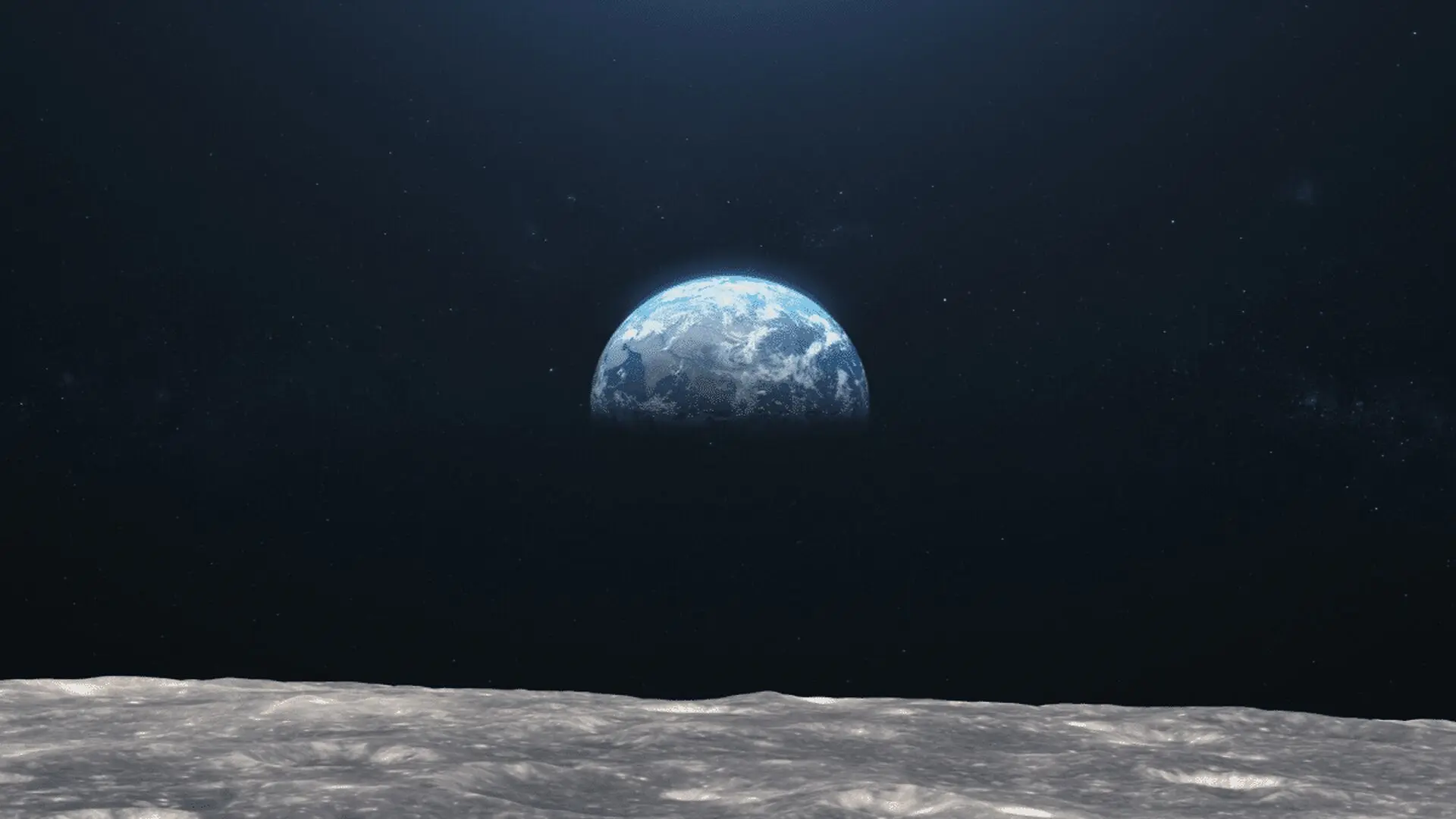
Water management on the Moon may present a much steeper engineering challenge than previously anticipated. Recent data from a collaborative study involving the Florida Institute of Technology, 4SPACE LLC, the University of Louisiana at Lafayette, and NASA Ames Research Center suggests that the Moon’s reduced gravity significantly alters fluid behavior, elevating the role of surface tension. These findings are critical for engineers tasked with designing irrigation systems for future lunar habitats, where self-sustaining plant cultivation is a cornerstone of life-support infrastructure.
Rewriting the Rules of Fluid Dynamics in Low Gravity
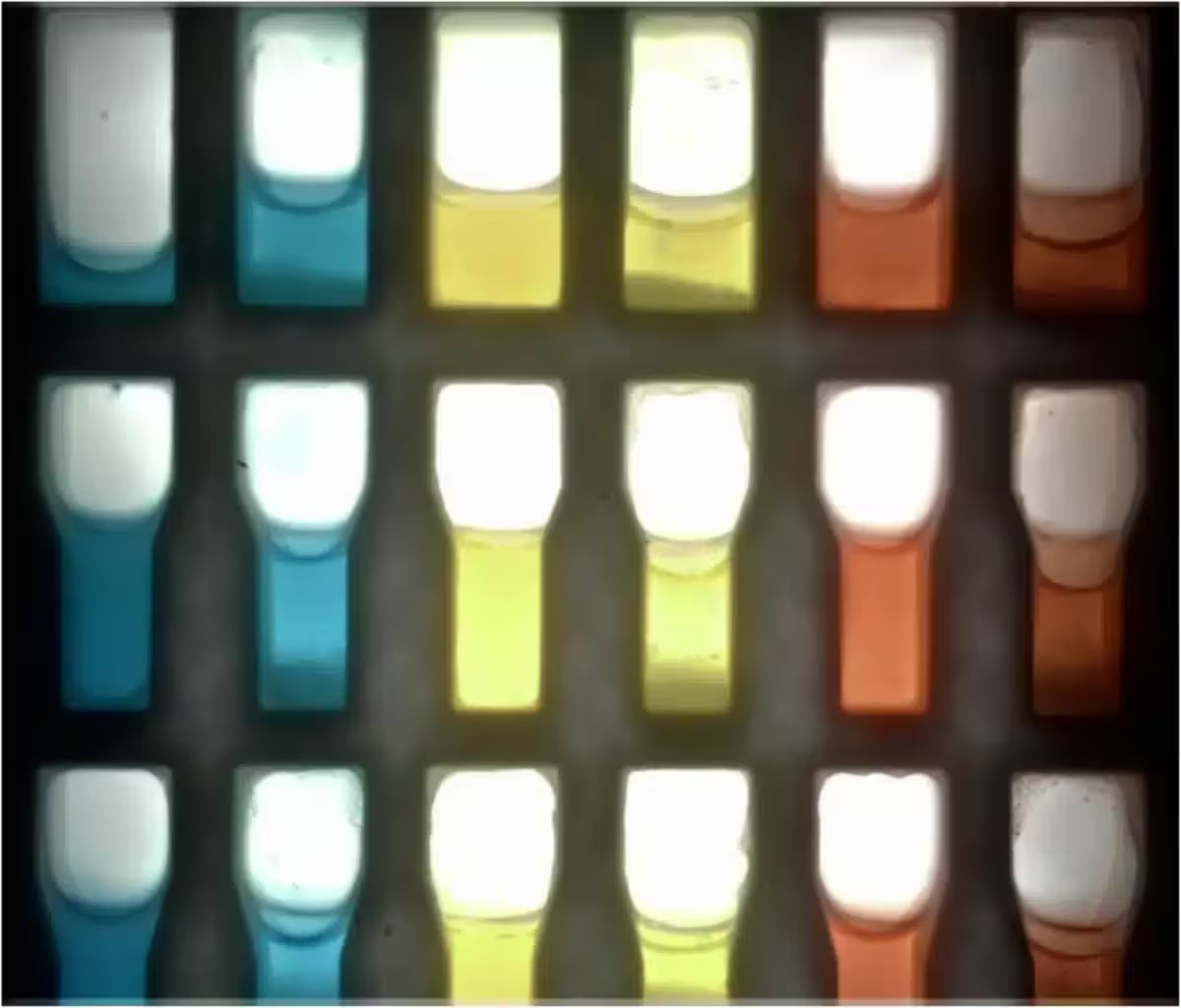
On Earth, the predictable pull of gravity is the primary force driving water through soil and irrigation plumbing. However, lunar gravity—which sits at just one-sixth of our home planet’s strength—shifts the fundamental balance of physics. As detailed in the journal Microgravity Science and Technology, researchers investigated how liquid menisci behave under simulated lunar conditions. A meniscus, the curved surface where a liquid meets its container, provides a visual map of the forces at play. In a low-gravity environment, the familiar pull that governs terrestrial fluid flow weakens, allowing surface tension to take dominance. This shift can cause water to behave sluggishly or unpredictably, a scenario that could prove disastrous for crops requiring precise moisture distribution.
John Z. Kiss, a space biologist and provost at the Florida Institute of Technology, emphasizes the shift in strategy required for off-world farming. “The surface tension is more of a factor in how water flows,” Kiss explained. “It doesn’t flow as freely because of that tension. If you are going to water plants on the Moon, you might have to design the entire system differently than you would on Earth.”
Precision Testing in a Two-Minute Window
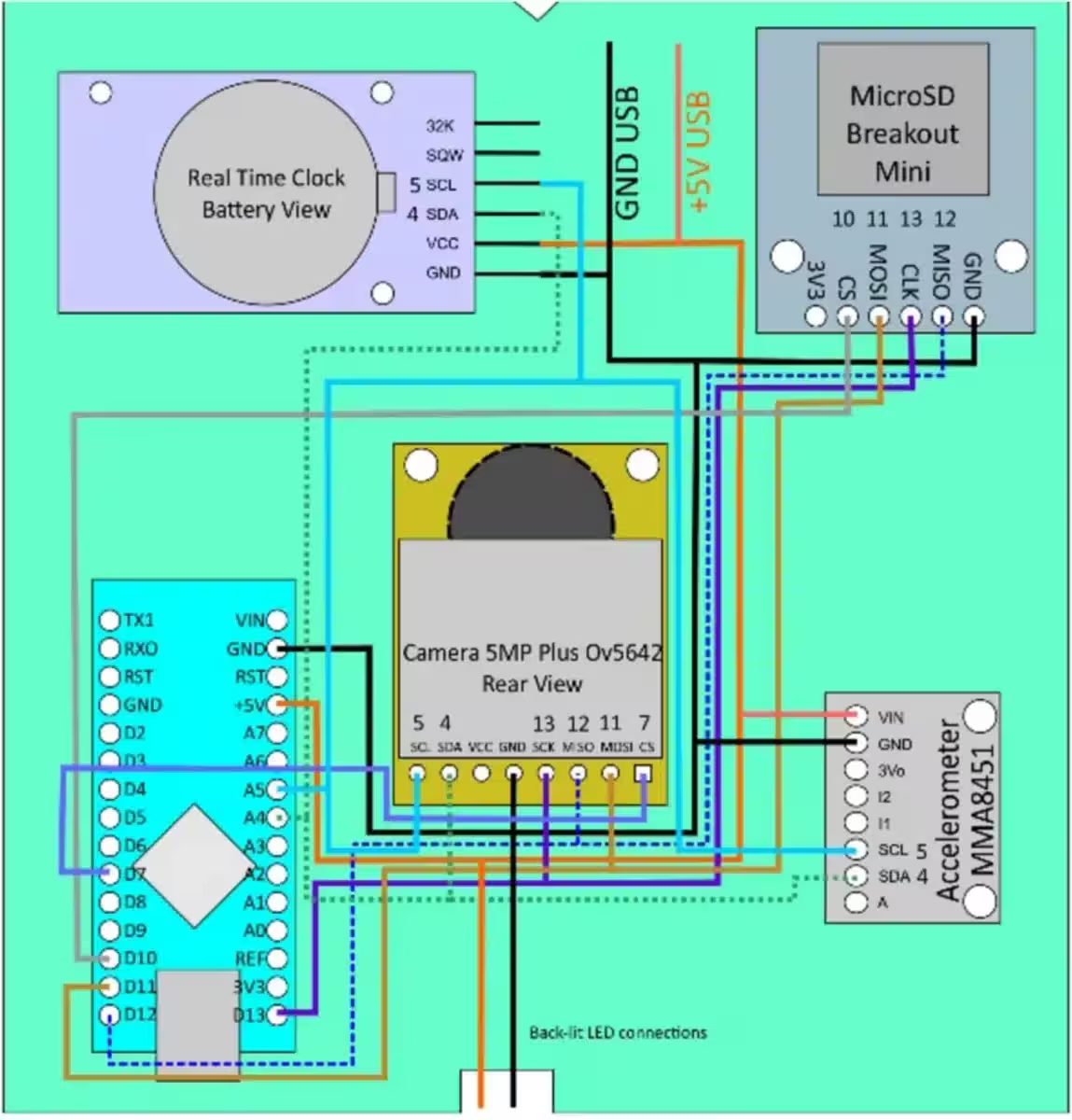
The research team successfully gathered critical data during the Blue Origin New Shepard 29 mission in February 2025. By rotating the spacecraft during its descent, they created a brief, two-minute window of effective lunar gravity. During this time, they observed three different fluids—pure water, a saline solution, and a 30% glycerol mixture—to determine how viscosity and composition affect liquid movement in reduced gravity. The success of the specialized hardware, including the cameras and sensors, was a milestone for the team, as suborbital experiments leave no room for technical failure.
The Challenge of Regolith and Resource Management
Beyond gravity, the physical medium of the Moon presents its own hurdles. Lunar regolith is composed of sharp, fine dust and fragmented rock, lacking the organic structure required to hold and distribute water effectively. This creates a high risk of moisture pockets, where some areas become waterlogged while others remain bone-dry, ultimately suffocating plant roots. The team’s findings suggest that future lunar agriculture may need to rely on specialized additives, capillary-based delivery systems, or enclosed, engineered growth chambers to bypass the limitations of traditional gravity-fed farming.
Ultimately, these experiments are about more than just gardening. In the closed environments of lunar bases, plants are intended to serve as vital components of life support, managing oxygen levels and processing waste. Because these systems are essential for the survival of future crews, the shift from Earth-based assumptions to gravity-independent engineering is a non-negotiable step for long-term space exploration.
This article has been fact checked for accuracy, with information verified against reputable sources. Learn more about us and our editorial process.
Last reviewed on .
Article history
- Latest version
Reference(s)
- Hasenstein, Karl H.., et al. “Assessing Water Dynamics at Lunar Gravity.” Microgravity Science and Technology, vol. 38, no. 5, September 12, 2026 Springer Science and Business Media LLC, doi: 10.1007/s12217-026-10277-w. <https://link.springer.com/article/10.1007/s12217-026-10277-w>.
Cite this page:
- Posted by Aisha Ahmed