Earth And Mars Had Very Different Births According To New Chemical Analysis
New chemical analysis reveals that Earth and Mars followed drastically different evolutionary paths during the earliest stages of their formation.
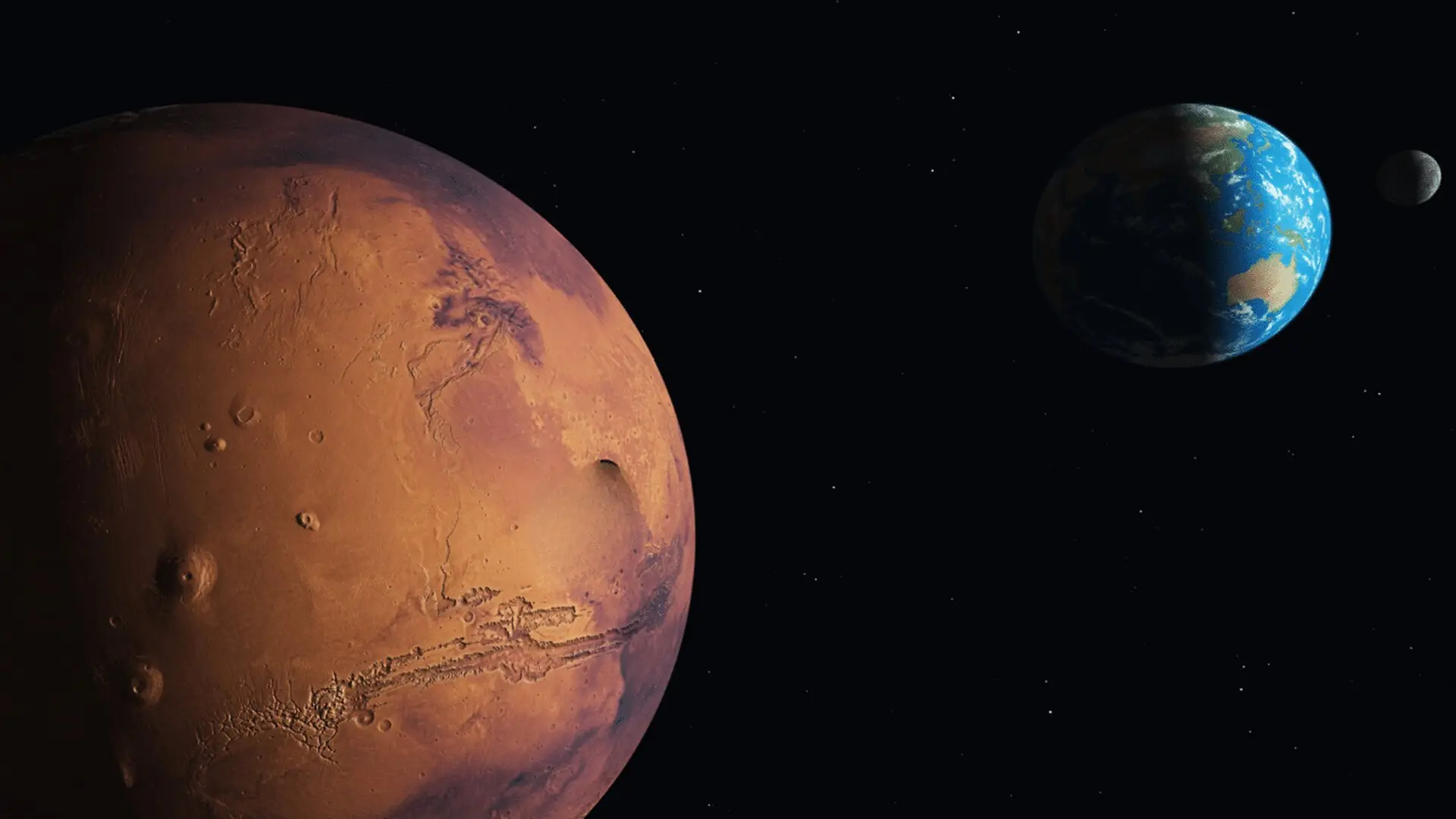
Earth and Mars, while sharing a common birthplace in the early solar system roughly 4.5 billion years ago, may have grown into the worlds we see today through starkly different physical processes. A new investigation, detailed in Nature Astronomy, suggests that these rocky neighbors followed distinct evolutionary trajectories, providing fresh insight into the diverse pathways that shape terrestrial planets.
Distinct Origins for Closely Related Worlds
The prevailing view of the young solar system involves a swirling disk of gas and dust where smaller grains coalesced into larger bodies. Researchers have long debated the relative importance of two primary growth mechanisms: the slow collision of large planetesimals or the rapid pebble accretion, where developing planets sweep up tiny, drifting particles. Scientists at the University of Copenhagen now propose that the dominance of these mechanisms varied between Earth and Mars, rather than acting in tandem across the board.
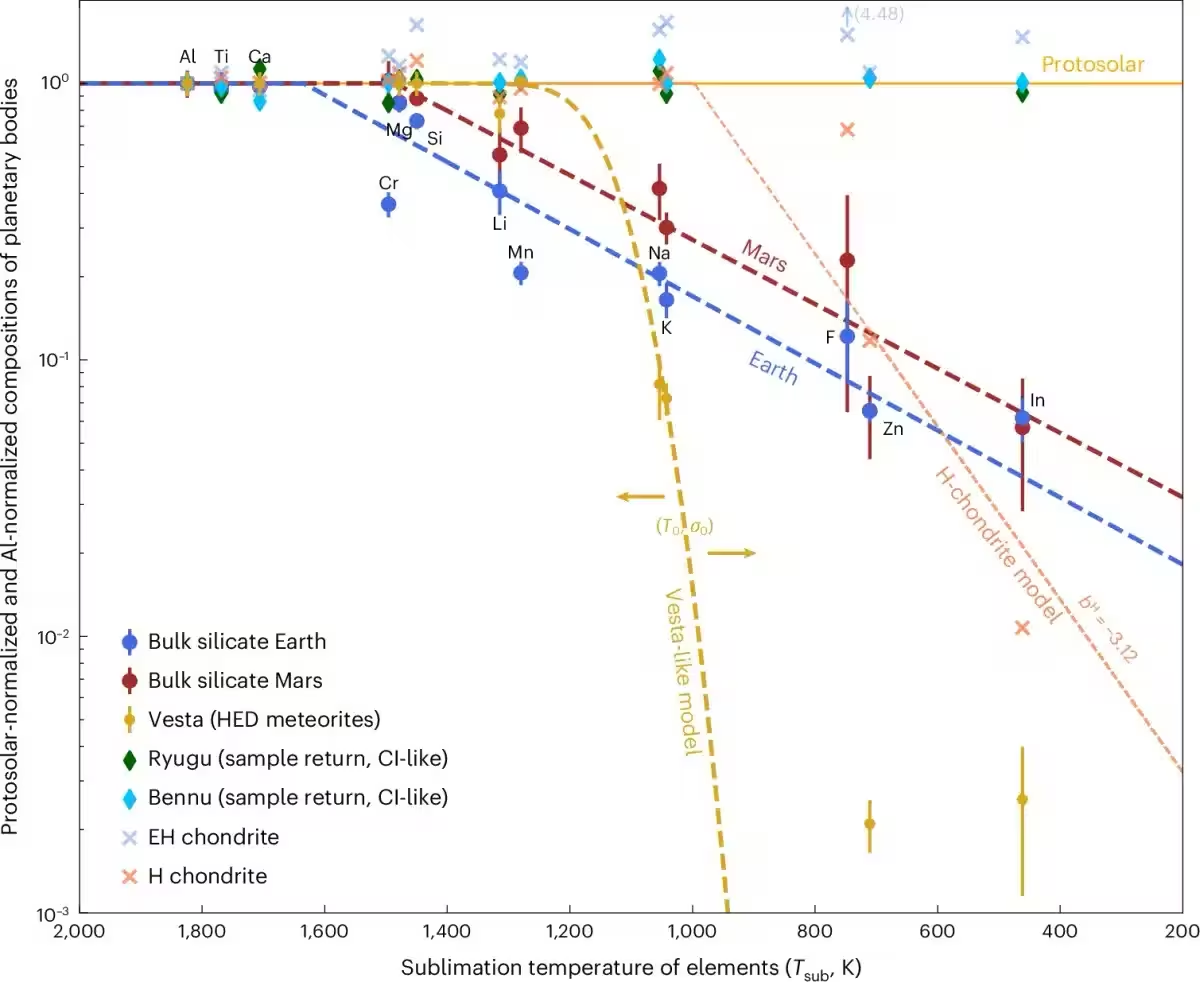
“The most surprising result was that Earth and Mars appear to have formed in different ways. You might have expected that two planets formed side by side in the same solar system would share a more similar formation history,” explains professor Anders Johansen of the Globe Institute at the University of Copenhagen, who co-led the study with assistant professor Haiyang Wang.
Tracing Planetary Heritage Through Chemical Signatures
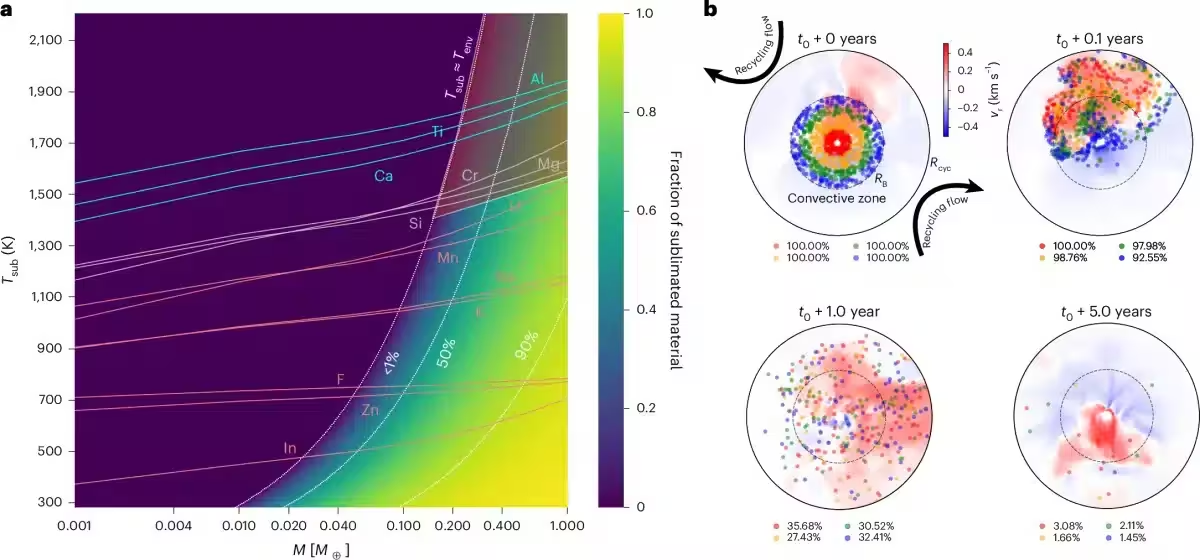
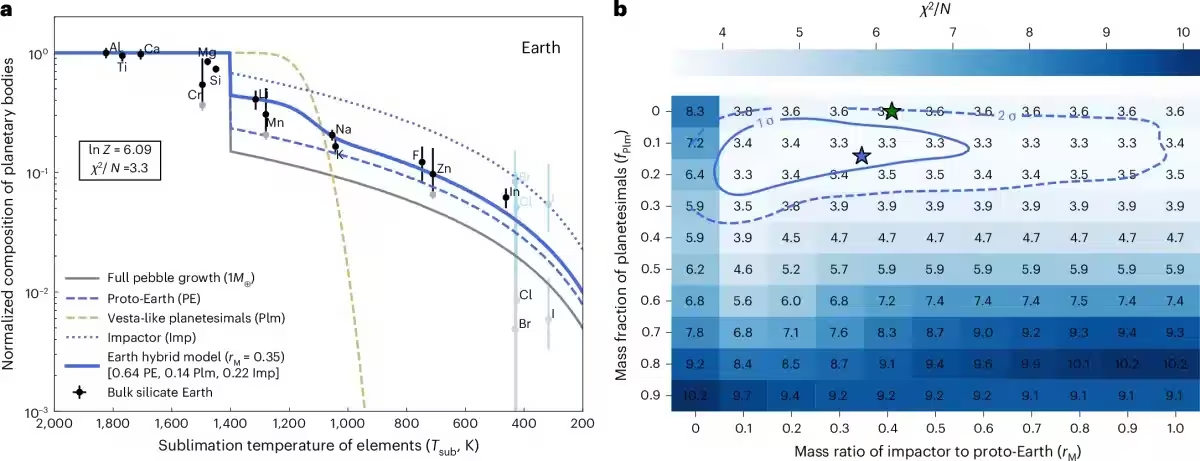
To reconstruct these ancient events, the research team analyzed the mantle and crust compositions of both planets, focusing on volatile elements such as sodium, zinc, and potassium. Because these elements vaporize at predictable temperatures, their relative abundances act as a chemical ledger, recording the heat and material accretion events that occurred billions of years ago.
The findings suggest a hybrid model of growth where the ratio of these processes shifts depending on the planet. According to the team’s modeling, roughly 75% of Earth’s mass likely stemmed from the merger of two large protoplanets that grew primarily via pebble accretion. In contrast, the model indicates that about 75% of Mars was built through the accumulation of planetesimals, suggesting that the Red Planet bypassed the rapid growth spurt driven by heavy pebble capture that favored Earth.
Implications for Universal Planet Formation
While the study provides a compelling narrative, the researchers note that their work relies on models of the early solar nebula, which cannot be sampled directly. However, they emphasize that their approach offers a more granular perspective than traditional isotope-based analyses, which can be susceptible to multiple interpretations.
“It is a major detective job to figure out what happened back then when most of the evidence disappeared long ago. But even after 4.5 billion years, the compositions of Earth’s and Mars’ mantles remain the same. You can think of them as an imprint of the formation process,” says Johansen. By highlighting these differences, the study challenges the notion that there is a single standard recipe for building rocky worlds, suggesting instead that the specific timing and local environment in the solar disk can lead to profoundly different outcomes for neighboring planets.
This article has been fact checked for accuracy, with information verified against reputable sources. Learn more about us and our editorial process.
Last reviewed on .
Article history
- Latest version
Reference(s)
- Wang, Haiyang. “Volatile depletion in rocky planets as a chemical fingerprint of hybrid accretion - Nature Astronomy.”, September 25, 2026, pp. 1-12. Nature, doi: 10.1038/s41550-026-02984-6. <https://www.nature.com/articles/s41550-026-02984-6>.
- Posted by Aisha Ahmed