NASA Just Launched a Telescope That Sees 100 Times More of the Universe Than Hubble
NASA’s Roman Space Telescope has launched to L2, beginning its mission to map billions of galaxies and hunt for thousands of distant exoplanets.
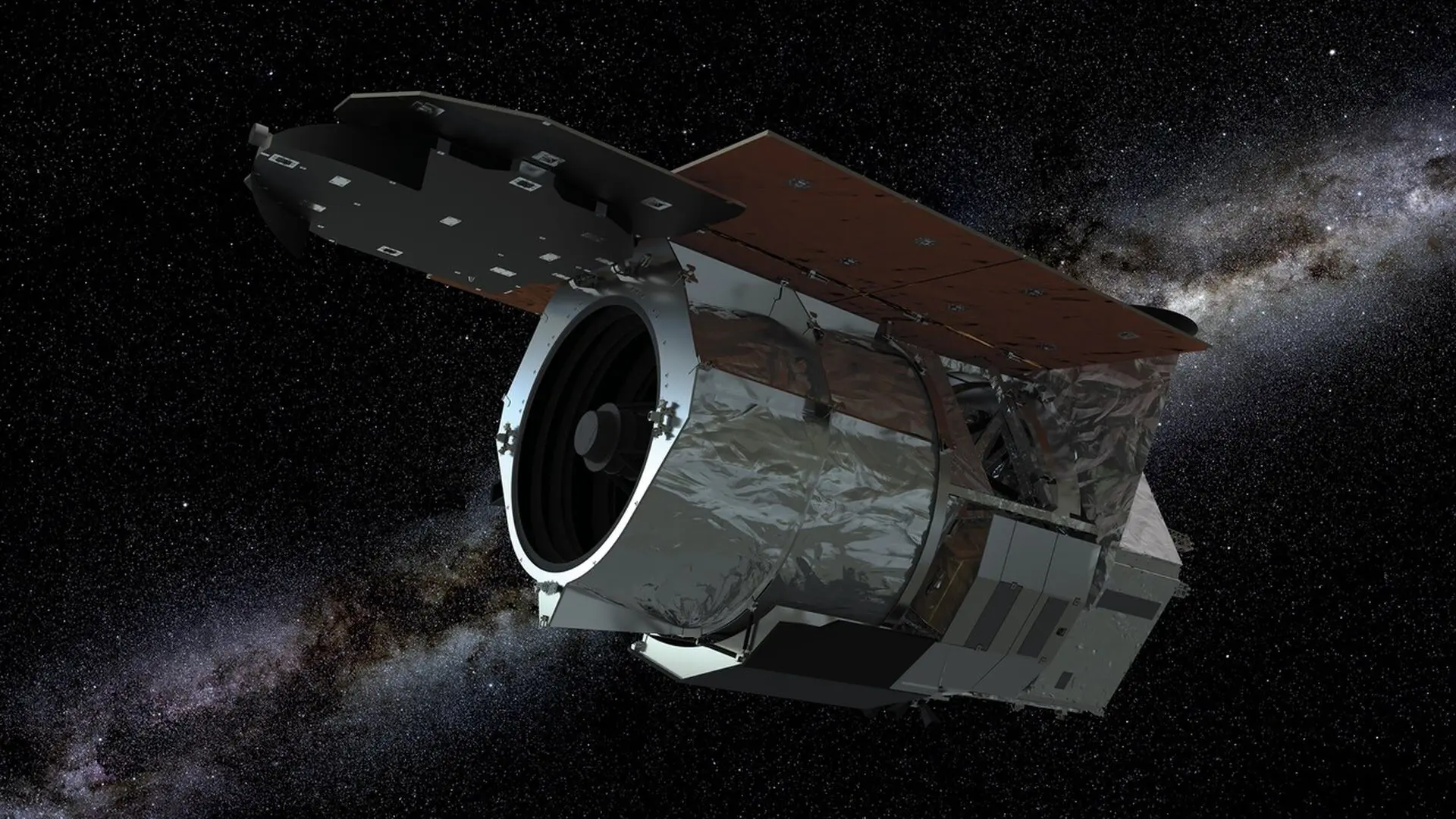
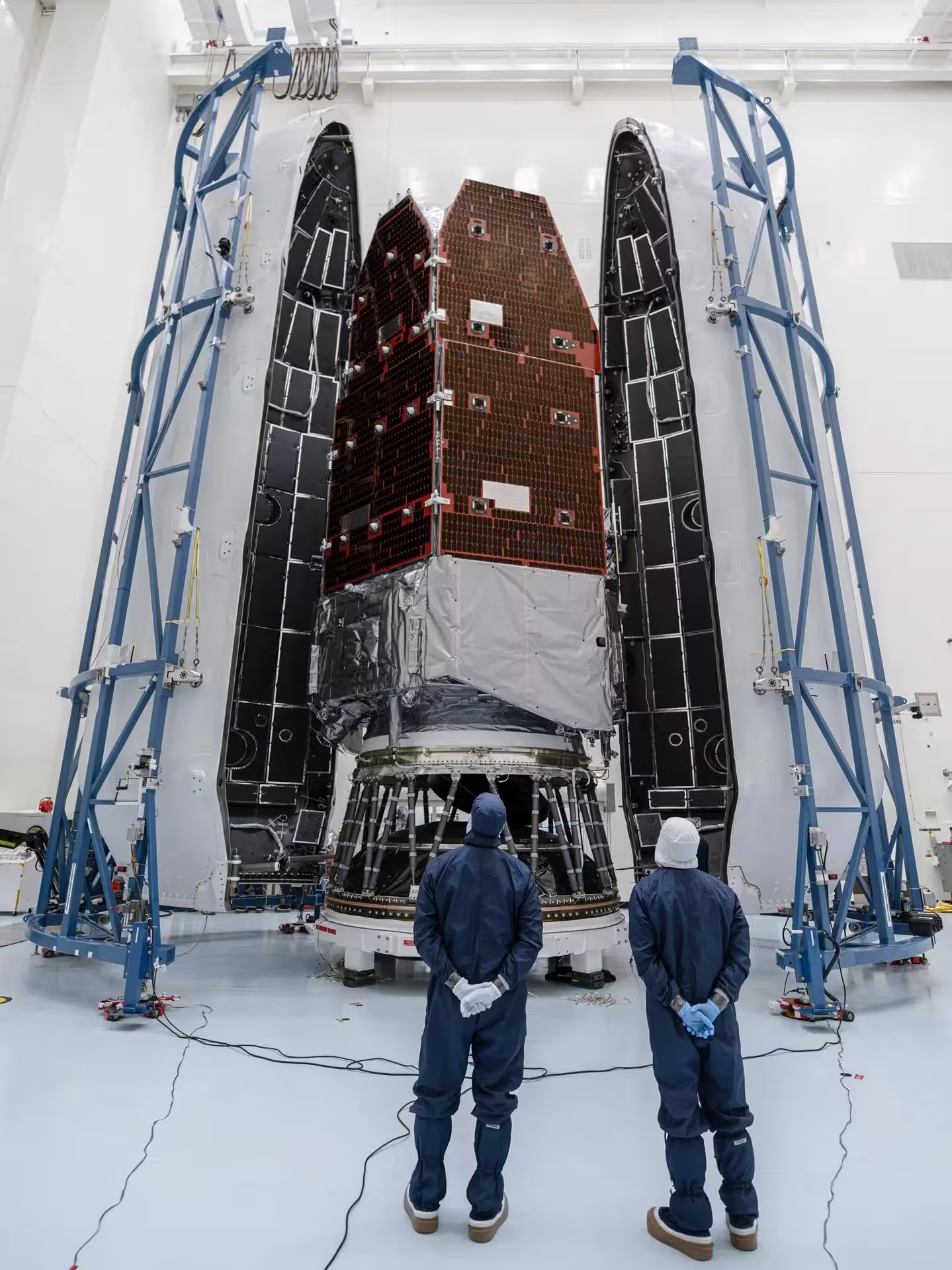
A new era of deep-space observation has officially begun. NASA’s Nancy Grace Roman Space Telescope successfully launched early Sunday morning, climbing into the sky aboard a SpaceX Falcon Heavy rocket from Launch Complex 39A at the Kennedy Space Center. The observatory is now on a transit path toward the second Sun-Earth Lagrange point (L2), located approximately one million miles from our planet.
Following its separation from the rocket’s second stage, mission control confirmed that the telescope successfully deployed its solar arrays and instrument sun shade. Over the next three months, the craft will undergo a rigorous period of calibration and systems testing before it begins its primary mission to survey the cosmos.
Unprecedented Cosmic Scope
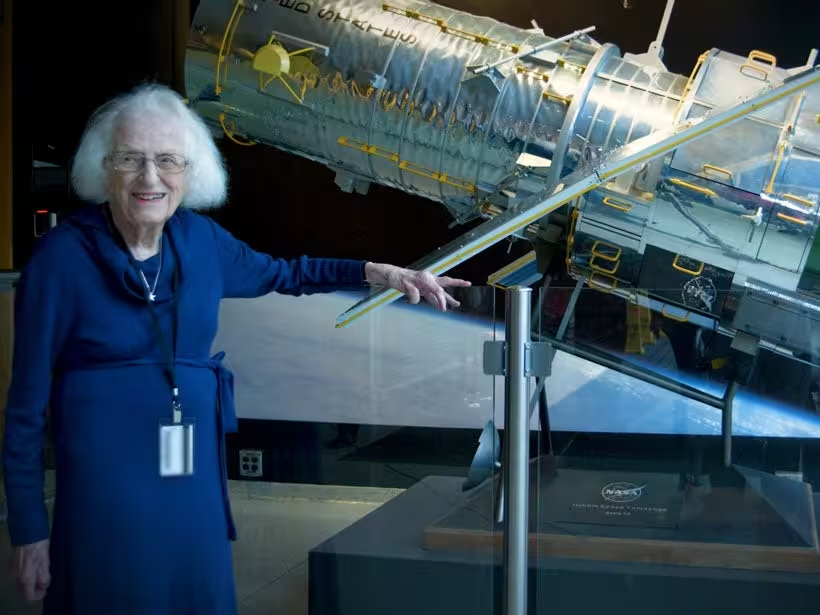
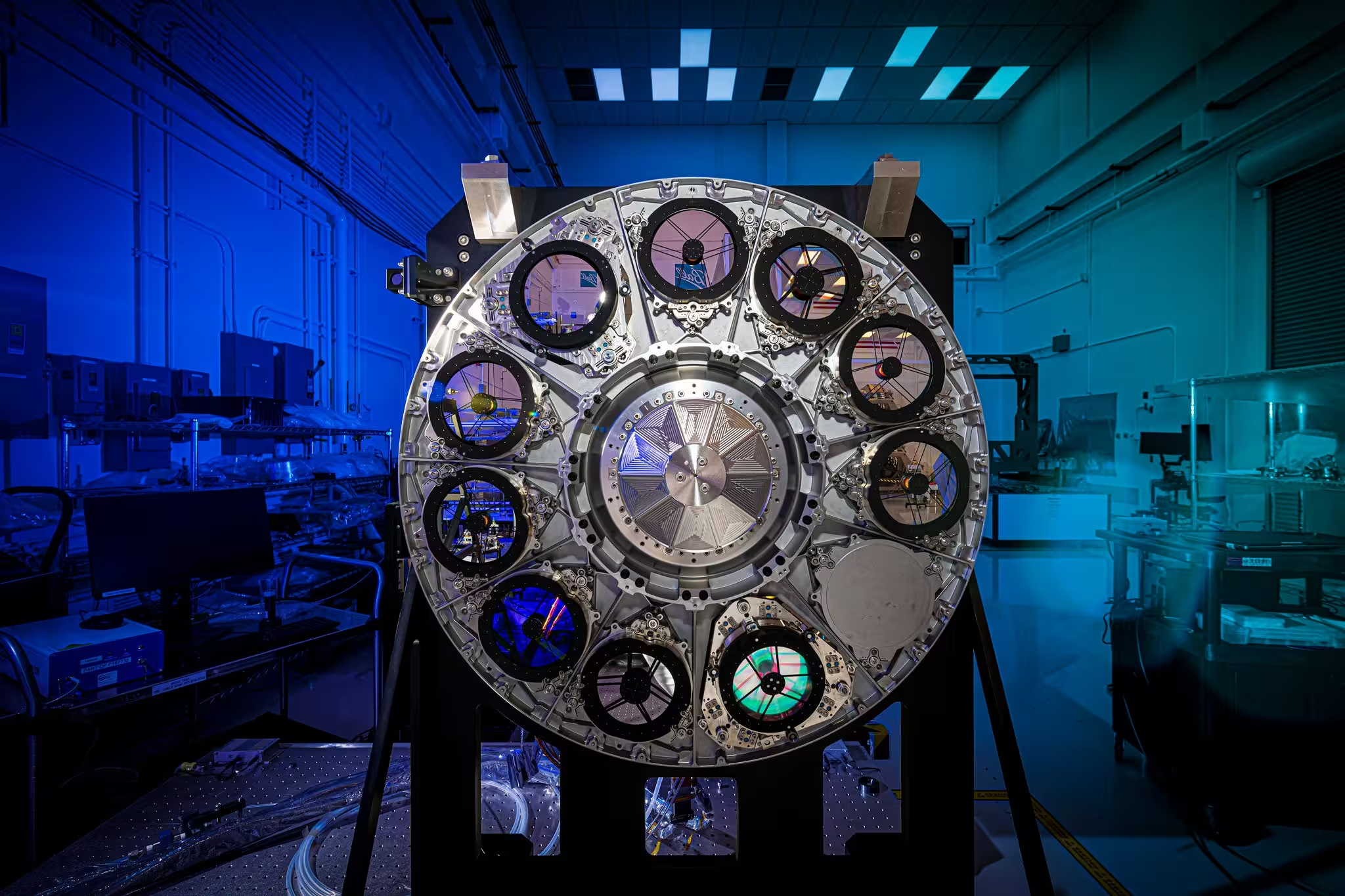
The Roman telescope is engineered to solve some of the most stubborn mysteries in modern astrophysics, including the nature of dark energy and the distribution of dark matter. While it features a 2.4-meter primary mirror comparable to the Hubble Space Telescope, its Wide Field Instrument grants it a view of the heavens at least 100 times larger. This configuration allows the observatory to scan the sky roughly 1,000 times faster than its predecessors, delivering infrared imagery with remarkable clarity.
David Weinberg, a Distinguished University Professor of astronomy at The Ohio State University, notes that the telescope’s reach will redefine our understanding of cosmic architecture. “This enormous field of view will allow us to map astronomical objects in a way that we previously couldn’t,” Weinberg said. “These better measurements may end up teaching us something extremely revolutionary about all kinds of matter in the cosmos.”
Mapping the Dark Universe
A primary objective for the mission is to peer into the “dark side” of the universe. By conducting wide-area surveys that combine imaging and spectroscopy, researchers intend to observe hundreds of millions of galaxies. By tracking how these galaxies cluster and how their light is bent by gravitational lensing, scientists hope to gain insight into the mysterious force of dark energy that continues to drive the accelerating expansion of the universe.
“Mapping clusters of dark matter will help us figure out why gravity on the scale of the universe is so radically different from gravity on the scale of a solar system or galaxy,” Weinberg added.
A Prolific Planet Hunter
Beyond dark energy, the Roman telescope is poised to become a cornerstone of exoplanet research. Through a technique known as gravitational microlensing, the telescope will monitor the crowded center of the Milky Way, identifying planets that might otherwise remain hidden. Experts anticipate that the mission will uncover more than 1,000 planets through microlensing alone, with the potential to identify another 100,000 via transit observations.
The telescope also carries a Coronagraph Instrument, a technology demonstration designed to block out the blinding glare of distant stars. This tool will allow astronomers to image fainter objects orbiting nearby stars, testing methods that could inform future missions dedicated to finding Earth-like worlds.
Data for the Global Community
As the mission progresses, its vast datasets will be made available to the public, ensuring that the legacy of the telescope extends well beyond the professional astronomical community. With the first images expected in early 2027, the scientific community is preparing for a new surge of discovery.
“The value of producing really big, vital datasets is that you then enable anyone in the world to go and make discoveries with it,” Weinberg said. “That’s a really powerful way of doing science, and I think bringing that to space-based astronomy is very inspiring.”
This article has been fact checked for accuracy, with information verified against reputable sources. Learn more about us and our editorial process.
Last reviewed on .
Article history
- Latest version
Cite this page:
- Posted by Aisha Ahmed