Scientists May Have Found Why Giant Stellar Eruptions Are Vanishing Into Thin Air
New research suggests powerful magnetic fields can tear apart and trap giant stellar eruptions, preventing plasma from escaping into space.
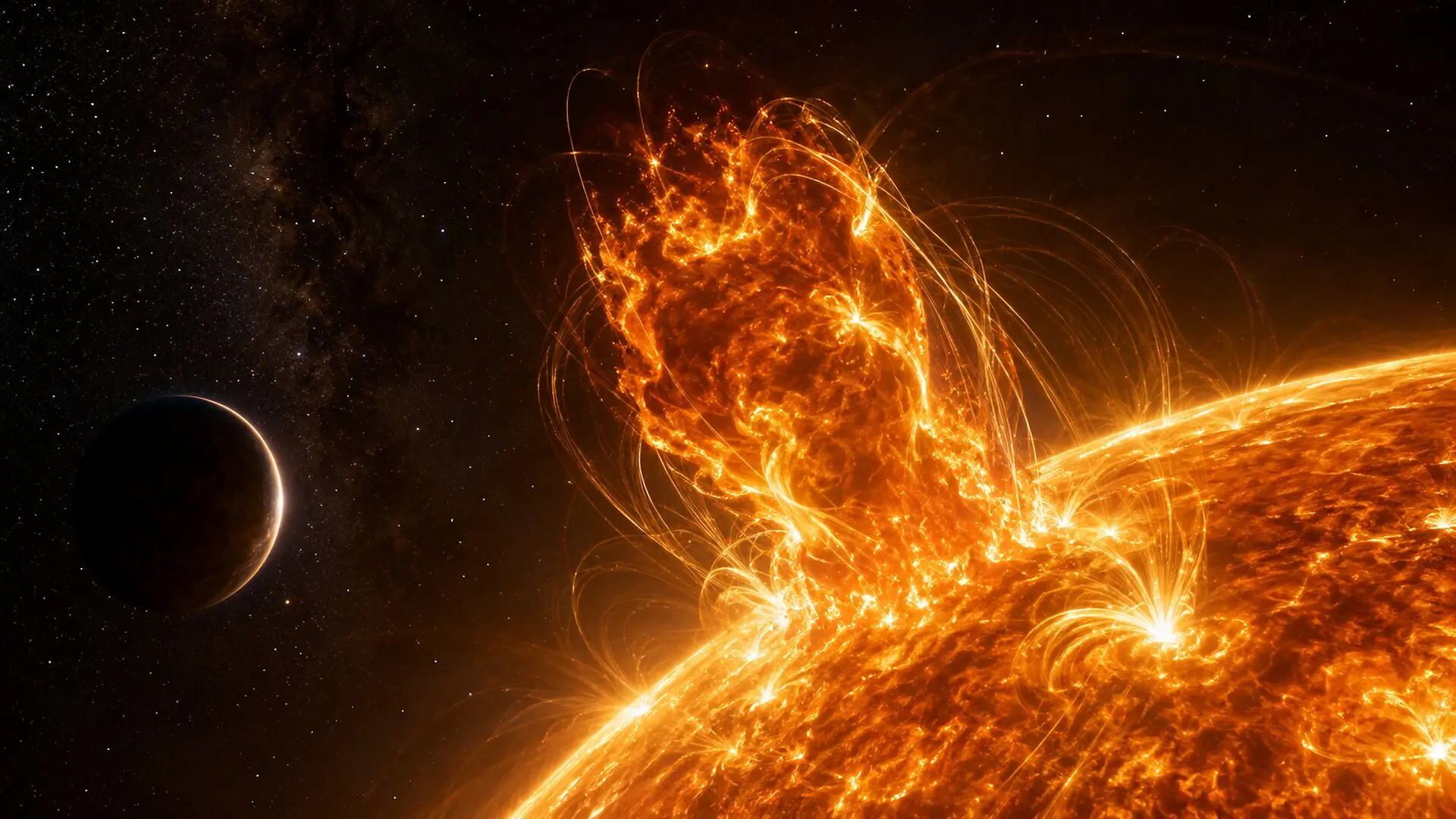
The mystery of why astronomers observe frequent, intense flares on highly active stars while rarely detecting the accompanying coronal mass ejections (CMEs) may finally have a solution. New research suggests that the powerful magnetic fields surrounding these stars act as a high-stakes containment system, effectively trapping plasma eruptions before they can ever make it into space.
An international team of scientists from the Leibniz Institute for Astrophysics Potsdam, École Polytechnique, and the Technion-Israel Institute of Technology combined computational modeling with high-energy laser experiments to bridge the gap between theoretical predictions and observed cosmic phenomena. Their findings, published in Physical Review Letters, provide the first clear experimental evidence that magnetic field strengths of approximately 100 gauss can stifle stellar eruptions.
Confronting the missing eruption paradox
Coronal mass ejections are massive, high-speed releases of magnetized plasma that play a critical role in how stars shed mass and angular momentum. On the Sun, these events are well-documented and predictable. Because astronomers have long assumed that active stars operate on similar physical principles, the lack of observed CMEs on those stars—despite their propensity for frequent and energetic flaring—has become a persistent hurdle in stellar astrophysics.
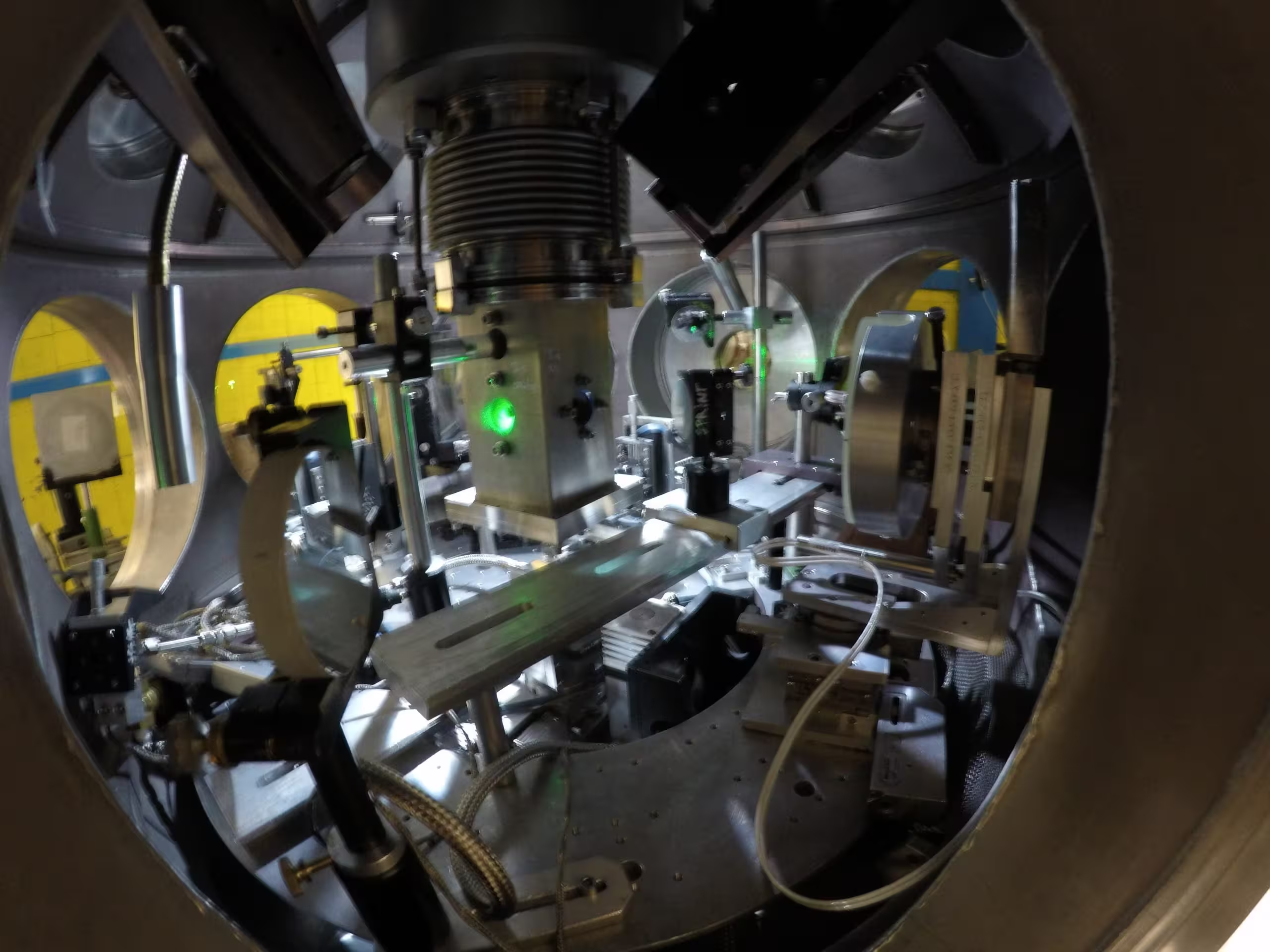
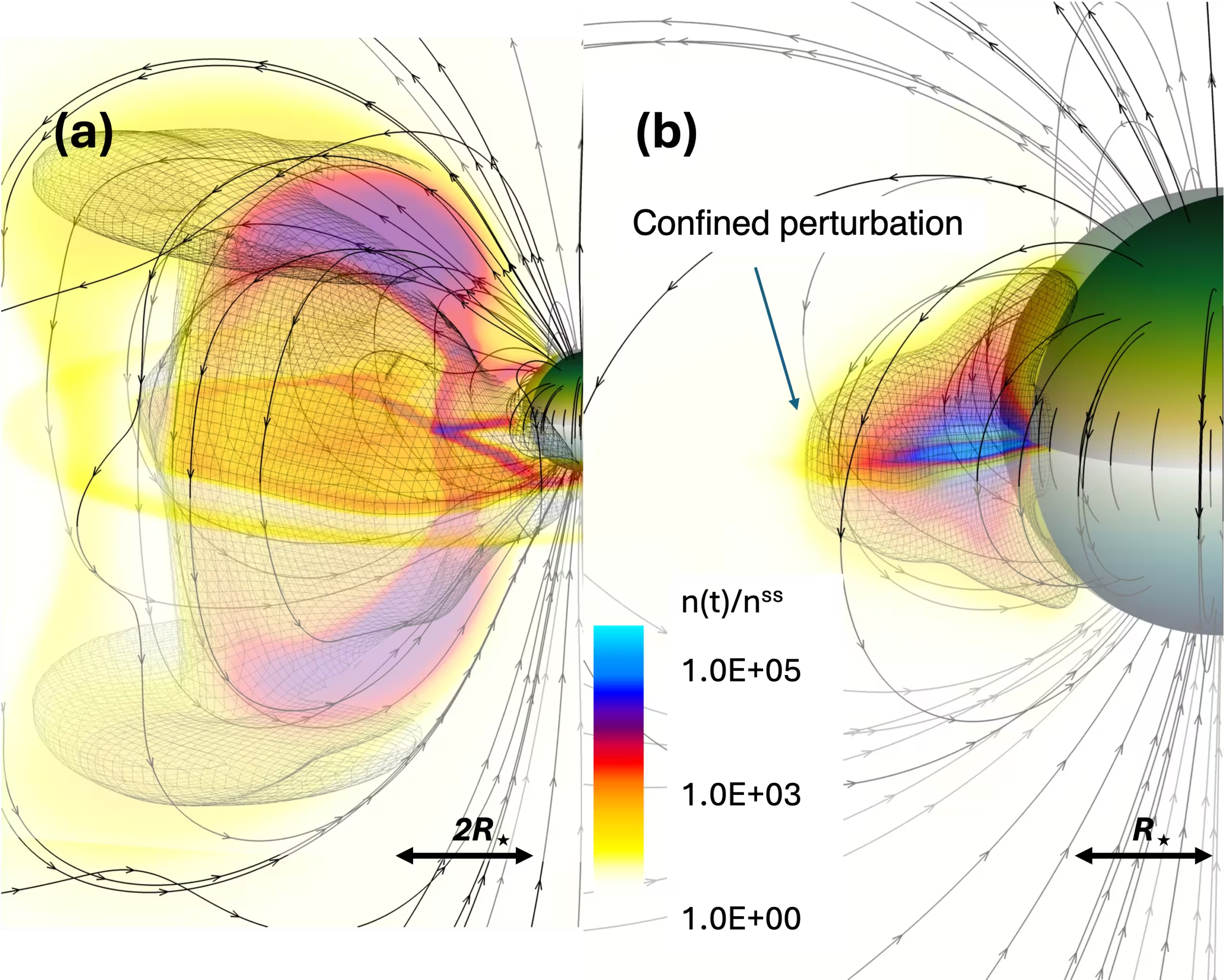
While some researchers suspected that stronger magnetic environments on more active stars might inhibit these ejections, empirical verification has been notoriously difficult. To test this, the research team employed a three-pronged strategy: stellar modeling, sophisticated 3D magnetohydrodynamic simulations, and laboratory-scale experiments using the ELFIE laser facility.
Laboratory simulations of stellar confinement
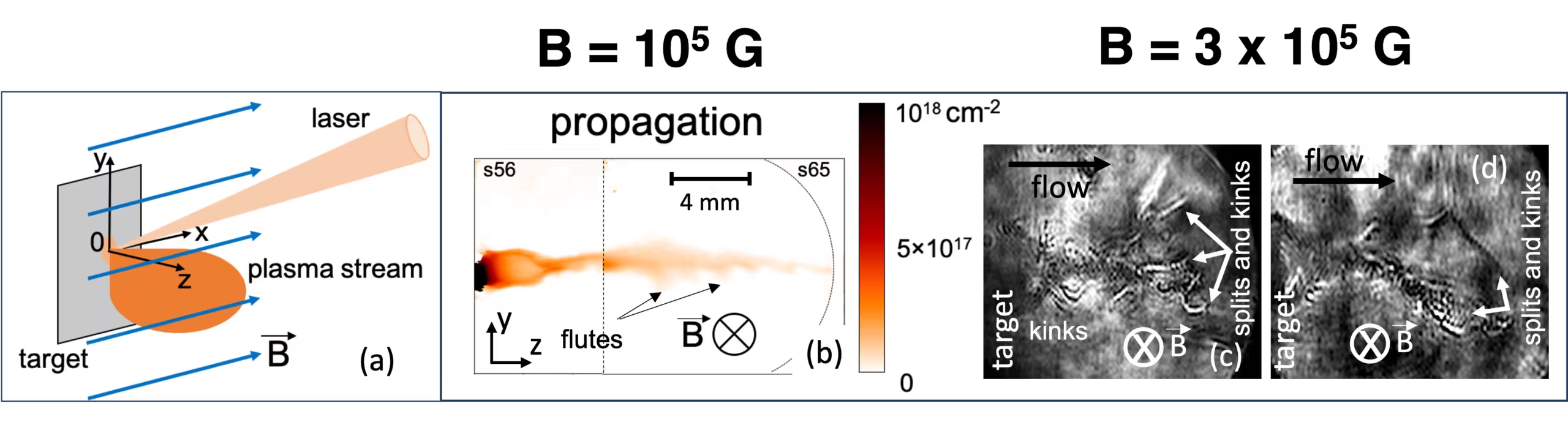
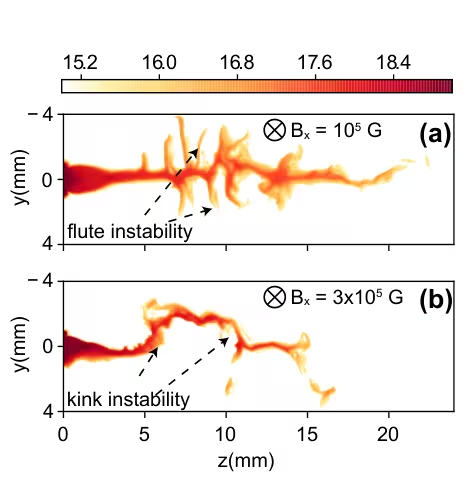
In the lab, the team used laser pulses to blast Teflon targets, creating a fast-moving, hot plasma stream meant to mimic the detached phase of a stellar eruption. By applying external magnetic fields of up to 300,000 gauss—scaled to replicate the conditions of a young, active star—the researchers observed a fundamental change in the plasma’s behavior.
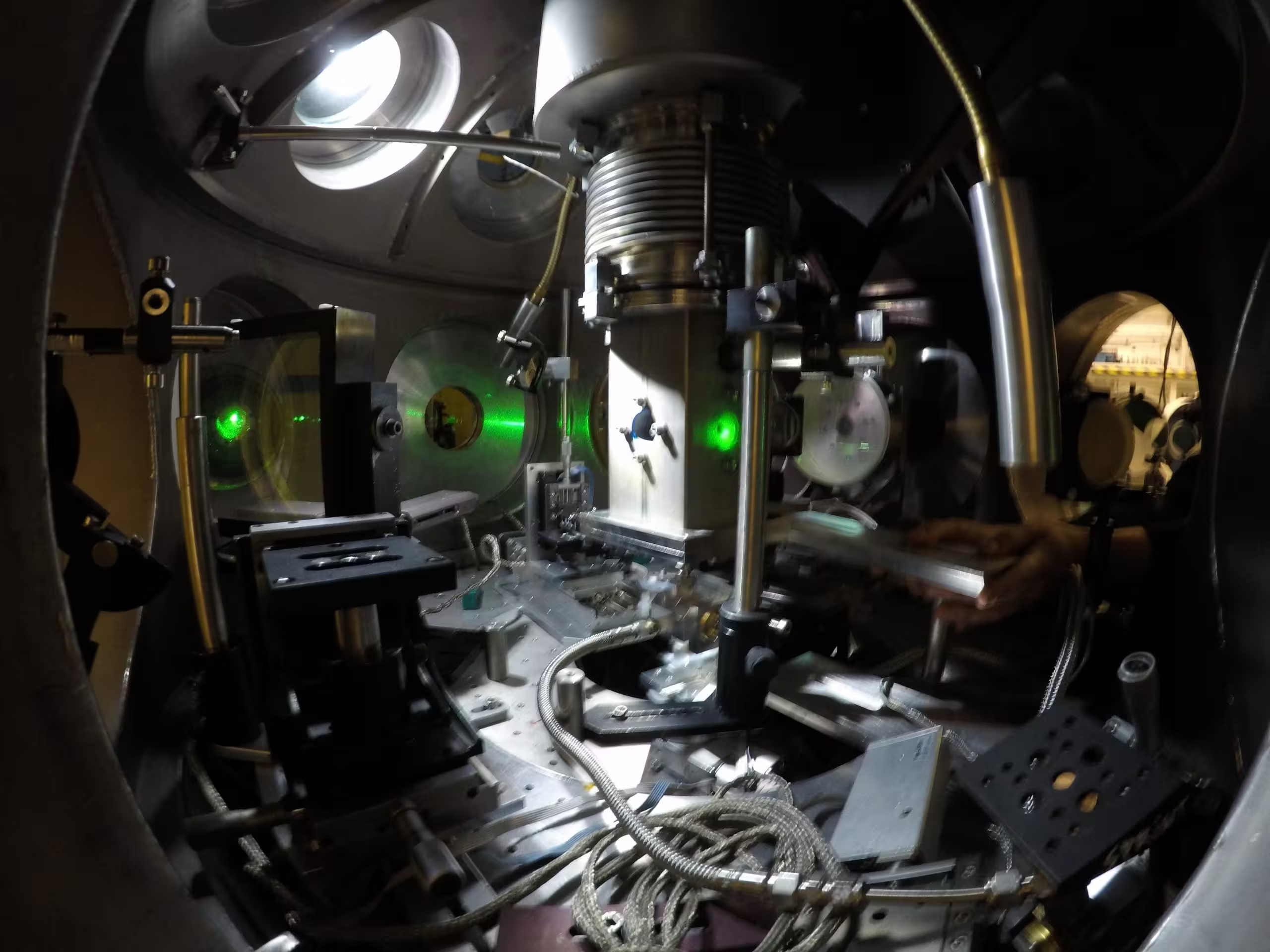
When subjected to these intense fields, the plasma did not simply slow down; it underwent a structural collapse. High-speed imaging revealed the stream fragmenting, twisting, and bending until it completely stagnated. The researchers identified a “kink instability” as the primary culprit, where the magnetic environment forces the eruption to warp until it loses all outward momentum.
Redefining planetary habitability
This mechanism of magnetic trapping has profound implications for our understanding of exoplanetary systems. If active stars are indeed “caging” their own eruptions, the space weather environment surrounding their orbiting planets may be drastically different than previously assumed. Rather than being pummeled by repeated, intense ejections, these planets might be spared a significant portion of the energetic particle bombardment that would otherwise strip away atmospheres and drive stellar mass loss.
The research underscores a vital nuance in modern astronomy: the most energetic events we see may not be the only ones occurring. Instead, a silent but violent struggle takes place within the magnetic coronae of these stars, where eruptions are born only to be dismantled by the very fields that host them.
Further Reading
- Radio burst from a stellar coronal mass ejection: Nature, 2025.
- Discovery of multi-temperature coronal mass ejection signatures from a young solar analogue: Nature Astronomy, 2025.
- Coronal dimmings and what they tell us about solar and stellar coronal mass ejections: Living Reviews in Solar Physics, 2025.
- Radio signatures of star–planet interactions, exoplanets and space weather: Nature Astronomy, 2024.
- Suppression of Coronal Mass Ejections in Active Stars by an Overlying Large-scale Magnetic Field: A Numerical Study: The Astrophysical Journal, 2018.
This article has been fact checked for accuracy, with information verified against reputable sources. Learn more about us and our editorial process.
Last reviewed on .
Article history
- Latest version
Reference(s)
- Callingham, J.. “Radio burst from a stellar coronal mass ejection - Nature.”, vol. 647, no. 8090, pp. 603-607. Nature, doi: 10.1038/s41586-025-09715-3. <https://www.nature.com/articles/s41586-025-09715-3>.
- Namekata, Kosuke. “Discovery of multi-temperature coronal mass ejection signatures from a young solar analogue - Nature Astronomy.”, vol. 10, no. 1, pp. 64-75. Nature, doi: 10.1038/s41550-025-02691-8. <https://www.nature.com/articles/s41550-025-02691-8>.
- <https://pubmed.ncbi.nlm.nih.gov/40740692/>.
- Callingham, J.. “Radio signatures of star–planet interactions, exoplanets and space weather - Nature Astronomy.”, vol. 8, no. 11, pp. 1359-1372. Nature, doi: 10.1038/s41550-024-02405-6. <https://www.nature.com/articles/s41550-024-02405-6>.
- Alvarado-Gómez, Julián D.., et al. “Suppression of Coronal Mass Ejections in Active Stars by an Overlying Large-scale Magnetic Field: A Numerical Study.” The Astrophysical Journal, vol. 862, no. 2, July 26, 2018, pp. 93 American Astronomical Society, doi: 10.3847/1538-4357/aacb7f. <https://iopscience.iop.org/article/10.3847/1538-4357/aacb7f>.
Cite this page:
- Posted by Aisha Ahmed