Physicists Invent A Quantum Watch That Measures Time Without Counting Ticks
Quantum interference in excited helium atoms allows scientists to measure time with femtosecond accuracy, even when a precise starting point is unknown.

Researchers have developed a novel method for tracking the passage of time that bypasses the need for traditional ticking mechanisms. Instead of counting oscillations from a fixed starting point, this new approach relies on the unique interference patterns generated by excited helium atoms to provide precise timestamps.
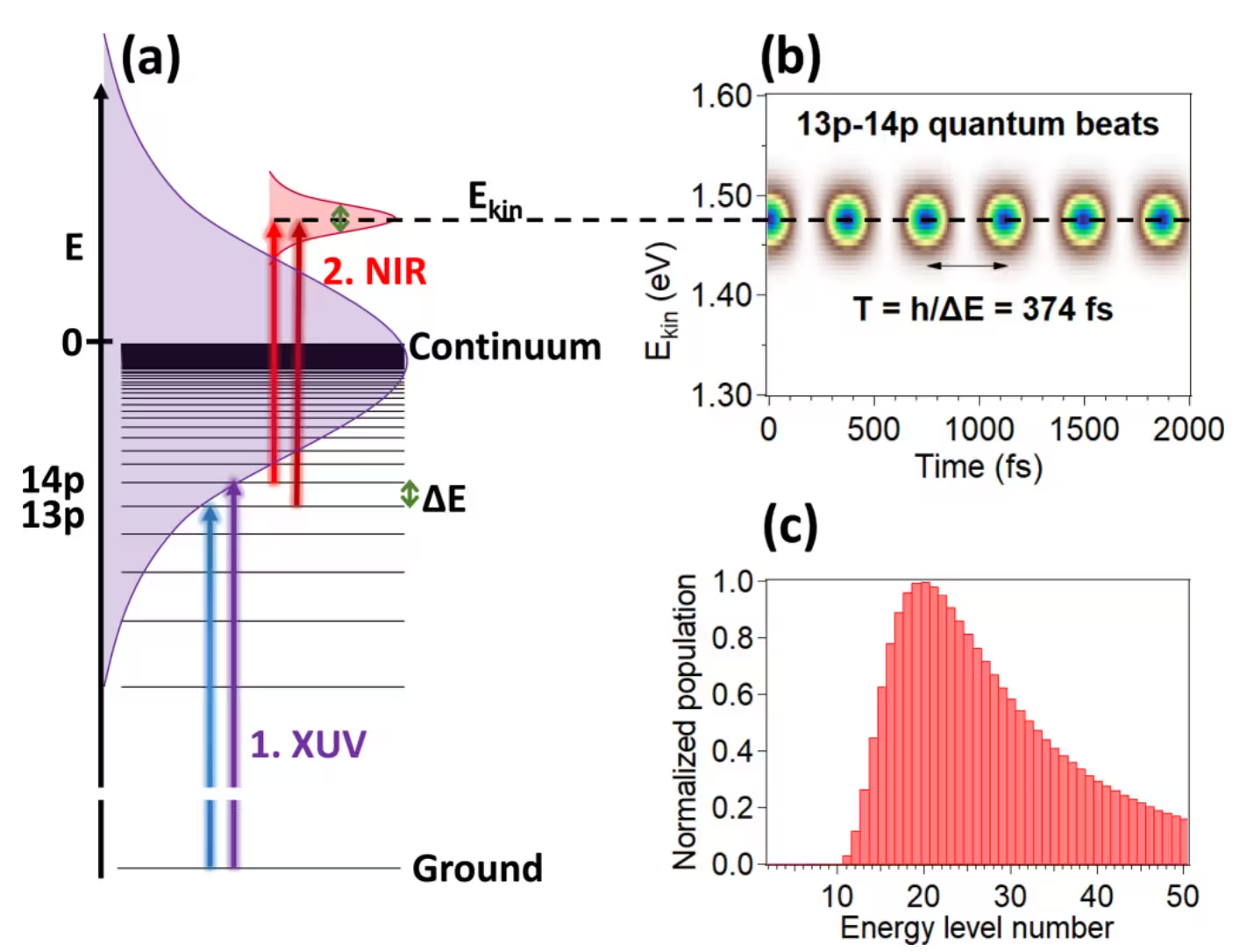
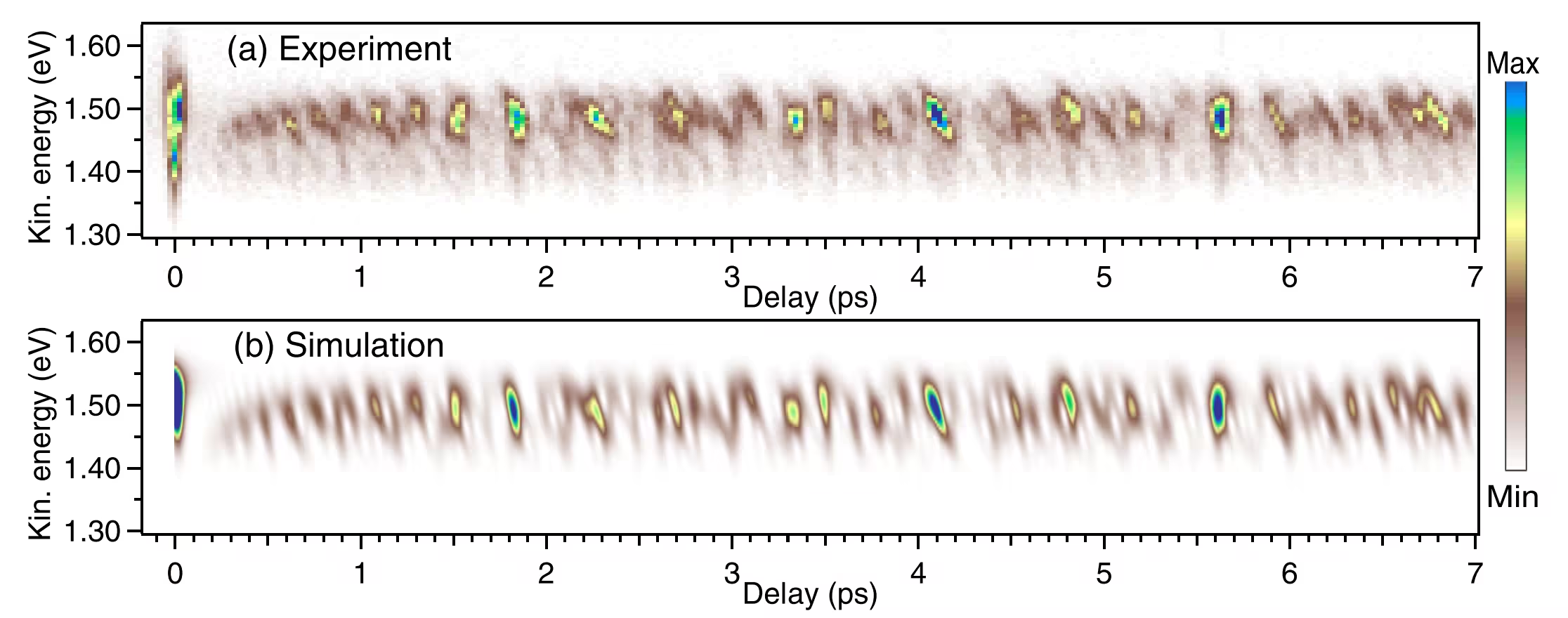
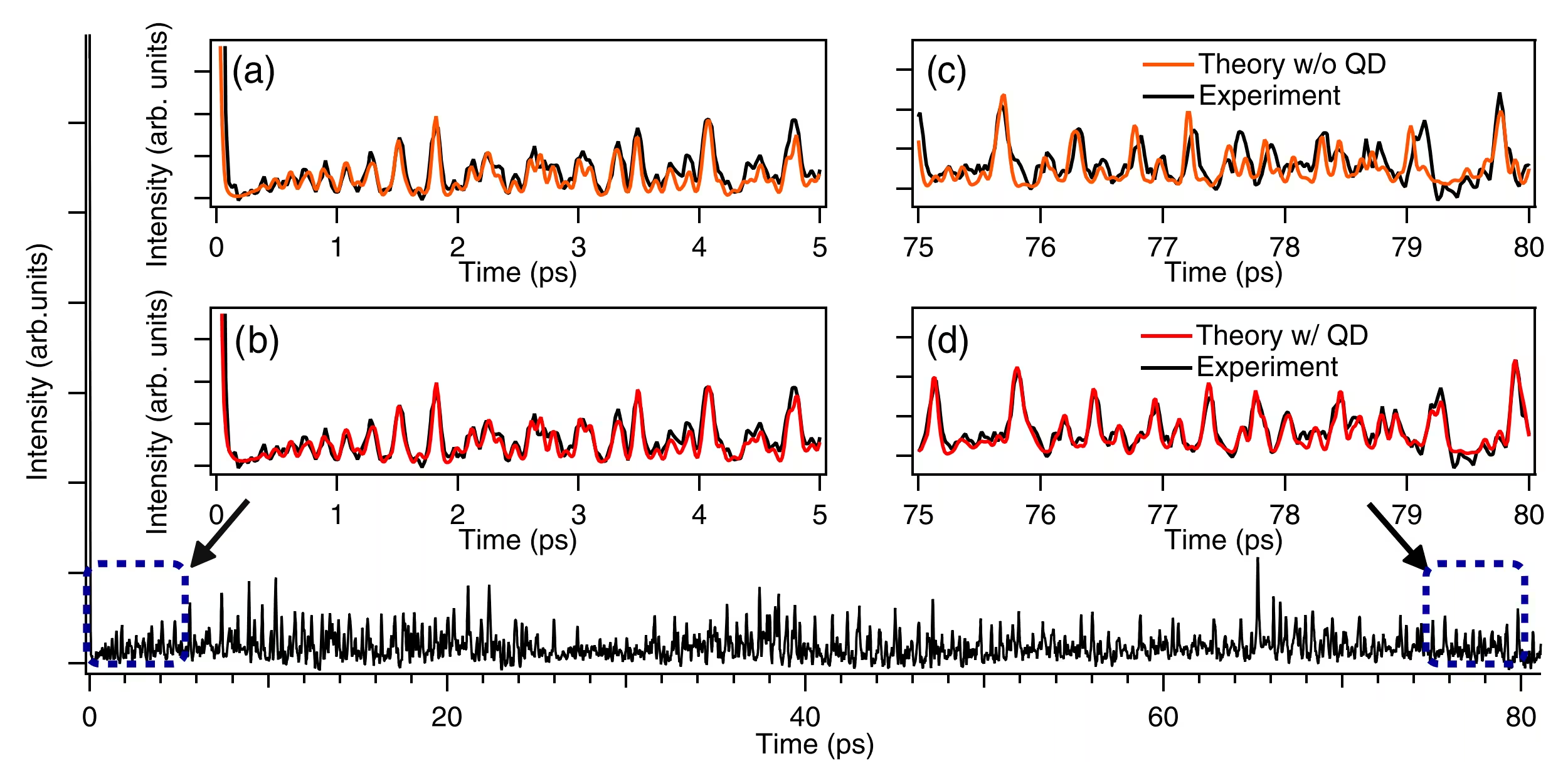
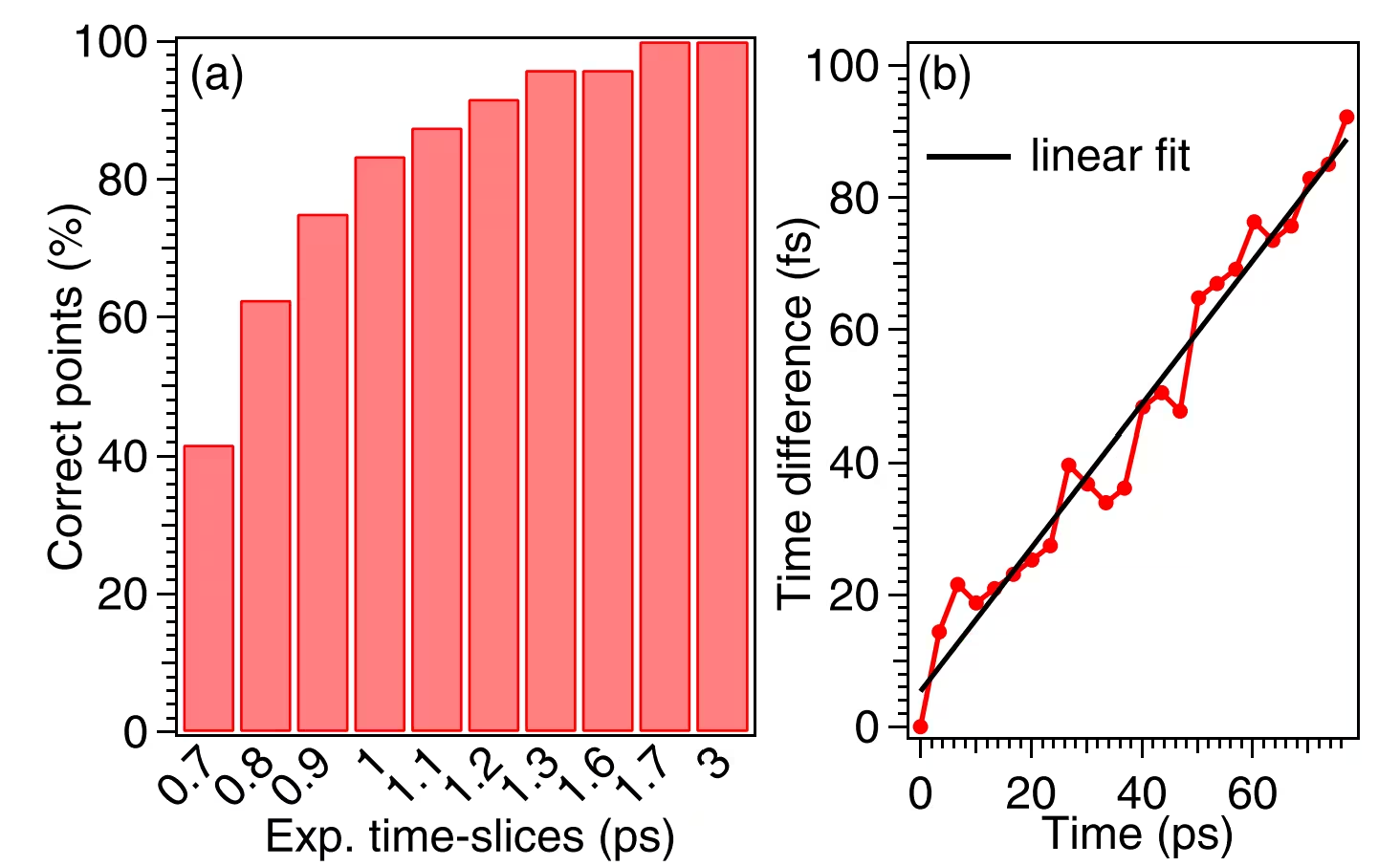
The system, developed by a team at Uppsala University, functions more like a quantum watch than a traditional clock. By mapping complex interference patterns—known as quasi-unique beat signatures, or QUBS—against theoretical predictions, scientists can determine how much time has elapsed since the atoms were initially excited. This technique, which boasts an estimated timing accuracy of approximately 8 femtoseconds, offers a powerful new tool for ultrafast physics experiments where establishing an exact “time zero” is notoriously difficult.
Moving Beyond the Traditional Tick
Most timekeeping devices, from mechanical gears to atomic clocks, operate on a fundamental principle of accumulation: they count regular intervals starting from a defined moment. The Uppsala University team’s method flips this logic, using the way a quantum system evolves to act as its own temporal reference.
“You can compare it to how you can look at a measuring tape and see how far you are from the start,” explained Johan Söderström, lead researcher at the university’s Department of Physics and Astronomy. By observing the probability that Rydberg states—highly excited electronic states in an atom—can be ionized by a light pulse, the team can derive the elapsed time by comparing the resulting signal to established theoretical models.
The core of this system involves Rydberg wave packets. When multiple Rydberg states are excited simultaneously, their differing energy levels cause them to oscillate at distinct phases. This creates a sophisticated, ever-changing interference pattern that acts as a unique fingerprint for any given moment in time.
High-Precision Diagnostics
The researchers tested the system using helium atoms at the Ångström Laboratory’s HELIOS facility. After exciting the atoms with extreme-ultraviolet (XUV) pulses, the team used a secondary near-infrared pulse to ionize them, allowing for the precise measurement of emitted electrons. As the interference pattern evolved, the researchers were able to match experimental data to theoretical calculations with remarkable fidelity, even accounting for subtle quantum defects.
Beyond its function as a timekeeper, the “quantum watch” revealed its utility as a diagnostic tool. During testing, the team noticed a subtle divergence between their quantum-derived timing and the readings from a conventional motorized delay stage. They discovered an error of roughly 90 femtoseconds, which they attributed to a slight physical misalignment in the laboratory equipment. The ability of the quantum interference pattern to serve as an intrinsic calibration check could prove vital for ensuring accuracy in complex, high-speed measurements.
Future Directions in Ultrafast Science
While this technology is not intended to replace standard chronometers, its value lies in specialized scientific applications. The researchers suggest the method could be adapted using other noble gases like neon or argon, depending on the required energy levels. Future studies may look into applying these techniques to molecular systems to observe how fragmentation processes influence Rydberg state stability.
By shifting the paradigm from counting cycles to reading changing quantum states, the Uppsala team has provided a sophisticated new method for pinning down the fleeting moments that define the ultrafast world.
Additional Technical Context
Wave-packet manipulation of He Rydberg states by a seeded free-electron laser: A foundational study on the manipulation of coherent helium Rydberg wave packets. (Physical Review Research, 2024)
Experimental demonstration of attosecond pump-probe spectroscopy with an X-ray free-electron laser: An examination of why precision delay control is essential for sub-femtosecond electron dynamics. (Nature Photonics, 2024)
Entanglement in photoionisation reveals the effect of ionic coupling in attosecond time delays: Research into how quantum interference exposes timing data in photoionization. (Nature Communications, 2025)
Technical review: Time-dependent density functional theory for attosecond physics ranging from gas-phase to solids: A deep dive into the theoretical frameworks for interpreting ultrafast electron dynamics. (npj Computational Materials, 2025)
Rydberg states of alkali atoms in atomic vapour as SI-traceable field probes and communications receivers: A review of the increasing importance of Rydberg atoms as self-calibrating measurement instruments. (Nature Reviews Physics, 2024)
This article has been fact checked for accuracy, with information verified against reputable sources. Learn more about us and our editorial process.
Last reviewed on .
Article history
- Latest version
Reference(s)
- “Uppsala University.”, September 1, 2026 <https://www.uu.se/en>.
- Dumergue, Mathieu., et al. “Wave-packet manipulation of He Rydberg states by a seeded free-electron laser.” Physical Review Research, vol. 6, no. 4, December 27, 2024 American Physical Society (APS), doi: 10.1103/PhysRevResearch.6.043323. <https://journals.aps.org/prresearch/abstract/10.1103/PhysRevResearch.6.043323>.
- Guo, Zhaoheng. “Experimental demonstration of attosecond pump–probe spectroscopy with an X-ray free-electron laser - Nature Photonics.”, vol. 18, no. 7, pp. 691-697. Nature, doi: 10.1038/s41566-024-01419-w. <https://www.nature.com/articles/s41566-024-01419-w>.
- Makos, Ioannis. “Entanglement in photoionisation reveals the effect of ionic coupling in attosecond time delays - Nature Communications.”, vol. 16, no. 1, September 29, 2025, pp. 8554 Nature, doi: 10.1038/s41467-025-64182-8. <https://www.nature.com/articles/s41467-025-64182-8>.
- Sato, Shunsuke. “Technical review: Time-dependent density functional theory for attosecond physics ranging from gas-phase to solids - npj Computational Materials.”, vol. 11, no. 1, July 15, 2025, pp. 233 Nature, doi: 10.1038/s41524-025-01715-1. <https://www.nature.com/articles/s41524-025-01715-1>.
- Schlossberger, Noah. “Rydberg states of alkali atoms in atomic vapour as SI-traceable field probes and communications receivers - Nature Reviews Physics.”, vol. 6, no. 10, pp. 606-620. Nature, doi: 10.1038/s42254-024-00756-7. <https://www.nature.com/articles/s42254-024-00756-7>.
Cite this page:
- Posted by Aisha Ahmed