Europe Is Building a Heavy Duty Robotic Crane to Revolutionize Lunar Cargo Operations
European engineers have successfully tested a foldable lunar crane designed to hoist heavy cargo and support equipment deployment for future Moon missions.
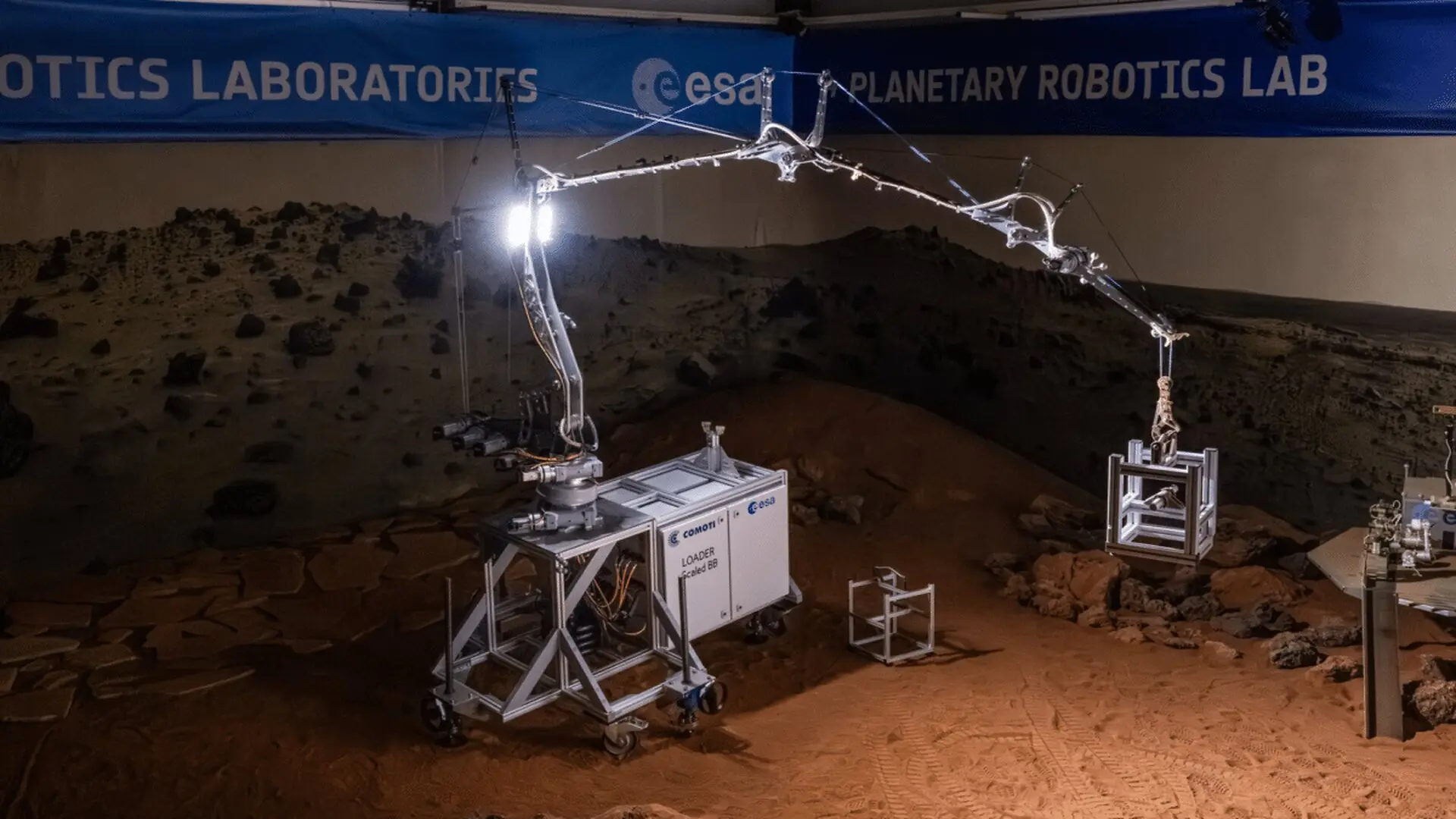
Engineers at the European Space Agency (ESA) are developing a heavy-duty robotic crane designed to tackle one of the most persistent hurdles of lunar exploration: offloading massive cargo on the Moon’s surface. As space agencies prepare to land increasingly complex scientific equipment and infrastructure, the ability to safely transfer payloads from a spacecraft’s deck to the dusty lunar ground is becoming a priority for mission planners.
Solving the Lunar Logistics Gap
Current plans for the ESA’s Argonaut landers involve delivering up to 1,500 kilograms of supplies to the Moon. However, standard robotic arms often lack the reach and power to move heavy assets far enough from the landing site to avoid interference or to position them precisely where they are needed. To bridge this gap, the Romanian research institute COMOTI, in collaboration with Initium Space, has introduced the “Loader” project—a specialized crane system engineered to hoist one-tonne loads and maneuver them up to six meters away from a lander.
Testing Heavy Lifting in a Simulated Environment
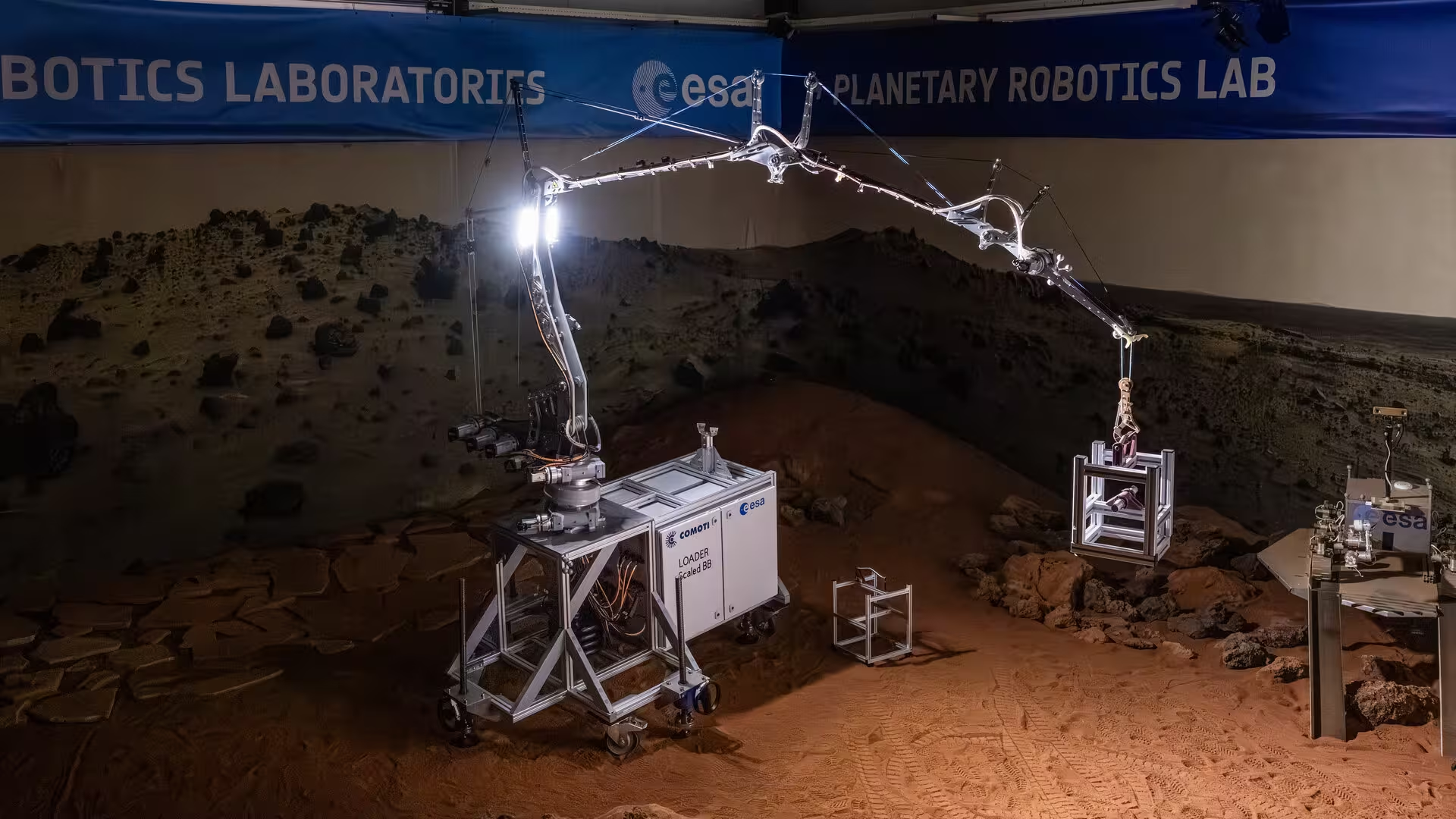
The development team has moved beyond the drawing board, utilizing the ESA’s Planetary Robotics Laboratory in the Netherlands to put a scaled prototype through its paces. This facility allows engineers to simulate the mechanical demands of an extraterrestrial environment, testing the crane’s range of motion, positioning accuracy, and structural integrity under stress.
While the current laboratory model is designed for Earth-bound testing, it provides a crucial proof of concept. ESA robotics engineer Gunter Just noted that the current demonstrator handles 30 kg under Earth’s gravity, which correlates to over 180 kg in the lunar environment. Because the Moon’s gravity is roughly one-sixth that of Earth, the final operational version will be significantly larger and capable of supporting much greater mass without a proportional increase in structural weight.
Engineered for Deployment on Uneven Ground
Spacecraft volume is at a premium during launch, necessitating a design that is both compact and resilient. The Loader crane is designed to remain in a folded configuration while packed inside the lander. Upon arrival, a pre-programmed deployment sequence allows it to unfold and lock into place. Daniel Useriu of COMOTI highlighted that the system includes a sophisticated leveling mechanism, ensuring the crane remains stable even when the lander settles on uneven or sloping lunar terrain.
The device also features a dual-gripper setup to handle diverse payloads. A passive, spring-loaded gripper provides a secure, power-independent hold, while an active, battery-powered gripper offers the dexterity to rotate and precisely orient sensitive instruments. This redundancy is vital for operations where human intervention is impossible and environmental conditions are unpredictable.
The Road to Future Lunar Infrastructure
The Loader project, funded by the ESA’s Technology Development Element, represents a foundational step toward long-term lunar habitation and research. While there is no official flight date yet, the success of the current prototype provides a roadmap for future iterations. As the global push for lunar exploration shifts from short-term visits to sustained presence, this robotic crane could become an essential tool for transforming delivered cargo into functional, long-term scientific installations.
This article has been fact checked for accuracy, with information verified against reputable sources. Learn more about us and our editorial process.
Last reviewed on .
Article history
- Latest version
Cite this page:
- Posted by Karan Das