Nearly 100 Prehistoric Paintings Found in Turkey Cave, Unveiling Millennia-Long Legacy
A newly discovered cave reveals extraordinary prehistoric art, boasting unique features that set it apart from other ancient rock‑art sites.
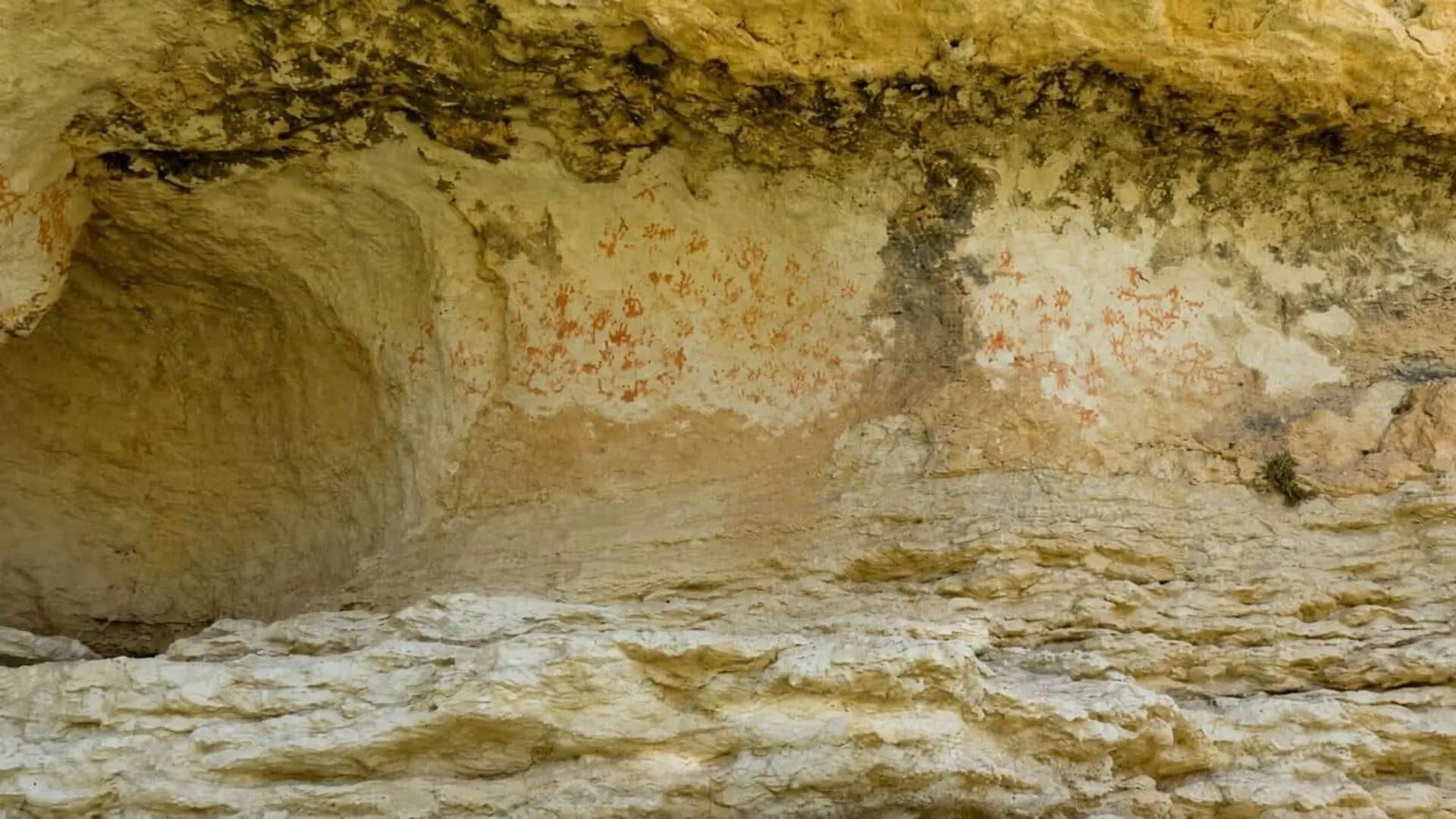
A recently identified prehistoric cave in eastern Turkey has attracted scientific interest after an interdisciplinary team documented nearly one hundred painted figures of humans and animals across its interior walls. While the site may emerge as a landmark example of Anatolian rock art, researchers caution that further analysis is required to establish a precise chronology.
The discovery occurred in Malatya’s Tohma Canyon, a rugged gorge in the Darende district, during fieldwork led by Dr. Levent İskenderoğlu of İnönü University. The pigments, ranging from deep reds to earthy brown tones, suggest a complex sequence of artistic activity rather than a single episode.
Stratified Imagery Across the Rock Face
The cave walls display an assemblage of almost one hundred motifs, including stylized human silhouettes, animal forms, and geometric patterns rendered in red hues. Many of these elements interlock, forming extended compositions that traverse the surface.
According to a statement from İnönü University, certain figures appear to overlay earlier ones, while other sections reveal intersecting lines and shifts in artistic style. These characteristics imply repeated visits by different groups, each adding new layers over an extended period.
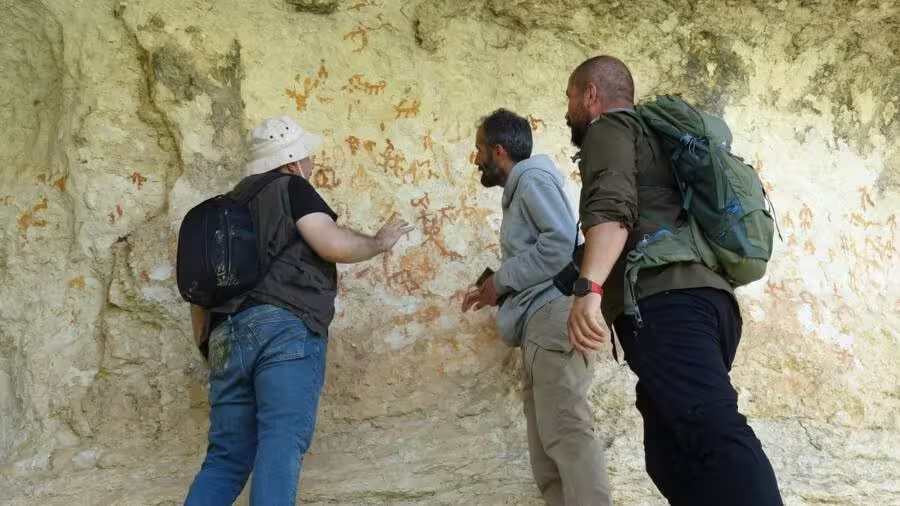
Rather than attributing the artwork to a solitary event, the team is treating the cave as a visual chronicle that may capture several distinct moments in its prehistoric use.
“Closer examination reveals stylistic variations and differences in the texture of the paint and pigments, pointing to both older and more recent phases of artwork. This suggests the site may have been used over thousands of years,” said Dr. Levent İskenderoğlu, an assistant professor in the Department of Painting at İnönü University’s Faculty of Fine Arts and Design. “It could have been a sacred or dream‑related place, revisited repeatedly across generations and imbued with symbolic significance.”
Symbolic Forms Distinguish the Cave Art
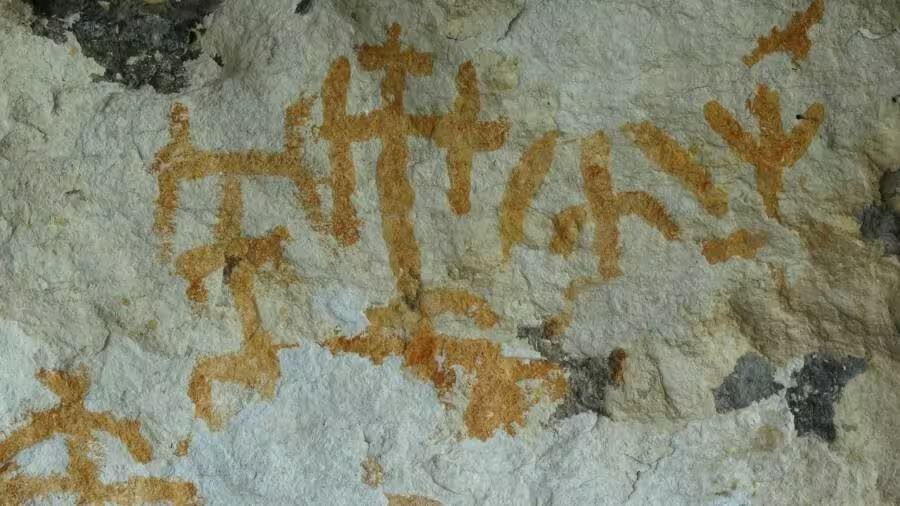
Dr. İskenderoğlu notes that the paintings employ a schematic language, relying on simplified shapes, repeated motifs, and abstract signs rather than the naturalistic depictions typical of many European sites.
“The handprints, in particular, caught our attention. We interpreted them as a form of resistance to mortality. It is possible that people wanted to leave a lasting mark of their existence by imprinting their hands on these walls,” he added.
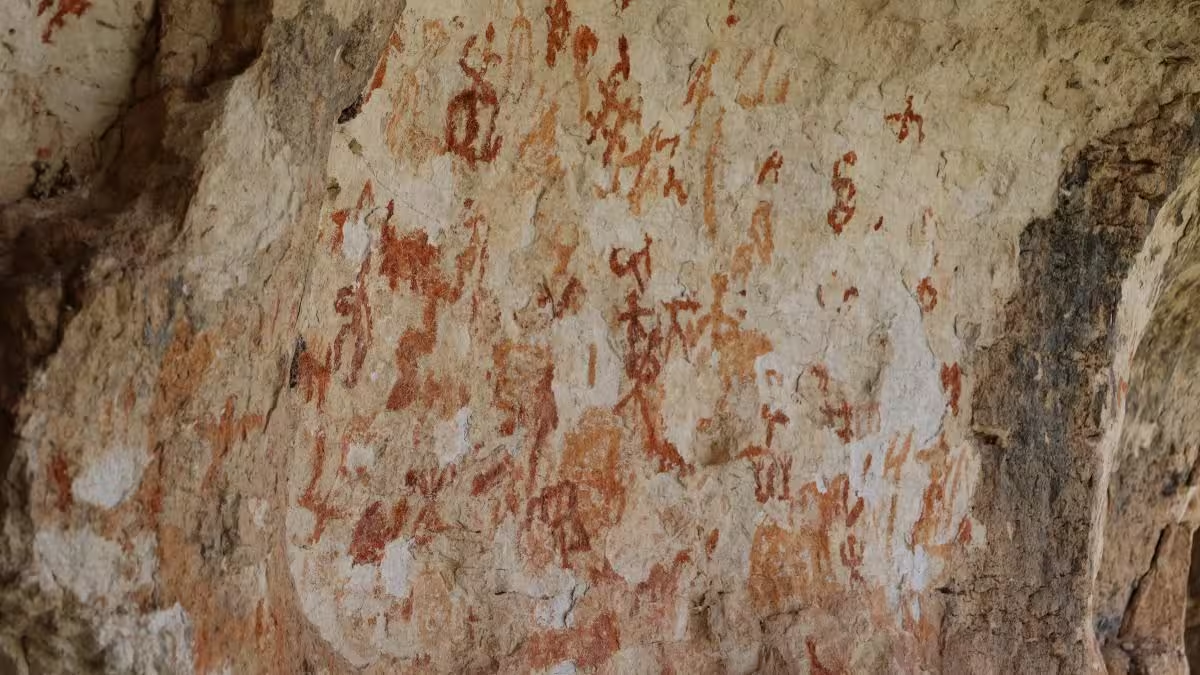
The combination of anthropomorphic figures, fauna, and geometric designs raises questions about the cave’s function, with possibilities ranging from ritual use to a venue for communal storytelling. Dr. İskenderoğlu emphasizes that such interpretations remain speculative pending further research.
Comparisons are already being drawn with other renowned Turkish painted sites such as Beldibi in Antalya, the Latmos rock art on the Aydın–Muğla border, and Doğu Sandal Cave in Mersin. The sheer number and diversity of motifs make the Tohma Canyon discovery particularly significant.
Prioritizing Conservation and Dating Efforts
The precise age of the cave’s artwork has yet to be determined. Upcoming work will focus on detailed pigment analysis, stylistic classification, and the creation of a comprehensive catalog of the surviving images.
“We can’t put an exact date on the site yet, but our early findings suggest that some of the traces may go back to the Neolithic period. The final dating will come after carbon‑14 and uranium‑thorium (U‑Th) analyses are finished,” he said in the release.
The research team also plans to submit detailed reports to heritage authorities, a step deemed essential before drawing definitive conclusions about the site’s historical importance.
Preservation has become urgent after recent incidents of vandalism. Dr. İskenderoğlu warns that illegal digging and treasure‑hunting pose serious threats, noting that the site holds no hidden riches.
“If the site is properly protected and the necessary visitor facilities are put in place, it could become one of the region’s major tourist destinations. But this isn’t just our heritage—it’s part of humanity’s shared history. Protecting it and ensuring future generations can experience it is incredibly important.”
This article has been fact checked for accuracy, with information verified against reputable sources. Learn more about us and our editorial process.
Last reviewed on .
Article history
- Latest version
Reference(s)
- “Tohmada Bulunan Resimli Magaralar Bilimsel Kayit Altina Aliniyor.” <https://www.inonu.edu.tr/inuhaber/haber/11682/tohmada-bulunan-resimli-magaralar-bilimsel-kayit-altina-aliniyor>.
- “Asst. Prof. LEVENT İSKENDEROĞLU | AVESİS.” <https://avesis.inonu.edu.tr/levent.iskenderoglu>.
Cite this page:
- Posted by Hassan Raza