First Dinosaur Egg Inside Another Egg Reveals Bird‑Like Reproductive Trait
Fossil dinosaur egg found with another egg inside, a bizarre first that could reshape our understanding of titanosaur reproduction.
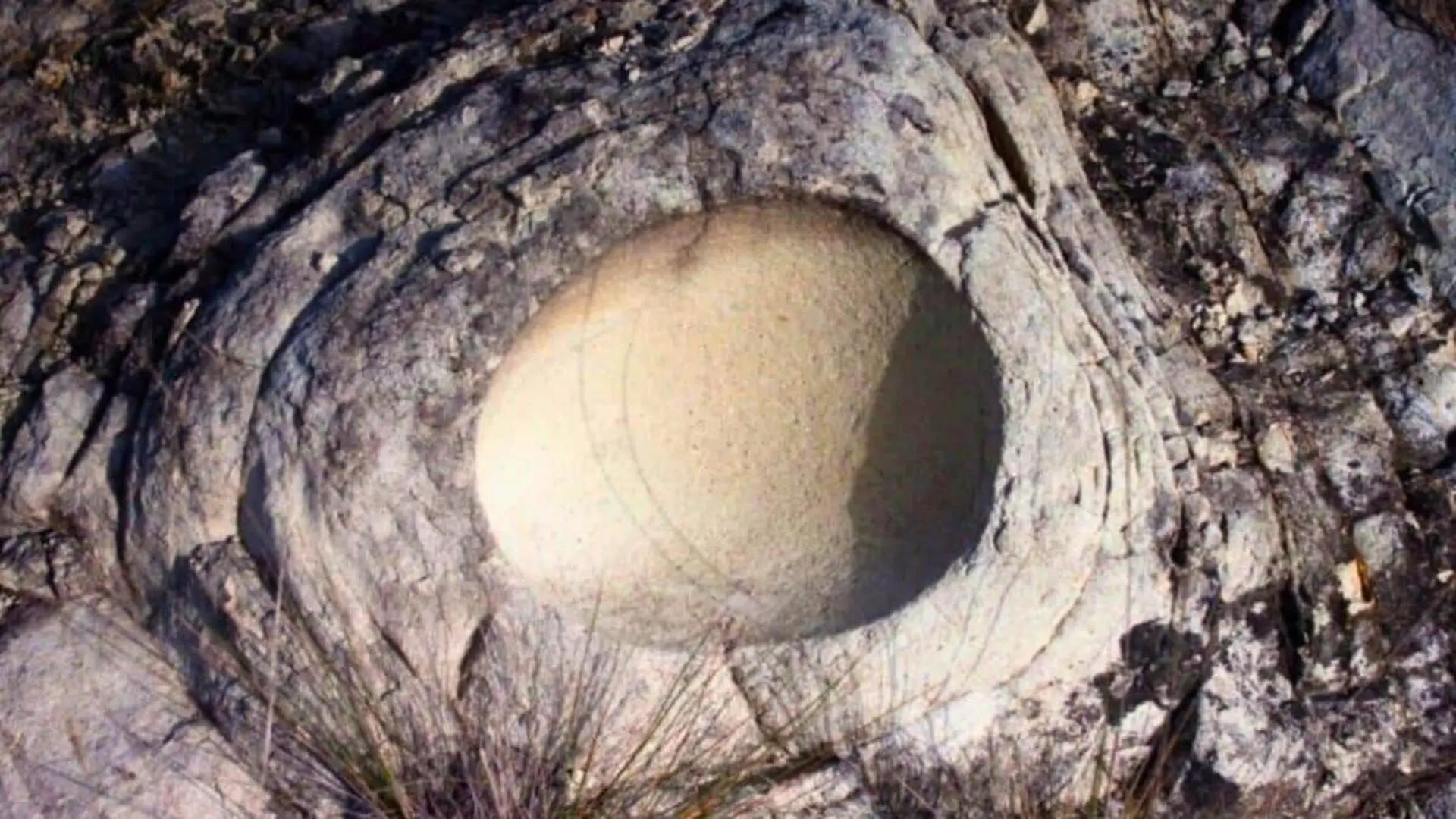
Among a clutch of eleven titanosaur eggs unearthed from the Lameta Formation in Dhar District, Madhya Pradesh, one specimen revealed an unexpected interior: a complete egg encased within its outer shell, separated by a clear cavity. Researchers identified this as an ovum‑in‑ovo condition, a phenomenon previously recorded only in birds and never confirmed in any non‑avian dinosaur.
How Ovum‑in‑Ovo Differs From Other Egg Disorders
Egg pathologies generally fall into two categories. A multi‑shelled egg consists of several calcite layers pressed tightly together, a pattern observed in turtles, geckos, crocodilians, various birds, and in some Argentine titanosaur nests. By contrast, an ovum‑in‑ovo egg contains a near‑complete inner egg surrounded by a second outer shell, leaving a substantial gap that would have housed yolk before fossilisation.
The gap in egg C from nest P7 sets it apart from all previously documented dinosaur egg abnormalities. The outer shell measures 2.6 mm thick, while the inner shell is about 2 mm—both within the normal range for titanosaur eggs. Comparative analysis with collapse patterns from the Lameta Formation and the Auca Mahuevo site in Argentina showed no match.
Small fragments of eggshell discovered within the cavity, rather than on the exterior of either layer, support the interpretation that the space was a biological feature present at the time of laying. Randomly fallen hatchlings would not preserve two nearly complete circular outlines with a consistent intervening gap. Minor fracturing caused by post‑burial sediment pressure affected other eggs from the same site, but it did not alter the relationship between the two shells.
What Biological Process Could Produce a Double‑Shell Egg?
In modern birds, an ovum‑in‑ovo egg forms when a partially shelled egg reverses direction in the oviduct due to antiperistaltic muscle contractions, meets another developing egg, and both travel together through the shell‑secreting region, receiving a second outer shell. This mechanism requires a segmented oviduct with separate zones for membrane formation and shell calcification.
Reptiles such as turtles and lizards lack a segmented oviduct, rendering the ovum‑in‑ovo process mechanically impossible for them. Crocodilians possess differentiated uterine regions like birds but ovulate clutches simultaneously, placing them between the two groups.
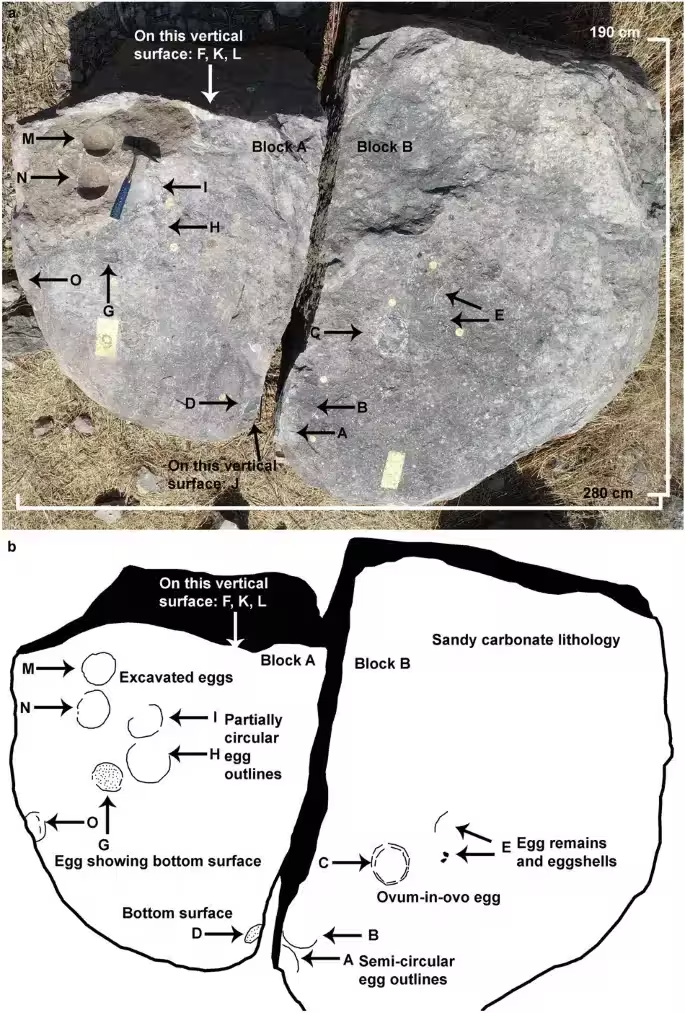
Researchers also evaluated whether environmental stress might have triggered the abnormality. The Lameta Formation records intense Deccan volcanism, and the Padlya area contains 52 titanosaur nests within roughly 0.70 km². Only a single pathological egg has been identified among all material, suggesting an isolated biological incident rather than a widespread stress response.
Microscopic Analysis Confirms Independent Shell Formation
Scanning electron microscopy and polarized light microscopy performed at the University of Delhi examined fragments from the abnormal egg and a neighboring normal egg in the same clutch. Both were assigned to the oospecies Fusioolithus baghensis, confirming they originated from the same individual and excluding the possibility of a later‑stage intrusion.
Thin sections of the inner shell displayed the characteristic fan‑shaped calcite units and arched growth lines of this oospecies, indicating that the inner layer developed biologically within the oviduct rather than as a post‑depositional mineral coating.
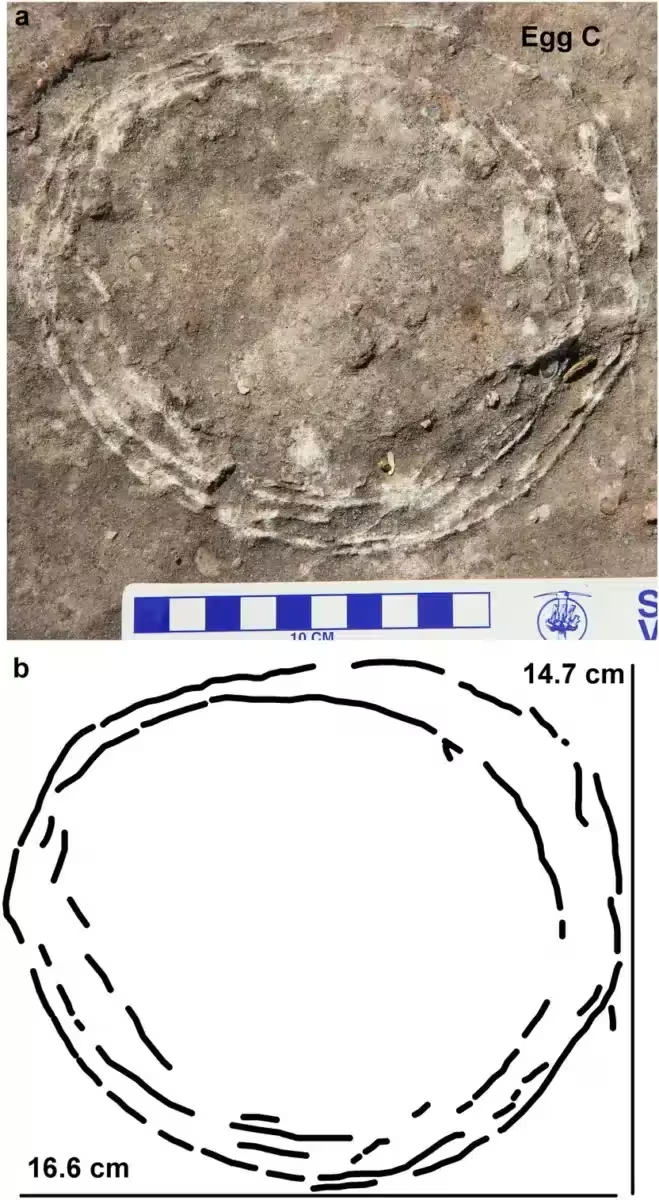
Both shells exhibited normal titanosaur microstructure, each forming at a distinct point in the reproductive cycle. The sharp, consistent separation between them demonstrates that the two shells calcified independently before the egg was laid.
Implications for Understanding Sauropod Reproduction
Prior to this discovery, knowledge of sauropod reproductive biology—published in Scientific Reports—relied on nest architecture, eggshell porosity, and analogies with living archosaurs. Water‑vapor conductance studies had already suggested that titanosaur incubation resembled crocodilian burial rather than avian brooding.
While multi‑shelled eggs from France and Argentina hinted at reproductive stress, they do not require a segmented oviduct to form. The present ovum‑in‑ovo specimen does, implying that titanosaurs may have possessed a bird‑like segmented oviduct and possibly laid eggs sequentially rather than depositing an entire clutch at once. Sequential laying has been proposed for some European megaloolithid material, and this structural evidence strengthens that hypothesis.
By extending ovum‑in‑ovo pathology beyond birds, the finding positions sauropod dinosaurs closer to birds and crocodilians in terms of reproductive anatomy, distinguishing them from turtles and lizards.
This article has been fact checked for accuracy, with information verified against reputable sources. Learn more about us and our editorial process.
Last reviewed on .
Article history
- Latest version
Reference(s)
- Dhiman, Harsha. “First ovum-in-ovo pathological titanosaurid egg throws light on the reproductive biology of sauropod dinosaurs - Scientific Reports.”, vol. 12, no. 1, June 7, 2022, pp. 9362 Nature, doi: 10.1038/s41598-022-13257-3. <https://www.nature.com/articles/s41598-022-13257-3>.
Cite this page:
- Posted by Hassan Raza