Archaeologists Discover 800 Year Old Medieval Ship Hidden in Plain Sight Within a Cellar Ceiling
A cellar renovation in Germany has unearthed a complete 13th-century ship’s hull, revealing a rare and extraordinary medieval archaeological discovery.

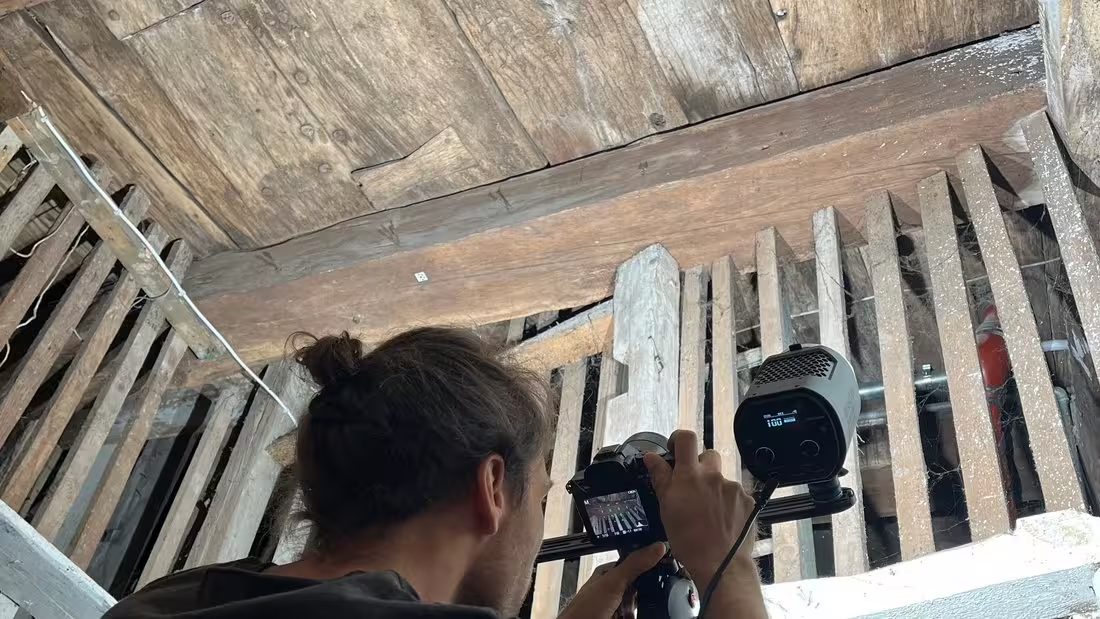
Archaeologists working in a cellar in Konstanz, Germany, have uncovered an unexpected piece of maritime history hidden in plain sight. What was initially identified as standard ceiling timber in a structure dating to 1244 C.E. has been revealed to be the salvaged hull of a medieval ship, preserved for nearly eight centuries.
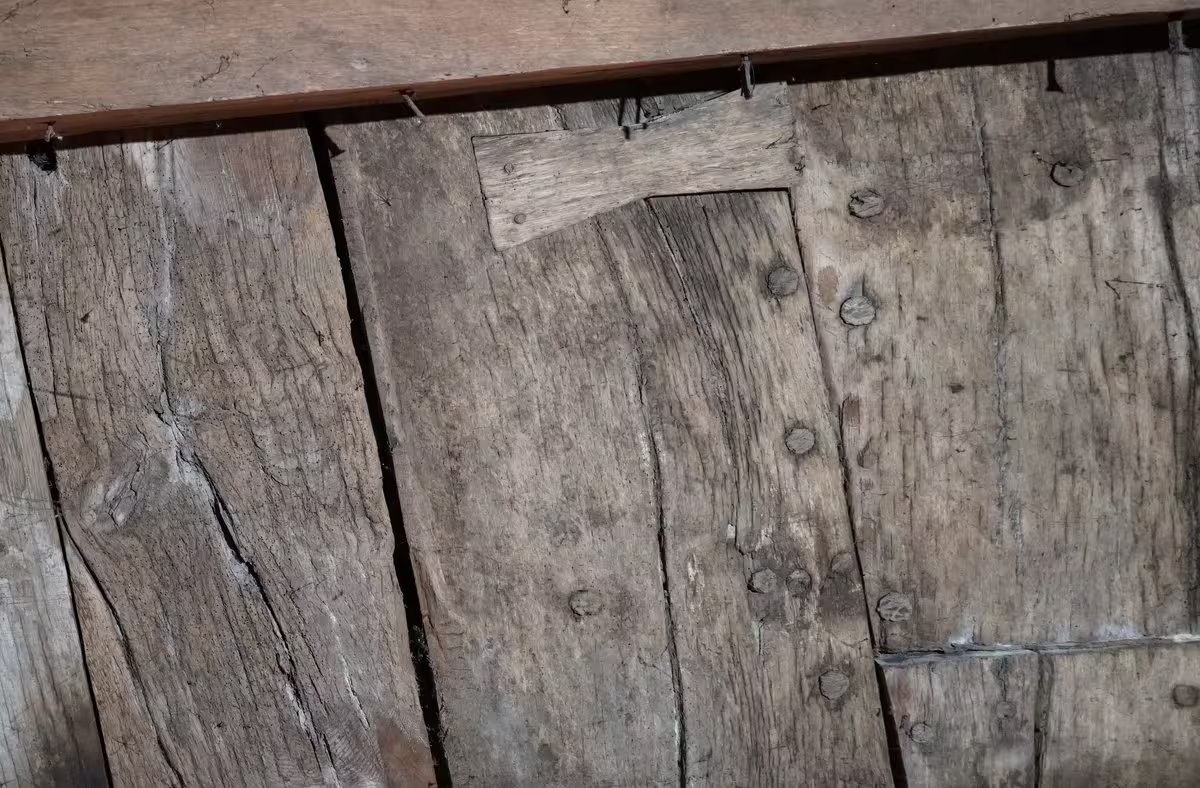
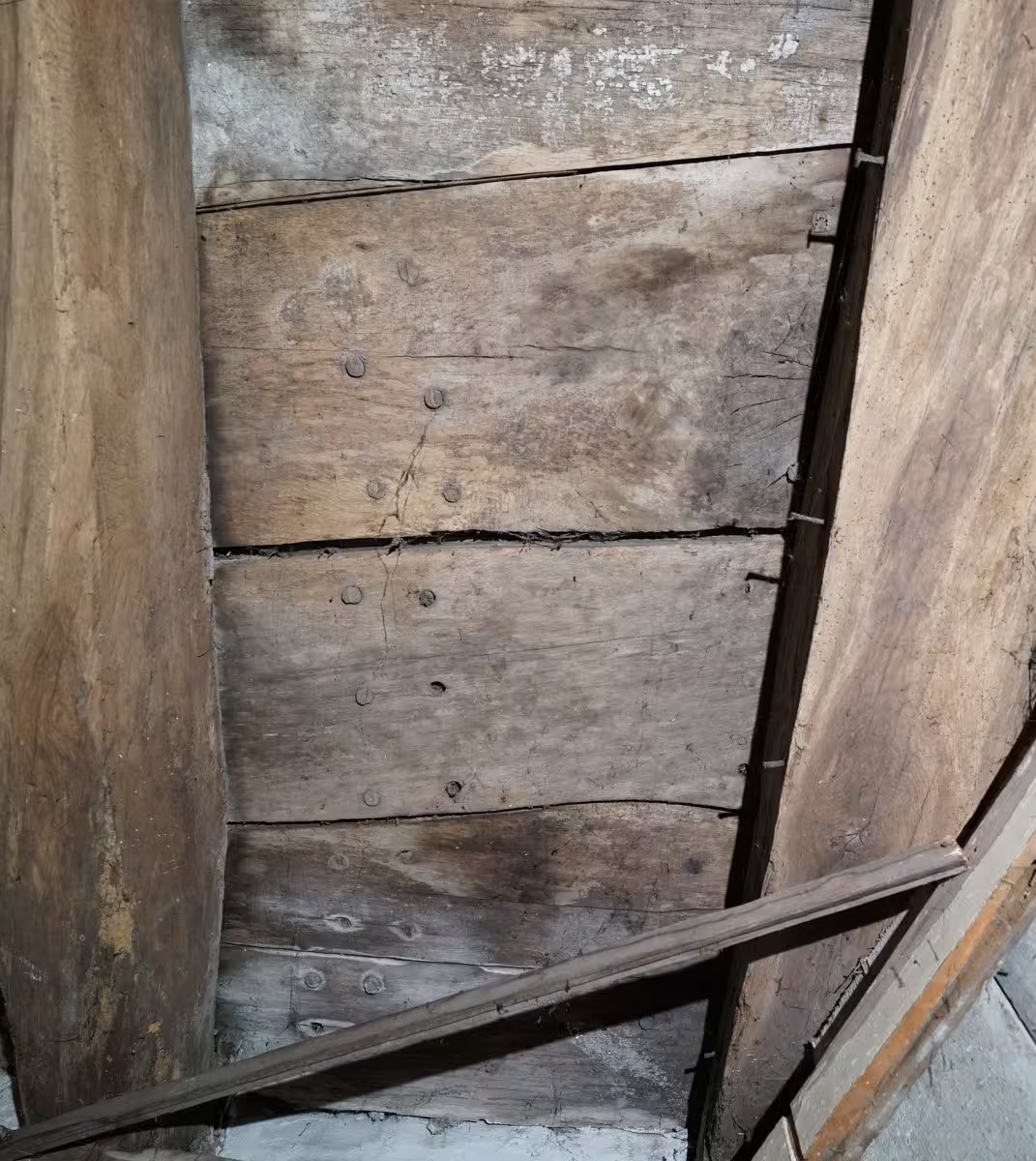
While the repurposing of ship parts for land-based construction was common practice during the Middle Ages, the discovery in Konstanz stands out for its scale and structural integrity. Rather than scattered planks, the ceiling features 19 substantial segments that retain their original configurations, complete with wooden pegs and iron nails that would have held the vessel together on the water.
A Rare Glimpse Into Medieval Shipbuilding
Experts from the Baden-Württemberg Stuttgart Regional Council confirmed that the timbers belonged to a flat-bottomed cargo ship, a design frequently used on Lake Constance during the medieval period. According to Aline Kottmann, a specialist with the State Office for Monument Preservation, the discovery was entirely unexpected, as the components clearly originated from a nautical environment rather than standard architecture.
Alexandra Ulisch, a researcher with the state’s “Wrecks and Deep Sea” project, emphasized the significance of the find, noting that the presence of the original hull structure provides a unique opportunity to analyze how these vessels were built. The precise alignment of the planks, which mirrors their original nautical arrangement, has even kept portions of the historical caulking—the sealant used to waterproof the ship—intact.
Evidence of Historical Maintenance
The timbers reveal more than just design; they also provide a record of wear and maintenance. Researchers identified four distinct repair sites where damaged sections had been removed and replaced with custom-fitted inserts. Among these repairs is a complex dovetail joint, a technique that has not been previously documented in other medieval shipwrecks found in the region.
Unlocking Further Secrets
Future investigations will focus on dendrochronological dating to pinpoint the age of the wood, alongside a detailed analysis of the caulking materials. While medieval shipwrecks in Lake Constance are usually submerged and difficult to access, this “dry” discovery offers a rare, accessible laboratory for maritime archaeologists.
As documented in the official report, researchers hope that the study of these materials will close significant gaps in our understanding of the evolution of shipbuilding and the ingenuity of medieval maritime engineering.
This article has been fact checked for accuracy, with information verified against reputable sources. Learn more about us and our editorial process.
Last reviewed on .
Article history
- Latest version
Reference(s)
- “Landesamt für Denkmalpflege untersucht mittelalterliches Schiff in einer Konstanzer Kellerdecke.”, August 12, 2026 Regierungspräsidium Stuttgart <https://rps.baden-wuerttemberg.de/presse/artikel/landesamt-fuer-denkmalpflege-untersucht-mittelalterliches-schiff-in-einer-konstanzer-kellerdecke/>.
Cite this page:
- Posted by Zara Tariq