Revolutionary War Cannons Recovered From Savannah River Still Loaded With Ammunition
Archaeologists have discovered cannons abandoned in a hurried retreat, offering new clues into the chaotic final moments of a historic military engagement.
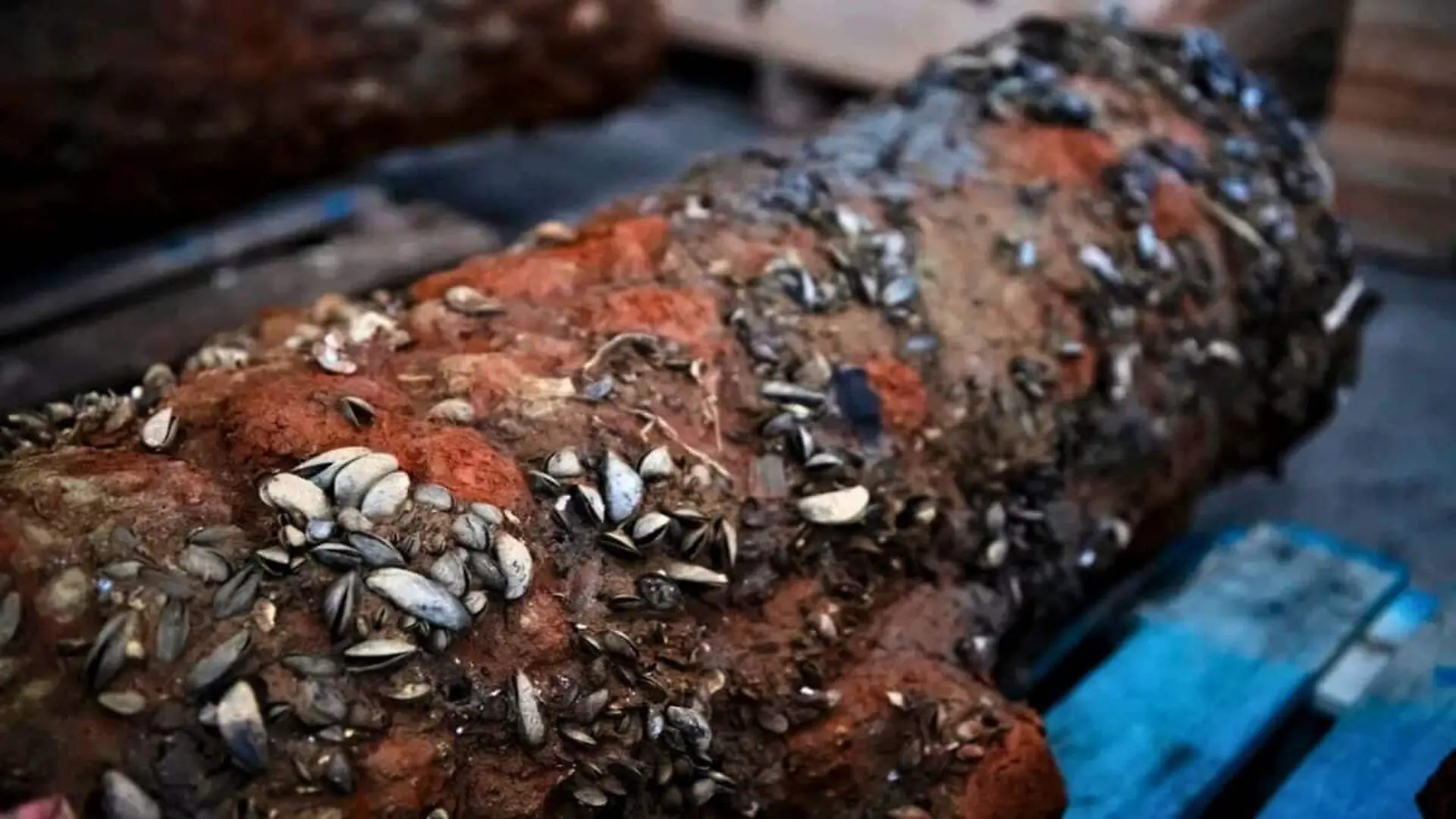
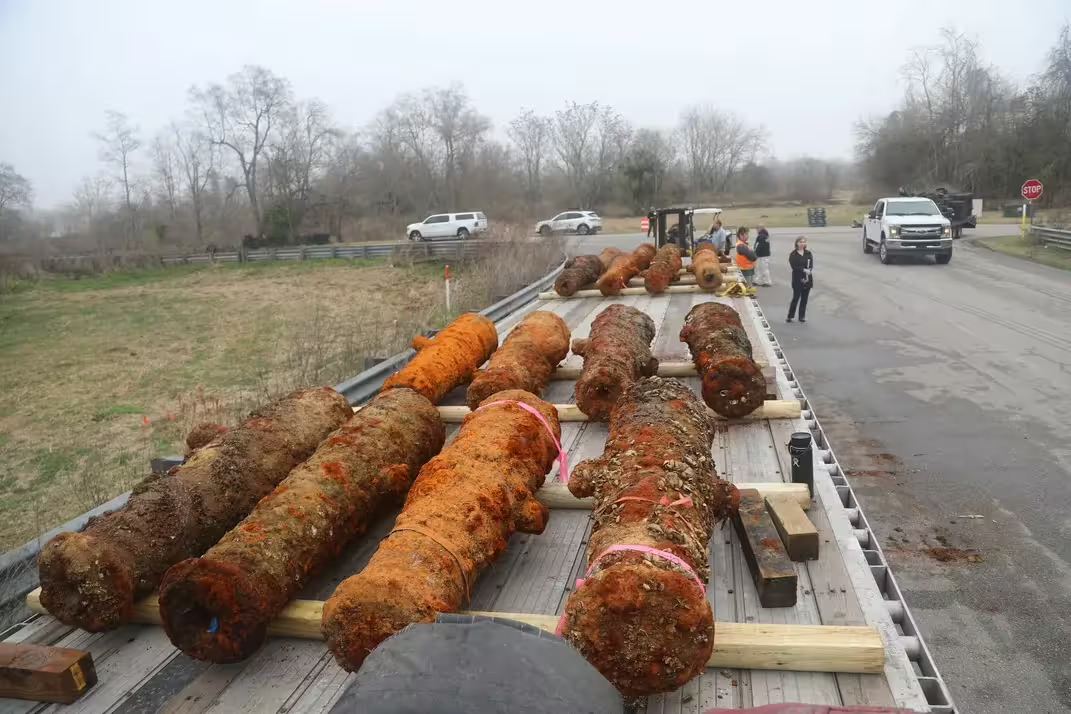
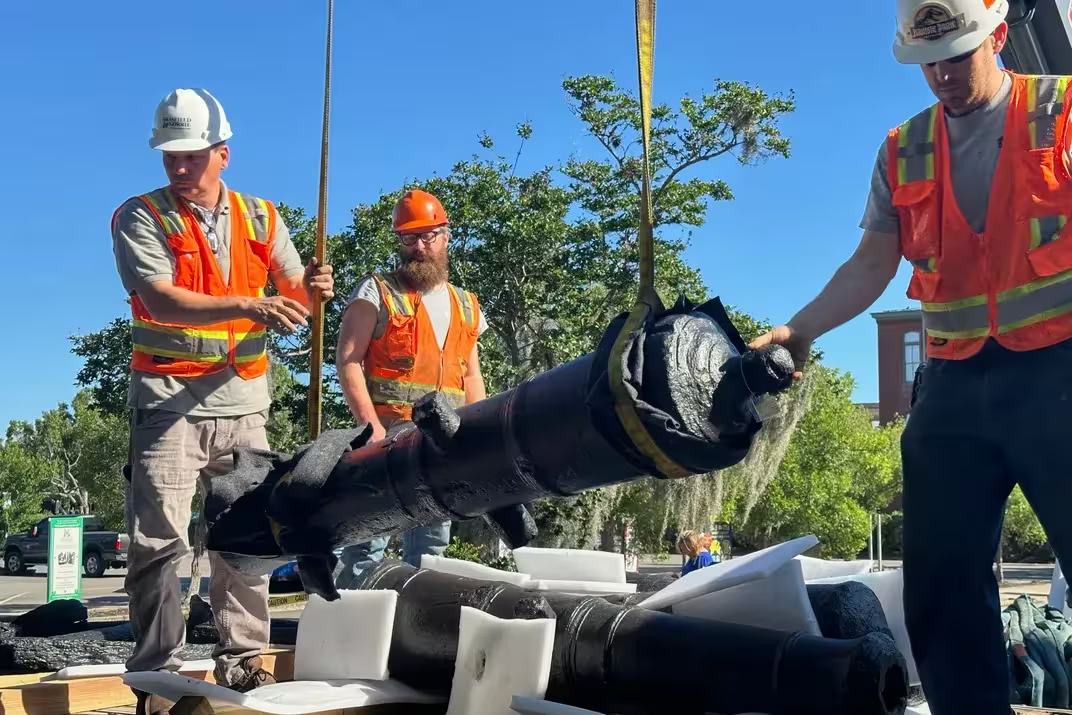
A major restoration effort has brought 19 Revolutionary War-era cannons back to public view after nearly two and a half centuries submerged in the Savannah River. The collection, which includes artifacts still loaded with their original munitions, provides a tangible link to a pivotal, often-overlooked moment in the American struggle for independence.
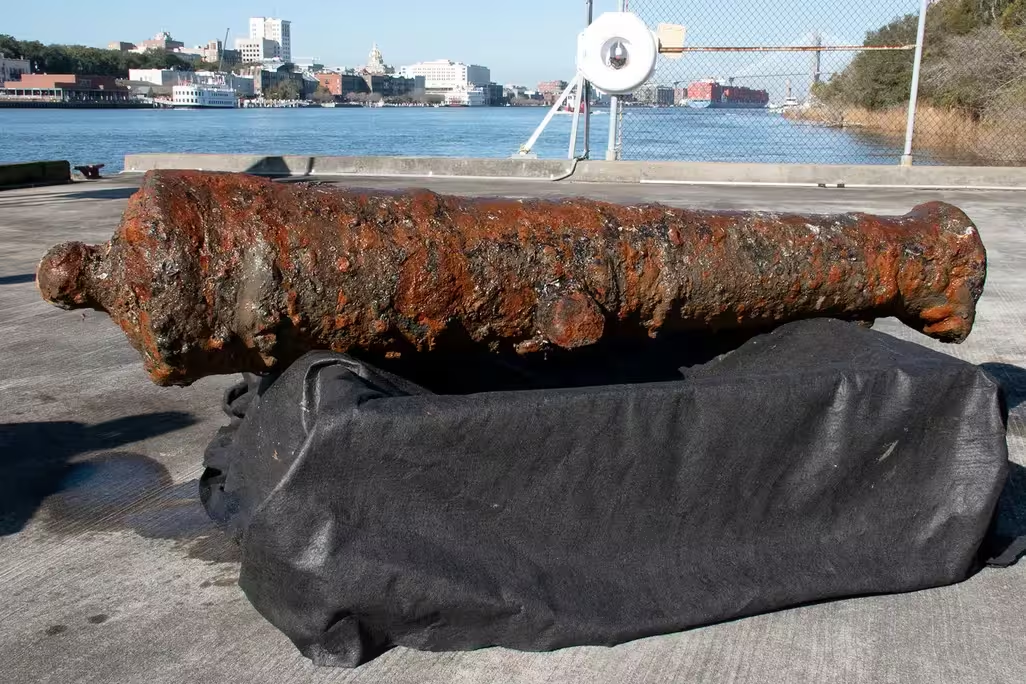
The discovery occurred during a routine $973 million dredging project aimed at deepening the 40-mile shipping channel leading into Georgia’s primary port. Between 2021 and 2022, crews recovered the iron pieces from a site known as Five Fathom Hole, located near Old Fort Jackson. Divers operating in the area described the underwater conditions as treacherous, citing limited visibility and intense currents that forced them to work under significant time constraints.
A Tactical Scuttling
Historical evidence suggests the cannons were abandoned in September 1779 when British forces, desperate to prevent a French fleet from reaching Savannah, deliberately sank their own vessels to obstruct the river channel. According to Andrea Farmer, an archaeologist with the Army Corps of Engineers for the Savannah district, the sinking was executed with such speed that the ships were left fully armed and provisioned, effectively freezing a moment in naval history.
The weapons, which include both 70-inch and 60-inch models likely cast in the mid-18th century, are believed to have been stripped from the HMS Savannah and the HMS Venus. Beyond the guns, the riverbed yielded anchors, bar shot, and remnants of a ship’s bell.
The Siege and the Aftermath
The blockade of the river was part of the broader Siege of Savannah. Shortly after the British scuttled their fleet, a French force commanded by the Comte d’Estaing arrived to support American troops led by Gen. Benjamin Lincoln. The subsequent attempt to retake the city on October 9, 1779, was disastrous for the allies, who suffered roughly 700 casualties in the first hour of fighting alone. The siege ultimately failed, and the British retained control of the city until 1782.
Preservation and Public Display
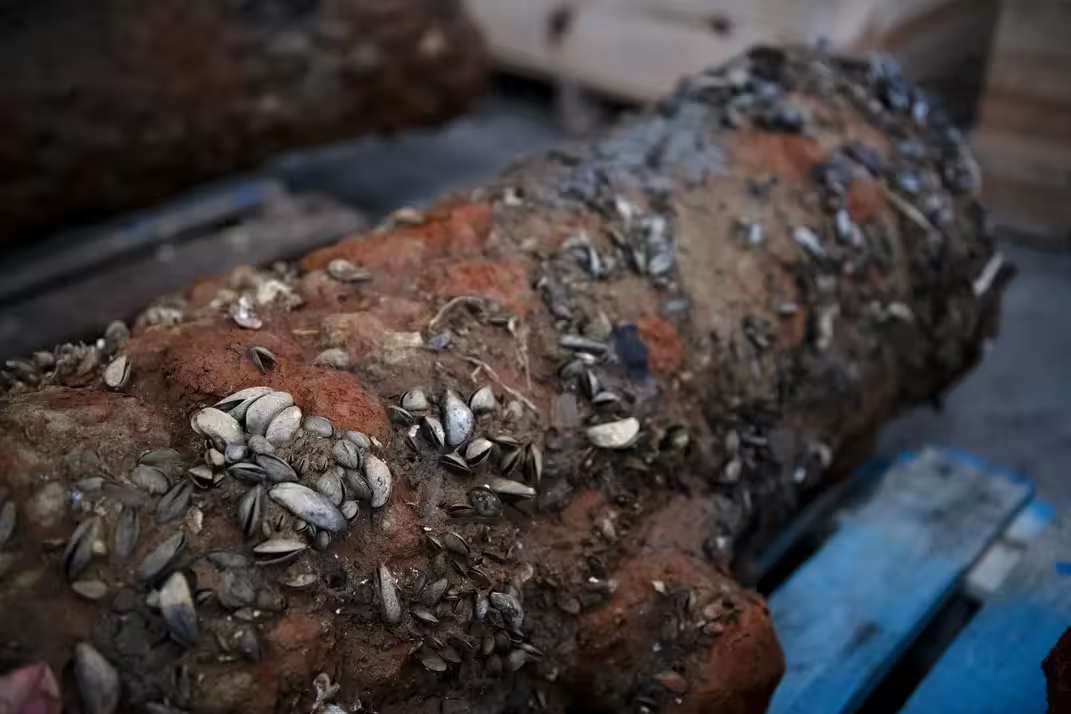
Following their recovery, 17 of the cannons were sent to the Conservation Research Laboratory at Texas A&M University for an intensive three-year stabilization process. Conservators utilized electrolytic reduction to draw corrosive salts from the iron, while also creating 3D models and conducting X-ray analysis to better understand the artifacts. Remarkably, 14 of the cannons were found to still contain their original gunpowder wads and cannonballs.
With the support of a $325,000 fundraising effort by the Coastal Heritage Society, the cannons returned to Georgia earlier this summer. They are now the centerpiece of the “Loyalists & Liberty” exhibition at the Savannah History Museum, providing a rare look at the realities of 18th-century naval warfare. Nora Fleming Lee, CEO of the Coastal Heritage Society, emphasized the importance of the find, noting that it represents the most significant discovery of 18th-century artillery from a single naval engagement in the American Revolution.
This article has been fact checked for accuracy, with information verified against reputable sources. Learn more about us and our editorial process.
Last reviewed on .
Article history
- Latest version
Reference(s)
- “Savannah.” American Battlefield Trust <https://www.battlefields.org/learn/revolutionary-war/battles/savannah>.
- Soto-Arzat, América. “Spring 2024: Savannah River Cannons – Artifact Analysis and 3D Modeling.”, November 28, 2023 Aggie Research Programs <https://aggieresearch.tamu.edu/spring-2024-savannah-river-cannons-artifact-analysis-and-3d-modeling/>.
- <https://chsgeorgia.org/america250/>.
Cite this page:
- Posted by Zara Tariq