Engineered Killer Cells Fight Tough Cancers With Lower Toxicity Risks
Advanced genetic modifications and novel receptor designs are transforming natural killer cells into powerful off-the-shelf treatments, though solid tumors still present stubborn survival hurdles.
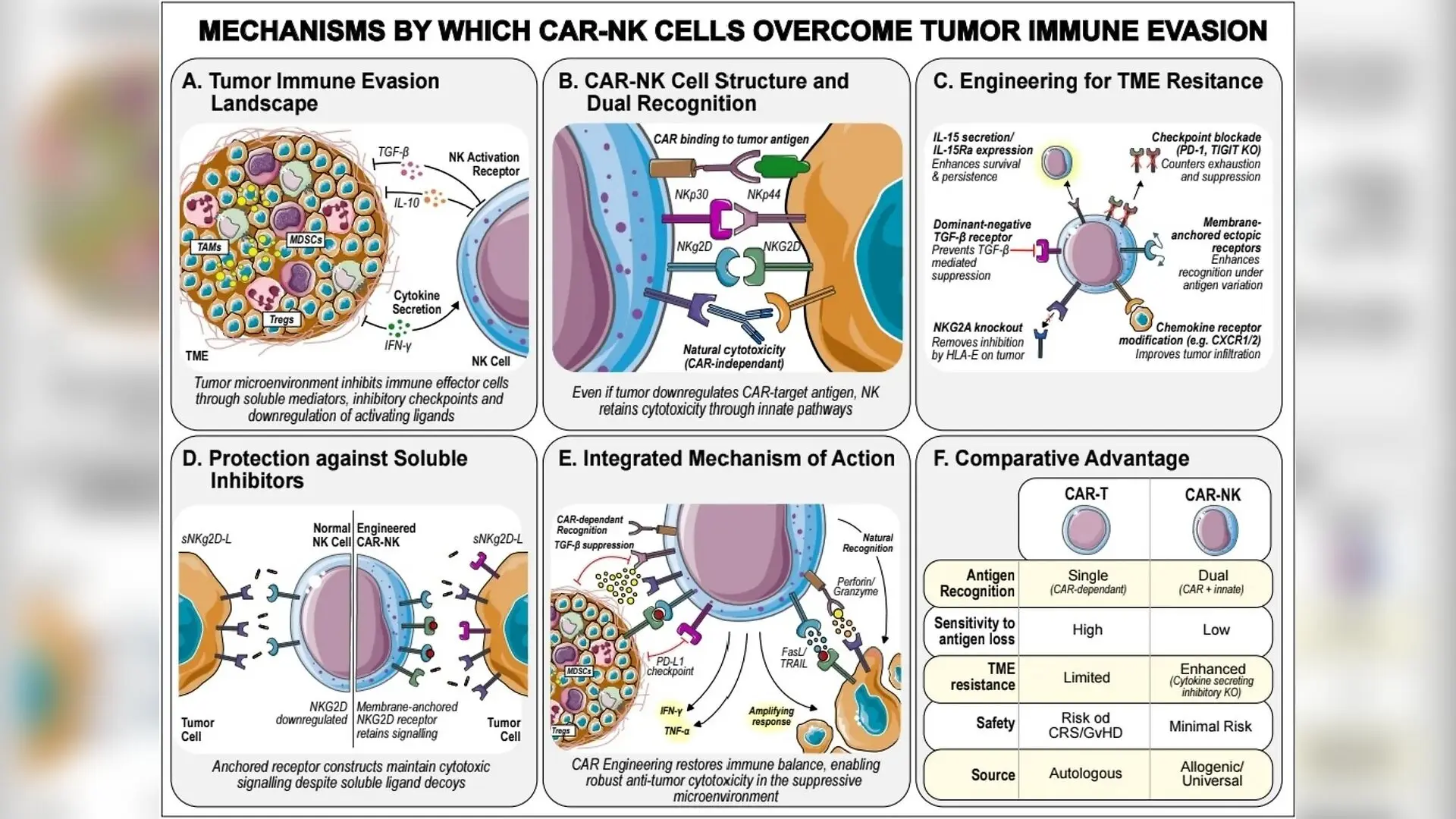
Genetically engineered immune cells equipped with artificial receptor proteins are showing remarkable promise in targeting stubborn cancers, yet researchers are still racing to overcome formidable biological shields that protect solid tumors. Chimeric antigen receptor-natural killer cells, known as CAR-NK cells, combine the innate ability of the body’s natural killer lymphocytes to spot and destroy abnormal cells with precision-guided receptor tech that locks onto specific tumor markers.
Unlike traditional treatments or related cell therapies, these engineered killer cells exhibit a much lower risk of causing severe side effects like cytokine release syndrome or neurological complications, and they do not trigger graft-versus-host disease. These findings are detailed in a review published in the Journal of Cancer Research and Clinical Oncology by Salma Mohamed Awadallah and colleagues, outlining how these engineered immune cells can be manufactured from allogeneic sources like umbilical cord blood or established cell lines for potential off-the-shelf patient use.
How Natural Killer Cells Overcome Immune Evasion
Natural killer cells are specialized lymphocytes that act as a primary line of defense against infections and emerging malignancies without requiring prior sensitization to foreign antigens. They differentiate between healthy and pathological tissues by reading a complex balance of stimulatory and inhibitory surface receptors that detect stress-induced ligands on target cells. Many cancer types evade standard T-cell immunity by downregulating major histocompatibility complex class I molecules, but this exact camouflage makes them prime targets for natural killer cell surveillance.
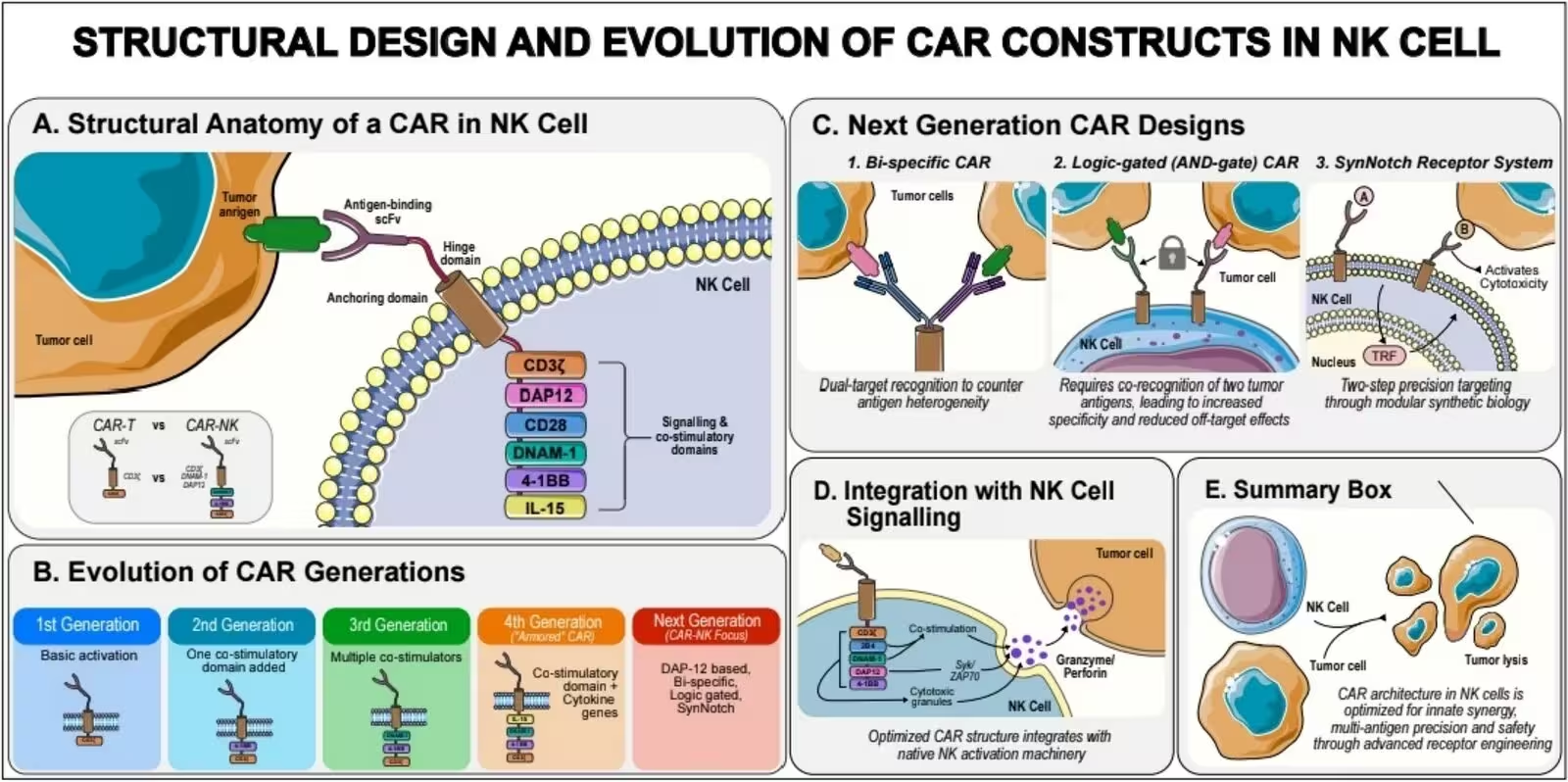
When researchers attach chimeric antigen receptors to these cells, the resulting therapeutics gain dual-killing capabilities through both receptor-directed pathways and innate mechanisms. This means that even if a tumor manages to downregulate the primary target antigen, the cells can still recognize and destroy the malignant tissue through natural cytotoxicity receptors or antibody-dependent cellular cytotoxicity. Such versatility provides a crucial advantage over conventional therapies in preventing tumor immune escape.
What Blocks Cell Persistence in Solid Tumors
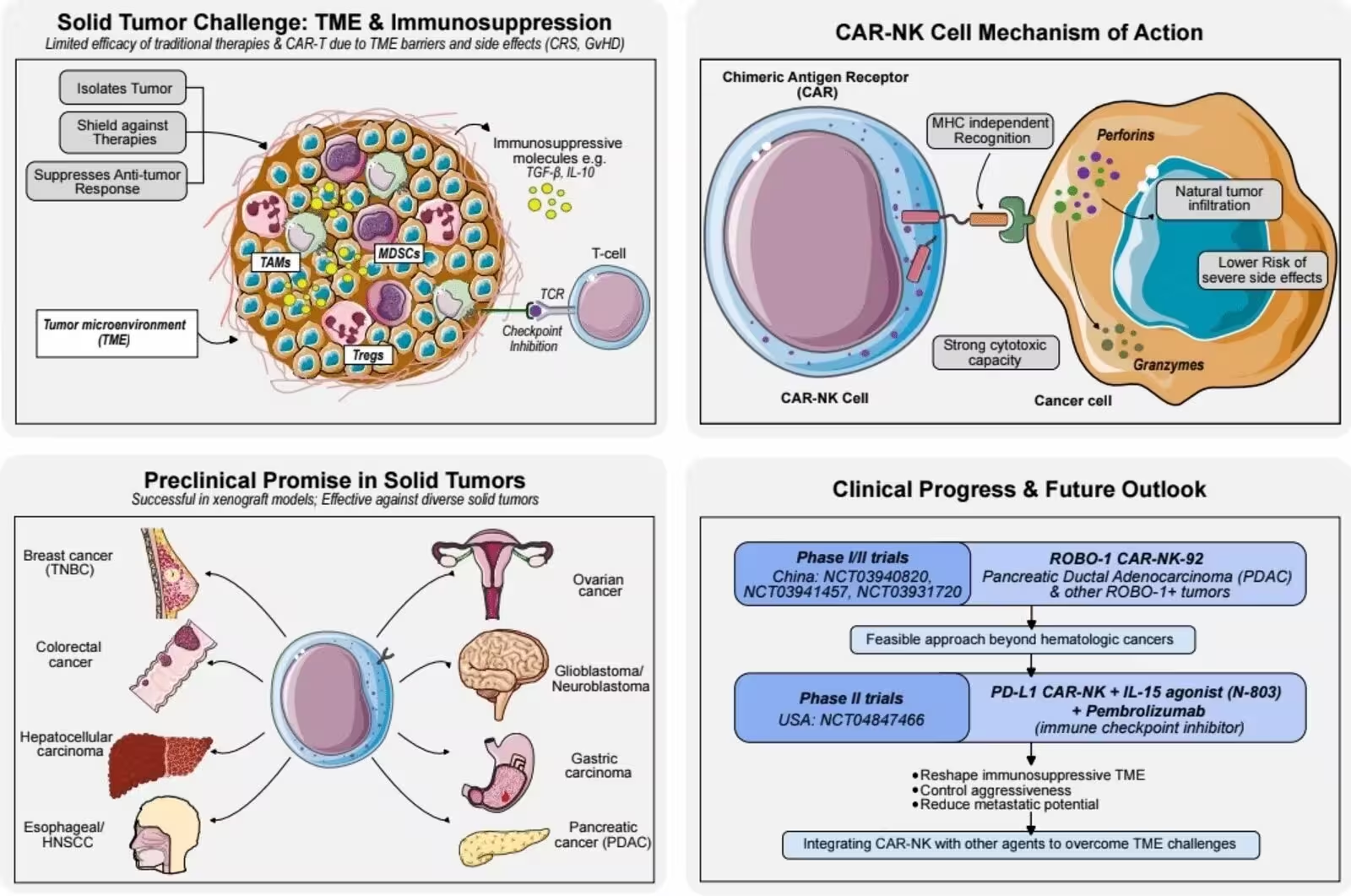
Despite their success in blood cancers such as acute myeloid leukemia, multiple myeloma, and B-cell lymphomas, applying these therapies to solid tumors remains an uphill battle. Solid malignancies feature a hostile tumor microenvironment characterized by hypoxia, nutrient deprivation, and immunosuppressive factors such as transforming growth factor-beta, interleukin-10, and adenosine. These chemical signals exhaust the incoming immune cells, suppress their activating receptors, and accelerate cellular death.
Furthermore, natural killer cells naturally exhibit a shorter lifespan and a quicker turnover rate inside the body than longer-lived T lymphocytes. Their migration into dense solid tumor masses is also severely restricted by low expression levels of homing and chemokine receptors. Without deliberate structural upgrades, these engineered cells struggle to maintain sufficient numbers and persistent activity long enough to eradicate large solid tumor structures.
Next-Generation Engineering and Future Outlook
To outsmart these survival hurdles, modern bioengineering strategies are actively redesigning the internal architecture of these cellular therapies. Investigators are arming the cells with membrane-tethered interleukin-15 to provide continuous autonomous survival signals, and employing gene-editing tools like CRISPR-Cas9 to knock out inhibitory checkpoints such as programmed cell death protein 1 and T-cell immunoreceptor with Ig and ITIM domains. Other solutions involve co-expressing specific chemokine receptors like CXCR1 and CXCR2 to guide the cells straight along chemical gradients into deep tumor tissue.
Additional developmental tracks include constructing bispecific and multispecific antigen receptors to tackle tumor heterogeneity and prevent antigen escape across diverse cancer masses. By combining these advanced cellular designs with checkpoint inhibitors, metabolic resistance modules, or localized therapies like radiotherapy, scientists aim to transform these living drugs into standardized, highly effective clinical treatments for both blood and solid cancers.
The research was published in Journal of cancer research and clinical oncology on October 23, 2026.
This article has been fact checked for accuracy, with information verified against reputable sources. Learn more about us and our editorial process.
Last reviewed on .
Article history
- Latest version
Reference(s)
- Awadallah, Salma Mohamed., et al. “CAR-NK cell immunotherapy: a comprehensive review of engineering platforms, clinical applications in hematological and solid tumors.” Journal of Cancer Research and Clinical Oncology, vol. 152, no. 10, October 23, 2026 Springer Science and Business Media LLC, doi: 10.1007/s00432-026-06635-1. <https://doi.org/10.1007/s00432-026-06635-1>.
Cite this page:
- Posted by Robert Brown