Expedition 74 Advances Science And Prepares Canadarm2 Repair In Space
Astronauts conduct cutting-edge science aboard ISS during Expedition 74 mission
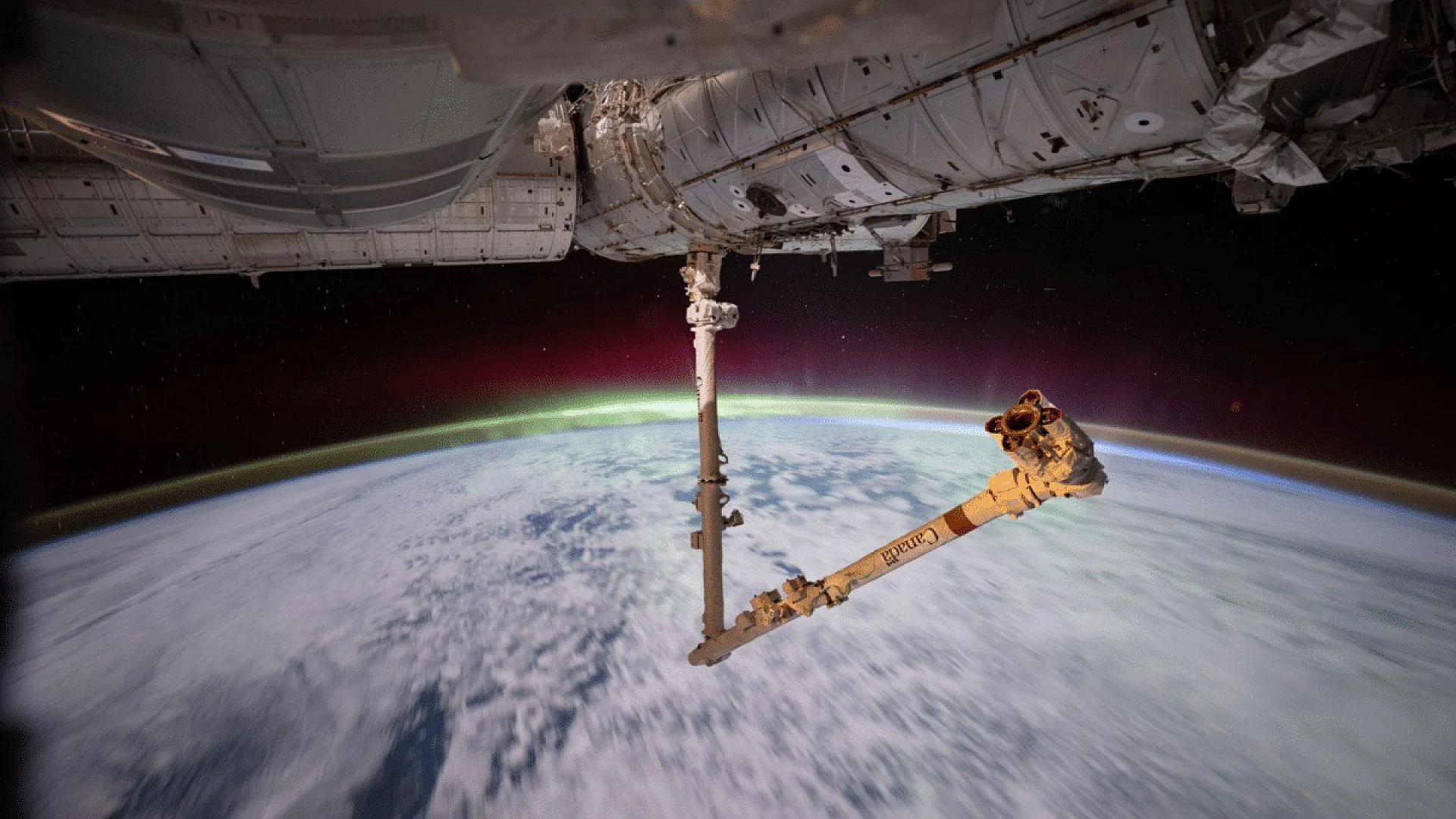
Today on the International Space Station (ISS) crews from Expedition 74 carried out a suite of experiments, fitted new equipment, and readied themselves for a demanding repair of the station’s Canadarm2 robotic arm. NASA says these tasks highlight the continual creativity and exactness required to keep humanity’s orbital laboratory operational.
New CubeSat Deployers Expand Micro‑Satellite Capabilities
A key accomplishment involved fitting a deployment unit for compact CubeSats inside the Japanese Kibo laboratory. The tiny satellites promise to broaden scientific and commercial research from low Earth orbit. One of the payloads, the Hokushin‑1 CubeSat, will evaluate cutting‑edge systems such as radio‑frequency links, propulsion, and solar panels. Flight engineer Jack Hathaway carefully secured the deployer within Kibo’s airlock, where the Japanese robotic arm will later expose it to space before releasing the CubeSats into orbit. The effort adds a new dimension to ISS research and reinforces the outpost’s function as a proving ground for future space hardware.
Expedition 74 spent Wednesday working on CubeSats, a science freezer, and biomedical monitoring while preparing for a Canadarm2 repair spacewalk. More… https://t.co/WLJBKiIXe1pic.twitter.com/vc0TCDyJKw
— International Space Station (@Space_Station) June 10, 2026
On‑Orbit Freezers Safeguard Sample Quality
Maintaining the fidelity of scientific specimens in space demands rapid freezing. NASA flight engineer Jessica Meir installed a compact freezer within the Kibo Life Science Glovebox (LSG) to instantly chill samples after processing. This configuration preserves biological material for both in‑flight analysis and later return to Earth, enabling delicate studies that could inform long‑duration missions, from cellular investigations to tissue examinations, and trial equipment destined for lunar or Martian habitats.
Wearable Sensors Test Next‑Generation Health Tracking
Health monitoring remains a top priority aboard the ISS. Meir assisted ESA astronaut Sophie Adenot in evaluating two wearable devices for biomedical research. After calibrating the PhysioTool system with a blood‑pressure measurement, Adenot wore head‑ and torso‑mounted sensors that recorded cerebral oxygenation and blood flow while she performed cognitive tasks. The trials are intended to verify tools that could continuously assess astronaut well‑being on future deep‑space voyages to the Moon or Mars.
Preparing for a Critical Canadarm2 EVA
In late May, routine checks on the Canadarm2 identified an abnormal rise in motor current at one of its wrist joints, restricting the arm’s range of motion. NASA, together with the Canadian Space Agency (CSA), concluded that an extravehicular activity is needed to swap the defective joint with a spare already aboard. Flight engineers have been configuring suits for the upcoming spacewalk, verifying limb, helmet, and life‑support settings. Until the repair, Canadarm2 remains in a restricted mode, underscoring the careful balance between operational readiness and safety.
Russian Cosmonauts Probe Motion in Microgravity
Roscosmos cosmonauts Sergey Kud‑Sverchkov and Sergei Mikaev carried out a series of experiments inside the Zvezda service module aimed at characterizing free‑floating motion. By releasing spheres of varying diameters and observing their drift without external forces, they gathered data relevant to crew movement, robotic manipulator design, and the dynamics of objects in space. Findings are expected to feed into improvements in station ergonomics, robot development, and overall mission safety.
Thruster Burn Boosts Station Altitude Ahead of New Crew Arrival
Progress 95 executed an eight‑minute engine firing that lifted the ISS by roughly 1.9 miles, creating a favorable orbit for the upcoming Soyuz MS‑29 crew vehicle scheduled to launch in mid‑July. Such reboosts are routine yet vital, ensuring safe docking corridors, preserving the station’s long‑term orbital stability, and supporting the myriad scientific instruments onboard.
This article has been fact checked for accuracy, with information verified against reputable sources. Learn more about us and our editorial process.
Last reviewed on .
Article history
- Latest version
Reference(s)
- “https://go.nasa.gov/4xl2iO0.” <https://t.co/WLJBKiIXe1>.
- “https://twitter.com/Space_Station/status/2064755234824393071/photo/1.” <https://t.co/vc0TCDyJKw>.
- Garcia, Mark. “Expedition 74 Works Scientific Installs, Suit Prep Ahead of Canadarm2 Repair Spacewalk - NASA.”, June 10, 2026 NASA <https://www.nasa.gov/blogs/spacestation/2026/06/10/expedition-74-works-scientific-installs-suit-prep-ahead-of-canadarm2-repair-spacewalk/>.
Cite this page:
- Posted by Farah Siddiqui