Deep-Drill Nuclear Blast Could Be Earth’s Best Weapon Against Large Asteroids
Study finds that placing a nuclear device deep inside an asteroid could vastly boost Earth’s defenses against catastrophic impacts.
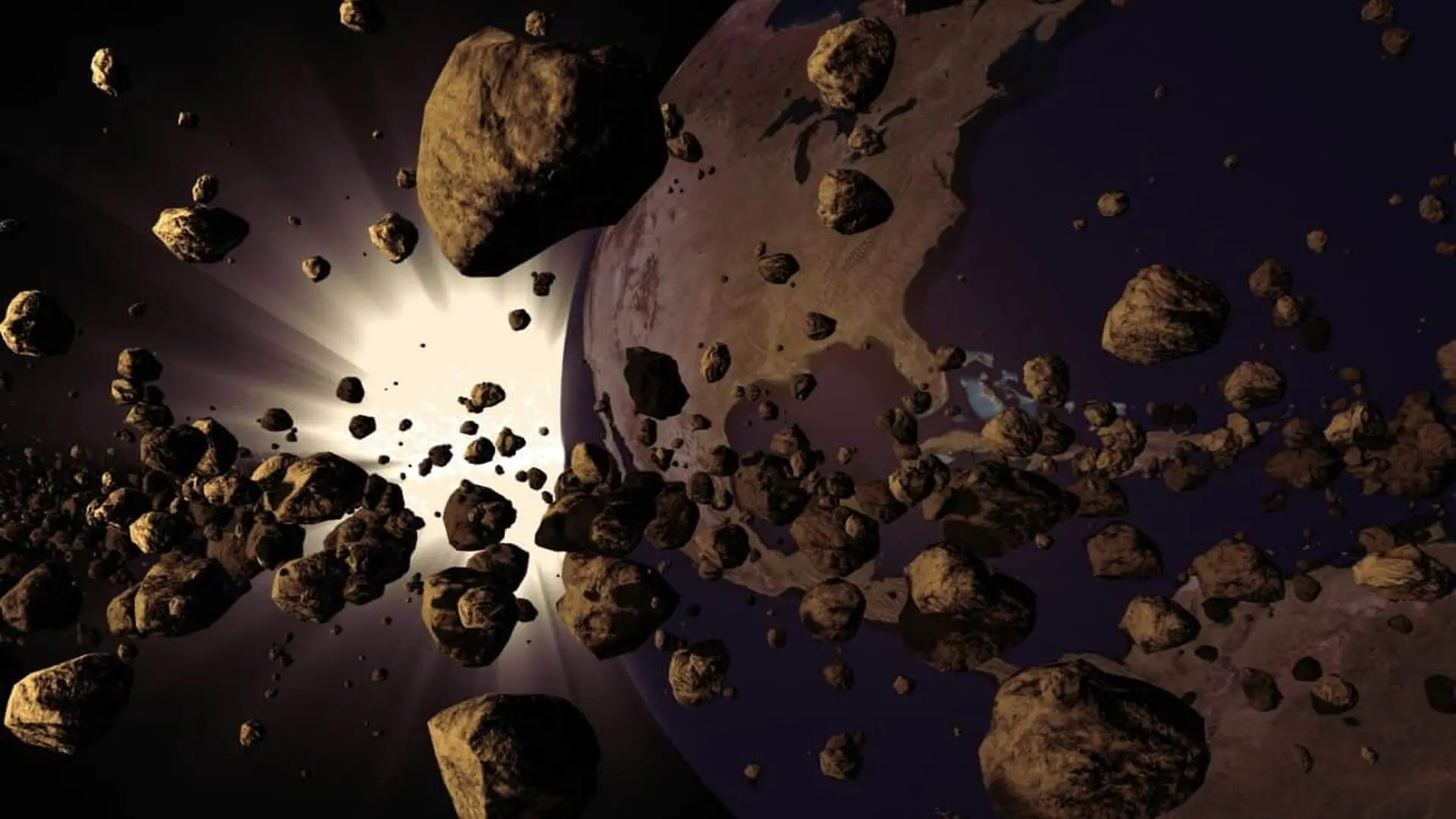
A recent peer‑reviewed article in Space: Science and Technology proposes that the most effective way to neutralise a massive asteroid on a collision course with Earth may involve drilling into the rock before triggering a nuclear blast, rather than detonating at the surface. The study demonstrates that underground explosions can transfer far more energy into the target, markedly increasing the odds of averting a planetary disaster.
Current Deflection Techniques May Fall Short
For decades, space agencies have refined the detection and tracking of potentially hazardous asteroids, building extensive catalogs of near‑Earth objects and forecasting their paths with high accuracy. Although no known body poses an immediate danger, the record of impacts – from the 2013 Chelyabinsk airburst that caused widespread damage to the looming threat of kilometre‑scale projectiles – makes planetary defence a long‑term priority. Researchers note that when a large asteroid is identified with only a short warning window, conventional kinetic‑impactors or gradual‑force methods may lack the necessary energy to alter its trajectory in time.
The new analysis in Space: Science and Technology highlights this gap, stating that “traditional kinetic impact, or long‑term force deflection methods, offer limited energy and cannot achieve effective deflection within short timeframes.” Consequently, scientists are turning to nuclear‑based concepts as a last‑resort option for objects exceeding 100 metres in diameter.
Drilling Before Detonation: A Novel Approach
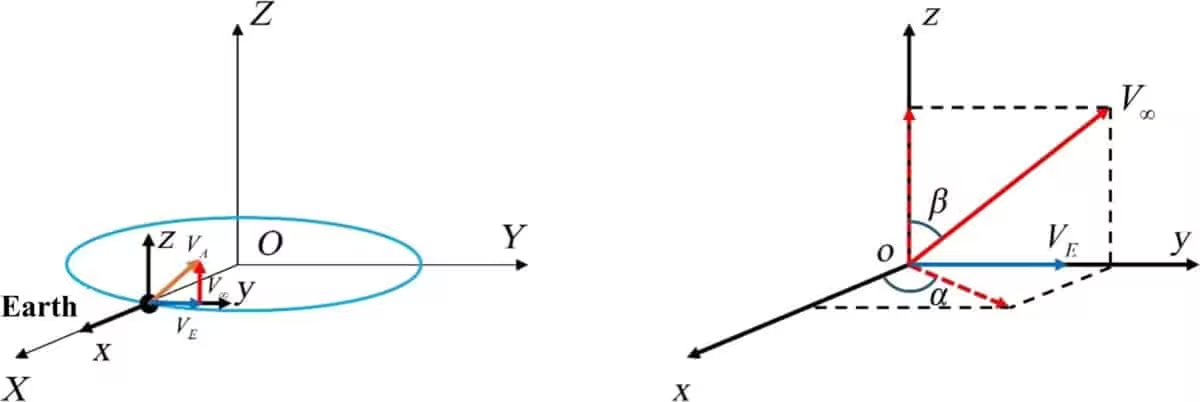
Led by Xiaowei Wang of the China Academy of Launch Vehicle Technology, the research team compared two nuclear‑defence concepts through extensive simulations. The first mirrors earlier proposals: a spacecraft impacts the asteroid’s surface, creating a shallow crater, and a nuclear device detonates within it. The second, termed a “pre‑excavation detonation,” employs a penetrator to bore a deep cavity before the bomb goes off, allowing the explosion to occur well inside the rock. Simulations indicate that the deep‑bore method channels a substantially larger fraction of the blast energy into the asteroid, rather than letting it escape into space.
“The flyby pre‑excavation detonation mode, due to its ability to autonomously select the cratering location and achieve deep detonation, offers stronger energy coupling.”
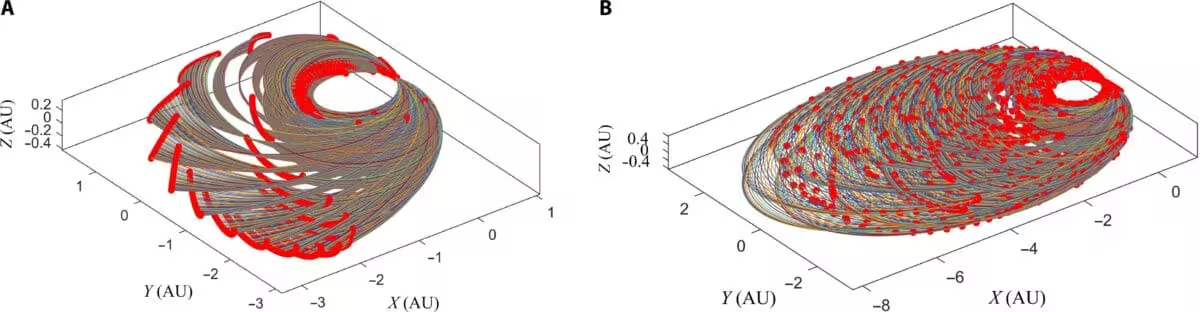
Their models incorporated launch‑vehicle capabilities, impact velocities, asteroid compositions, and warning intervals ranging from one year to two decades. Across all scenarios with adequate preparation time, the deep‑detonation concept outperformed the surface blast.
Underground Blasts Yield Bigger Gains for Bigger Rocks
The analysis shows that the benefits of an underground nuclear explosion grow with asteroid size. For objects around 100 metres in diameter, a deep‑blast could completely fragment the body, while a kilometre‑scale rock could receive enough momentum change to be steered away, provided a sufficient warning period exists. The authors estimate that a velocity shift of roughly one metre per second may be enough to miss Earth when applied months or years before impact, underscoring the importance of early detection.
A key advantage of the deep‑detonation scheme is the ability to choose the optimal explosion point, rather than being constrained by the geometry of a direct surface impact. This flexibility appears to drive the consistent performance gains observed in the simulations, positioning the concept as a compelling option for future planetary‑defence architectures.
Surface Explosions May Still Be Needed When Time Is Critical
Despite the superiority of the pre‑excavation approach, the authors caution that surface‑impact missions could remain the only viable choice when an asteroid is spotted with very little lead time. In such emergencies, there may not be enough opportunity to execute the drilling phase, making a rapid surface strike the only practical response, albeit with lower efficiency.
“The impact location is random, energy coupling is weak, and requirements for the nuclear device’s impact resistance and detonation timing are extremely stringent.”
These engineering constraints mean that a shallow‑detonation strategy is less predictable and potentially less effective, but the speed of deployment could outweigh the loss of efficiency when every day counts. Future mission planners will need to weigh warning time, asteroid dimensions, trajectory, and spacecraft complexity to decide on the most appropriate defence method.
This article has been fact checked for accuracy, with information verified against reputable sources. Learn more about us and our editorial process.
Last reviewed on .
Article history
- Latest version
Cite this page:
- Posted by Karan Das