SpaceX’s Starship Ship 40 Ignites in First Static Fire Bringing Flight 13 Closer
SpaceX conducts Ship 40’s first static fire, advancing the next Starship launch and paving the way for upcoming Moon missions.
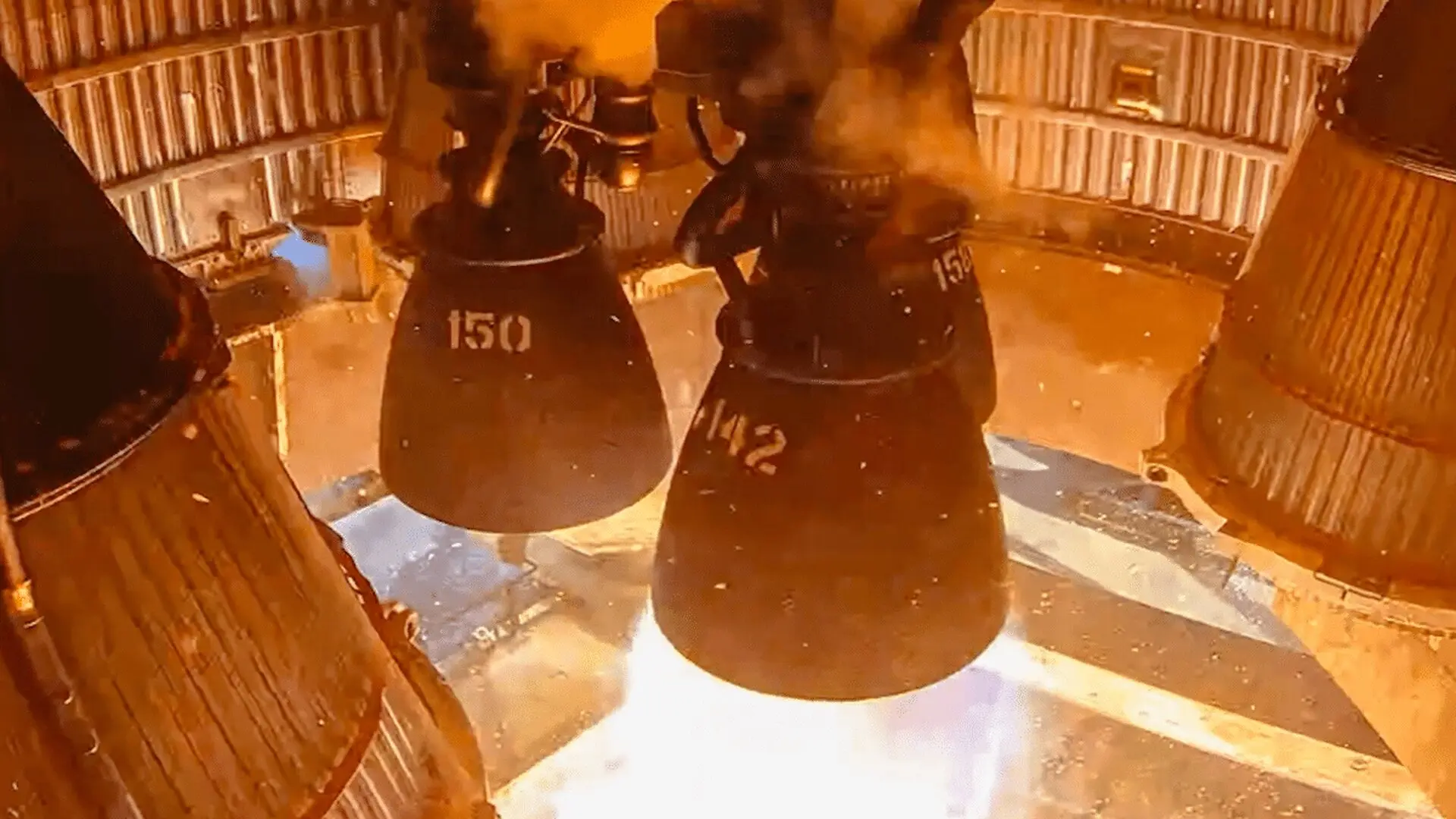
SpaceX has moved a key milestone forward with the first static‑fire of Ship 40, the upper stage slated for the upcoming Flight 13. The short engine burn confirms that the vehicle’s new propulsion system is operating as intended and kicks off a series of ground‑based evaluations for the world’s largest launch vehicle.
Ship 40’s Initial Engine Test Sets the Stage for Flight 13
According to Space.com, the trial was conducted at SpaceX’s Starbase site in Texas, where Ship 40 was positioned on the company’s Massey test stand. During the procedure, a single Raptor 3 engine fired for roughly 15 seconds, giving engineers the data they need before progressing to more demanding evaluations. Static‑fire runs are critical because they let the team verify engine performance while the rocket remains tethered to the ground.
Ship 40 houses six Raptor 3 engines—three optimized for sea‑level operation and three for vacuum performance. In a full launch, all six will ignite together, while a single sea‑level engine will handle the final landing burn. The recent ignition is only the first of several ground tests; future campaigns will involve firing all six engines to certify the vehicle for flight.
— SpaceX (@SpaceX) June 26, 2026
New Starship Variant Pushes the Envelope of Reusability
The test follows the inaugural flight of Starship Version 3 on 22 May, a 408‑foot (124.4‑meter) vehicle that introduces the Raptor 3 engine family and a host of structural upgrades. Among the changes are revised aerodynamic grid fins, enhanced thermal protection, larger fuel tanks, and integrated docking hardware aimed at supporting future orbital refueling missions.
While the first V3 launch encountered setbacks—including a soft‑splashdown failure of the Super Heavy booster—the mission still demonstrated that many of the new systems performed as designed. SpaceX’s rapid shift from Flight 12 to the Ship 40 test underscores its iterative development model: collect flight data, implement upgrades, and return to testing with minimal downtime.
Ground Tests Tie Directly to NASA’s Artemis Moon Plans
Beyond Earth orbit, Starship’s ability to receive propellant in space is pivotal for deep‑space missions. The spacecraft is engineered to dock with tanker variants that will deliver additional fuel, a capability that remains to be proven in orbit but is essential for long‑duration journeys.
NASA’s Artemis program has selected a modified Starship as its Human Landing System, relying on orbital refueling to enable lunar surface operations. Current estimates suggest the lunar‑landing configuration will need at least 15 tanker launches to fully top‑off before descending to the Moon during Artemis 4, now slated for late 2028. Each successful static‑fire therefore brings the agency one step closer to a sustainable presence beyond low‑Earth orbit.
This article has been fact checked for accuracy, with information verified against reputable sources. Learn more about us and our editorial process.
Last reviewed on .
Article history
- Latest version
Reference(s)
- Dinner, Josh. “SpaceX's next Starship breathes fire for 1st time in prelaunch test (video).”, June 26, 2026 Space <https://www.space.com/space-exploration/launches-spacecraft/spacexs-next-starship-breathes-fire-for-1st-time-in-prelaunch-test-video>.
Cite this page:
- Posted by Karan Das