ESA Astronaut Captures Neon Green Aurora From Space, Showcasing Planet-Scale Light Show
Astronaut captures a rare, vivid aurora stretching across Earth’s atmosphere from the ISS, offering an unprecedented view unlike any previous footage.
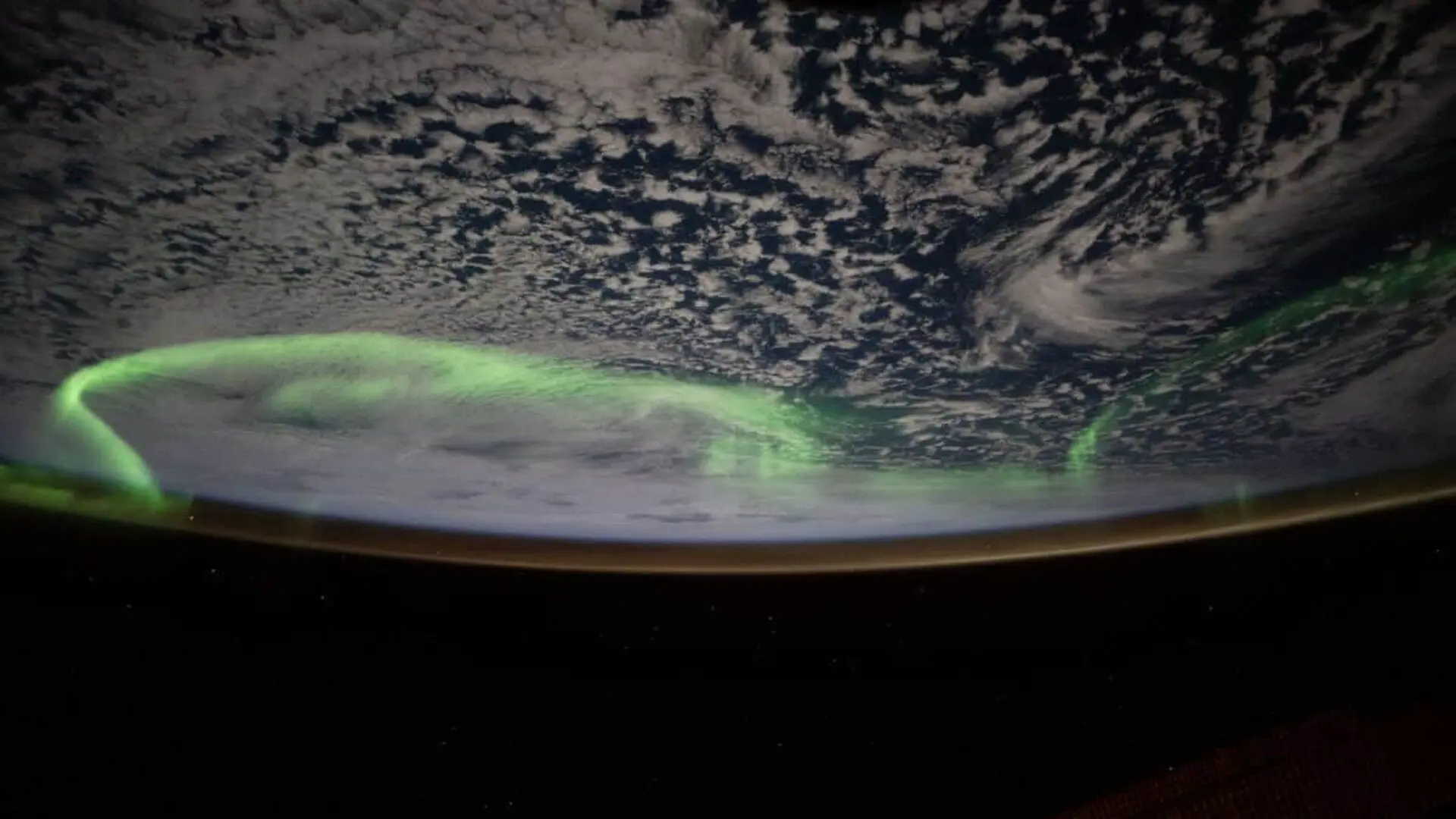
A vivid capture from the International Space Station reveals the southern lights in shades of emerald, violet and crimson. The photograph was taken by European Space Agency astronaut Sophie Adenot during the εpsilon mission, offering a rare orbital perspective on a phenomenon most people only dream of witnessing from the ground.
For many, watching an aurora from Earth’s surface is a bucket‑list experience, drawing travelers to high‑latitude locales where dark skies unveil curtains of light generated by energetic processes far above the planet.
From orbit, however, the perspective shifts dramatically. Astronauts look down on the glowing envelope, seeing how the aurora stretches across the curvature of the globe.
Seeing the Aurora from Space: A Planet‑Wide Lightshow
The snapshot displays sweeping ribbons of neon‑green illumination coursing through Earth’s upper atmosphere, set against a backdrop of deep purple haze and edged by a ruby‑red rim. Those colors contrast sharply with the blackness of space and the pale blue of the planet’s limb.
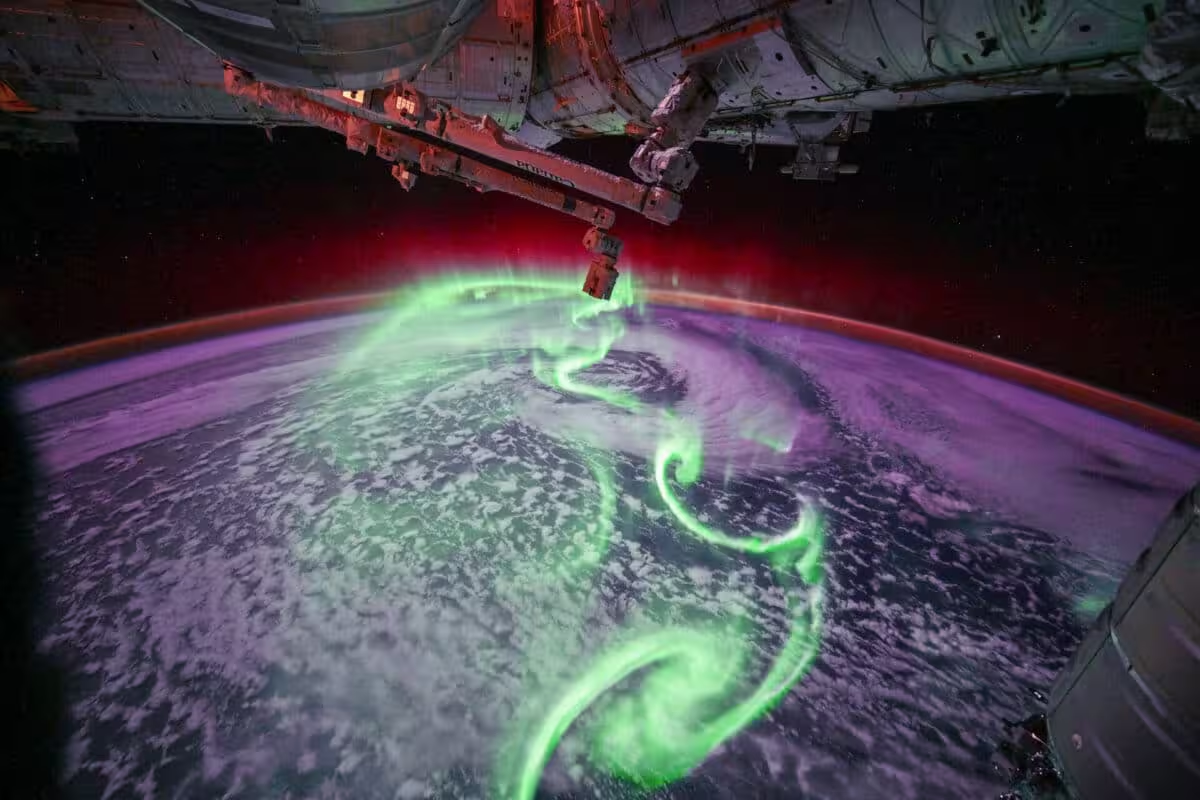
Space.com notes that the auroral brightness was so extreme its reddish hue even reflected off the International Space Station itself, underscoring how far the glow extends beyond the visible horizon when viewed from orbit.
Sophie Adenot recorded the scene while aboard the orbital laboratory as part of the European Space Agency’s εpsilon mission.
How Solar Particles Paint the Sky
According to NASA, auroras emerge when streams of charged particles emitted by the Sun—known as the solar wind—collide with atmospheric gases. These collisions energize the gases, causing them to emit light in various colors.
The image captured by Adenot depicts the aurora australis, the southern‑hemisphere counterpart to the northern lights, or aurora borealis. In this particular event, green dominated the display, while purple veiled the surrounding atmosphere and a thin band of ruby‑red encircled the planet, creating a striking visual combination.
Astronaut’s Personal Account of the Spectacle
Adenot shared her reaction on social media, describing the event as the most impressive aurora she had encountered since the mission began.
“Day 127, orbit 1968 — That aurora was absolutely spectacular… shimmering and dancing beneath us, stretching as far as the eye could see, and so intense it lit up the Station in shades of green,” she said.
She added that the brightness surpassed the limits of her usual camera settings for aurora photography.
“We’ve seen several since the beginning of the mission, but this one was on a completely different level — far too bright for my usual aurora camera settings. Moments like these never get old up here; the whole crew suddenly find themselves vying for a good spot at a window!”
This article has been fact checked for accuracy, with information verified against reputable sources. Learn more about us and our editorial process.
Last reviewed on .
Article history
- Latest version
Reference(s)
- “Sophie Adenot.” <https://www.esa.int/Space_in_Member_States/France/Sophie_Adenot>.
- “εpsilon.” <https://www.esa.int/Science_Exploration/Human_and_Robotic_Exploration/epsilon>.
- Lense, Rachel. “Auroras - NASA Science.”, February 4, 2025 NASA <https://science.nasa.gov/sun/auroras/>.
Cite this page:
- Posted by Karan Das