Jupiter’s Hidden Oxygen Is 1.5 Times the Sun’s New Models Reveal
Simulations show Jupiter holds far more oxygen than the Sun, shedding new light on the giant planet’s origins and the early solar system’s formation.
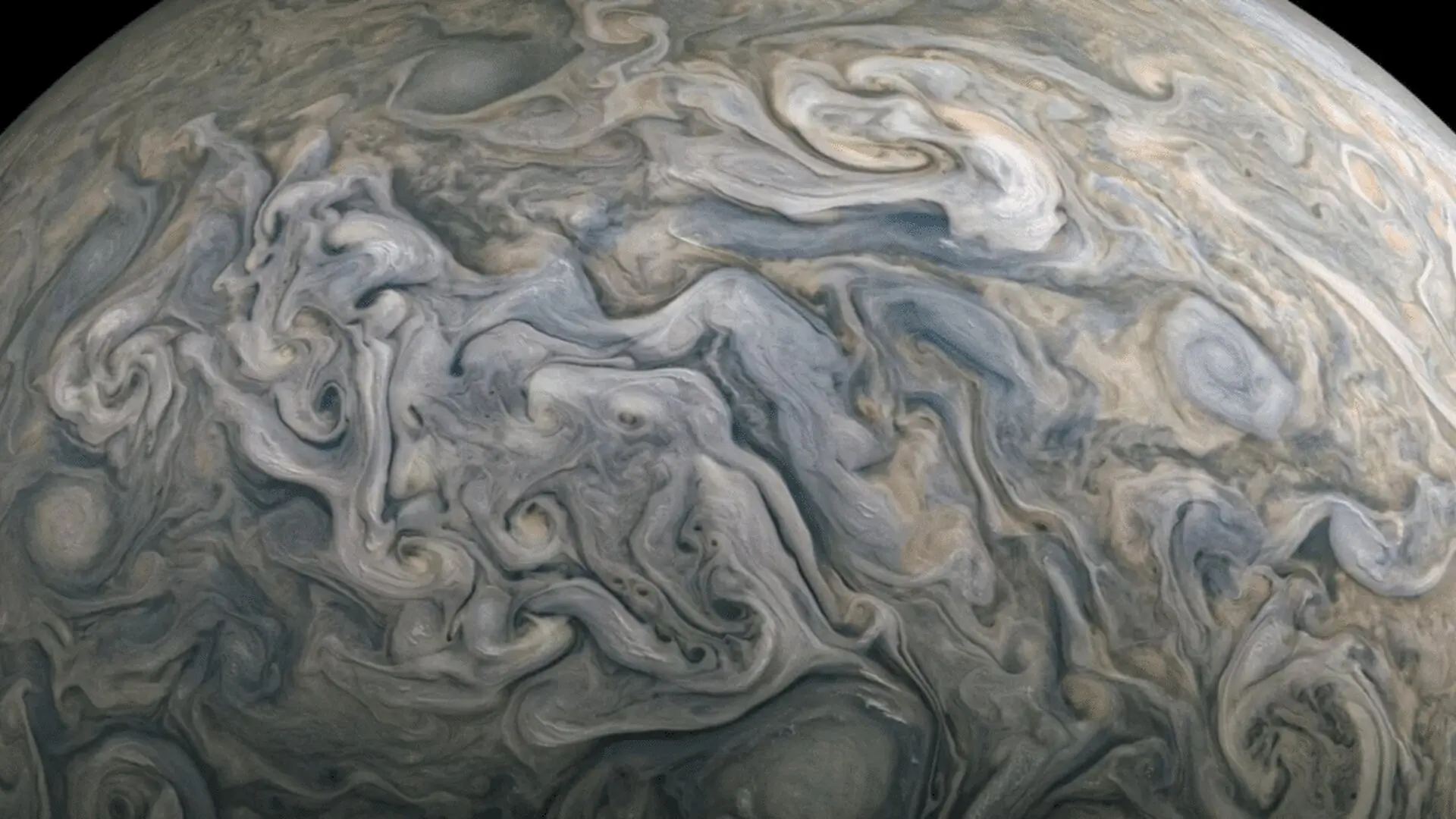
Deep beneath the striped clouds that define Jupiter, a hidden chemical signature is challenging long‑standing ideas about the planet’s birth. Recent work published in the Planetary Science Journal suggests that the giant holds roughly one and a half times the oxygen found in the Sun, bolstering models that propose Jupiter grew by gathering massive quantities of icy debris in the solar system’s infancy.
Cutting‑Edge Models Peer Into Jupiter’s Unobservable Depths
For generations astronomers have tracked Jupiter’s turbulent weather, from its iconic Great Red Spot to the swirling jet streams that crown its surface. Although missions such as NASA’s Juno spacecraft have charted the planet’s gravity and magnetism with unprecedented precision, the deep layers where most of its oxygen resides have remained out of reach. The difficulty stems from water—Jupiter’s primary oxygen carrier—condensing far below the visible cloud deck, beyond the grasp of any current probe.
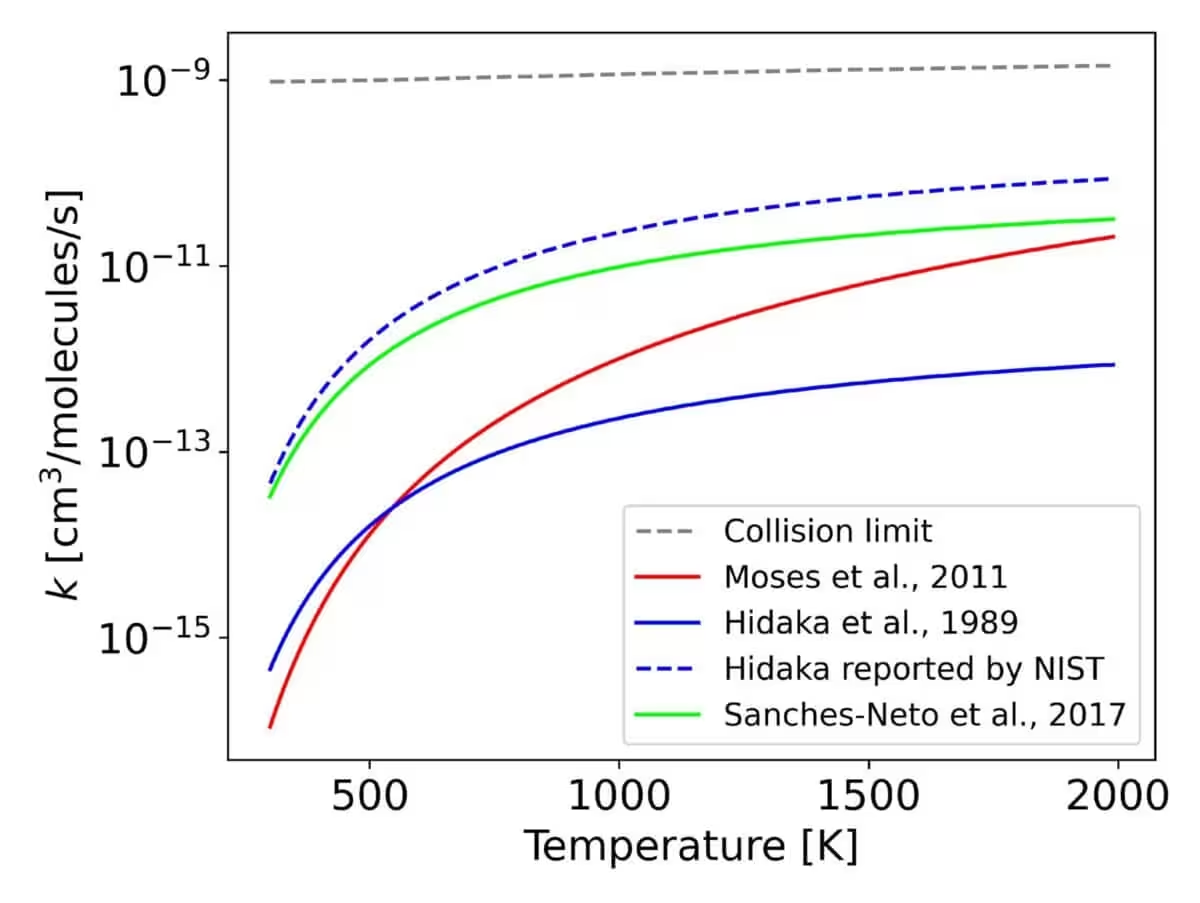
To bridge this observational gap, a team from the University of Chicago and NASA’s Jet Propulsion Laboratory constructed the most comprehensive computational representation of Jupiter’s interior to date. Unlike earlier efforts that treated atmospheric chemistry and fluid dynamics in isolation, the new simulations intertwine gas transport, cloud formation, and chemical reactions within a single, time‑evolving framework. By following the slow circulation of material between scorching depths and cooler upper layers, the model delivers a cohesive picture of the planet’s hidden composition and yields a robust estimate of its deep‑sea oxygen inventory. The results appear in the Planetary Science Journal.
Oxygen Abundance Exceeds Solar Levels, Supporting an Icy Accretion Origin
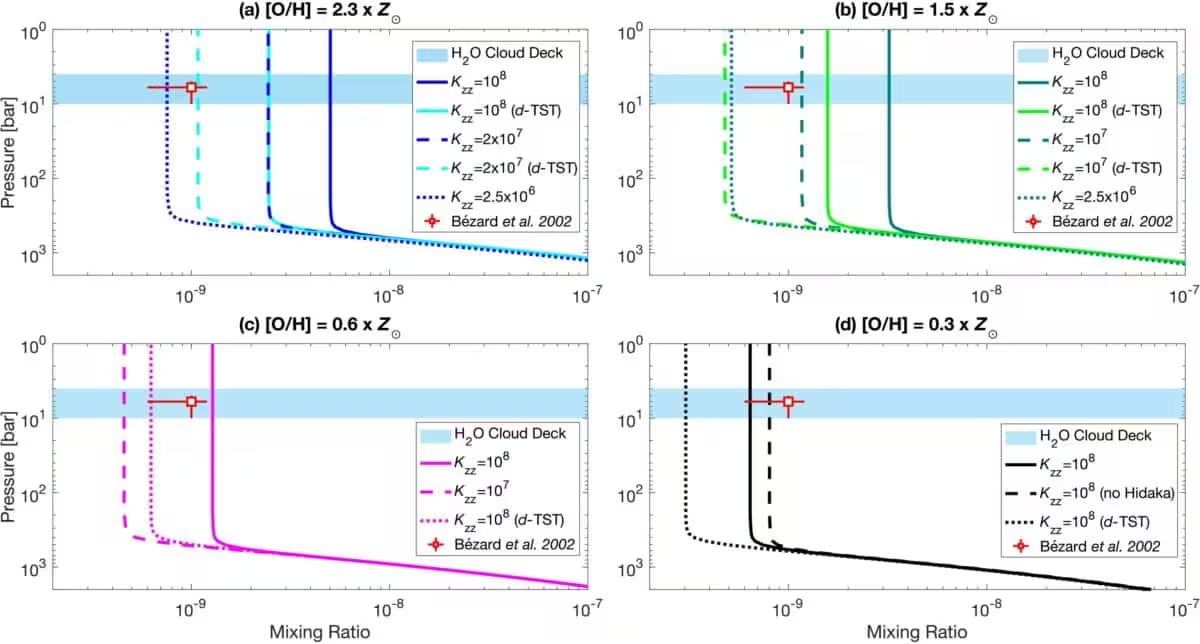
The model’s output indicates that Jupiter harbors about 150 % of the Sun’s oxygen content, a measurement that reshapes discussions about the giant’s formative processes. For decades, scientists have debated whether the planet’s bulk grew mainly from gas capture or from the ingestion of solid, ice‑rich planetesimals. The elevated oxygen figure strongly favors the latter, implying that Jupiter assembled beyond the young solar system’s “snow line”—the boundary where water could freeze and become incorporated into a growing body.
In such a cold, distant zone, abundant icy material would have been available to augment the nascent planet, naturally enriching it in oxygen relative to the Sun. This observation dovetails with theoretical expectations and offers a tangible clue about the temperature and composition of the protoplanetary disk at the time the giant planets coalesced.
“It really shows how much we still have to learn about planets, even in our own solar system,” said study lead author Jeehyun Yang, a postdoctoral researcher at the University of Chicago, in a press release.
Revised Mixing Times Imply a More Gradual Interior Circulation
Earlier calculations presumed that gases could shuttle between deep layers and the observable atmosphere within hours. The new suite of simulations, however, points to a markedly slower exchange, with parcels of gas requiring weeks to complete a full circuit. This extended mixing timescale reshapes expectations for how heat, clouds, and chemical species are redistributed throughout Jupiter’s massive interior.
By coupling dynamical transport with reaction networks, the researchers demonstrate that atmospheric motion and chemistry are inseparable influences on the planet’s evolution. The refined picture not only aligns more closely with Juno’s measurements but also offers a template for interpreting future observations of giant planets.
Beyond Jupiter: A Template for Planetary Formation Studies
While the focus of the investigation is Jupiter, the methodology and conclusions have far‑reaching relevance. Every planet carries a chemical imprint of its birth environment, acting as a fossil record of early planetary systems. Understanding why Jupiter’s oxygen inventory surpasses solar values equips scientists with a benchmark for probing the origins of both solar and extrasolar giants.
The integrated modeling framework showcased here is poised for application to other gas giants in our system and to the growing catalog of exoplanets. As astronomers continue to unveil new worlds around distant stars, the ability to reconstruct their formative chemistry will become a cornerstone of comparative planetology. Jupiter, despite decades of scrutiny, still yields surprises that refine our broader view of planetary birth and evolution.
This article has been fact checked for accuracy, with information verified against reputable sources. Learn more about us and our editorial process.
Last reviewed on .
Article history
- Latest version
Cite this page:
- Posted by Karan Das