Astronomers Detect Most Distant High Energy Blazar Ever Seen 8 Billion Light Years Away
A record-breaking blazar observation has shed new light on ancient black hole activity and the universe’s mysterious hidden radiation field.
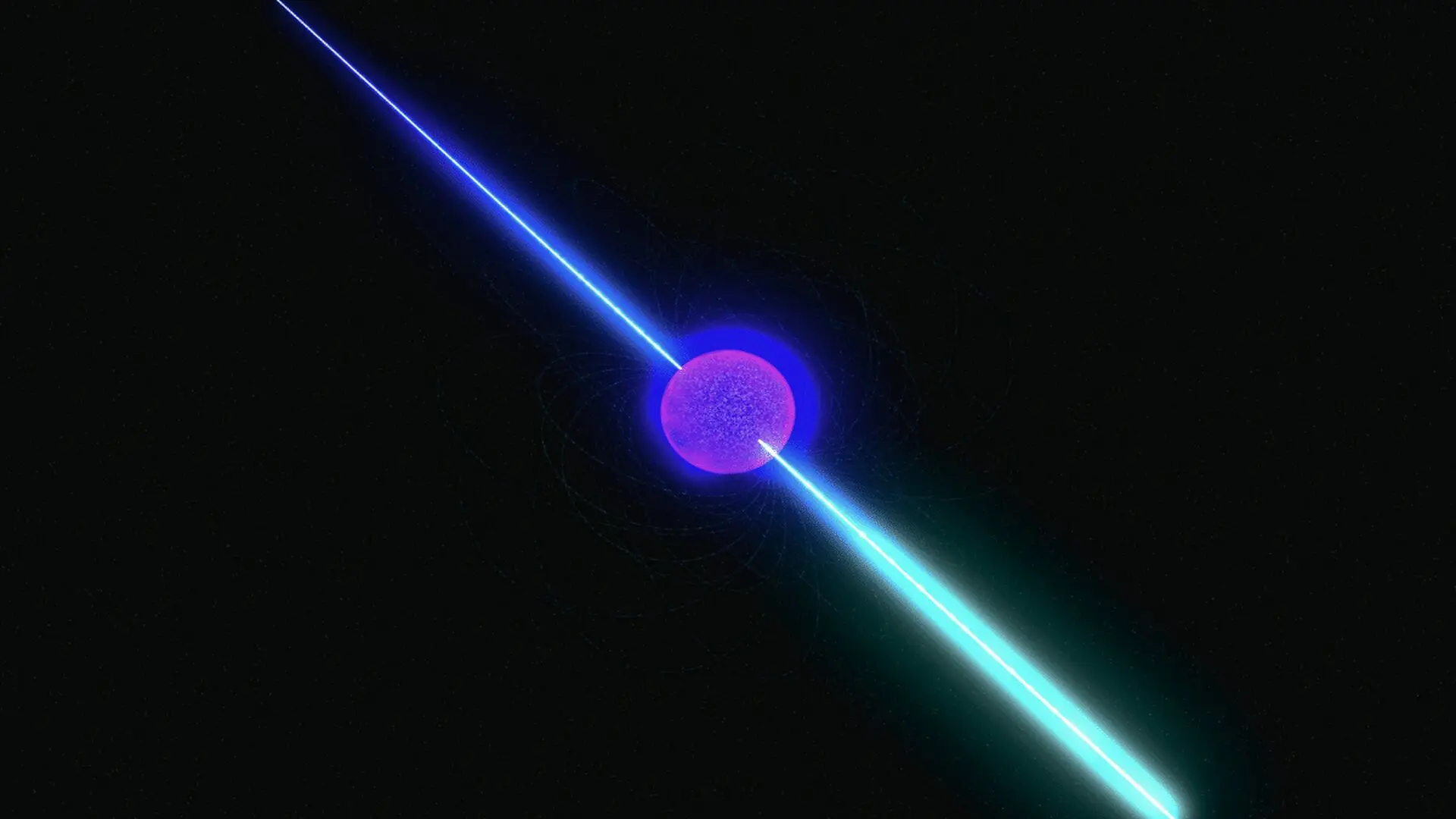
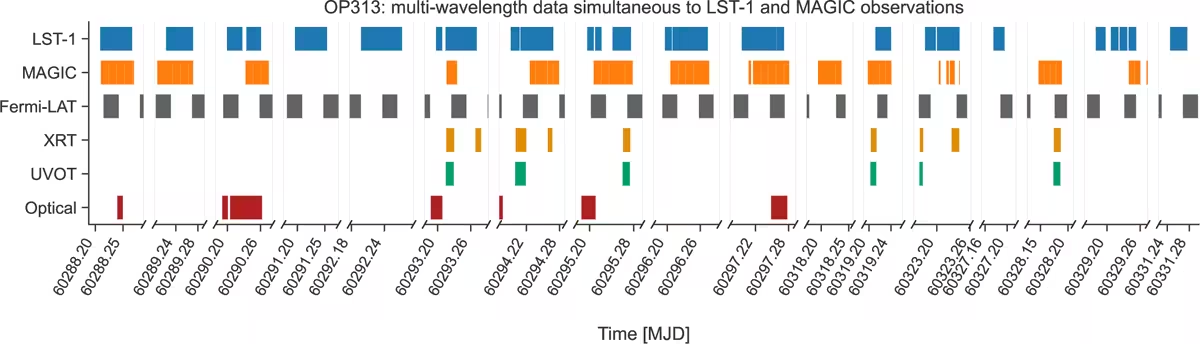
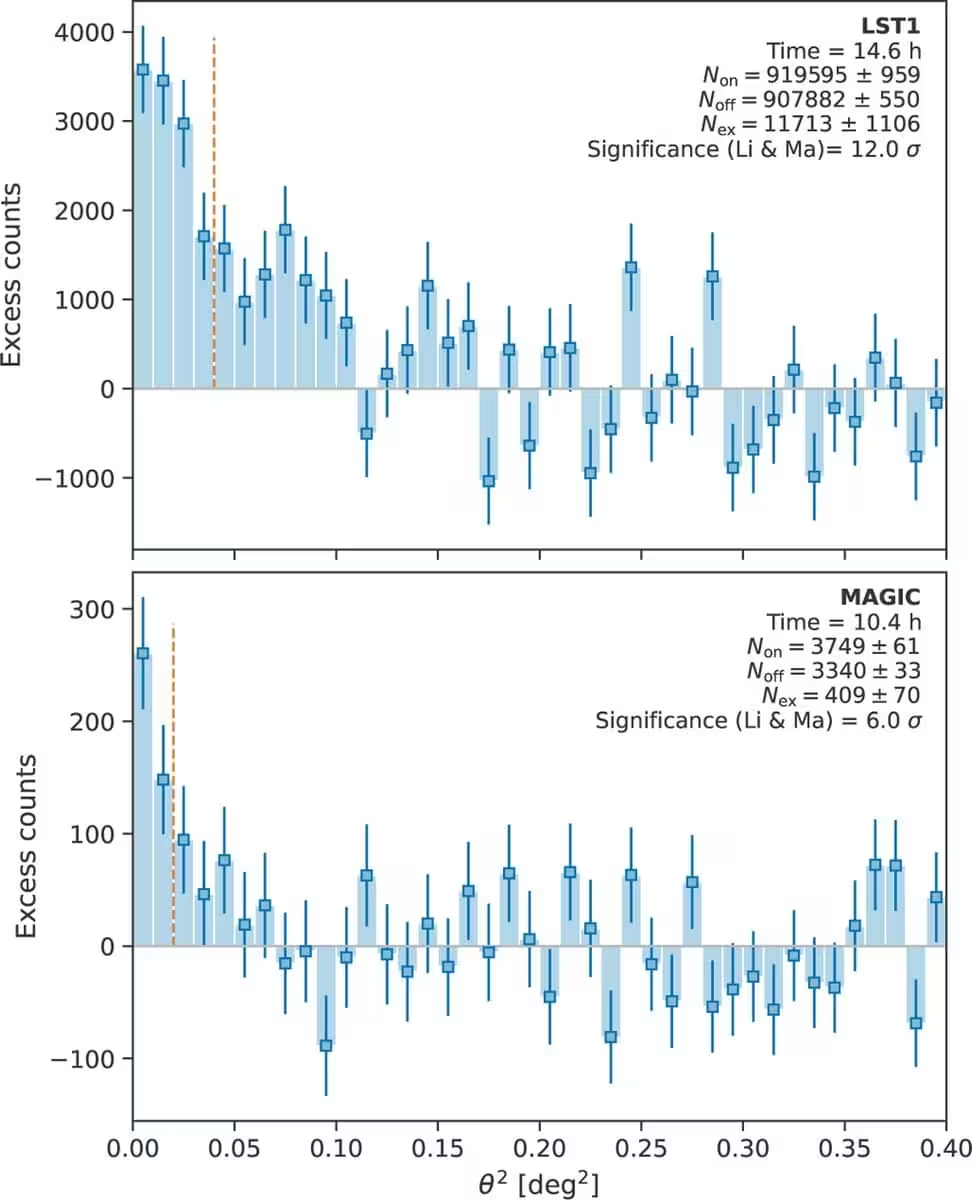
Astronomers have achieved a landmark breakthrough in high-energy astrophysics, detecting the most distant very-high-energy blazar ever recorded. The cosmic signal, originating from a source designated as OP 313, traveled across approximately 8 billion light-years before being captured by researchers. This discovery, detailed in the journal Astronomy & Astrophysics, was made possible by the coordinated efforts of the Large-Sized Telescope (LST-1) and the MAGIC telescopes, both situated at the Roque de los Muchachos Observatory in La Palma, Spain.
OP 313 is classified as a flat-spectrum radio quasar, a member of the active galactic nuclei family. These objects are driven by supermassive black holes at their cores that voraciously consume surrounding matter, ejecting powerful, high-velocity plasma jets into space. When such a jet is oriented directly toward Earth, the blazar appears exceptionally luminous, providing a rare window into the physics of the early universe. The data from this observation reflects a period roughly 11 billion years ago, known as “cosmic noon,” a time characterized by intense galaxy formation and rapid stellar birth.
Probing the Invisible Cosmic Background
Beyond identifying a record-breaking object, the study offers significant insights into the extragalactic background light (EBL)—a pervasive field of low-energy radiation composed of photons emitted by stars and galaxies throughout cosmic time. As high-energy gamma rays from distant blazars traverse the universe, they occasionally collide with these background photons.
These interactions frequently result in the conversion of gamma-ray photons into electron-positron pairs, a process that naturally attenuates the signal reaching our detectors. By analyzing the gamma-ray flux from OP 313, the researchers were able to place tighter constraints on the density of this background light, allowing for more precise modeling of how light has evolved and spread through intergalactic space over eons.
High-Energy Particle Acceleration Mechanisms
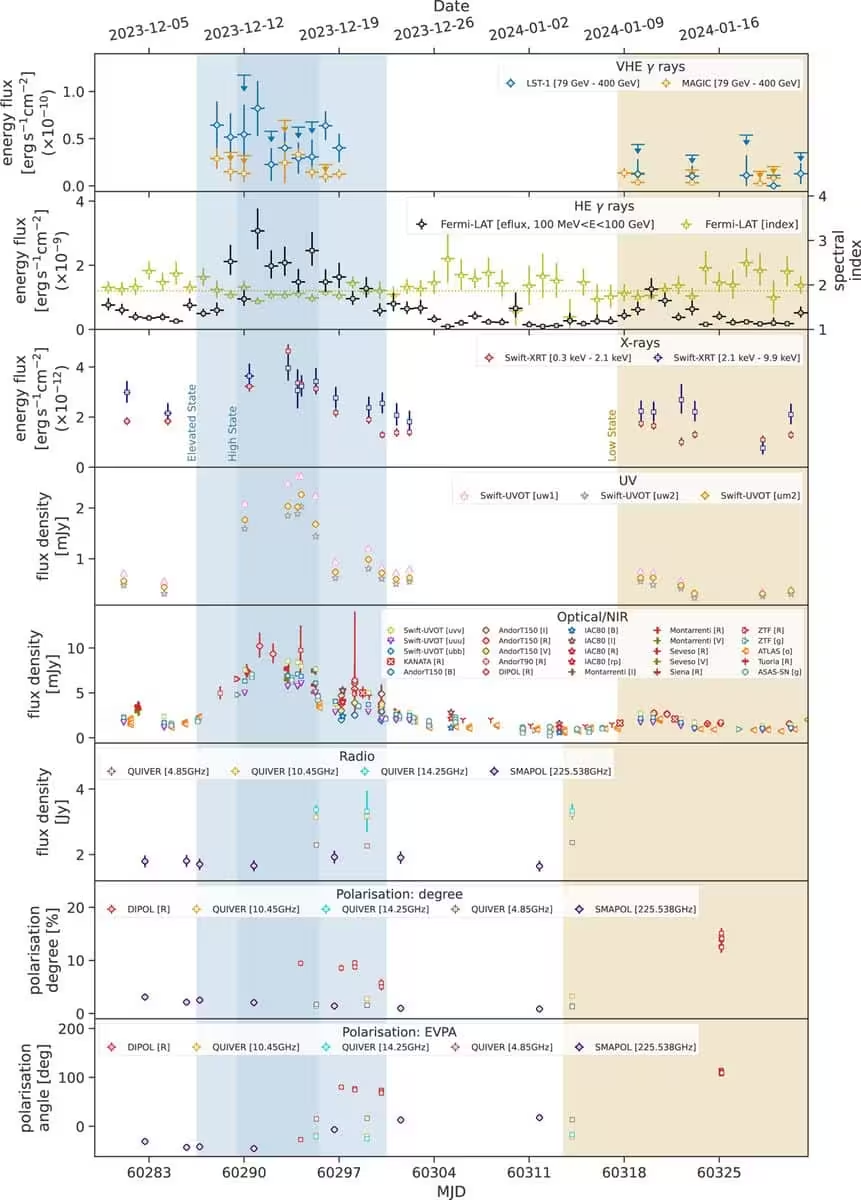
The intense gamma-ray emission detected from OP 313 likely stems from an extreme population of electrons accelerated to nearly the speed of light within the galactic jet. According to the “leptonic scenario” proposed by the researchers, these electrons interact with lower-energy photons in the vicinity of the black hole, boosting them to the high-energy gamma-ray frequencies observed by the La Palma telescopes.
While the exact physics governing the particle acceleration within these relativistic jets remains a primary subject of modern astrophysics, observations of such distant, energetic sources allow scientists to examine extreme conditions that are impossible to replicate in terrestrial laboratories.
Advancing the Frontiers of Gamma-Ray Astronomy
This achievement highlights the operational potential of the LST-1, a prototype system for the future Cherenkov Telescope Array Observatory (CTAO). Despite being in its commissioning phase, the telescope has already demonstrated a remarkable capability to peer into the deep, high-energy universe. The planned expansion of the LST array is expected to further enhance sensitivity, particularly at lower energy thresholds near 20 GeV.
By effectively extending the known gamma-ray horizon, future iterations of this technology promise to reveal even more distant and elusive cosmic phenomena. The detection of OP 313 serves as a clear indication that the field of gamma-ray astronomy is rapidly expanding, offering new pathways to understand the structural evolution of the universe and the enigmatic power of its most massive black holes.
This article has been fact checked for accuracy, with information verified against reputable sources. Learn more about us and our editorial process.
Last reviewed on .
Article history
- Latest version
Cite this page:
- Posted by Aisha Ahmed