A Supermassive Black Hole Was Just Hurled Out of Its Galaxy at Incredible Speeds
Astronomers have discovered a 202,000-light-year stellar wake, suggesting a violent cosmic collision may have ejected a supermassive black hole into space.
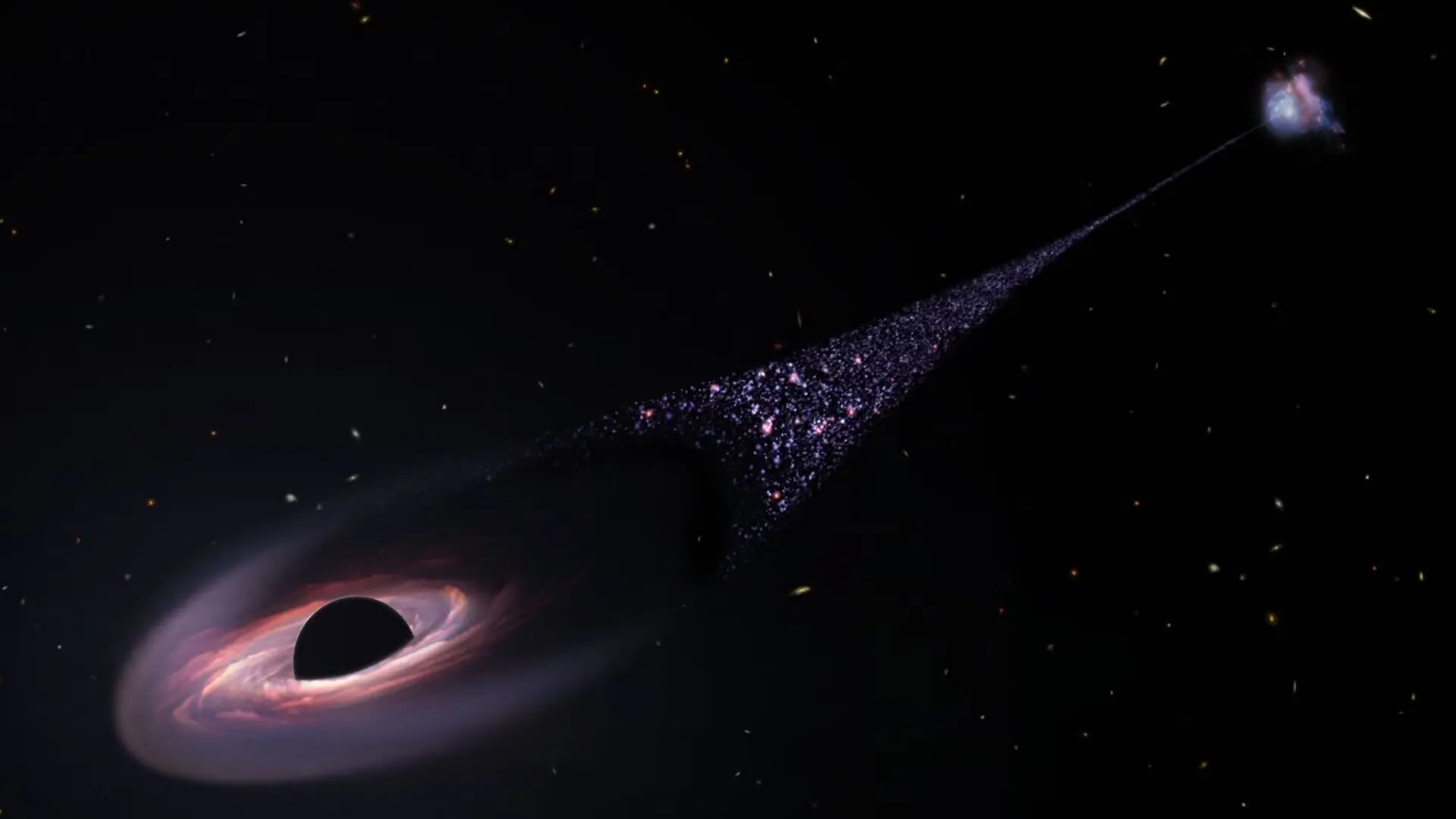
Astronomers have traced the origin of a rogue supermassive black hole, identified as RBH-1, which is currently hurtling through space at nearly 1,000 kilometers per second. The object, located approximately 7.5 billion light-years away, is trailing a 202,000-light-year-long wake of young stars and ionized gas, a discovery that offers a rare glimpse into the violent mechanics of galactic-scale collisions.
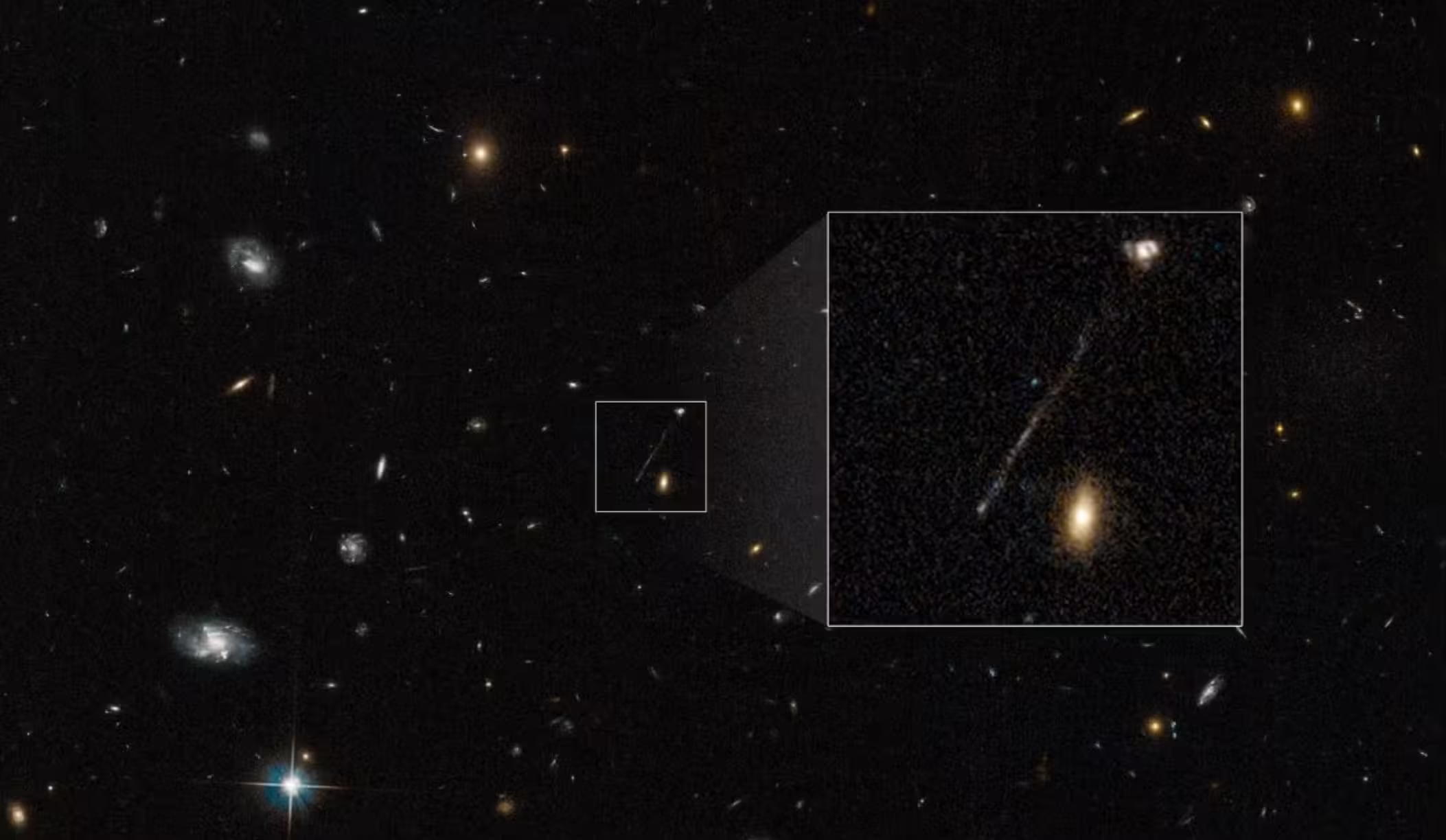
The runaway black hole was first identified in 2022 by the Hubble Space Telescope, which captured a linear feature extending from a compact galaxy dubbed GX. Subsequent observations using the James Webb Space Telescope confirmed the object’s nature, showing it as a point source at the head of a massive, shock-heated trail. A research team from UC Santa Barbara and the University of Texas at Austin recently published a study in Physical Review Letters, detailing how they reconstructed the event responsible for the black hole’s ejection.
Kinetic Recoil from Asymmetric Mergers
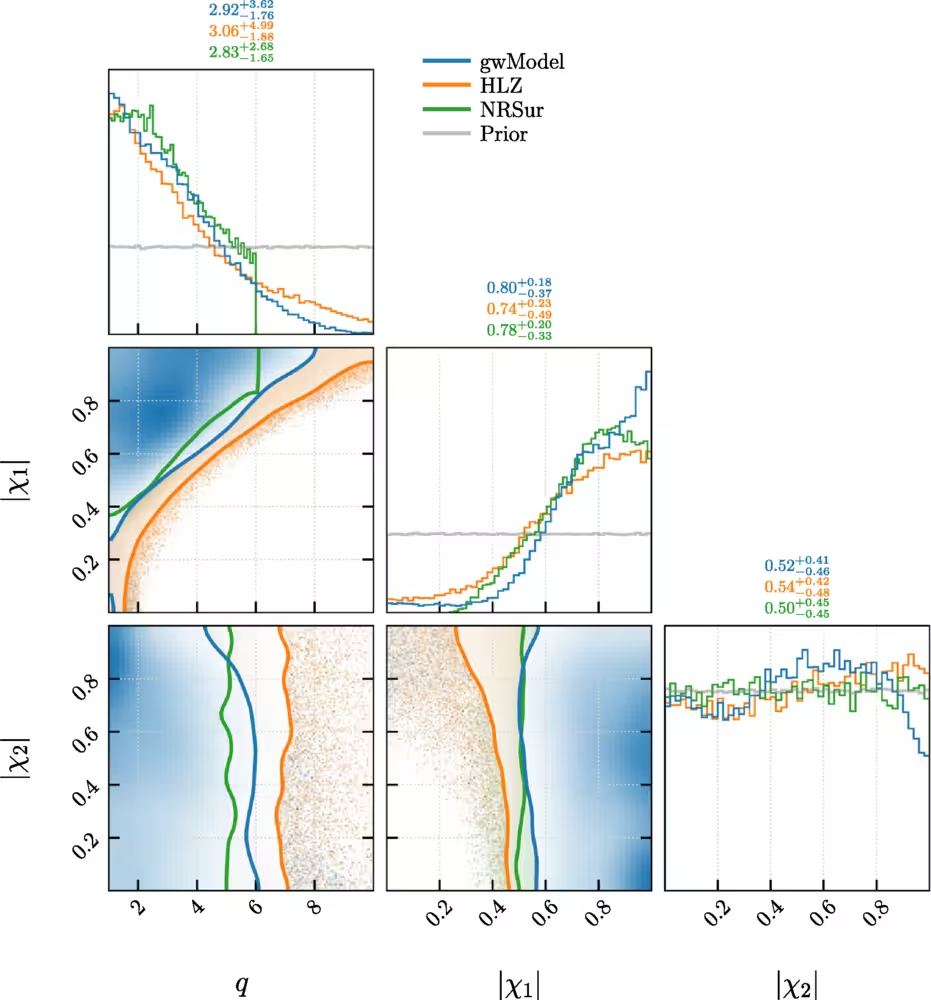
The team suggests the black hole was launched by the gravitational-wave equivalent of a cannon recoil. When two black holes merge, they emit gravitational waves that carry away momentum. If the system is asymmetric, the newly formed black hole is kicked in the opposite direction. By modeling hundreds of thousands of potential merger scenarios, the researchers determined that a standard, non-spinning merger could not generate the observed velocity of approximately 954 kilometers per second.
Instead, the data points to a high-energy collision between two rapidly spinning supermassive black holes with misaligned axes. This configuration, known as precession, is necessary to produce a recoil kick powerful enough to eject the black hole from its host galaxy. “The two black holes had to be spinning fast, and their spins had to be misaligned,” explained lead author Tousif Islam of the Kavli Institute for Theoretical Physics.
![We show merger scenarios incapable of producing the RBH-1 runaway velocity of 954^{+110}_{-126} km s^{-1} (vertical shaded gray region). These include nonspinning SMBH mergers, nonprecessing SMBH mergers, and precessing SMBH mergers with mass ratios q ∈ [5, 20].](https://www.bioscience.com.pk/images/e012b0007d.avif)
Insights into Galactic Evolution
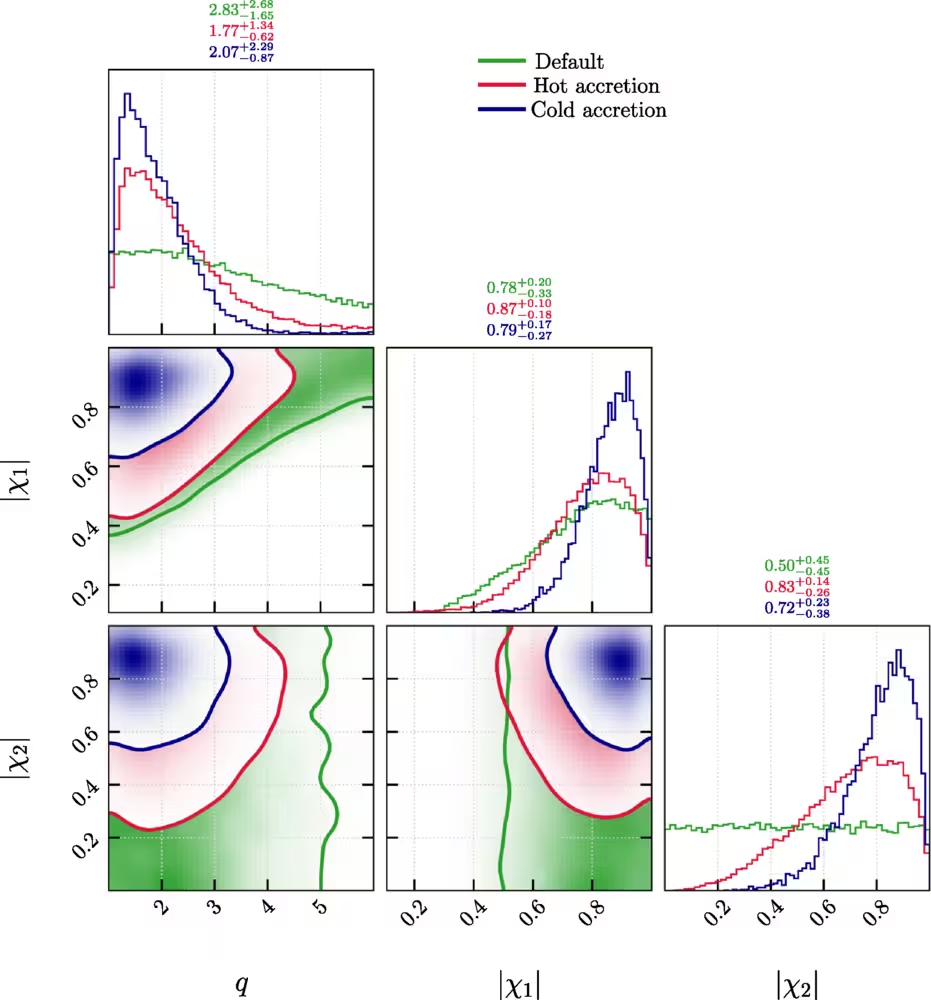
The research suggests that the merger occurred roughly 70 million years ago, following the collision of two progenitor galaxies of comparable mass. The presence of high spin in at least one of the original black holes implies a history of prolonged gas accretion, which likely occurred in a chaotic, gas-rich environment. This environment would have been instrumental in maintaining the spin-orbit misalignment required to produce such a massive kick.
Tejaswi Venumadhav, an associate professor of physics at UC Santa Barbara, noted that while the intensity of the event seems extreme, it is a necessary explanation for the observed astronomical feature. The model estimates that the final merger retained nearly 97% of the binary’s initial mass, with the runaway object holding a significant fraction of its spin.
A Bridge to Future Gravitational-Wave Detection
This discovery provides a valuable test case for the Laser Interferometer Space Antenna (LISA), a future space-based observatory designed to detect the low-frequency gravitational waves generated by supermassive black hole mergers. While current ground-based detectors like LIGO and Virgo focus on stellar-mass black hole collisions, LISA will be uniquely capable of measuring the signatures of these massive events directly.
The researchers emphasize that RBH-1 may represent a broader population of runaway black holes, with general relativity theory predicting that 5% to 10% of such mergers should result in significant recoil. Future observations could help refine models of how massive black holes interact, how host galaxies evolve, and how to interpret the signals that LISA will eventually record.
![Similar to Fig. 2, but showing the inferred spin angles between the progenitor SMBH spins and the orbital angular momentum: θ₁(= cos⁻¹[L̂ × Ŝ₁]), θ₂, and the effective precession parameter χₚ [Eq. (1)], obtained using the recoil-kick models HLZ and NRSur.](https://www.bioscience.com.pk/images/0adb4a58c8.avif)
For further reading on the physics of recoiling black holes and the role of gas in massive mergers, the following resources provide additional technical context:
- A confirmed recoiling supermassive black hole in a powerful quasar (arXiv)
- Accretion, Jets, and Recoil in Merging Supermassive Binary Black Holes (arXiv)
- Accretion-mediated spin–eccentricity correlations in LISA massive black hole binaries (MNRAS)
- Systematics in tests of general relativity using LISA massive black hole binaries (MNRAS)
- Waveform modelling for the Laser Interferometer Space Antenna (Living Reviews in Relativity)
This article has been fact checked for accuracy, with information verified against reputable sources. Learn more about us and our editorial process.
Last reviewed on .
Article history
- Latest version
Reference(s)
- Islam, Tousif., et al. “Progenitor of the Recoiling Supermassive Black Hole RBH-1 Identified Using HST and JWST Imaging.” Physical Review Letters, vol. 137, no. 3, July 17, 2026 American Physical Society (APS), doi: 10.1103/fm3n-sy3f. <https://journals.aps.org/prl/abstract/10.1103/fm3n-sy3f>.
- Chiaberge, Marco. “A recoiling supermassive black hole in a powerful quasar.” arXiv.org <https://arxiv.org/abs/2501.18730>.
- de Simone, Maria. “Accretion, Jets, and Recoil in Merging Supermassive Binary Black Holes.” arXiv.org <https://arxiv.org/abs/2510.05883>.
- <https://academic.oup.com/mnras/article/534/4/3705/7821244>.
- <https://academic.oup.com/mnras/article/535/4/3283/7906604>.
- , et al. “Waveform modelling for the Laser Interferometer Space Antenna.” Living Reviews in Relativity, vol. 28, no. 1, October 30, 2025 Springer Science and Business Media LLC, doi: 10.1007/s41114-025-00056-1. <https://link.springer.com/article/10.1007/s41114-025-00056-1>.
Cite this page:
- Posted by Aisha Ahmed