Massive Solar Hole Could Bring Northern Lights to Northern US States This Weekend
A massive solar hole is sending high-speed winds toward Earth, potentially pushing the northern lights as far south as New York and Idaho this weekend.
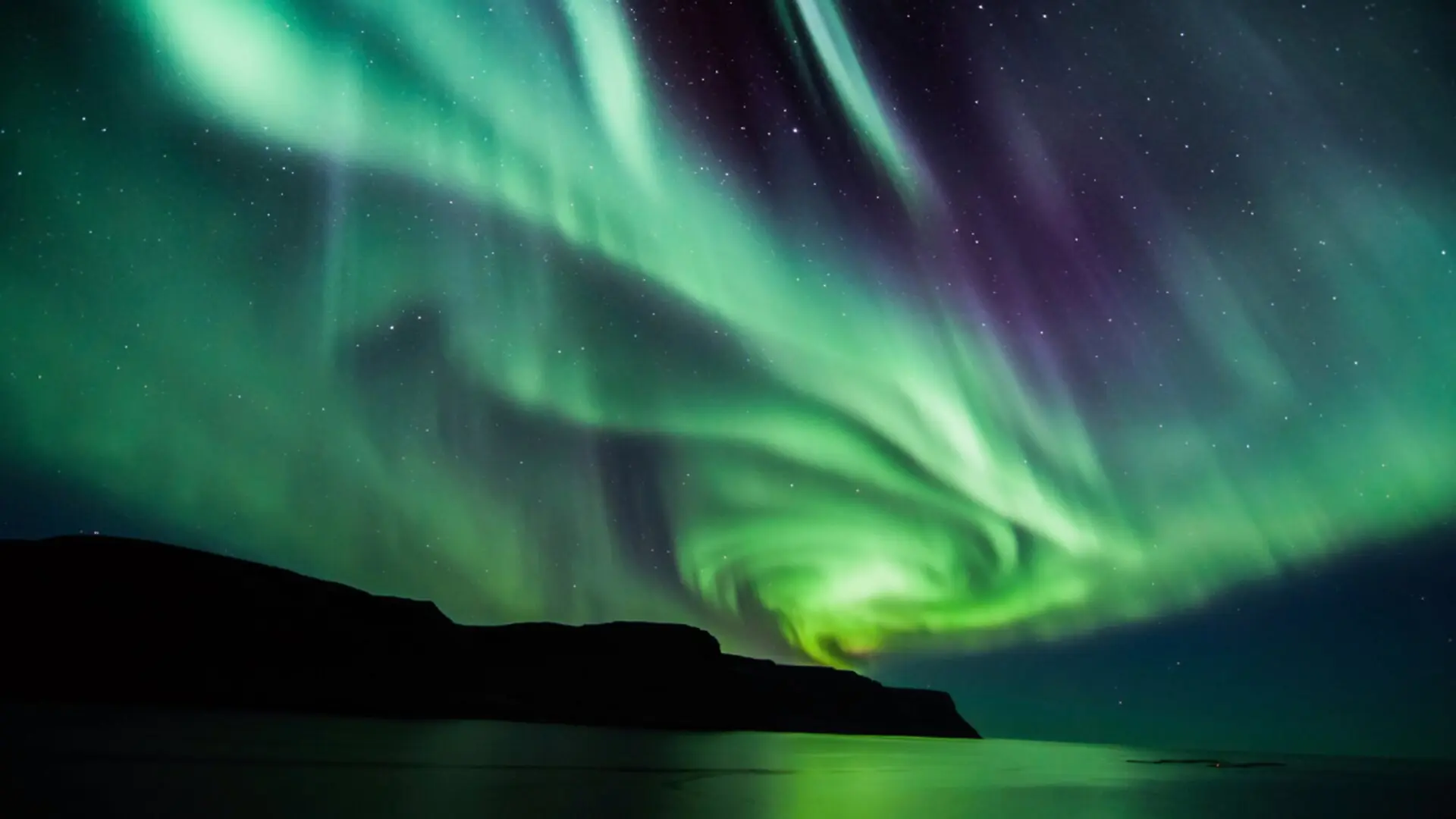
Solar Activity Set to Trigger Potential Geomagnetic Disturbance
A sprawling coronal hole currently positioned on the Sun is projecting a stream of high-velocity solar wind toward our planet, raising the prospect of geomagnetic storms on November 7 and 8. The solar phenomenon, characterized by a dark, irregularly shaped region, acts as a gateway for charged particles to escape the Sun’s atmosphere at speeds frequently surpassing 700 kilometers per second.
Unlike the abrupt explosive events known as coronal mass ejections, these wind streams are characterized by their longevity. Because this solar wind is expected to buffet the Earth’s magnetic field over several days, observers in the northern United States may have multiple windows of opportunity to witness the aurora borealis throughout the upcoming weekend.

Forecasts Suggest Moderate Magnetic Unrest
The Space Weather Prediction Center, operated by the National Oceanic and Atmospheric Administration (NOAA), has issued a forecast projecting G1 minor storm conditions leading into November 6, with the potential for intensity to climb to G2 moderate levels by November 7 and 8. The degree of geomagnetic activity is the primary factor determining how far south the shimmering lights may descend from the Arctic.
If the G2 threshold is met, the viewing footprint for the aurora could expand to include regions of New York and Idaho. Under G1 conditions, visibility is generally restricted to the northernmost tiers of the country, including Maine and northern Michigan. Beyond the visual spectacle, moderate G2 events can occasionally necessitate minor adjustments for satellite orientation and may lead to slight voltage fluctuations in power grids at high latitudes.
Guidelines for Potential Skywatchers
For those hoping to catch a glimpse of the display, geography and light conditions remain critical. Observers in rural areas, far removed from the ambient light pollution of major metropolitan centers, will have a distinct advantage. Experts recommend finding a vantage point that offers a clear, unobstructed view of the northern horizon, as auroral displays often appear low in the sky at lower latitudes.
Patience and preparation are essential for successful viewing. Because the human eye requires time to adjust to low-light environments, it is recommended that viewers allow at least 20 minutes for dark adaptation. To the naked eye, faint auroras can sometimes be mistaken for stationary, pale clouds. Utilizing a smartphone camera with a long-exposure setting or a dedicated night mode can often reveal subtle colors and structures that are otherwise imperceptible.
Because solar wind interactions are dynamic, activity levels can shift rapidly. Enthusiasts are encouraged to consult real-time data, such as NOAA’s 30-minute aurora forecast, to monitor the shifting conditions as the solar particles make contact with the Earth’s magnetosphere. The intensity and southward reach of the coming event will ultimately depend on the orientation of the solar magnetic field as it arrives at Earth.
As the solar wind continues its trajectory, the scientific community remains focused on the coronal hole as the primary driver of this week’s space weather. While forecasts provide a general window for activity, the true nature of the display will only be confirmed as the solar stream integrates with our planet’s protective magnetic environment.
This article has been fact checked for accuracy, with information verified against reputable sources. Learn more about us and our editorial process.
Last reviewed on .
Article history
- Latest version
Reference(s)
- “3-Day Forecast | NOAA / NWS Space Weather Prediction Center.” <https://www.spaceweather.gov/products/3-day-forecast>.
Cite this page:
- Posted by Aisha Ahmed