Stem Cell Transplant Repairs Brain Damage and Restores Movement After Stroke in Mice
Human neural stem-cell transplants have successfully repaired stroke-damaged brain tissue and restored motor function in mice, new research reveals.
Modern medicine faces a significant hurdle when treating stroke: the adult human brain possesses a notoriously limited ability to repair damaged neural circuits. With one in four adults expected to experience a stroke in their lifetime, and roughly half of survivors left with long-term disability, the current standard of care—primarily mechanical thrombectomy and intravenous thrombolysis—is frequently hampered by narrow therapeutic windows and potential complications.
A collaborative research team, led by Christian Tackenberg and Rebecca Weber of the University of Zurich in partnership with Ruslan Rust from the University of Southern California, has investigated a potential path forward using human neural progenitor cells (NPCs) derived from induced pluripotent stem cells (iPSCs). Their findings, recently detailed in Nature Communications, suggest that these stem-cell-derived grafts may do far more than replace lost neurons.
Regeneration Beyond Cell Replacement
To evaluate the therapeutic potential of these cells, the researchers induced sensorimotor cortex strokes in a mouse model. Seven days post-stroke, they transplanted the human-derived NPCs directly into the damaged tissue. To ensure the grafts were not rejected, the host animals were genetically modified to suppress immune response.
The results, tracked over a 35-day period, demonstrated significant survival and integration of the transplanted cells. Approximately 78% of the characterized grafts differentiated into neurons, while others adopted roles as astrocytes or remained as progenitor cells. Crucially, these new neurons extended projections across the damaged brain, reaching the primary and secondary motor areas and the primary somatosensory cortex. In more than half of the subjects, these neural extensions successfully navigated toward the opposite hemisphere.
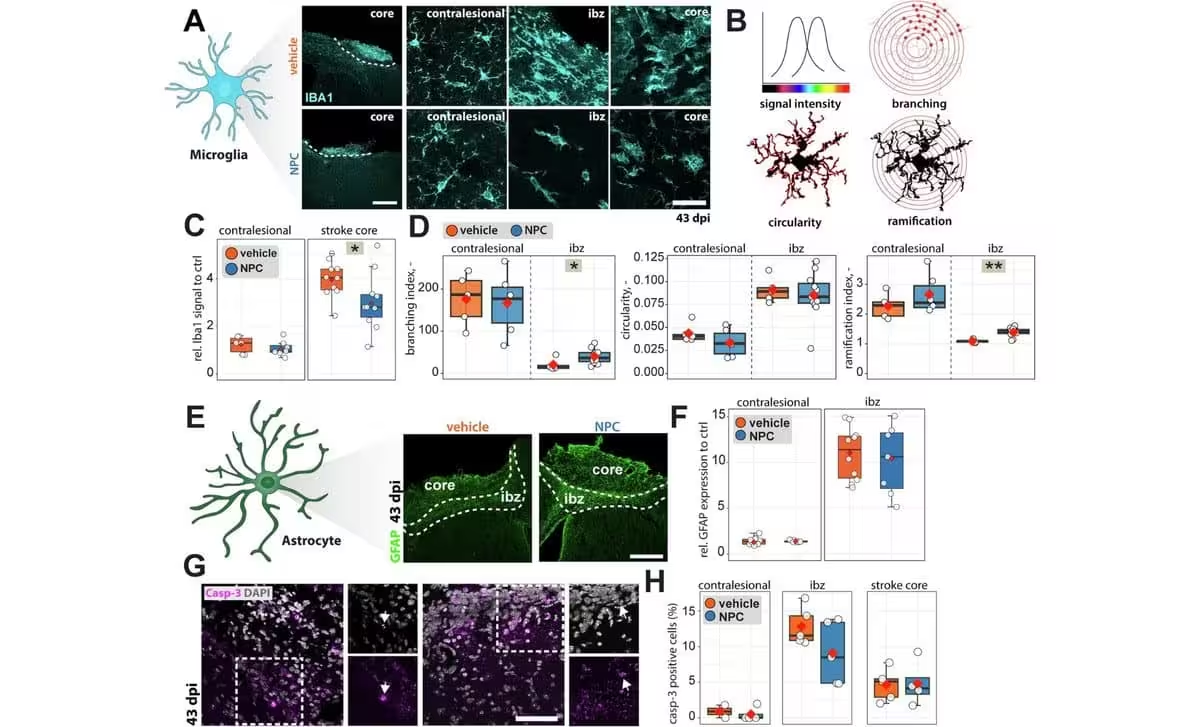
Beyond the direct impact of the grafts, the team observed a broader environment of repair. Treated mice exhibited a 32% decrease in inflammatory activity, specifically reduced microglial activation, within the stroke core. Furthermore, the presence of the cells appeared to trigger endogenous neurogenesis, essentially stimulating the brain’s innate recovery mechanisms.
Vascular Restoration and Motor Recovery
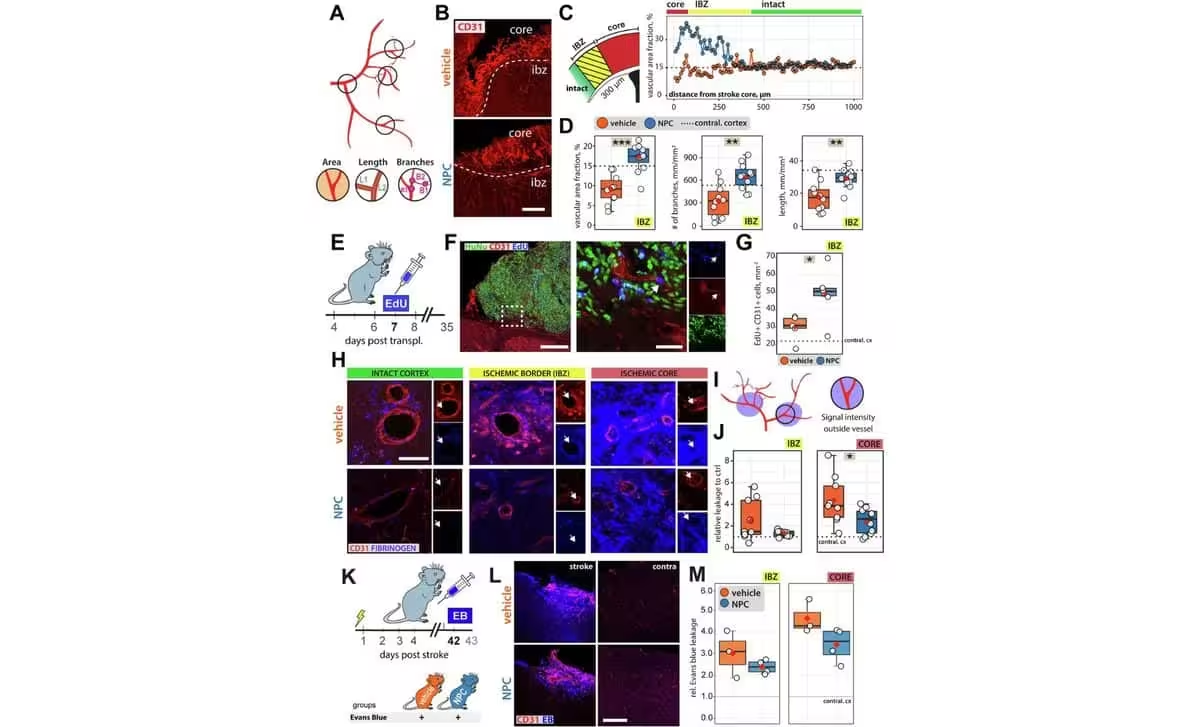
A notable discovery involved the recovery of the vascular system. Brain tissue treated with NPCs showed a marked improvement in blood vessel density and branching compared to control groups. The density of newly formed vessels in the border zone of the ischemic injury was significantly higher in treated subjects, suggesting that the transplantation might stabilize the local microenvironment by improving blood flow and reducing vessel leakage.
This structural restoration translated into functional gains. Five weeks after the injury, mice that received the cell therapy demonstrated superior performance on motor tests, including rotarod trials and gait analysis, compared to the control mice.
From Laboratory Model to Clinical Reality
While the results are promising, the researchers emphasize that they remain preclinical. The team utilized manufacturing protocols that are free from animal-derived materials to ensure future compatibility with human clinical requirements, but significant work remains. Current efforts are focused on improving safety, specifically by developing genetic “switches” to prevent excessive cell growth and exploring endovascular delivery methods that would remove the need for invasive brain surgery.
“Our findings show that neural stem cells not only form new neurons, but also induce other regeneration processes,” Tackenberg noted. As the researchers continue to refine these techniques, the ultimate goal remains clear: translating these findings into a viable treatment for humans, moving stroke recovery from a process of mere compensation to one of active biological repair.
This article has been fact checked for accuracy, with information verified against reputable sources. Learn more about us and our editorial process.
Last reviewed on .
Article history
- Latest version
Reference(s)
- Weber, Rebecca. “Neural xenografts contribute to long-term recovery in stroke via molecular graft-host crosstalk - Nature Communications.”, vol. 16, no. 1, September 16, 2025, pp. 8224 Nature, doi: 10.1038/s41467-025-63725-3. <https://www.nature.com/articles/s41467-025-63725-3>.
Cite this page:
- Posted by David Anderson