1.4 Million Year Old Footprints Reveal Giant Paranthropus Boisei Walking in All Male Groups
Muddy lakeshore frozen in time yields a rare fossil find—ancient footprints that reveal details bones can’t provide.
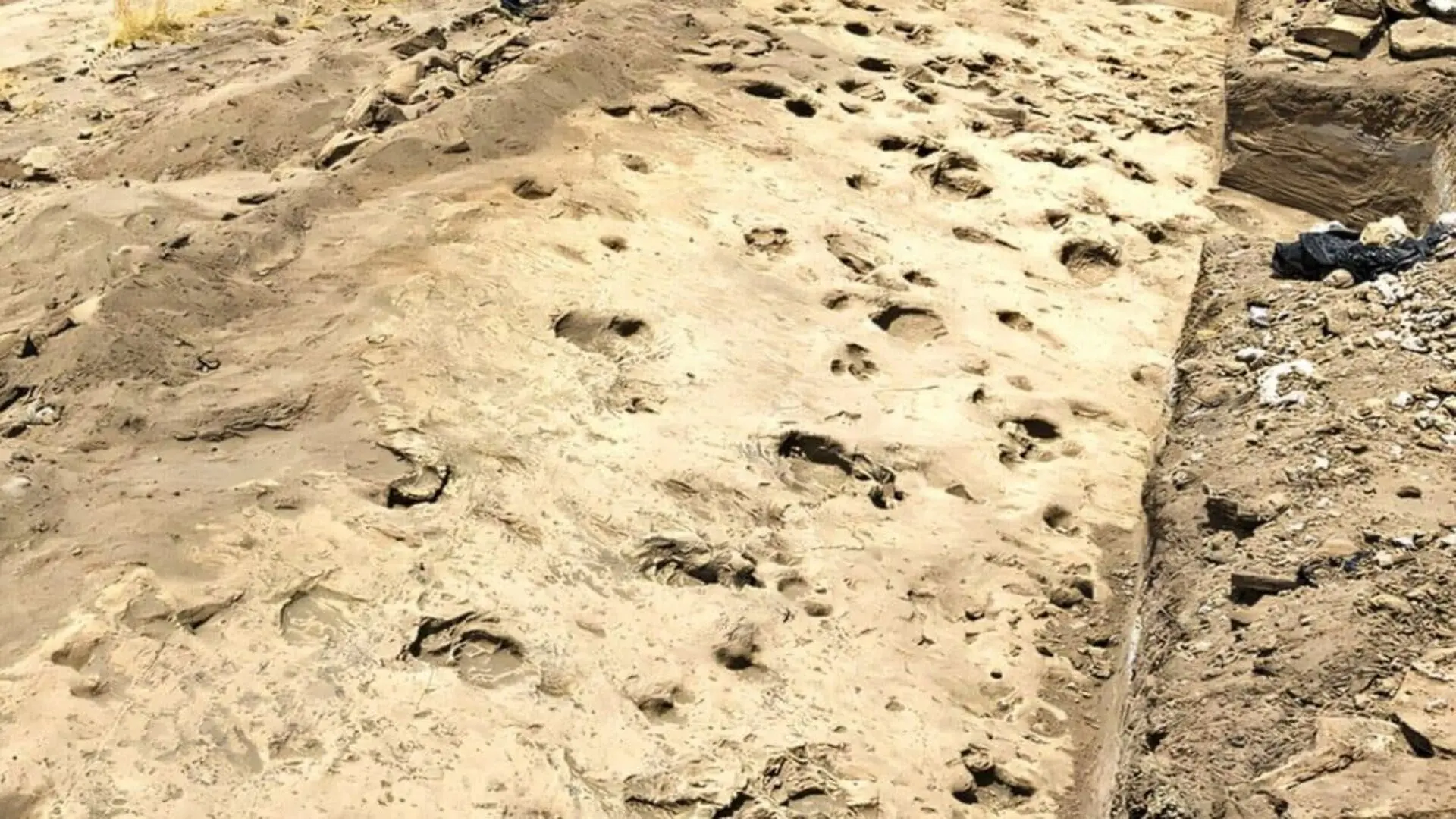
Footprints preserved in lake‑edge sediments near Lake Turkana, northern Kenya, have provided a rare glimpse into the life of the extinct hominin Paranthropus boisei, suggesting a body size comparable to that of Homo erectus and indicating that adult males may have moved together in groups.
Ancient Mudflat Yields a Unique Hominin Record
The trackway was uncovered at the GaJi10 locality, a site first identified in 1978 by Kay Behrensmeyer of the Smithsonian National Museum of Natural History. She has returned repeatedly to the area, where soft mud impressions were later sealed by sand carried by gentle shoreline currents.
The study, appearing in the Proceedings of the National Academy of Sciences (PNAS), examined 21 footprints attributed to eight separate individuals, all dated to roughly 1.43 million years ago. The same sedimentary layer also preserved tracks of hippopotamuses, antelopes and other large fauna that frequented the lakeshore.
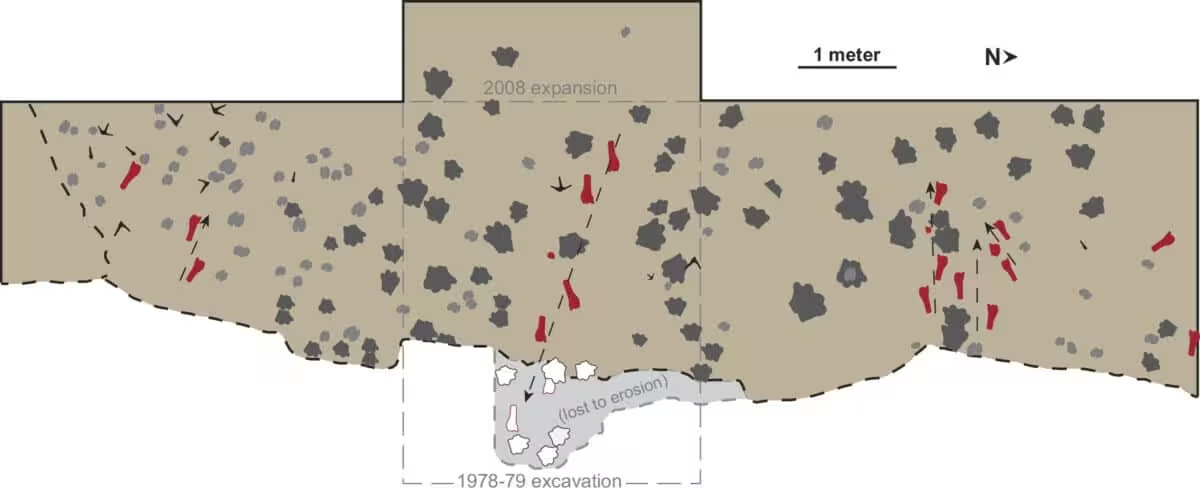
A second nearby trackway revealed that footprints attributable to both Paranthropus boisei and Homo erectus were deposited in the same sedimentary horizon, confirming that the two species co‑existed in the region during the Early Pleistocene.
“We can’t say how the two different hominins interacted on the mudflats, but we know they were both here at this time,” Behrensmeyer said in remarks accompanying the publication.
Footprint Dimensions Redefine Body Size Estimates
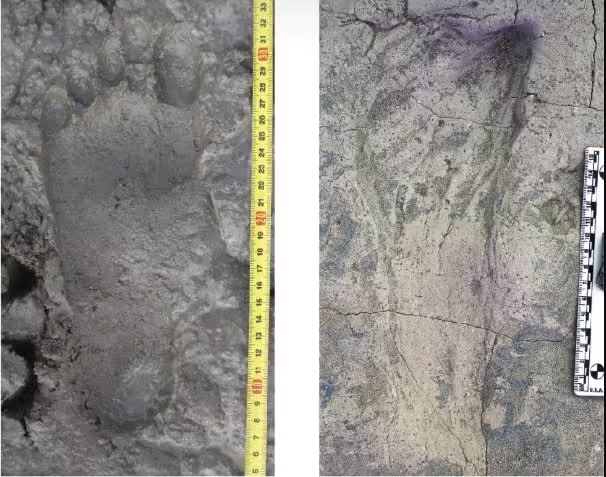
Prior reconstructions of Paranthropus boisei relied heavily on cranial material, highlighting its massive jaws and teeth while leaving overall stature uncertain. By analysing stride length and footprint width, researchers inferred an average height of up to 1.8 meters and a mass near 75 kilograms—dimensions that align closely with those of early Homo erectus individuals.
“The sizes of the footprints indicate human‑like body sizes – up to 1.8 meters tall and around 75 kilograms,” said Kevin Hatala, an evolutionary anthropologist at Chatham University and co‑author of the study.
Track Patterns Hint at Group Behavior
The spatial arrangement of the GaJi10 footprints suggests that eight primarily adult male Paranthropus boisei individuals moved together along the lakeshore. No footprints attributable to females or juveniles were identified within this specific assemblage, implying that adult males may have formed temporary travel groups.
Behrensmeyer emphasized the unique value of footprints: “The special thing about footprints scientifically is that they preserve an instant in time. They also allow people to relate to these fossils much more easily than an isolated piece of bone or jaw.”
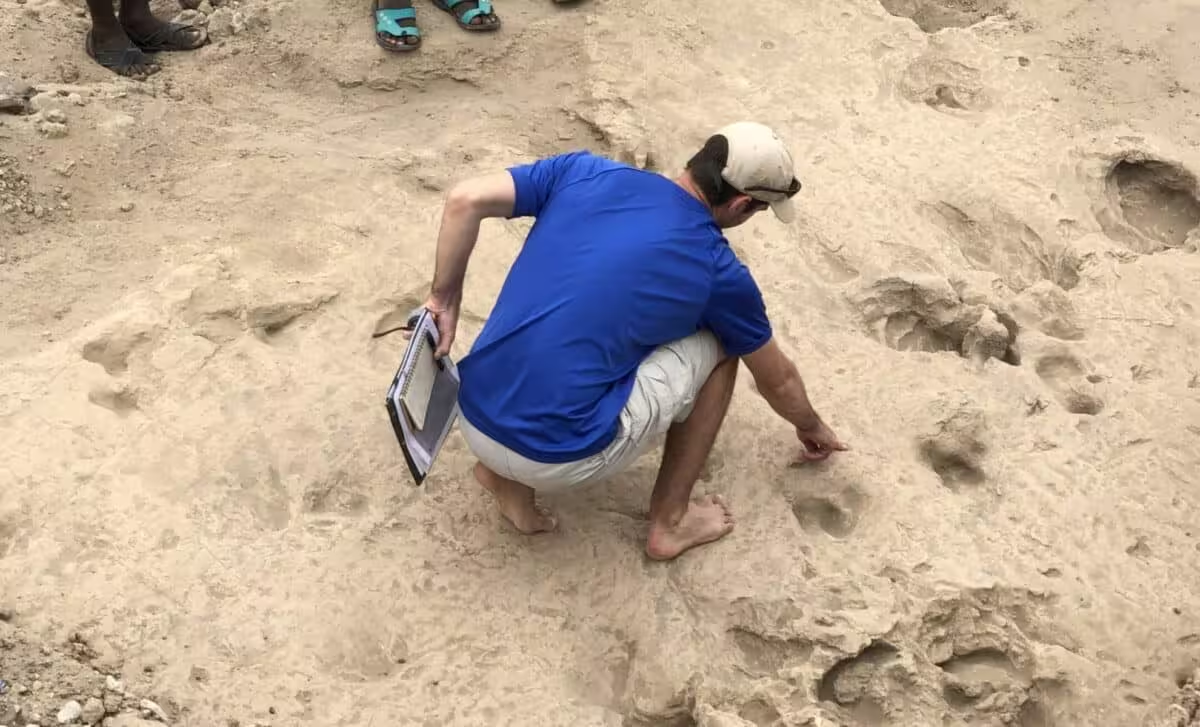
Together, the footprints broaden our understanding of Paranthropus boisei by providing concrete evidence of its stature, its coexistence with early Homo erectus, and the possibility that adult males occasionally traveled in coordinated groups.
This article has been fact checked for accuracy, with information verified against reputable sources. Learn more about us and our editorial process.
Last reviewed on .
Article history
- Latest version
Reference(s)
- <https://humanorigins.si.edu/about/human-origins-program-team/anna-k-kay-behrensmeyer>.
- “Kevin Hatala.” Chatham University <https://www.chatham.edu/academics/undergraduate/biology/faculty/kevin-hatala.html>.
Cite this page:
- Posted by Hassan Raza