Scientists Find Shrimp‑Like Crustacean 600 Feet Under Antarctic Ice
A deep-ice camera in Antarctica captured an unexpected sight, revealing how little we know about the hidden world beneath the frozen continent.
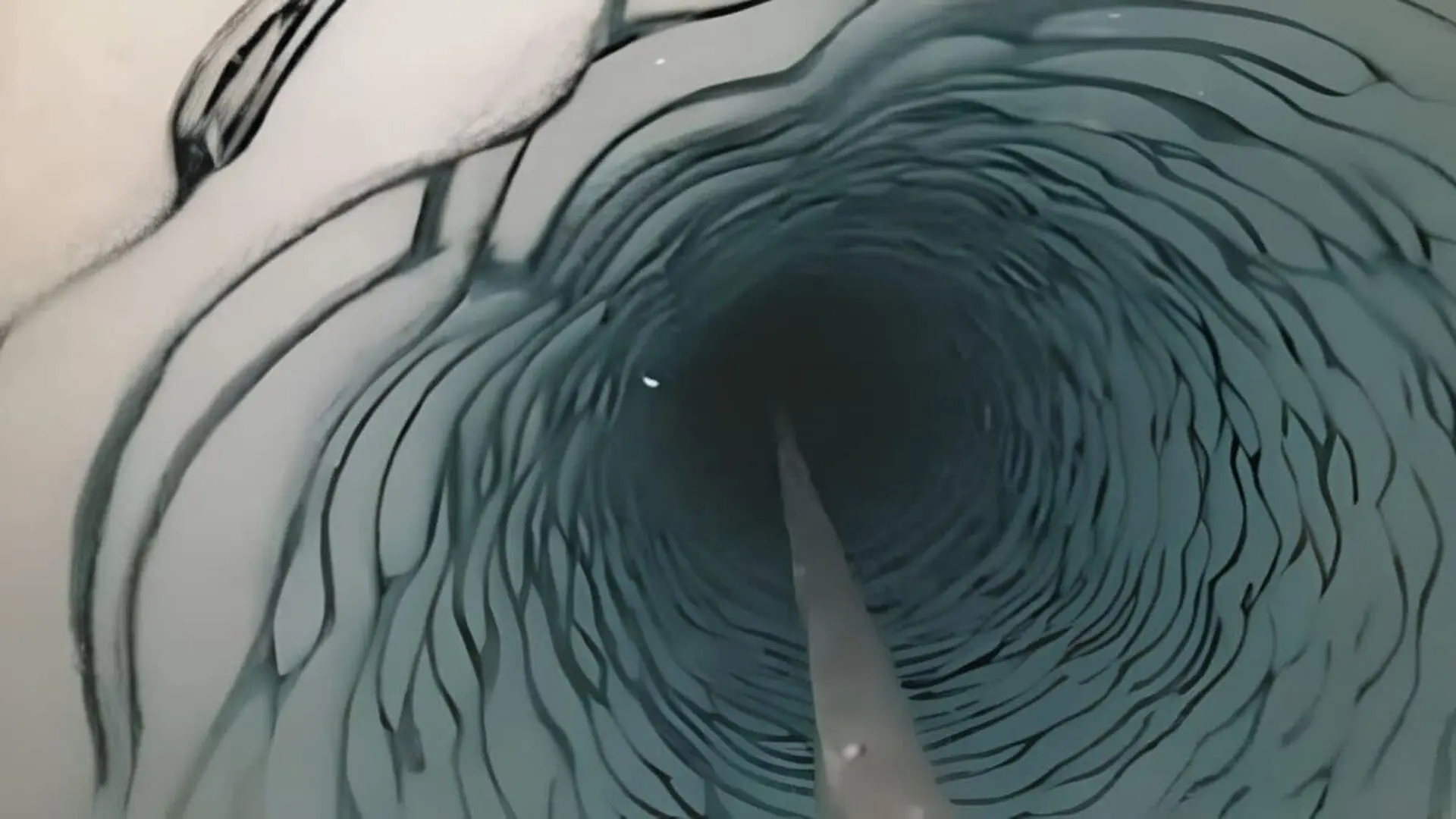
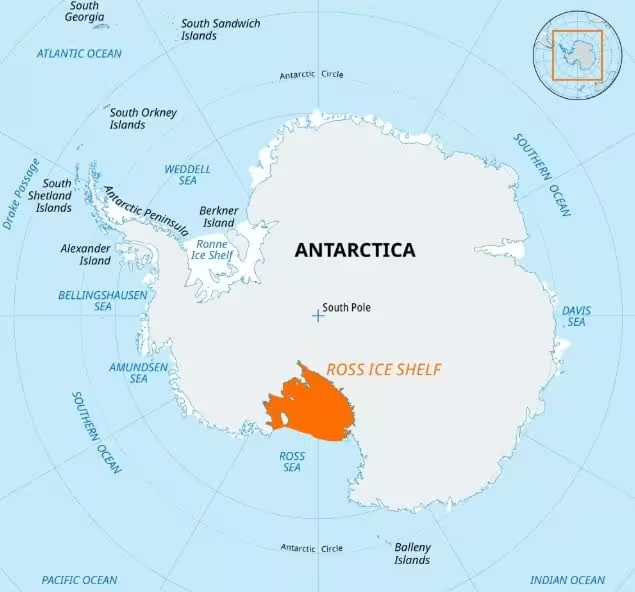
In 2009 a research team descending through Antarctica’s Ross Ice Shelf made a startling find: a shrimp‑like crustacean thriving beneath more than 180 meters (600 feet) of solid ice. The discovery proved that complex marine organisms can inhabit one of the planet’s most isolated, frozen habitats.
For many years scientists have drilled through the continent’s ice shelves to study the ocean hidden below. The 2009 mission broke new ground by lowering a Jet Propulsion Laboratory camera into the Ross Ice Shelf’s underside, providing the first visual glimpse of that concealed world.
Researchers had anticipated only microscopic life in the perpetual darkness of the sub‑ice waters. Instead, the camera recorded an active crustacean exploring the drilling equipment, a sight that surprised both glaciologists and marine biologists involved in the project.
Unexpected Creature in Pitch‑Black Waters
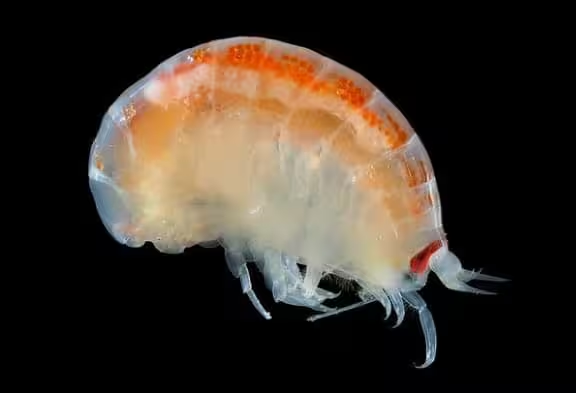
According to a NASA release, after boring through roughly 183 meters (600 feet) of ice, scientists lowered the camera into the seawater below. There they observed a lysianassid amphipod, a diminutive shrimp‑like animal that swam around the cable and repeatedly approached the probe.
NASA ice specialist Robert Bindschadler recalled the excitement in the control room. Speaking to the Associated Press, he noted that the drilling site lay about 20 miles (32 kilometers) from the open ocean, so the appearance of a higher‑order animal was wholly unexpected.
“We were all huddled around the monitor just fascinated with what we were seeing at the bottom of our hole,” Bindschadler said. “When I showed this to a marine biologist she was quite surprised because we are a long way from the open ocean, about 20 miles [32 kilometers], and this is a higher life form.”
Rather than flee, the amphipod circled the cable several times, inspecting the unfamiliar object before drifting away.
Scavenger Highlights Hidden Food Web
The creature belongs to the lysianassid amphipods, a group of scavenging crustaceans that feed on the remains of fish, seals and penguins. IFLScience describes them as the ocean’s “clean‑up crew,” recycling organic material on the seafloor.
For the team, the find meant more than a single animal; it indicated that a higher trophic level was supported, implying the presence of additional organisms to sustain the amphipod.
When the drill string was retrieved, scientists also observed jellyfish clinging to the cable, reinforcing the idea of a surprisingly diverse community beneath the ice. Bindschadler later called the underside of the Ross Ice Shelf “an entirely new frontier for us to explore.”
Subsequent Probes Reveal Rich Amphipod Populations
A decade later, a 2022 expedition descended about 500 meters (1,640 feet) beneath the Ross Ice Shelf, entering a subglacial river. Instead of isolated individuals, researchers encountered swarms of amphipods, indicating that these crustaceans can form substantial populations under the Antarctic ice.
Physical oceanographer Professor Craig Stevens of NIWA highlighted a lingering mystery: “What is interesting is where their food is coming from and why their presence was so variable over the 10 days we observed.”
This article has been fact checked for accuracy, with information verified against reputable sources. Learn more about us and our editorial process.
Last reviewed on .
Article history
- Latest version
Reference(s)
- “Shrimp-Like Creature Discovered at Windless Bight, Antarctica - 600 Feet Beneath Ice Sheet.”, March 18, 2010 NASA Scientific Visualization Studio <https://svs.gsfc.nasa.gov/3688>.
- <https://wacoastalnetwork.com/teams/1790/>.
- <https://www.iflscience.com/in-2009-scientists-drilled-183-meters-beneath-an-antarctic-ice-shelf-and-found-a-surprising-lifeform-84260>.
- <https://www.britannica.com/place/Ross-Ice-Shelf>.
- “Discovery.” <https://profiles.auckland.ac.nz/craig-stevens>.
Cite this page:
- Posted by Hassan Raza