Scientists Are Closer Than Ever to Creating Synthetic Life From Scratch
Scientists are working to build living cells from scratch. Are we close to mastering synthetic biology and unveiling the origins of life in the lab?
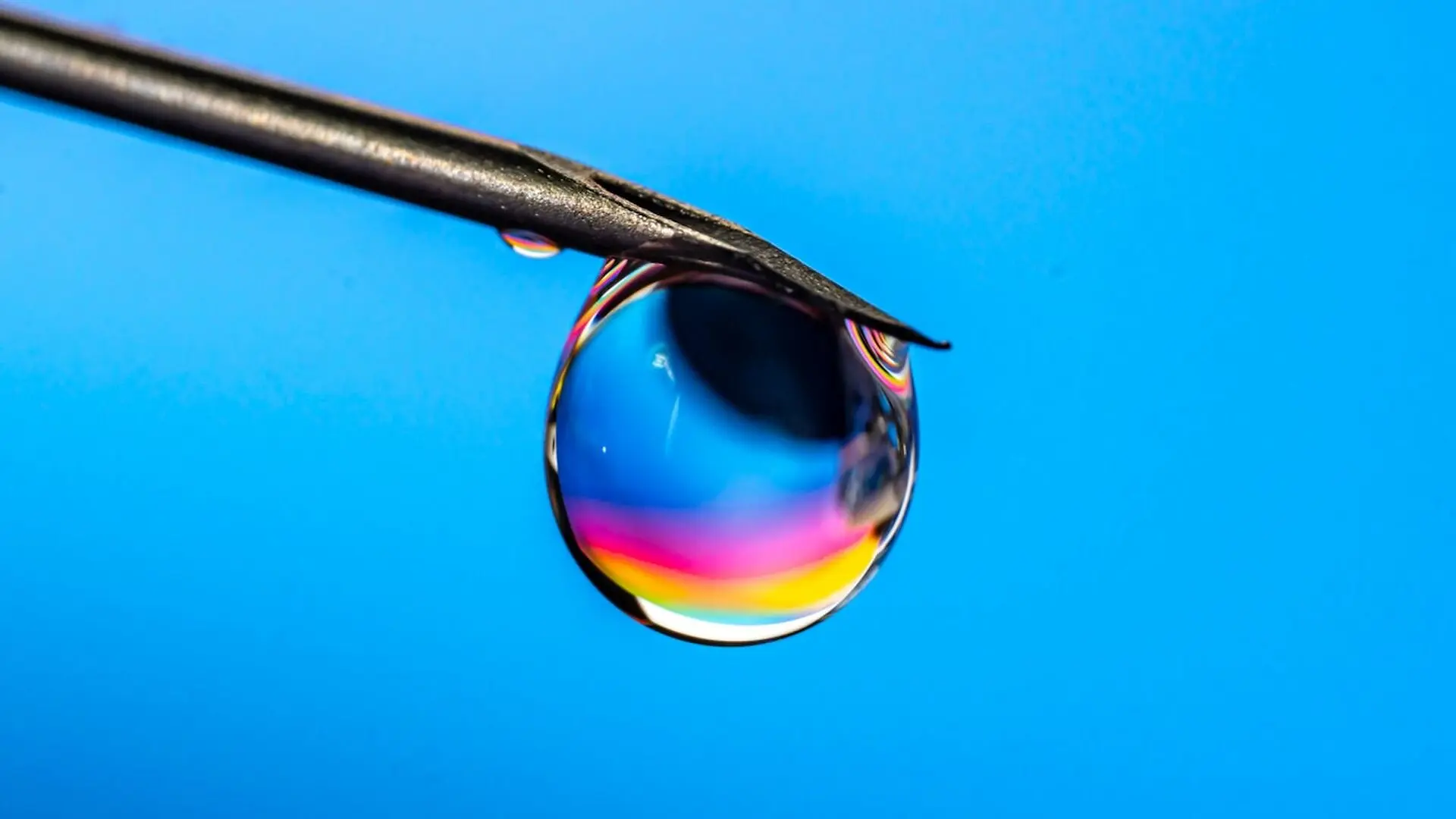
The Race to Build Synthetic Life: Are Scientists on the Verge of a Breakthrough?
Billions of years ago, a fortuitous arrangement of chemical precursors on a barren planet crossed an invisible threshold, transitioning from inert matter into the first spark of life. Today, researchers are attempting to reverse-engineer that monumental event. By assembling the fundamental components of biology in controlled laboratory settings, scientists are closing in on the creation of synthetic cells—structures that mirror the complex behaviors of living organisms.
The scientific community pursuing this goal is generally divided into two camps. The first focuses on the origins of life, seeking to replicate the conditions of early Earth to understand how biology emerged from chemistry. The second, driven by the field of synthetic biology, aims to design custom-built cells from scratch, stripped of evolutionary baggage, to perform specific tasks such as manufacturing sustainable chemicals or developing advanced medical therapies.
This pursuit has gained momentum through initiatives backed by institutions like NASA and the National Science Foundation, alongside increasing scrutiny from regulatory bodies concerned with the safety implications of artificial biology.
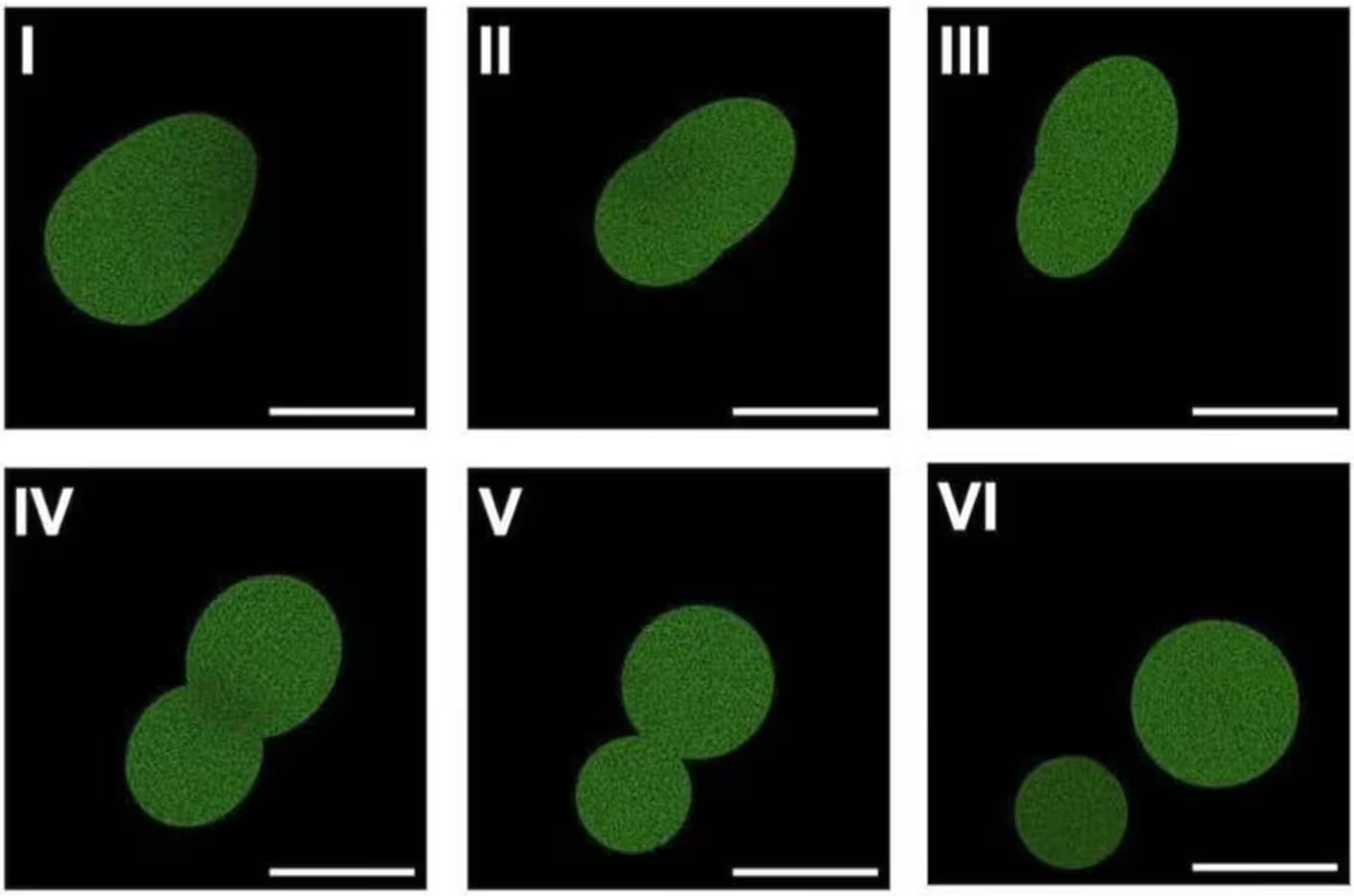
Kate Adamala, a synthetic biologist at the University of Minnesota, represents the shift toward application-driven research. While her early work focused on foundational questions, she now utilizes modern synthetic tools to engineer cells that possess real-world utility. In July, her team unveiled SpudCell, a synthetic construct capable of feeding, competing for resources, growing, dividing, and replicating its DNA—effectively completing a full cellular life cycle. While it lacks the ability to synthesize its own protein-building machinery or evolve independently, it marks a significant leap forward in the quest to create autonomous synthetic systems.
The Elusive Definition of Life
Despite these technical milestones, the field faces a philosophical hurdle: there is no universally accepted definition of life. Scientists generally agree that living things must metabolize, respond to their environment, maintain internal homeostasis, reproduce, and evolve. However, bridging the gap between a collection of biological parts and a cohesive, living entity remains a formidable challenge.
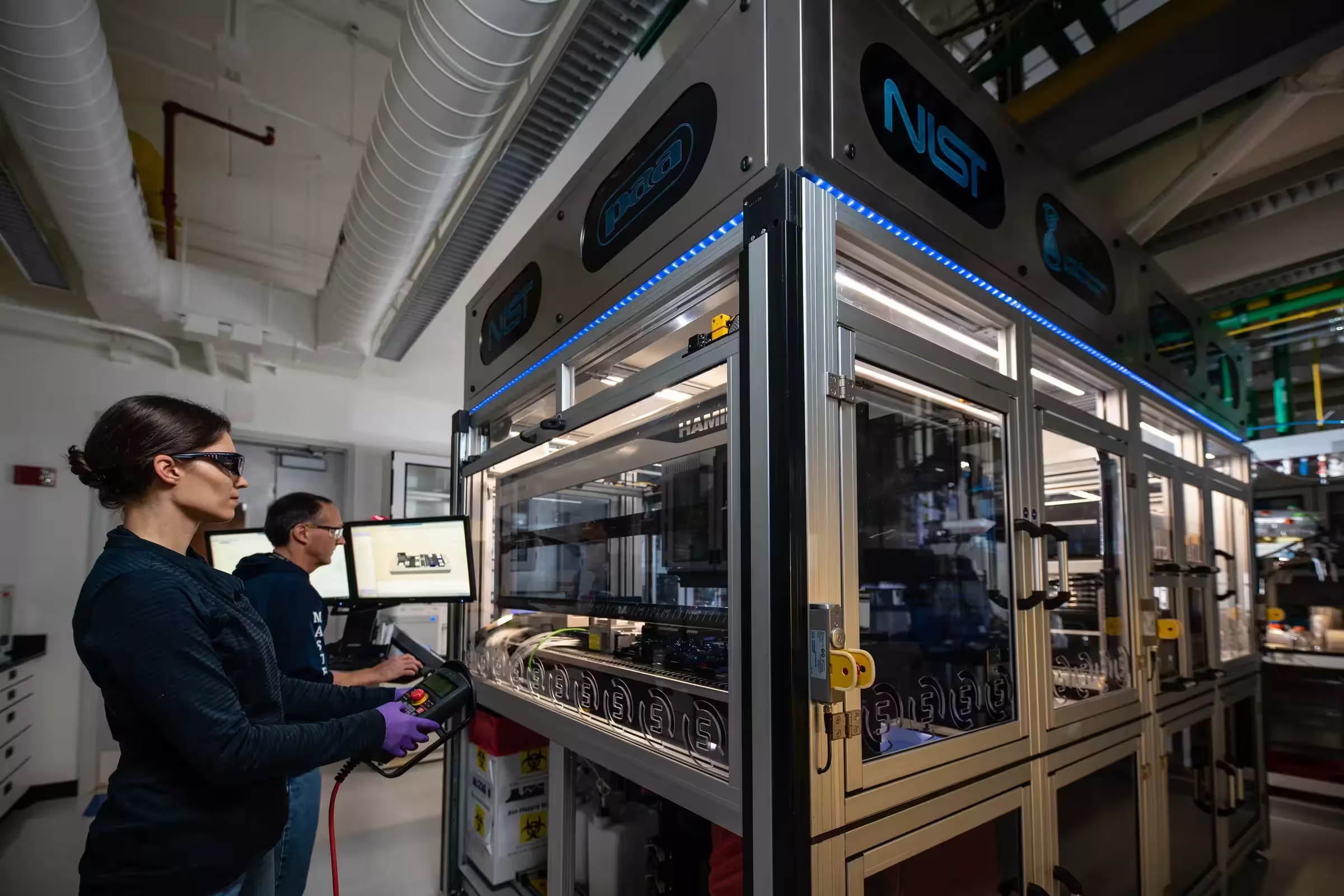
Elizabeth Strychalski, who leads the Cellular Engineering Group at the National Institute of Standards and Technology (NIST), notes that while researchers are getting closer to assembling living systems from non-living matter, the “magic” that allows parts to function as a unified whole remains elusive. For many, the threshold of life is a moving target that researchers often prefer to identify intuitively rather than through rigid checklists.
Unlocking Ancient Secrets
Parallel to the work of synthetic biologists, the Origins of Life Initiative at Harvard University approaches the problem through the lens of deep history. Founded by astronomer Dimitar Sasselov, the group investigates how early Earth’s chemistry, including the interactions of RNA and peptides under intense ultraviolet radiation, may have paved the way for the first protocells. Recent research, such as the synthesis of RNA strands capable of near-replication, highlights the ongoing progress in understanding how simple chemical reactions evolved into biological complexity.
Similarly, Nobel laureate Jack Szostak has spent years investigating fatty acid membranes that could serve as the boundaries for the earliest cells. His work explores how RNA within these simple compartments can undergo replication, offering a window into how the first units of life may have organized themselves.
Building Beyond Biology
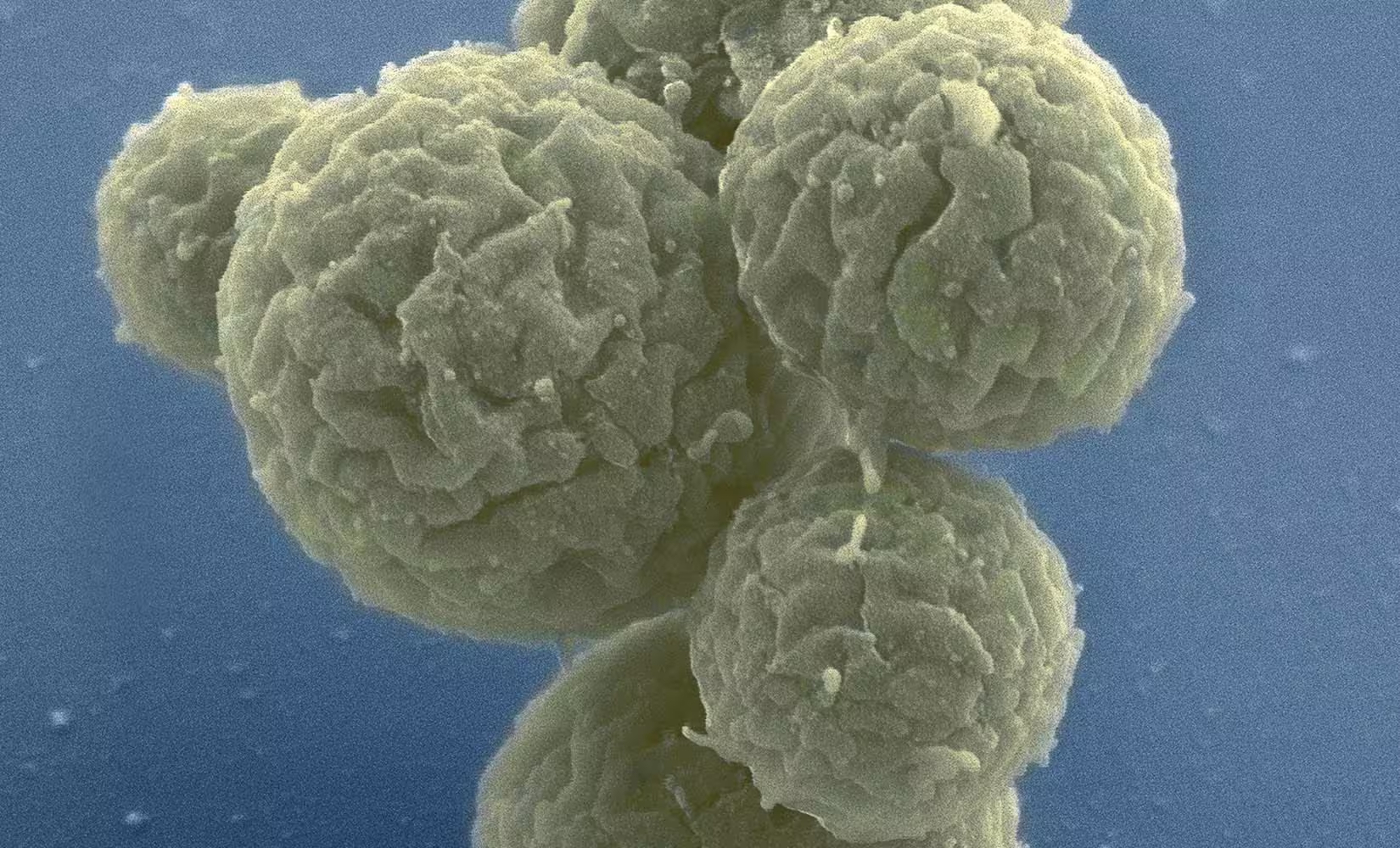
Other researchers are eschewing traditional biological components entirely. Juan Pérez-Mercader, a physicist at Harvard, seeks to demonstrate that life is a set of physical properties rather than a specific chemical recipe. His lab utilizes light-activated, non-biochemical polymerization to create synthetic micelles—water-filled structures that can grow, reproduce, and evolve. By proving that life-like behaviors can emerge from synthetic polymers, his work challenges the notion that biology is exclusively dependent on DNA and proteins.
Managing Safety and Containment
As the ability to construct synthetic systems grows, so do concerns regarding safety, containment, and potential misuse. The specter of “dual-use” technology—where scientific advancements could be repurposed for harmful ends—is a primary focus for researchers like Strychalski. The community is increasingly proactive, with experts pushing for robust biosafety measures and ethical oversight, particularly regarding the development of mirror-life and self-replicating systems.
The late J. Craig Venter, a pioneer in synthetic genomics, spent his final years pushing the boundaries of what could be achieved with minimal synthetic genomes. His work, which included the creation of a bacterial cell with a stripped-down, synthetic genetic code, remains a cornerstone of the field. As researchers continue to refine these technologies, the goal is to develop standardized metrics to measure “aliveness” and ensure that any breakthrough is met with appropriate safeguards.
While the path to creating life remains a complex, multidisciplinary puzzle, the convergence of physics, chemistry, and synthetic biology is accelerating. Whether through uncovering the origins of our own existence or engineering new forms of life to serve human needs, the quest to build life in the lab continues to redefine our understanding of the natural world.

This article has been fact checked for accuracy, with information verified against reputable sources. Learn more about us and our editorial process.
Last reviewed on .
Article history
- Latest version
Cite this page:
- Posted by Hassan Raza