Mysterious 8-Foot Predator Found in French Lake After Decades in Storage
Nearly three decades after their discovery in France, paleontologists have finally identified a collection of mysterious fossils found in Provence.
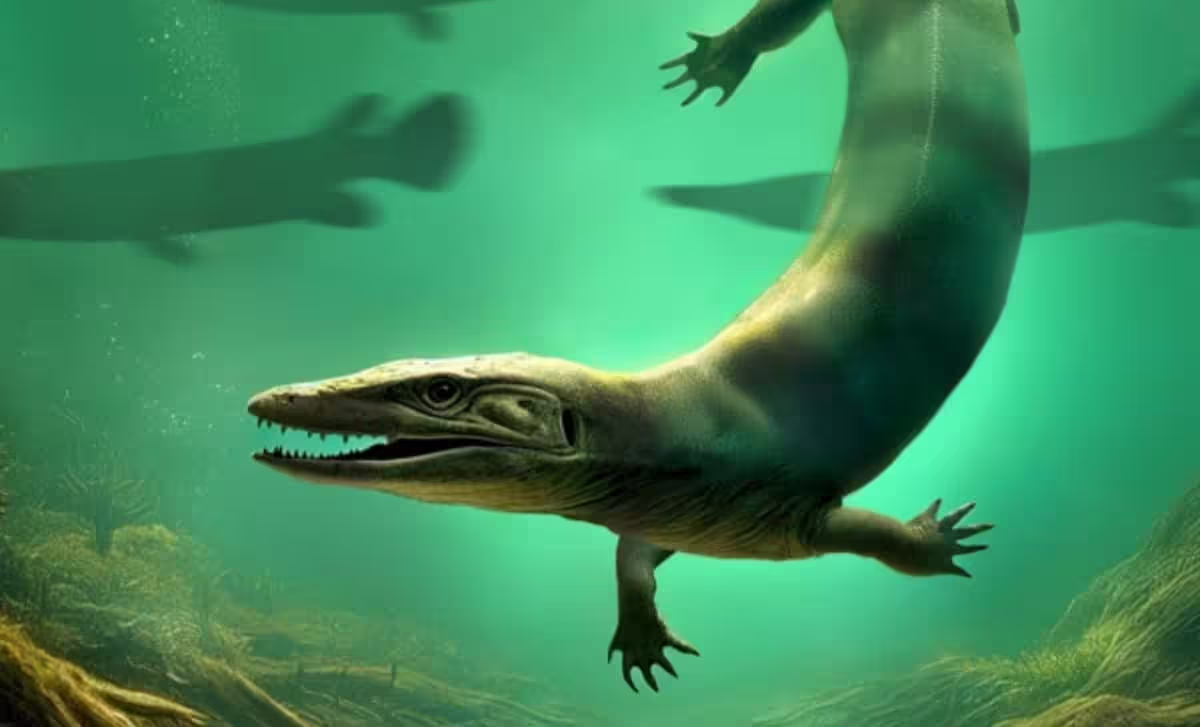
Paleontologists have officially identified a new species of mosasaur, Garamaudo bauciensis, based on fossil remains originally unearthed in Provence, France, in 1997. Unlike its colossal, ocean-dwelling relatives that dominate popular imagination, this roughly 2.5-meter-long predator appears to have been an inhabitant of freshwater lake ecosystems during the Santonian age of the Late Cretaceous, approximately 84 million years ago.
The findings, detailed in the Peer Community Journal, shed light on a niche group of early mosasaurs known as tethysaurines. While the majority of mosasaur fossils are recovered from marine deposits, this discovery adds to a growing body of evidence that certain lineages of these reptiles successfully adapted to freshwater environments in regions ranging from Portugal to Hungary.
Deciphering a Decades-Old Fossil Trove
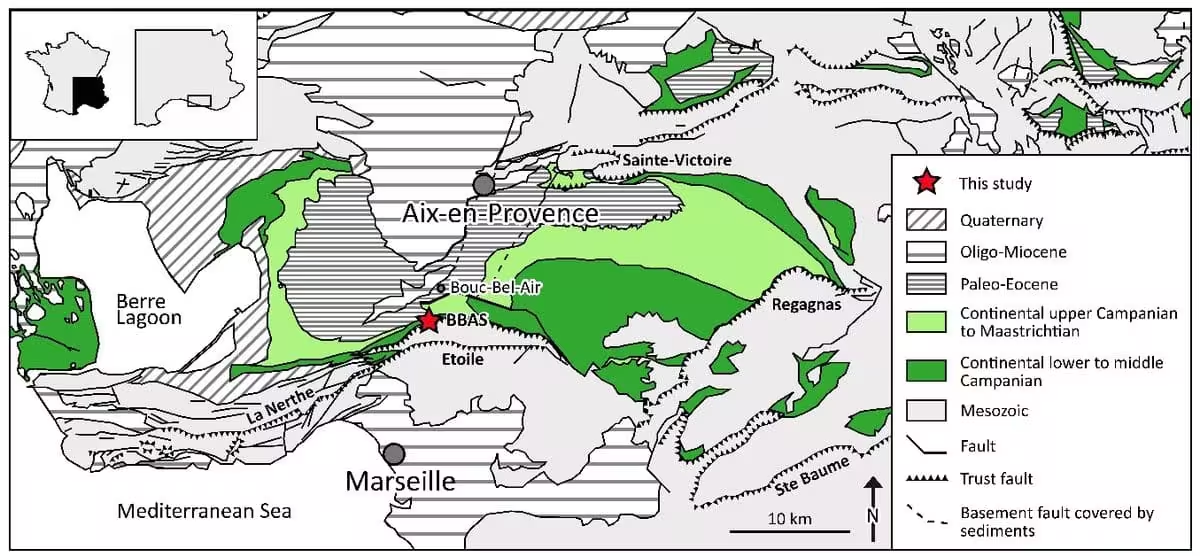
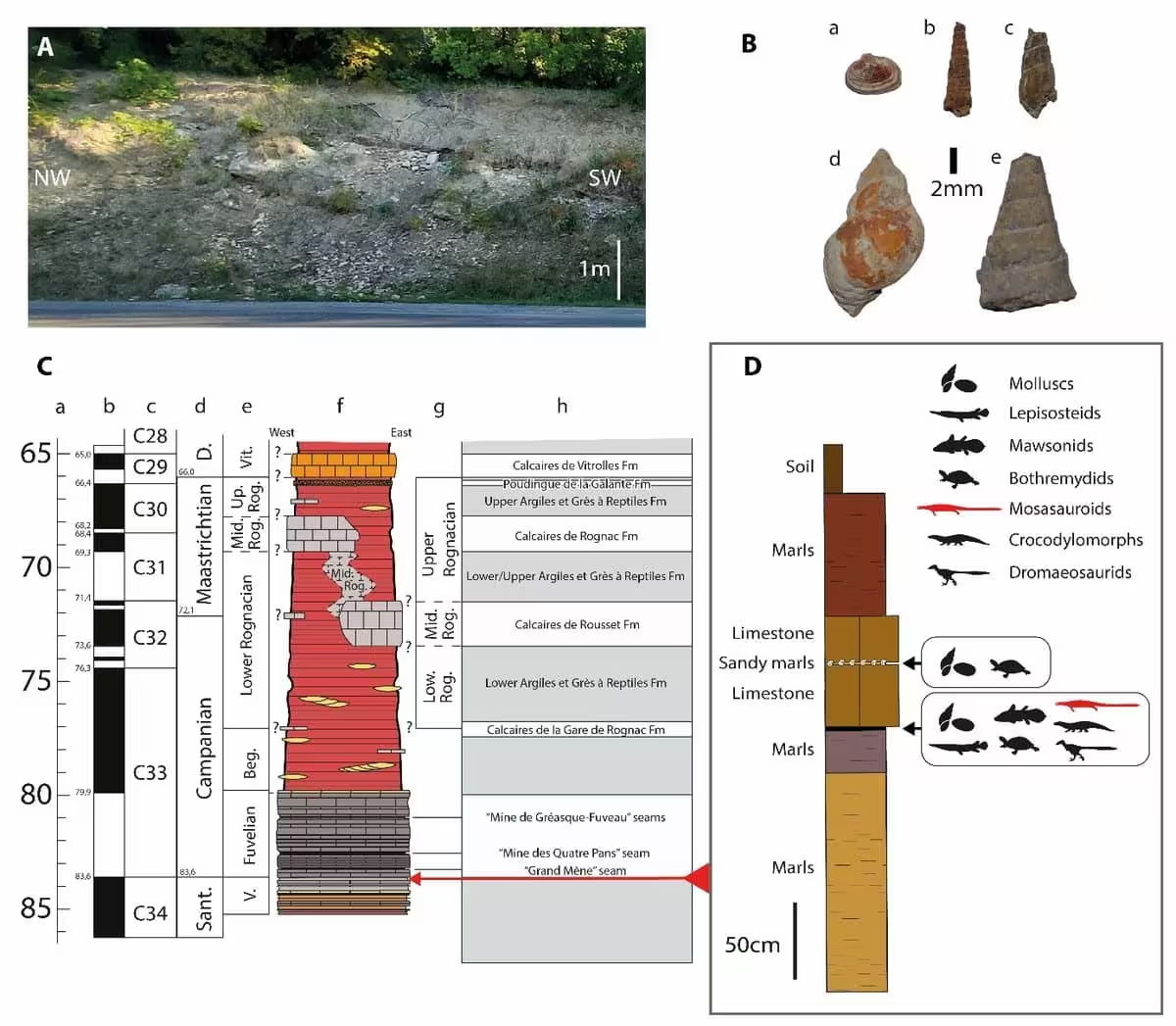
The site of the discovery, located in the Bouc-Bel-Air area of southeastern France, yielded a collection of remains—including parts of the lower jaw, ribs, vertebrae, pelvis, and humerus—that likely represent at least four individuals. Geological analysis suggests the area was once a moderately eutrophic lake characterized by carbonate production, which faced periodic shifts due to flooding. Researchers believe these rapid inundation events likely caused the fractures seen in the holotype specimen, though the surface integrity of the bones remains remarkably well-preserved.
A Distinctive Aquatic Morphology
Garamaudo bauciensis stands out for its unusual skeletal structure. Led by experts such as Dr. Nathalie Bardet and Dr. Alexandra Houssaye of France’s National Museum of Natural History, the team found that the creature retained limbs more reminiscent of land-dwelling ancestors, alongside a pelvis firmly connected to the spine. This marks a stark departure from the highly derived, paddle-limbed morphology found in typical marine mosasaurs.
CT scans of the remains revealed dense, compact bone tissue throughout the vertebrae, ribs, and humerus. This density, combined with the creature’s long, straight ribs, suggests a narrow, deep-bodied animal that likely navigated its environment through eel-like, undulatory swimming. Scientists hypothesize that this bone density helped the animal control buoyancy, potentially allowing it to act as an ambush predator in the depths of its lake home, feeding on local fish, amphibians, or other reptiles.
Broadening the Evolutionary Narrative
The placement of this species within the Tethysaurinae underscores a significant evolutionary divergence. While open-ocean mosasaurs were rapidly evolving into high-speed swimmers with porous, spongious bones, Garamaudo bauciensis represents a branch that pursued a different path in freshwater habitats.
“During the same period, hydropedal and hydropelvic mosasaurs with a higher growth rate and spongious bones, indicating an active carangiform swimming mode, evolved and radiated in open marine environments, spreading throughout the world,” the researchers noted.
By filling in these gaps, the study provides a more nuanced view of the post-Turonian era, demonstrating that mosasaurids occupied a wider range of ecological niches than researchers previously understood. This discovery suggests that the history of these ancient predators was marked by complex environmental partitioning that allowed them to thrive across both vast oceans and secluded continental waters.
This article has been fact checked for accuracy, with information verified against reputable sources. Learn more about us and our editorial process.
Last reviewed on .
Article history
- Latest version
Reference(s)
- Bardet, Nathalie., et al. “Garamaudo bauciensis, a new freshwater mosasaurid (Reptilia, Squamata) from the Santonian (Late Cretaceous) of Provence, southeastern France.” Peer Community Journal, vol. 6, September 28, 2026 Peer Community In, doi: 10.24072/pcjournal.804. <https://peercommunityjournal.org/articles/10.24072/pcjournal.804/>.
- Wikimedia, Contributeurs. “géologue et paléontologue française.”, July 17, 2026 Fondation Wikimedia, Inc. <https://fr.wikipedia.org/wiki/Nathalie_Bardet>.
- <https://alexandra-houssaye.weebly.com/>.
Cite this page:
- Posted by Hassan Raza