Common Sweetener Byproduct Found To Damage DNA In Lab Study
A single DNA impurity and fragmented genetic material have sparked a critical debate regarding the safety standards for modern medical treatments.
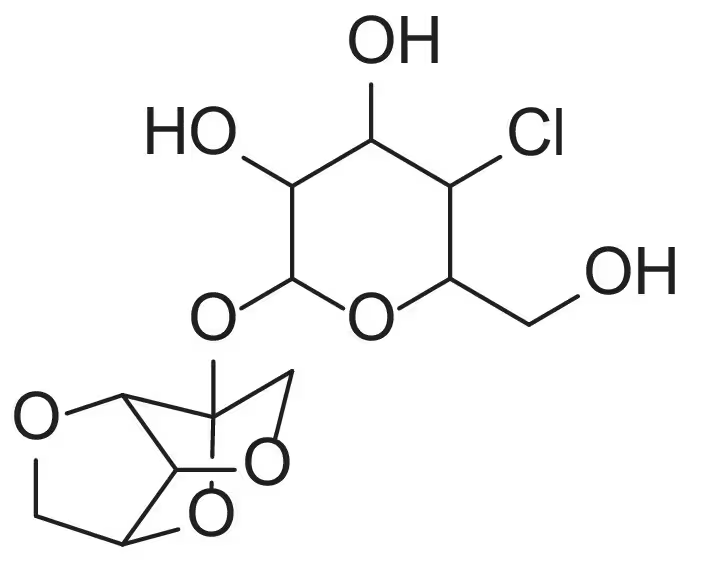
A compound known as sucralose-6-acetate has moved to the center of a scientific debate regarding the safety of one of the world’s most common artificial sweeteners. Found in trace amounts within commercial sucralose—widely known by the brand name Splenda—the substance has raised concerns among researchers regarding its potential to damage genetic material.
The controversy stems from research led by Susan Schiffman at North Carolina State University. In a study published in the Journal of Toxicology and Environmental Health, Part B, her team exposed human cells to the compound in laboratory settings. Using advanced screening methods, including the MultiFlow assay, the researchers observed that sucralose-6-acetate appeared to be genotoxic, specifically acting as a clastogen capable of fracturing DNA strands. Their findings suggested that the compound could compromise the intestinal barrier and trigger genetic pathways associated with inflammation and oxidative stress.
Regulatory Stance Remains Unchanged
While the 2023 laboratory results sparked significant public concern, international food safety bodies have maintained their confidence in the sweetener’s regulatory profile. On February 16, 2026, the European Food Safety Authority (EFSA) released a comprehensive re-evaluation of sucralose. After reviewing data spanning over two decades, the expert panel concluded that the current acceptable daily intake of 15 milligrams per kilogram of body weight remains safe. EFSA officials noted that the 2023 genotoxicity findings held limited relevance for food safety and did not warrant a change in policy.
In the United States, the FDA continues to uphold its approval of the additive, which was originally granted in 1998 following an extensive review of more than 110 clinical and toxicological studies. More recent research has also surfaced, including an August 2026 study published in Food and Chemical Toxicology that yielded largely negative results regarding genotoxicity, though some researchers noted that certain assay signals remained difficult to interpret.
Thermal Risks in the Kitchen
Despite the consensus on intake safety, European regulators have identified new limitations regarding the culinary use of sucralose. During its re-evaluation, EFSA found insufficient evidence to guarantee the safety of the sweetener when subjected to high-temperature baking or industrial processing. The chemical structure of sucralose can become unstable under heat, potentially releasing chlorinated impurities.
This risk has prompted specific warnings for home environments where temperatures are less controlled. The German Federal Institute for Risk Assessment issued an advisory in early 2026, explicitly recommending that consumers avoid heating sucralose-containing products above 120 °C (248 °F). Regulators have suggested that to mitigate potential risks, any sweetener usage should ideally occur after the cooking process is complete.
This article has been fact checked for accuracy, with information verified against reputable sources. Learn more about us and our editorial process.
Last reviewed on .
Article history
- Latest version
Reference(s)
- Authority, European. “Re-evaluation of sucralose (E 955) as a food additive.”, February 16, 2026 European Food Safety Authority <https://www.efsa.europa.eu/en/plain-language-summary/re-evaluation-sucralose-e-955-food-additive>.
- “Sucralose Heating Above 120 Degrees Can Produce Substances That Are Harmful To Health.” <https://www.bfr.bund.de/assets/01_Ver%C3%B6ffentlichungen/Mitteilungen_englisch/sucralose-heating-above-120-degrees-can-produce-substances-that-are-harmful-to-health.pdf>.
Cite this page:
- Posted by Hassan Raza