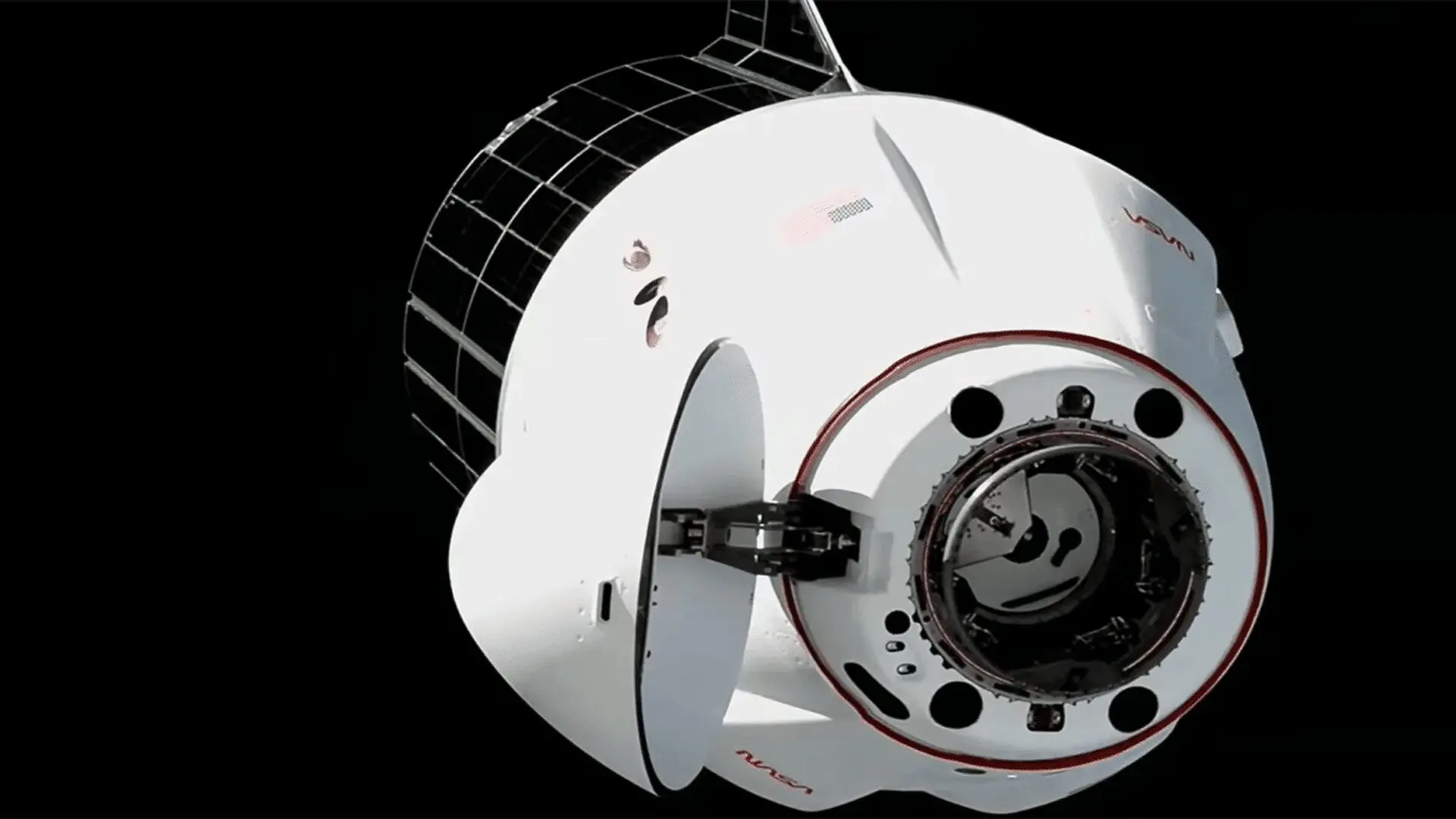
A SpaceX Dragon cargo spacecraft successfully docked with the International Space Station (ISS) on October 15, 2026, delivering over 6,300 pounds of vital supplies and cutting-edge research hardware to the orbiting laboratory. The mission, which marks SpaceX’s 35th commercial resupply flight for NASA, arrived at the station’s Harmony module at 10:27 a.m. EDT.
The mission launched on October 13 from Space Launch Complex 40 at Cape Canaveral Space Force Station, Florida, atop a Falcon 9 rocket. Upon arrival, the Expedition 75 crew began the process of unloading the cargo, which includes critical materials for ongoing scientific investigations into human health and advanced power infrastructure.
Another power upgrade is coming
The final pair of roll-out solar arrays have arrived at the space station aboard the latest SpaceX Dragon resupply.https://t.co/C6T9ISEAeg https://t.co/Ypl7ijqv69
A significant portion of the payload is dedicated to biomedical engineering, leveraging the unique microgravity environment to study complex biological processes that are difficult to isolate on Earth. Among the high-profile experiments is hardware designed to manufacture artificial retinas. By utilizing the stable, weightless conditions of space, researchers hope to refine the production of these light-sensitive implants, which could one day assist in restoring vision for those suffering from retinal cell degradation.
The Dragon also carried three-dimensional heart tissue models, intended to serve as sophisticated platforms for large-scale pharmaceutical testing. These models provide a more accurate representation of human cellular response than traditional two-dimensional cultures, allowing scientists to observe how drugs interact with tissue in a more realistic structural context.
Neuroscience Research in Low Earth Orbit
In a move to better understand the mechanisms behind debilitating neurodegenerative conditions, NASA has sent specialized brain organoids to the station. These laboratory-grown structures simulate early brain development and provide a controlled environment to study the pathology of diseases such as Alzheimer’s, Parkinson’s, and multiple sclerosis.
While these organoids are not replicas of a human brain, they allow scientists to observe cellular interactions and developmental milestones in a way that terrestrial models cannot. By comparing these space-based observations with ground-based findings, researchers aim to identify new therapeutic targets for conditions that remain among the most significant medical challenges of the modern era.
Completing the Station’s Power Infrastructure
Beyond its scientific cargo, the mission delivered the final pair of International Space Station Roll-Out Solar Arrays (IROSAs). These flexible, deployable power modules are essential for the station’s continued viability as its original hardware ages. Designed to be compactly stowed for launch, these arrays unfold to provide a massive increase in electrical output, ensuring that the station’s critical life support, communication, and scientific systems remain fully operational.
The arrival of this final set marks the culmination of a multi-year effort to modernize the orbital laboratory’s energy grid. Astronauts are expected to perform the complex installation of these arrays later this fall, a procedure that involves delicate maneuvering outside the station to integrate the new hardware with the existing electrical architecture.
Fact Checked
This article has been fact checked for accuracy, with information verified against reputable sources. Learn more about us and our editorial process.
Last reviewed on .
Article history
Latest version
Cite this page:
Raza, Hassan. “SpaceX Dragon Docks at ISS With Artificial Retinas and Final Solar Power Upgrade.” BioScience. BioScience ISSN 2521-5760, 16 October 2026. <https://www.bioscience.com.pk/en/subject/biology/spacex-dragon-reaches-space-station-with-advanced-science-experiments-and-new-solar-arrays>.
Raza, H. (2026, October 16). “SpaceX Dragon Docks at ISS With Artificial Retinas and Final Solar Power Upgrade.” BioScience. ISSN 2521-5760. Retrieved October 16, 2026 from https://www.bioscience.com.pk/en/subject/biology/spacex-dragon-reaches-space-station-with-advanced-science-experiments-and-new-solar-arrays
Raza, Hassan. “SpaceX Dragon Docks at ISS With Artificial Retinas and Final Solar Power Upgrade.” BioScience. ISSN 2521-5760. https://www.bioscience.com.pk/en/subject/biology/spacex-dragon-reaches-space-station-with-advanced-science-experiments-and-new-solar-arrays (accessed October 16, 2026).