Rocket Lab Just Hit A Major Milestone With Its Latest Secretive Earth Observation Mission
Rocket Lab’s 99th mission successfully deployed a Japanese radar satellite, strengthening a vital orbital network capable of imaging Earth in any weather.
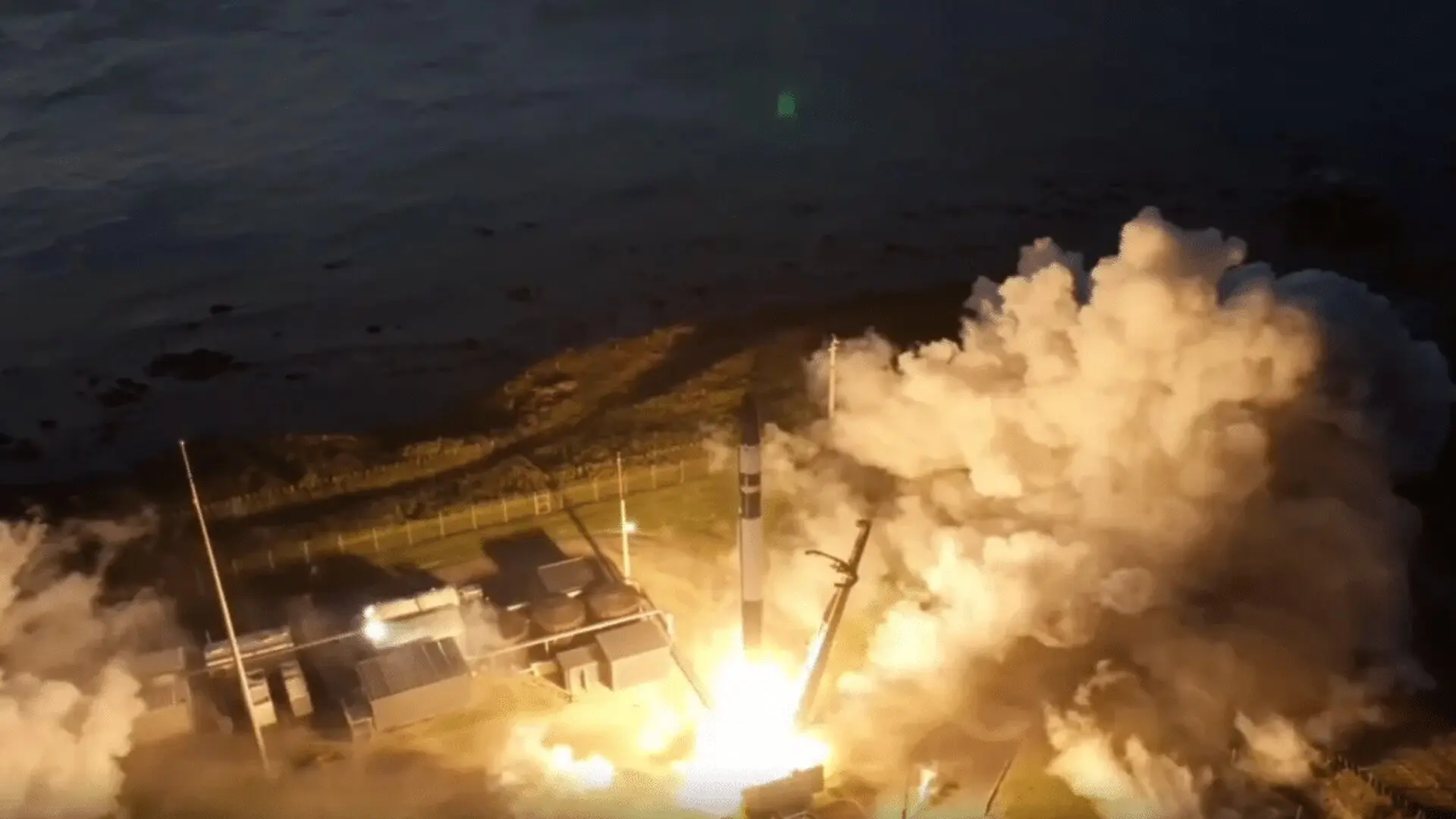
Rocket Lab successfully executed its 99th mission this weekend, deploying an advanced radar-imaging satellite into low Earth orbit to bolster Japan’s growing orbital network. The launch, dubbed The Sea God Surveys, took place on November 2, 2026, from the company’s primary launch complex in New Zealand, further cementing a long-standing collaboration between the launch provider and the Japanese firm iQPS.
The mission utilized an Electron rocket to ferry the synthetic aperture radar (SAR) spacecraft to an altitude of roughly 357 miles (575 kilometers). According to mission telemetry, deployment was confirmed 56 minutes after the vehicle cleared the pad. This flight marks the tenth time Rocket Lab has provided launch services for iQPS, reflecting the Japanese company’s push to establish a robust, 36-satellite constellation designed to monitor the planet with high precision.
Mission success! Payload deployment confirmed from Electron’s Kick Stage for the latest QPS-SAR satellite by @QPS_Inc – our tenth launch for their constellation with 100% mission success. https://t.co/WYvTc9IXQs
— Rocket Lab (@RocketLab) November 2, 2026
Unlocking All-Weather Earth Observation
The newly deployed satellite distinguishes itself from conventional Earth-observation hardware through its use of SAR technology. Unlike optical cameras, which rely on ambient sunlight to capture imagery, radar satellites actively emit microwave pulses toward the surface and interpret the returning echoes. This methodology allows for clear data collection regardless of darkness or thick cloud cover.
By bypassing the limitations of traditional photography, these satellites provide critical capabilities for real-time disaster response. Radar data can track flood progression, map landslide impacts, and detect ground deformation—even when storms obstruct the view of optical sensors. Furthermore, the technology offers significant utility for maritime surveillance, infrastructure monitoring, and long-term environmental research, providing a consistent stream of information in regions that are otherwise difficult to monitor.
Rapid Expansion of Orbital Networks
The ongoing partnership with iQPS highlights the evolving market for dedicated small-satellite launches. While large-scale rideshare missions on massive launch vehicles allow for cost-sharing, operators like iQPS often favor the precision and flexibility offered by a dedicated ride. This allows for specific orbital placement that is essential for the geometry of a growing satellite constellation.
For Rocket Lab, the mission also served as a operational milestone. It represented the 90th flight of the Electron vehicle, which has now launched 17 times within the 2026 calendar year alone. By providing a reliable cadence for constellation operators, Rocket Lab continues to demonstrate the viability of its small-lift launch model in a rapidly densifying orbital environment. As iQPS continues to add units to its planned 36-satellite network, the frequency of data collection—or the “revisit rate”—will increase, providing the end-users with more timely insights into rapidly changing surface conditions.
This article has been fact checked for accuracy, with information verified against reputable sources. Learn more about us and our editorial process.
Last reviewed on .
Article history
- Latest version
Cite this page:
- Posted by Mary Johnson