Teenager Found This Fossil In 1958 And It Is Now Australia’s Oldest Dinosaur Discovery
A fossil collected by a teenager in 1958 has finally been identified, revealing a prehistoric discovery that experts say changes everything we knew.
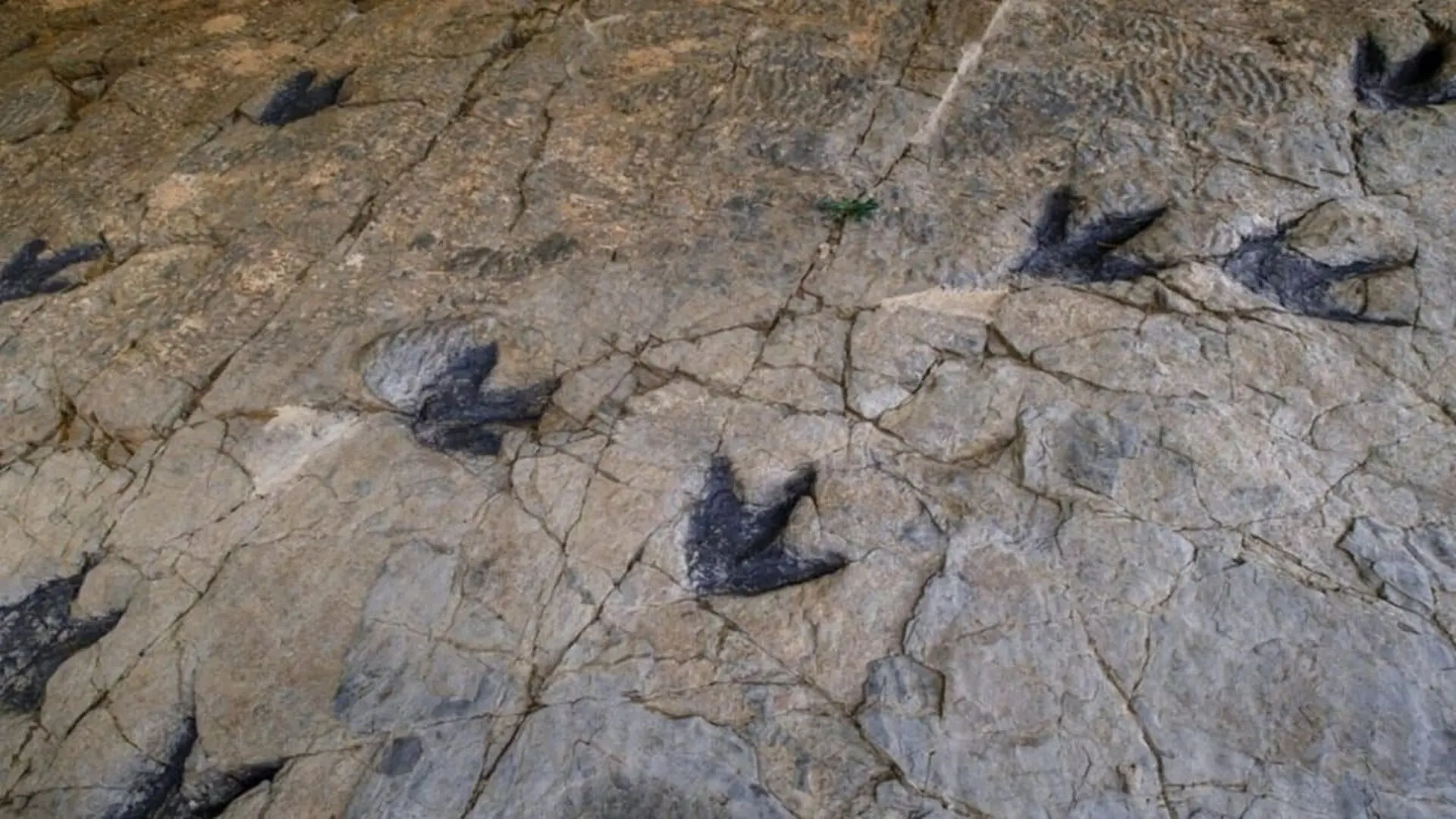
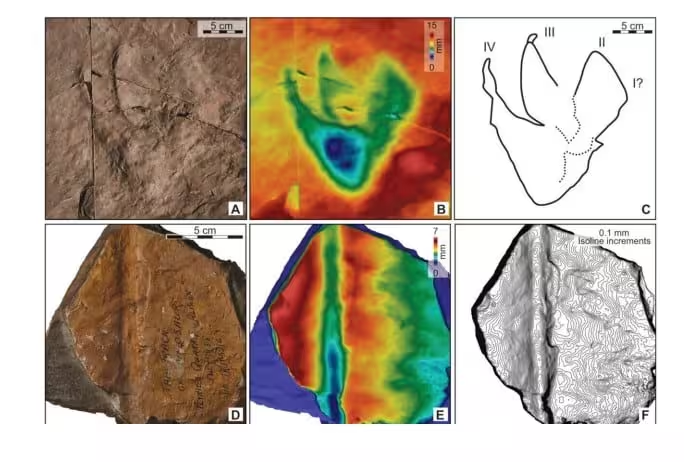
A fossilized footprint recovered from a Brisbane quarry nearly seven decades ago has been officially identified as the oldest known dinosaur trace in Australia. Dating back approximately 230 million years to the dawn of the Late Triassic period, the 18.5-centimeter impression offers a rare glimpse into the continent’s prehistoric origins. Notably, the specimen stands as the only dinosaur fossil ever unearthed within an Australian state capital.
The discovery, recently detailed in Alcheringa: An Australasian Journal of Palaeontology, underscores how vital scientific evidence can remain tucked away in private collections for generations. The fossil is now slated for permanent curation at the Queensland Museum.
An Accidental Discovery Decades in the Making
The saga began in 1958 at the Albion-based Petrie’s Quarry, where a young Bruce Runnegar, then a teenager, identified the peculiar mark while exploring with friends. Though he suspected the indentation held historical significance, he had no way of knowing at the time that he was holding a record-breaking piece of Australian natural history. He retained the fossil for more than 60 years, eventually bringing it to his academic career as he moved through positions at the University of New England and the University of California, Los Angeles.
“At the time, we suspected the marks might be dinosaur tracks, but we couldn’t have imagined their national significance,” said Bruce Runnegar, now an Honorary Professor at the University of Queensland.
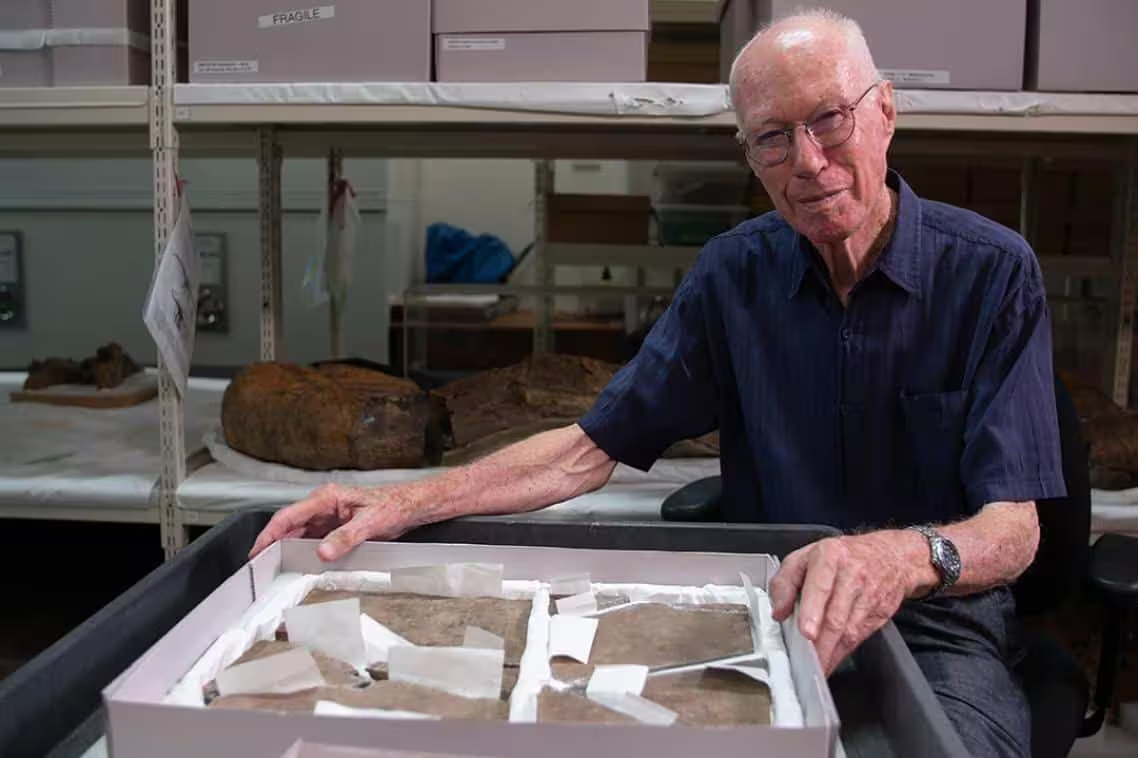
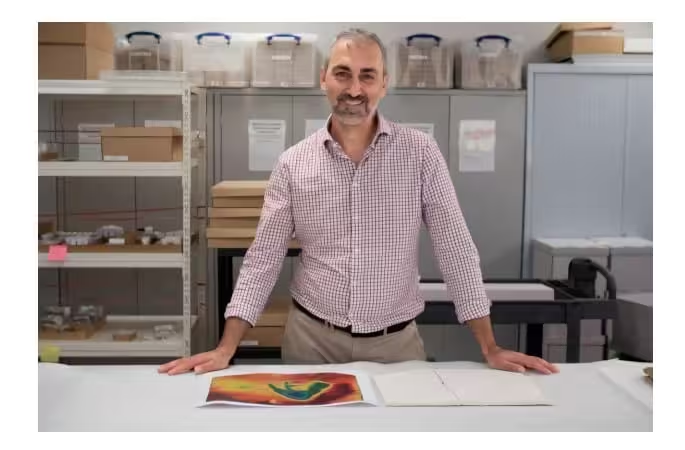
The push for formal documentation arrived after Runnegar connected with Dr. Anthony Romilio at the University of Queensland. Impressed by the advanced mapping and reconstruction techniques employed by the UQ Dinosaur Lab, Runnegar finally submitted the print for rigorous academic scrutiny.
An Ancient Walker in the Triassic Landscape
Analysis of the print suggests it was left by a bipedal creature, likely an early sauropodomorph—a precursor to the massive, long-necked titans that would dominate later landscapes. Estimates based on the track dimensions indicate the animal would have stood between 75 and 80 centimeters at the hip and carried a weight of approximately 140 kilograms.
The environment that captured this moment was likely a waterway, where the creature’s step was pressed into soft sediment that later hardened into sandstone. As Brisbane expanded, much of this geological record was lost to development, making this specific specimen a singular survivor of a vanished ecosystem.
Lessons from a Long-Hidden Relic
Dr. Romilio emphasizes that the footprint serves as a poignant reminder that significant scientific breakthroughs can persist in plain sight for decades. The loss of the original quarry site means this fossil is now the only tangible proof of dinosaurs within the city’s prehistoric boundaries.
“More than 60 years after we found it, it’s extraordinary to see it recognized as Australia’s oldest dinosaur fossil,” Runnegar noted. With the fossil now housed at the Queensland Museum, it remains accessible for future study, securing a piece of history that nearly slipped through the cracks of time.
This article has been fact checked for accuracy, with information verified against reputable sources. Learn more about us and our editorial process.
Last reviewed on .
Article history
- Latest version
Reference(s)
- Romilio, Anthony., et al. “Earliest Australian dinosaur: ichnofossils from the Carnian Aspley Formation of Brisbane, Queensland, Australia.” Alcheringa: An Australasian Journal of Palaeontology, vol. 50, no. 1, February 1, 2026, pp. 404-415. Informa UK Limited, doi: 10.1080/03115518.2025.2607630. <https://www.tandfonline.com/doi/full/10.1080/03115518.2025.2607630>.
- “Bruce Runnegar – UCLA EPSS.” <https://epss.ucla.edu/bruce-runnegar/>.
- Lucas, Spencer. “Anthony Romilio.”, June 2, 2016 <https://dinosaurs.group.uq.edu.au/profile/306/anthony-romilio>.
Cite this page:
- Posted by Mary Johnson