Solar-Powered Mosquito Repellent Fails to Lower Malaria Rates in Major Uganda Trial
A large-scale randomized trial in Uganda tested solar-powered transfluthrin emanators, revealing critical insights into the gap between laboratory efficacy and real-world protection.
Solar-powered spatial repelling devices designed to keep malaria-carrying mosquitoes away from homes in Eastern Uganda ultimately failed to significantly reduce infection rates among young children during a 12-month trial. The ambitious public health study tracked thousands of households across rural and peri-urban communities to test whether active chemical emanation could overcome the limits of traditional bed nets.
Malaria remains a persistent public health crisis across sub-Saharan Africa, driving researchers to explore innovative community-level interventions. While long-lasting insecticide-treated nets and indoor residual spraying have prevented billions of cases since 2000, rising insecticide resistance and changing mosquito biting habits have slowed global progress. Spatial emanators, which disperse volatile compounds into the air to deter mosquitoes from biting humans, represent a promising new class of vector control.
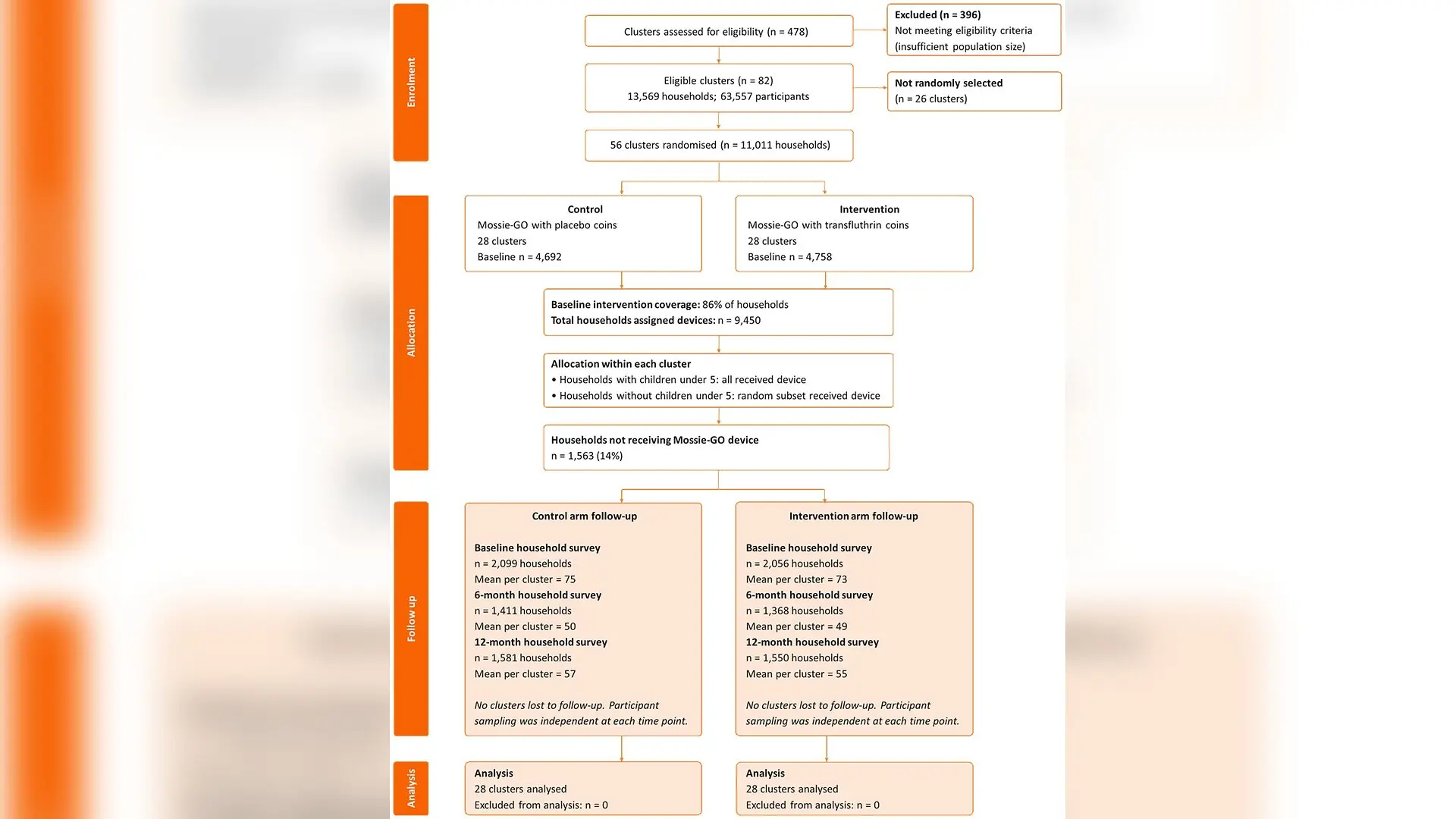
To test these tools under real-world conditions, researchers launched a large-scale evaluation known as the Mossie-GO trial, published in PLOS Global Public Health. The study was conducted in the districts of Jinja and Buikwe in Eastern Uganda, areas characterized by moderate to high malaria transmission and perennial risk. Investigators deployed 56 distinct village clusters, randomizing them in a 1:1 ratio to receive either solar-powered devices releasing transfluthrin, a synthetic pyrethroid repellent, or identical placebo devices containing no active ingredient.
How the Solar-Powered Trial Was Conducted
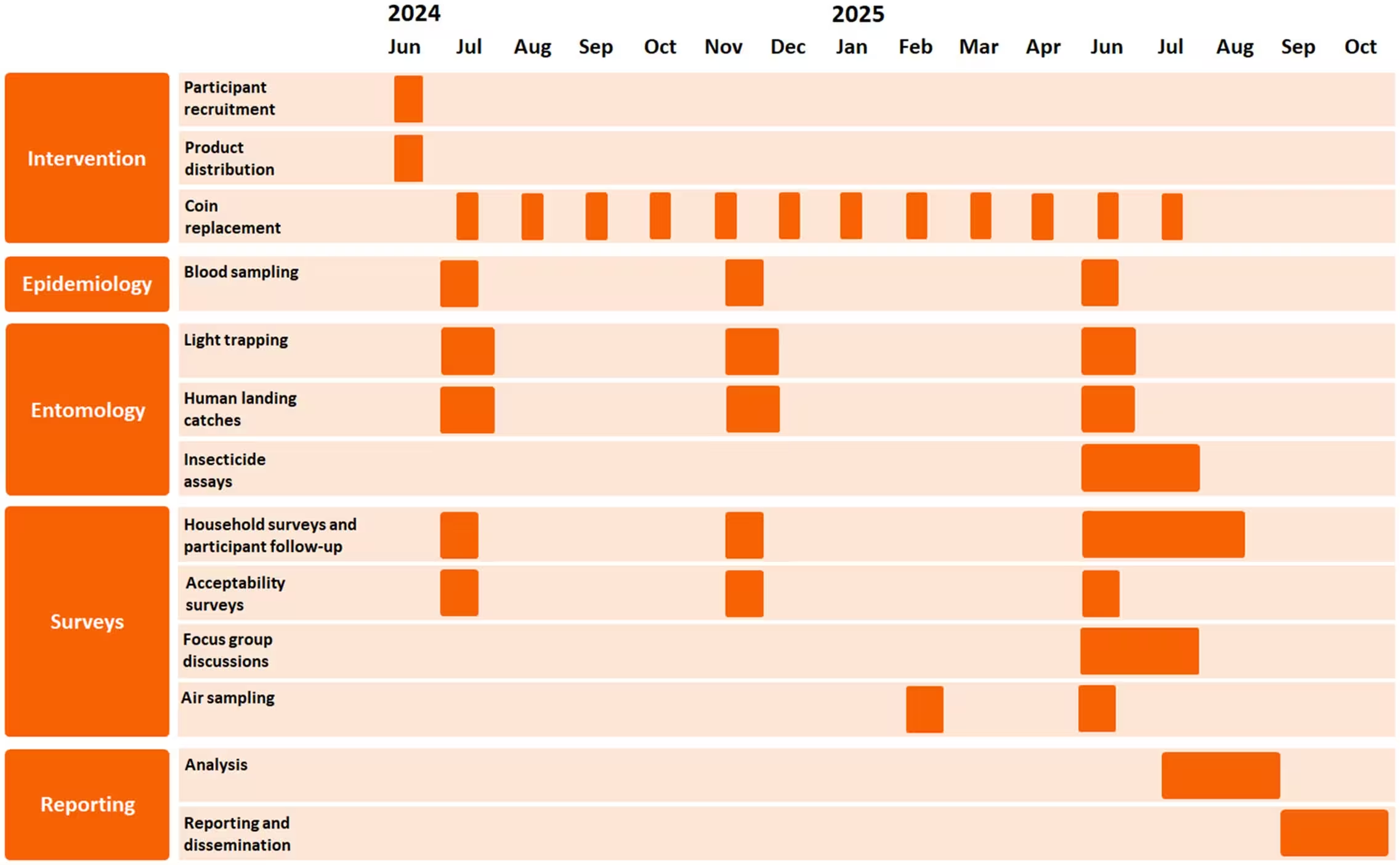
The trial enrolled over 11,000 households, distributing approximately 9,450 repelling units to families with children aged five years or younger. Each device was paired with a small solar panel and a rechargeable battery system designed to power an internal fan, which continuously volatilized replaceable cotton-based insecticide coins. Field teams replaced these treatment coins at monthly intervals throughout the one-year monitoring period.
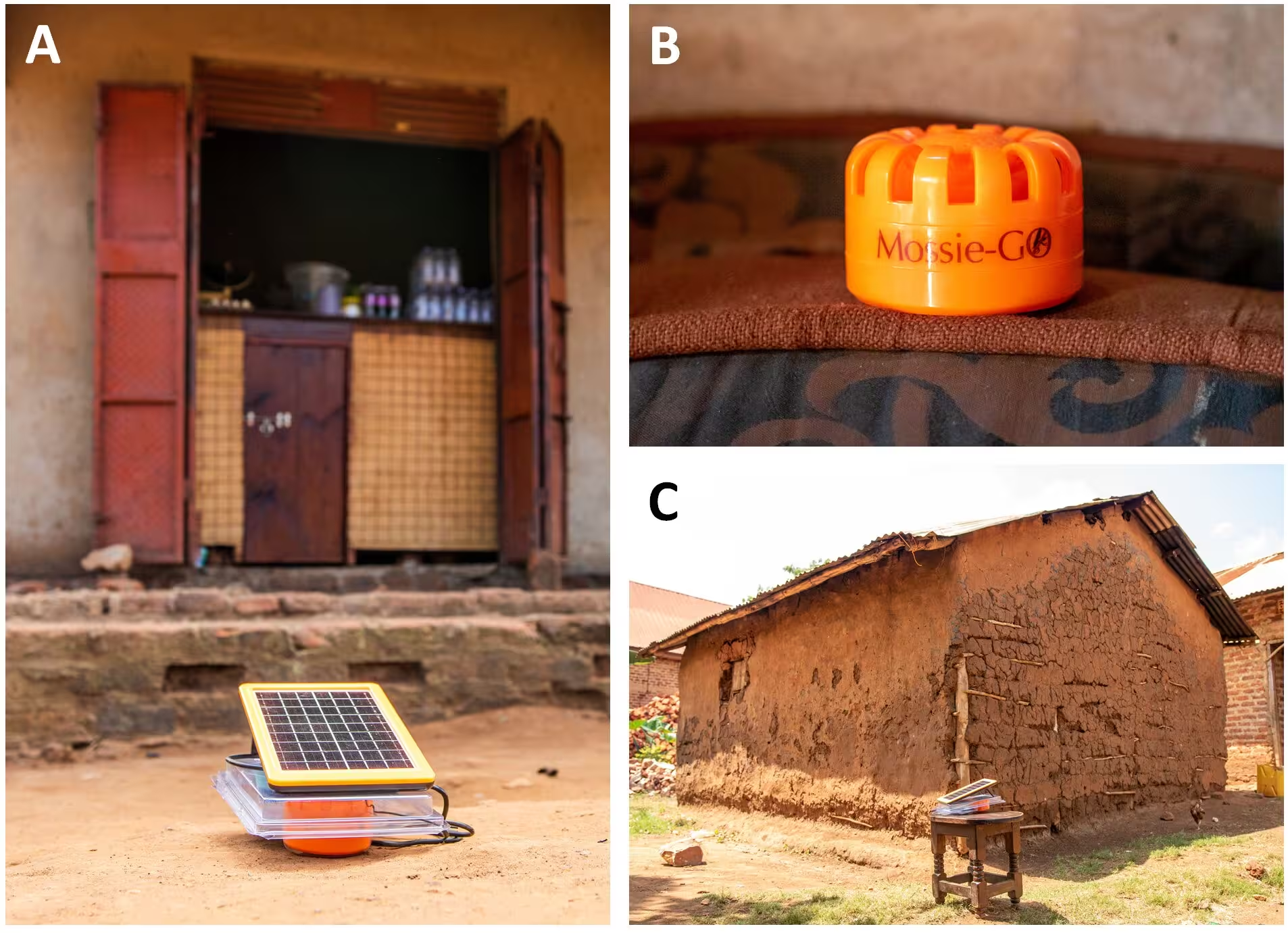
To measure the epidemiological impact, the team conducted repeated cross-sectional surveys, testing children aged five and under for malaria using rapid diagnostic tests and microscopy. Out of thousands of blood samples gathered at baseline, six months, and twelve months, researchers evaluated primary infection prevalence while controlling for baseline differences between clusters. Secondary measures tracked mosquito population density, human biting rates, airborne chemical concentrations, and user safety.
Why Infection Rates Remained Unchanged
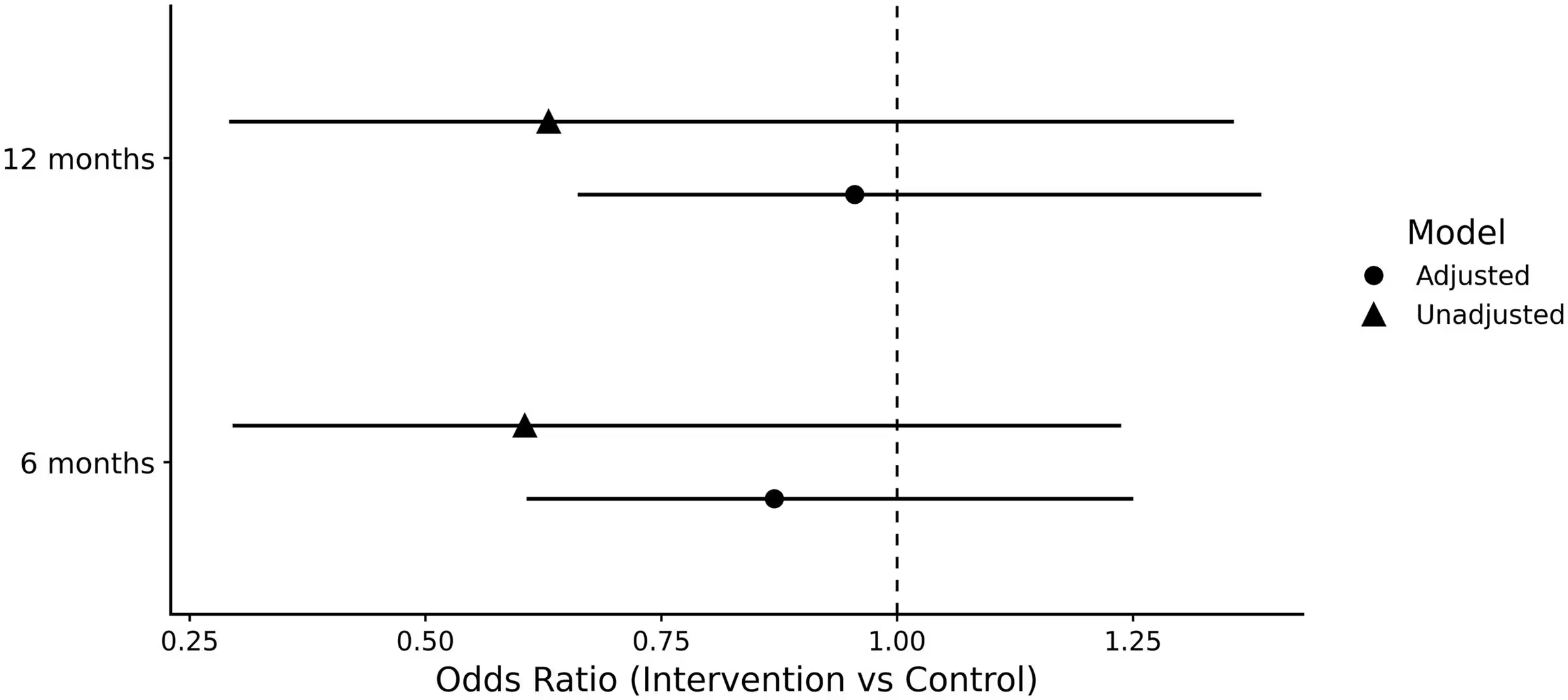
When analyzing the final clinical data, the team found no statistically significant reduction in malaria infection prevalence among children living in intervention clusters compared to control groups. At the 12-month mark, baseline-adjusted odds ratios showed an infection odds ratio of 0.96, indicating virtually no difference between the active and placebo arms. Unadjusted models had initially hinted at potential protective effects, but factoring in pre-existing baseline variations across villages eliminated those apparent differences.
Entomological assessments similarly showed no widespread drop in indoor mosquito densities or overall biting rates, though researchers noted minor, non-significant decreases in specific vector species such as Anopheles funestus during interim checks. Air sampling inside participant homes revealed that transfluthrin concentrations were frequently below the detectable laboratory limit of 0.03 nanograms per litre, suggesting that active ingredients may not have accumulated at biologically active levels under normal residential conditions.
Understanding Operational Hurdles and Safety
Several logistical and environmental factors likely contributed to the trial outcome. Device troubleshooting records indicated a mean monthly fault-reporting rate of approximately 5 percent, with broken switches and damaged solar ports causing operational downtime. Because participant compliance and exact device running times were not directly monitored, inconsistent usage or insufficient chemical emanation may have weakened the intervention’s real-world impact.
On the safety front, the solar devices proved remarkably well-tolerated by local communities. More than 5,600 adverse events were recorded across both trial arms, but nearly all symptoms were mild or moderate respiratory and general ailments typical of regional background morbidity, with no significant difference in rates between the active and control groups.
What Lies Ahead for Vector Control Research
Although the trial did not demonstrate a significant drop in clinical malaria prevalence, authors emphasized that transfluthrin itself remains a potent tool when deployed in controlled settings. Future investigations will need to examine how housing construction materials, ventilation patterns, and community-wide adoption thresholds influence airborne chemical dispersal.
Researchers concluded that bridging the gap between high efficacy in laboratory tests and real-world effectiveness will require enhanced device durability, stricter compliance tracking, and optimized active ingredient release rates. Understanding how families interact with off-grid solar technology will remain central to designing the next generation of mosquito-borne disease prevention tools.
The research was published in PLOS Global Public Health on November 5, 2026.
This article has been fact checked for accuracy, with information verified against reputable sources. Learn more about us and our editorial process.
Last reviewed on .
Article history
- Latest version
Reference(s)
- Dennehy, Jessica., et al. “Effect of a solar-powered spatial emanator on malaria prevalence in Uganda (Mossie-GO trial): A double-blinded, cluster-randomised, and placebo-controlled trial.” PLOS Global Public Health, vol. 6, no. 11, November 5, 2026, pp. e0007457 Public Library of Science (PLoS), doi: 10.1371/journal.pgph.0007457. <https://doi.org/10.1371/journal.pgph.0007457>.
Cite this page:
- Posted by Mary Ellison