New Dating Method Shows 28,000-Year-Old Hybrid Child Preceded Known Interbreeding
New radiocarbon method pins down the age of Portugal’s Lapedo child, a prehistoric skeleton with both Neanderthal and modern human traits.
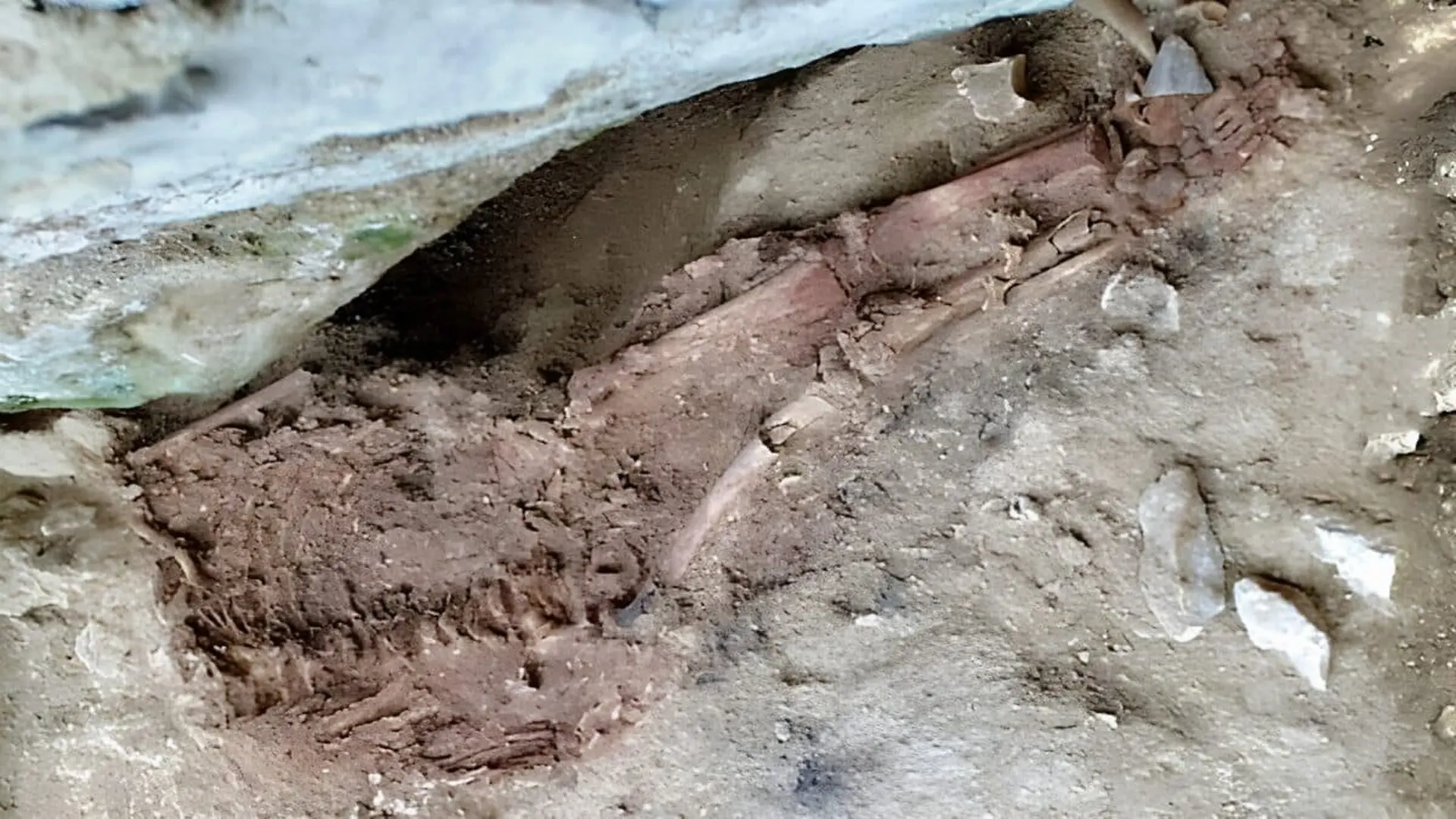
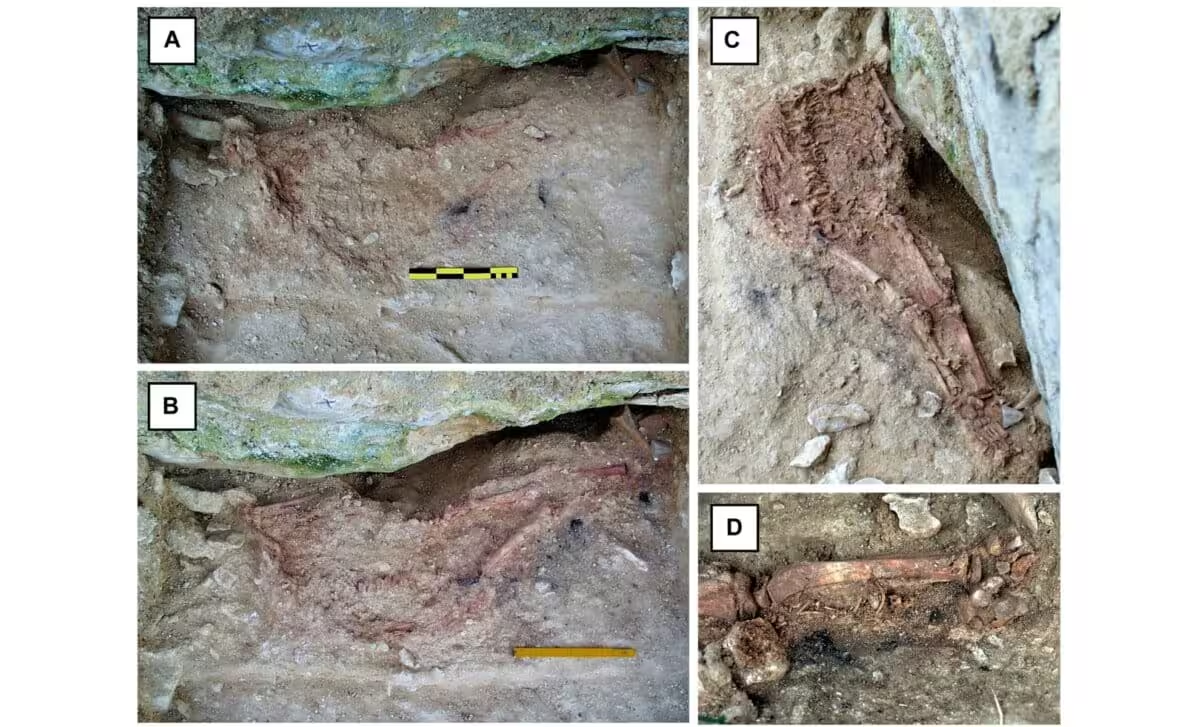
Since its unearthing in 1998, the Lapedo child’s remains have been a focal point of archaeological debate. Discovered within the Lagar Velho shelter in Portugal’s Lapedo Valley, the bones sparked interest because they displayed traits linked to both modern humans and Neanderthals.
At the time of discovery, the notion of interbreeding between Neanderthals and Homo sapiens was still highly contested. Some scholars maintained that Neanderthals vanished without leaving direct descendants, while others argued that the child’s unusual morphology could simply represent variation within early modern populations.
A Fossil That Upended Prevailing Theories
The skeleton combines a pronounced chin—typical of Homo sapiens—with short, sturdy limbs reminiscent of Neanderthal anatomy. This mosaic of features prompted scientists to label the specimen a possible hybrid, offering rare physical evidence of contact between the two groups. According to SciencePost, the lack of DNA data at the time prolonged the controversy surrounding the find.
The picture changed dramatically in 2010 when the first Neanderthal genome was decoded, confirming that gene flow between Neanderthals and modern humans did occur.
Refined Dating Using a Targeted Radiocarbon Method
Establishing an accurate age for the Lapedo child proved challenging. Conventional radiocarbon tests applied on four separate occasions yielded dates spanning 20,000 to 26,000 years, a spread attributed to sample degradation and contamination.
To overcome these obstacles, researchers employed compound-specific radiocarbon analysis (CSRA). The technique isolates distinct organic molecules—such as amino acids extracted from bone collagen—and purifies them to eliminate modern carbon. The resulting sample is then measured for its carbon‑14 content, delivering a more reliable age estimate.
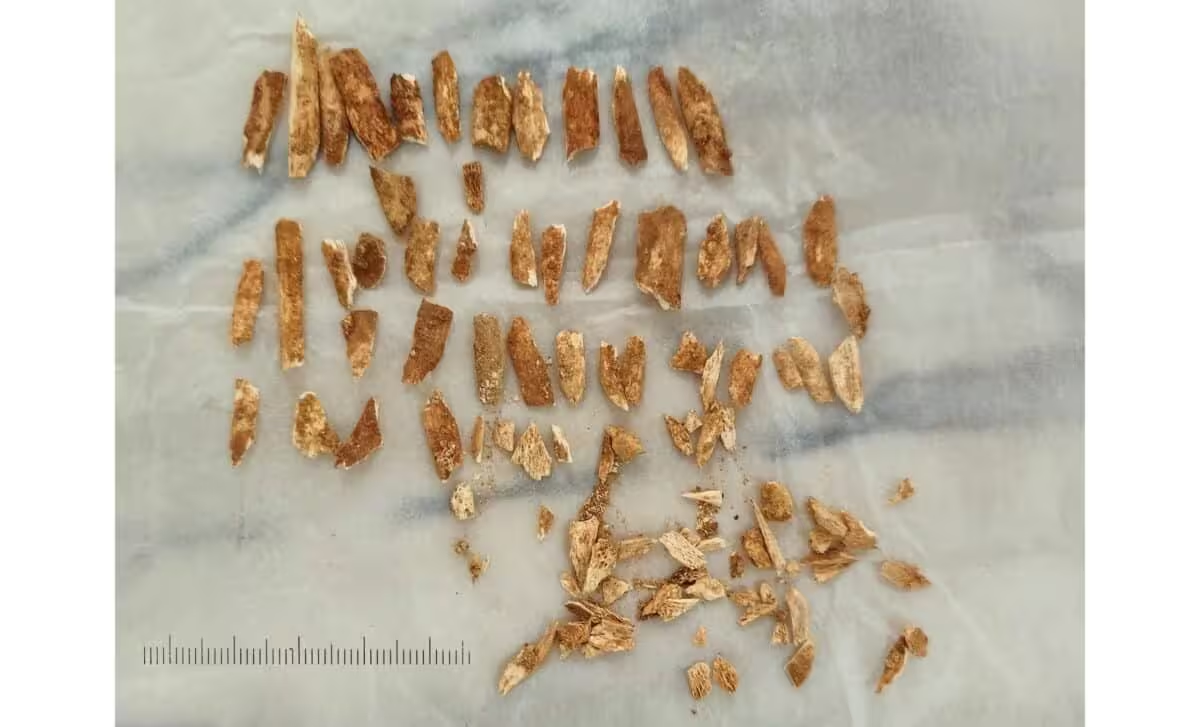
Applying CSRA, the team placed the child’s lifetime between 25,830 and 26,600 BC, roughly 28,000 years ago—significantly older than earlier estimates.
Reinterpreting the Grave Goods
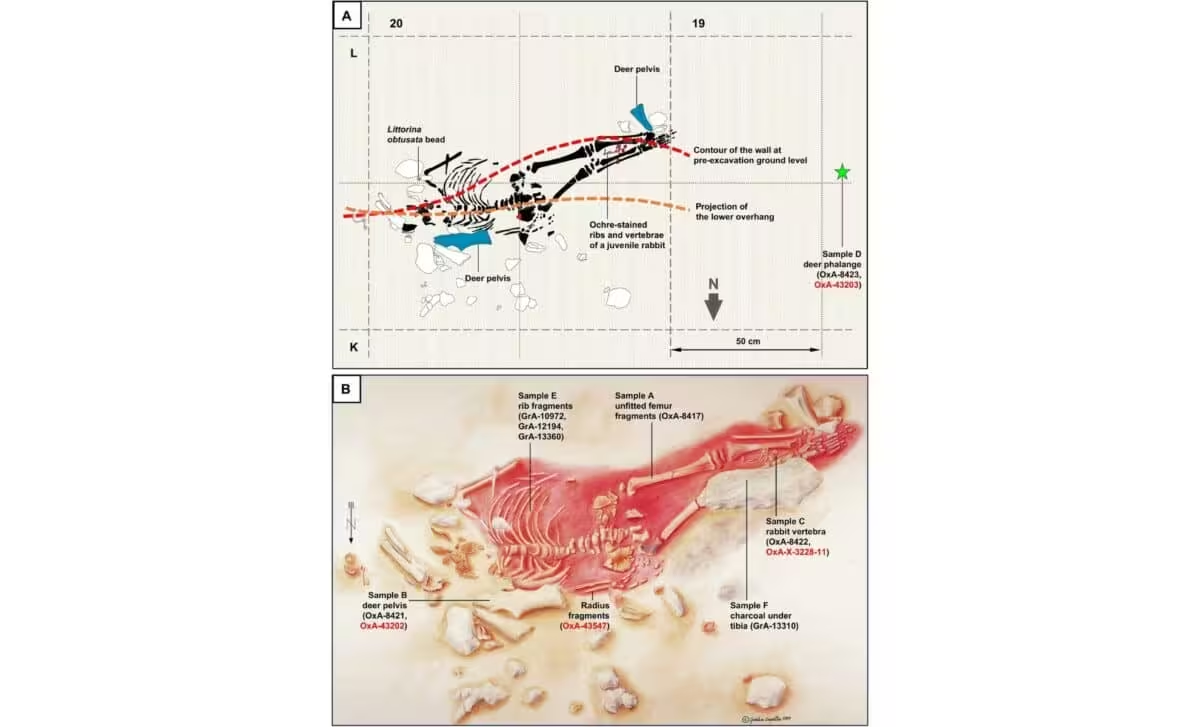
The investigation also revisited the artifacts found alongside the burial. Initial excavations uncovered a young rabbit’s bones laid on the child, red deer remains near a shoulder, and a layer of charcoal beneath the legs, all interpreted as ritual offerings.
CSRA results painted a more nuanced picture. Only the rabbit fragments were contemporaneous with the child; the deer bones and charcoal predated the interment, suggesting they were part of the site’s earlier occupational layers.
The findings, detailed in study published in Science Advances, the authors highlight how the mixed anatomical traits of the Lapedo child continue to support the idea of gene flow between Neanderthals and modern humans during their period of overlap, even though direct genetic material from this individual remains unavailable.
This article has been fact checked for accuracy, with information verified against reputable sources. Learn more about us and our editorial process.
Last reviewed on .
Article history
- Latest version
Reference(s)
- L., Brice. “Sous une roche du Portugal dormait depuis 29 000 ans un enfant qui n’aurait jamais dû exister selon les scientifiques.”, June 29, 2026 Sciencepost <https://sciencepost.fr/sous-une-roche-du-portugal-dormait-depuis-29-000-ans-un-enfant-qui-naurait-jamais-du-exister-selon-les-scientifiques/>.
- Talbi, Sarah. “They Removed One of Life's 20 Essential Amino Acids from Bacteria, and It Survived 450 Generations.”, May 13, 2026 Indian Defence Review <https://indiandefencereview.com/removed-one-of-lifes-20-essential-amino-acids-bacteria-survived/>.
- Linscott, Bethan., et al. “Direct hydroxyproline radiocarbon dating of the Lapedo child (Abrigo do Lagar Velho, Leiria, Portugal).” Science Advances, vol. 11, no. 10, March 7, 2025 American Association for the Advancement of Science (AAAS), doi: 10.1126/sciadv.adp5769. <https://www.science.org/doi/10.1126/sciadv.adp5769?adobe_mc=MCMID%3D25609653703714138231486740906066931547%7CMCORGID%3D242B6472541199F70A4C98A6%2540AdobeOrg%7CTS%3D1741290596&__cf_chl_f_tk=IlRQ4Ob5bazCjKi3Tc7xopRAJqF0HdrCGYJPFmP.m_0-1783419219-1.0.1.1-U7TislsszGk1Un8epr4U9mEU0V3WM.YWsavC6cZzxfU>.
Cite this page:
- Posted by Elizabeth Taylor