All Homo Naledi Fossils Lack Male Protein, Raising Mystery About Their Sex
Scientists find all tested Homo naledi fossils are biologically female, adding mystery to this extinct species’ mix of primitive and modern traits.
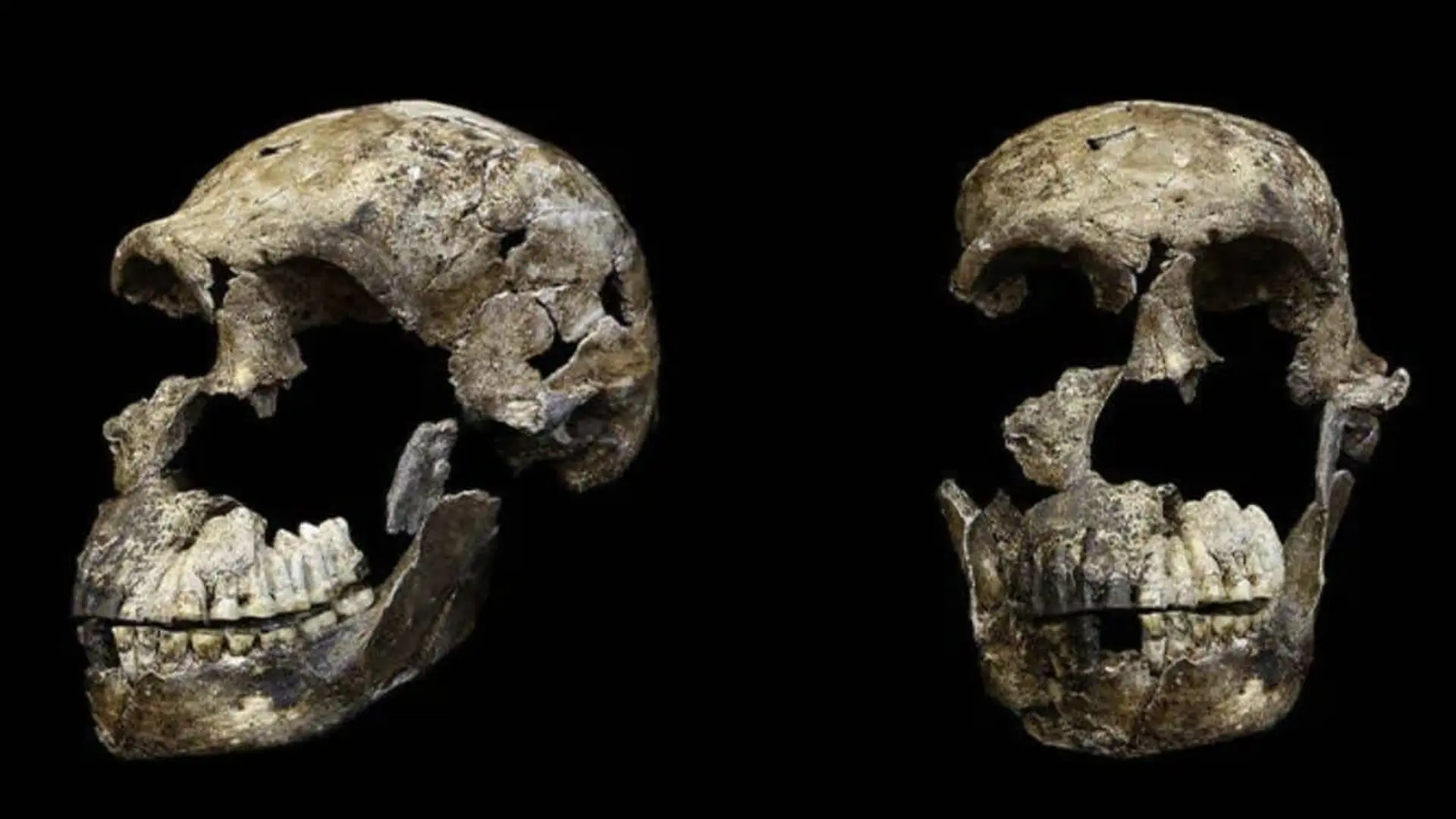
The first Homo naledi fossils emerged from South Africa’s Rising Star cave system in 2013, when a team headed by paleoanthropologist Lee Berger uncovered more than 1,500 bone fragments. These remains, belonging to at least 20 individuals dated to roughly 335,000–236,000 years ago, share a time frame with early Homo sapiens despite possessing a brain comparable in size to that of a chimpanzee.
Protein screening yields no male-specific signal
To determine the sex of the Rising Star occupants, researchers applied paleoproteomics—an approach that detects ancient proteins preserved in tooth enamel. The analysis targeted amelogenin Y, a protein exclusive to the male Y chromosome, by examining 23 teeth from a minimum of 20 distinct individuals.
The test returned no trace of the protein. The Cell paper reporting the work states that none of the specimens provided convincing evidence of a male individual. To rule out laboratory error, the experiment was replicated in two independent facilities, and the absence of the marker persisted.
Co‑author Enrico Cappellini explained that while occasional loss of the AMELY gene has been documented in single human and Neanderthal males, an entire population lacking it would be unprecedented. Lee Berger, who oversaw the original digs, told Smithsonian Magazine that the outcome left “a lot of quite nervous scientists,” because it conflicted with expectations.
Interpretations range from intentional burial to genetic oddity
One provocative hypothesis advanced by the authors suggests that Homo naledi may have sorted its dead by sex before consigning them to the cave, a behavior Berger has described as a form of cultural selection after death. However, sex‑specific funerary practices are not evident in the archaeological record until roughly 5,000 years ago—well after Homo naledi’s era—a discrepancy that paleoanthropologist Karen Rosenberg summed up as “something’s weird.”
Skeptics argue the chambers might simply be death traps rather than deliberate burials, pointing to the possibility that the individuals became stranded inside the cave system. The study also raises the remote scenario that a small, inbred population could have lost the AMELY gene entirely through mutation, meaning males were present but escaped detection by this method.
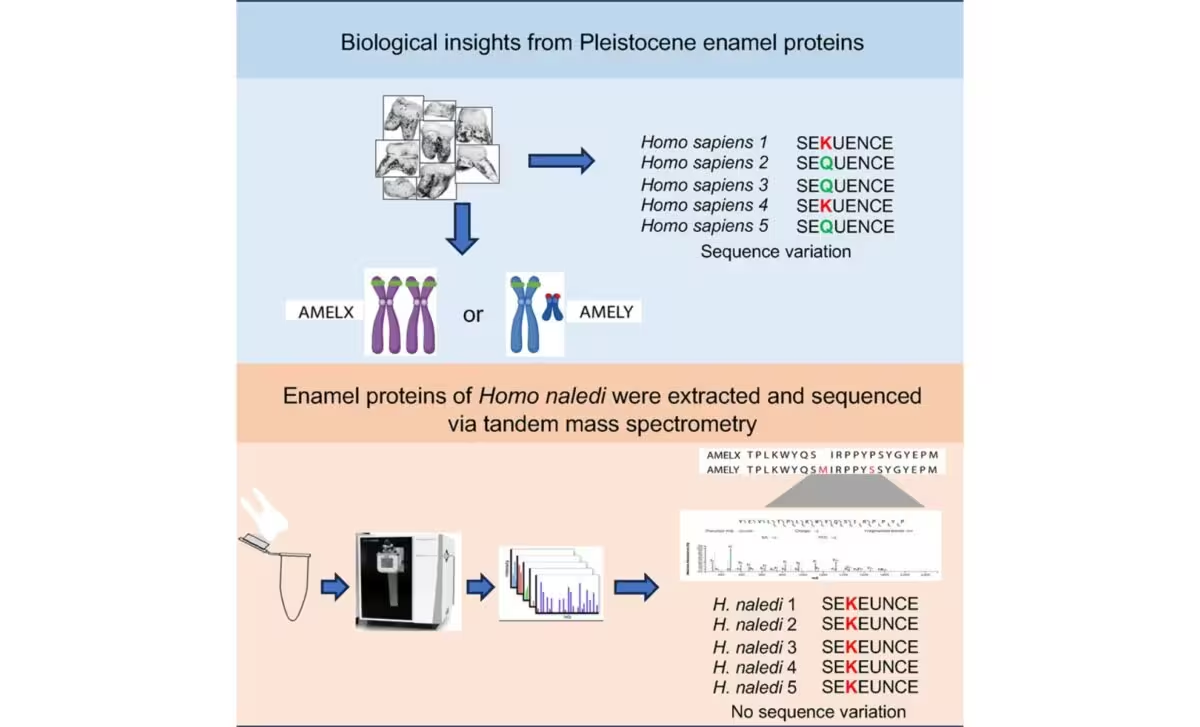
The authors stress that the lack of AMELY detection does not categorically rule out the presence of males; it merely indicates that none were identified by this technique. Moreover, the protein sequences showed no genetic variation, reinforcing the notion that the sample may represent a remarkably uniform group.
Given the lingering uncertainties, Berger’s team has paused additional excavation while laboratory work proceeds, emphasizing ethical caution before disturbing remains that could still yield crucial insights. Whether the outcome reflects a deliberate mortuary custom, an unusual genetic profile, or sheer coincidence, the findings revive longstanding debates about the cognitive capabilities of this small‑brained hominin and underscore how much about Homo naledi remains to be uncovered.
This article has been fact checked for accuracy, with information verified against reputable sources. Learn more about us and our editorial process.
Last reviewed on .
Article history
- Latest version
Reference(s)
- “Lee R. Berger, Ph.D. | Academy of Achievement.”, April 25, 2016 Academy of Achievement <https://achievement.org/achiever/lee-r-berger-ph-d/>.
- <https://www.cell.com/cell/fulltext/S0092-8674(26)00644-6?_returnURL=https%3A%2F%2Flinkinghub.elsevier.com%2Fretrieve%2Fpii%2FS0092867426006446%3Fshowall%3Dtrue>.
- “Enrico Cappellini.” University of Copenhagen Research Portal <https://researchprofiles.ku.dk/en/persons/enrico-cappellini/>.
- Anderson, Sonja. “Did These Prehistoric Primates Really Bury Just Their Female Dead Deep in a Cave?.”, June 25, 2026 Smithsonian Magazine <https://www.smithsonianmag.com/smart-news/did-these-prehistoric-primates-really-bury-just-their-female-dead-deep-in-a-cave-180989020/>.
- “Karen Rosenberg | Anthropology | College of Arts & Sciences | University of Delaware.” <https://www.udel.edu/academics/colleges/cas/units/departments/anthropology/our-people/karen-rosenberg/>.
- Posted by Elizabeth Taylor