Mysterious Black Spheres Reveal New Abyssal Flatworm Species at 6,200 Metres
Scientists probing Earth’s harshest depths discovered mysterious black cocoons that turned out to be a brand‑new deep‑sea species.
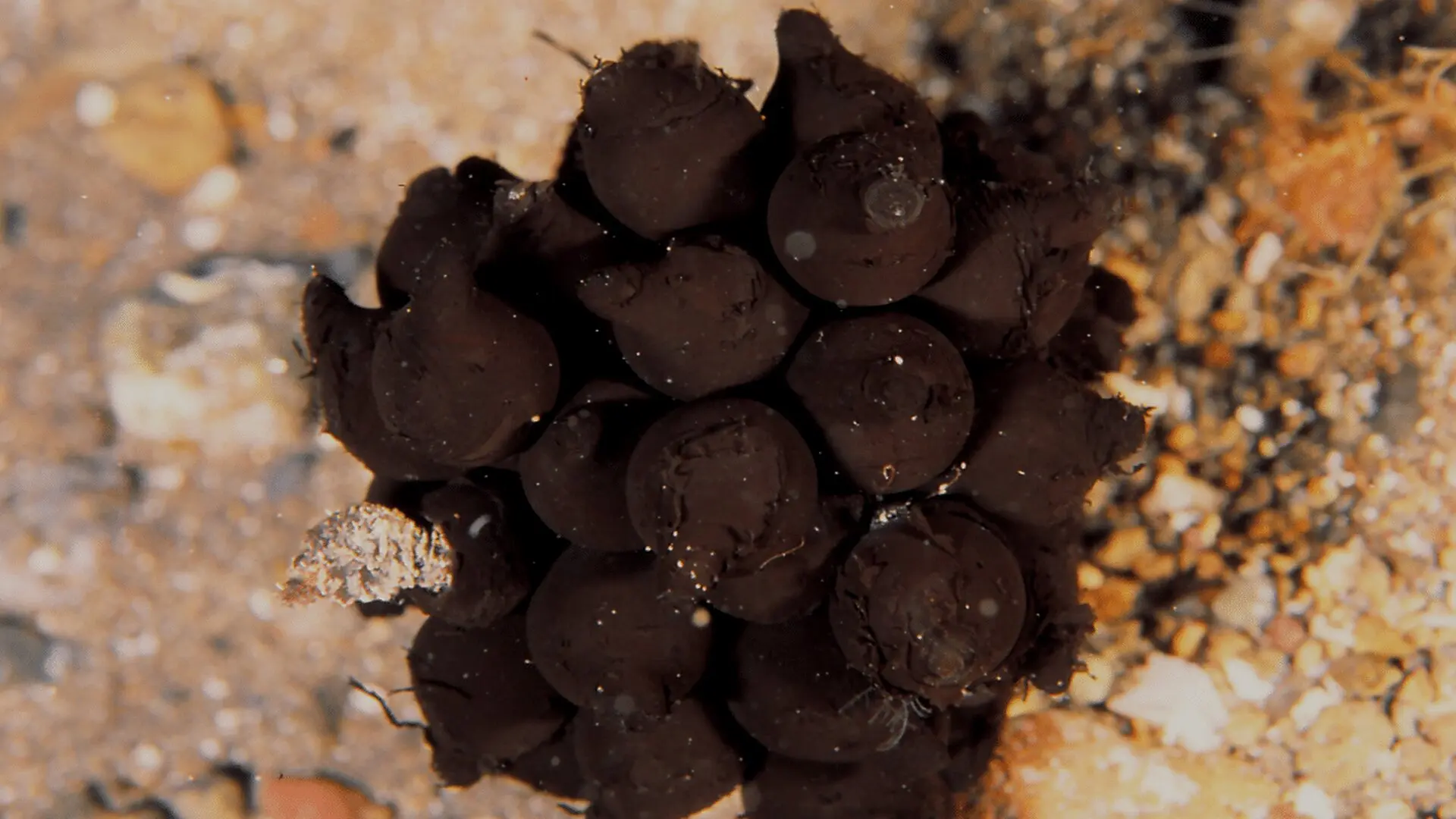
A deep‑sea robotic survey of the Pacific abyss has uncovered jet‑black, spherical capsules that house a previously unknown flatworm species, pushing the limits of known animal life in the ocean’s most extreme zones. The research, appearing in Biology Letters, demonstrates that even the planet’s harshest habitats still yield unexpected biological forms that challenge conventional views on the distribution of complex organisms.
Unexpected Finds from a 6,200‑Metre ROV Mission
Scientists from the University of Tokyo and Hokkaido University deployed a remotely operated vehicle into the abyssopelagic realm of the Pacific Ocean. Near a depth of about 6,200 metres (20,340 feet), the vehicle captured several smooth, ebony‑colored spheres affixed to a rock fragment. Their appearance did not match any known marine eggs or organisms, prompting the team to retrieve the samples for detailed laboratory work.
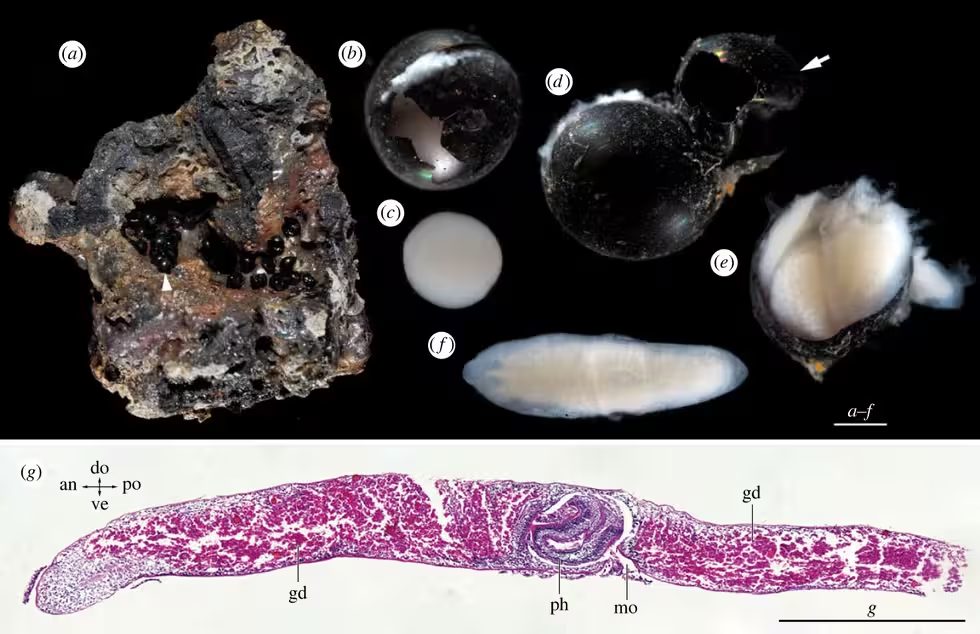
Most of the specimens had already split open, but four intact capsules were recovered, preserving their interior contents. Back in the lab, researchers subjected the objects to microscopic inspection and genetic sequencing. The analysis revealed that the dark spheres functioned as protective cocoons, each containing multiple developing flatworms—a record‑breaking find for free‑living flatworms at such depths.
Inside the Black Pods: A Surprising Identity
When the capsules were finally dissected, the team faced an unfamiliar form. Keiichi Kakui of Hokkaido University, a co‑author of the study, recalled his initial reaction in an interview with IFLScience: “Seeing those objects, I had never encountered flatworm cocoons before, so I first thought they might be some kind of protist.” Under a stereomicroscope he sliced one open, observing a milky fluid that released delicate white bodies—later identified as juvenile platyhelminths. Subsequent DNA work placed the organisms within a new species of the phylum Platyhelminthes, marking the first confirmed free‑living flatworm from the abyss.
Implications for the Known Range of Flatworms
Flatworms are typically linked to shallow seas, freshwater bodies, or damp terrestrial settings. Finding a viable population nearly 6,200 metres beneath the surface dramatically widens the ecological envelope for the group. The previous deepest confirmed free‑living flatworm was reported at roughly 5,200 metres, a record clouded by uncertainty because the specimen was attached to drifting wood that might have moved it downward. The new species provides unequivocal evidence that flatworms can endure the crushing pressure, near‑freezing temperatures, and perpetual darkness of the deep ocean.
Morphologically, the abyssal flatworm resembles many of its shallow‑water cousins, showing no radical developmental shifts. This suggests that core biological strategies can operate across an immense span of environmental conditions. Moreover, the robust cocoon structure appears to be a key adaptation, enabling the organism to persist where food is scarce and disturbances are minimal.
The Deep Sea Still Holds Vast Unknown Biodiversity
Oceans conceal more than 70 percent of the planet’s surface, yet the deep‑sea floor remains largely uncharted. Each foray into the abyssal plain carries the potential to reveal organisms never before documented, underscoring how incomplete our picture of marine life truly is. The newly described flatworm not only adds a branch to the tree of life but also offers insight into reproductive tactics under extreme hydrostatic pressure.
As autonomous and remotely operated technologies advance, scientists anticipate that additional surprising species will emerge from the darkness below. For now, these tiny black cocoons serve as a reminder that some of the most profound scientific discoveries await in the still‑largely unexplored depths of Earth’s oceans.
This article has been fact checked for accuracy, with information verified against reputable sources. Learn more about us and our editorial process.
Last reviewed on .
Article history
- Latest version
Cite this page:
- Posted by Elizabeth Taylor