For the First Time, Scientists See the Universe’s Skeleton in Incredible Detail Thanks to JWST
For eons, the cosmos has concealed its intricate blueprint. A cutting-edge orbital observatory is now lifting the veil, exposing a vast network linking galaxies in ways researchers once deemed impossible.
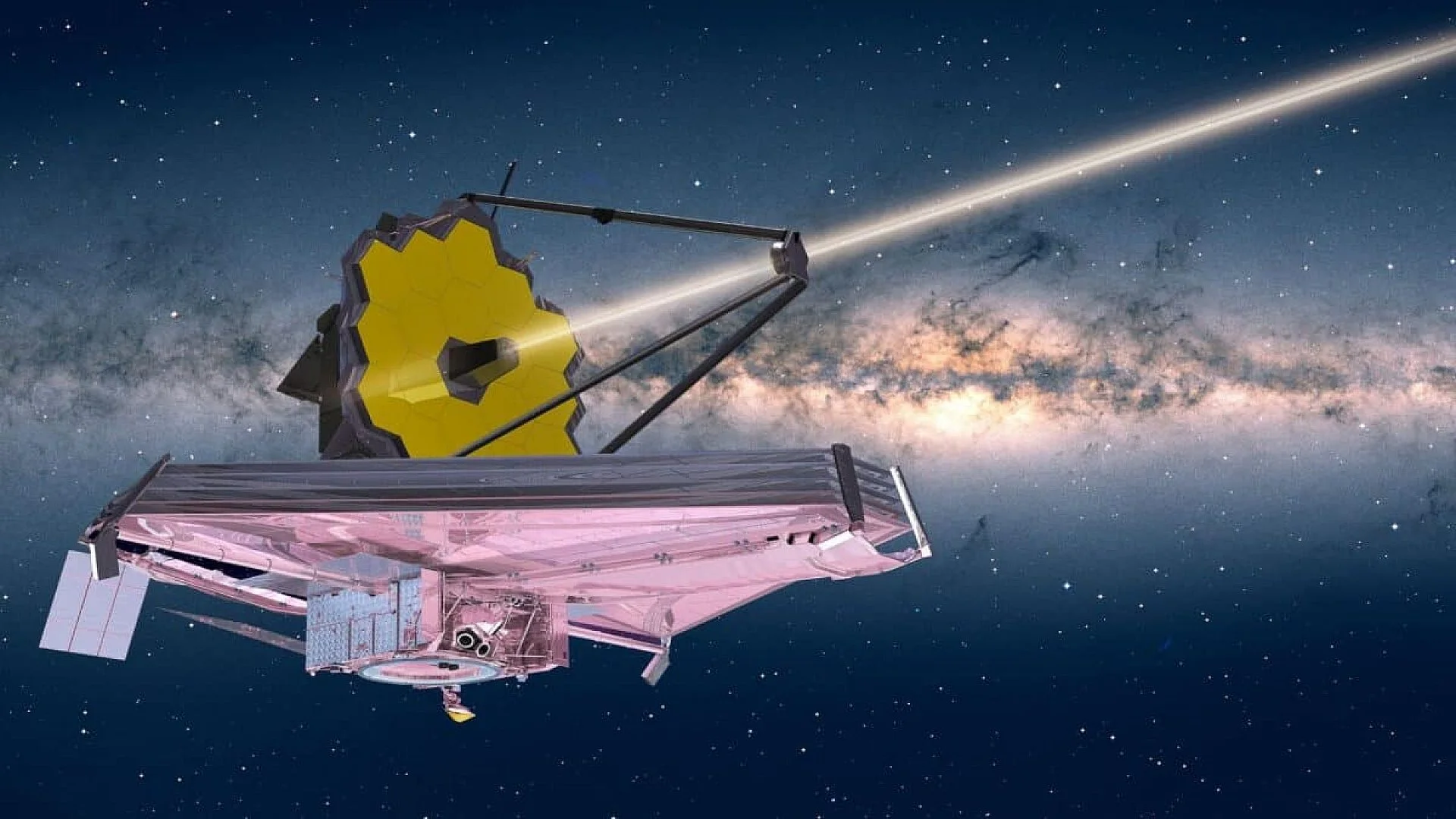
The James Webb Space Telescope (JWST) has produced the most detailed map ever of the cosmic web, the vast network connecting galaxies across the universe. This groundbreaking map stretches back nearly to the universe’s dawn, revealing structures from when it was just a billion years old.
Since its launch in 2021, JWST has significantly expanded astronomers’ ability to study the distant universe. Researchers at the University of California, Riverside note that its highly sensitive infrared instruments can detect incredibly faint galaxies invisible to earlier telescopes and peer through thick clouds of cosmic dust. This allows scientists to explore regions of the cosmos farther back in time than ever before.
The study published in The Astrophysical Journalhighlights that the COSMOS-Web survey, the largest JWST program to date, analyzed over 164,000 galaxies, tracing the arrangement of matter across cosmic history. The survey covers a sky area roughly equal to three full moons and was designed to reveal the universe’s hidden framework.
A Sharper View of Cosmic Structures
The cosmic web forms a skeleton-like framework of filaments and sheets of dark matter and gas surrounding vast empty voids. Lead author Hossein Hatamnia explains that JWST enables precise placement of galaxies in time and space, producing a far clearer picture than previous efforts.
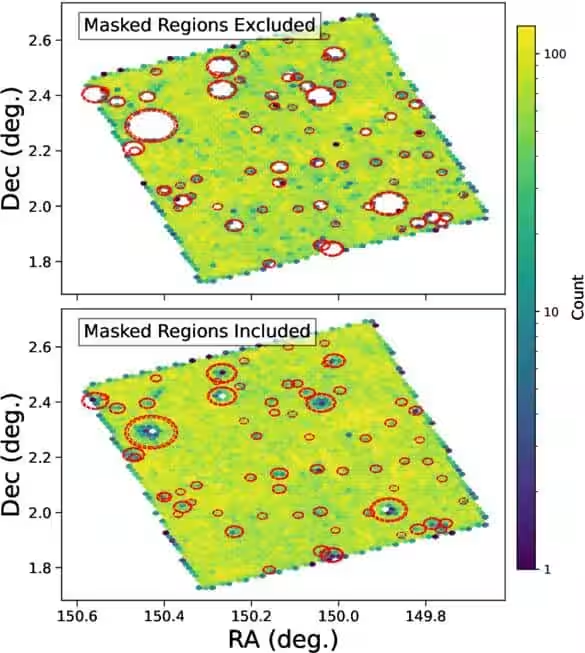
Bahram Mobasher, UCR professor of physics and astronomy, points out that earlier Hubble observations blurred many structures together. With JWST, these structures now appear as multiple distinct filaments, revealing details that were once smoothed over.
“The jump in depth and resolution is truly remarkable, and we can now see the cosmic web at a time when the universe was only a few hundred million years old, an era that was essentially out of reach before JWST,” he said. “What used to look like a single structure now resolves into many, and details that were smoothed away before, are now clearly visible.”
JWST Embarks on Its Largest-Ever Cosmic Survey
The COSMOS-Web survey represents JWST’s largest General Observer program. The research, published in The Astrophysical Journal, explains that it catalogs 164,000 galaxies, showing how clusters and filaments evolved over billions of years.
Experts from the United States, Denmark, Chile, France, Finland, Switzerland, Japan, China, Germany, and Italy contributed, demonstrating the scale of international collaboration.
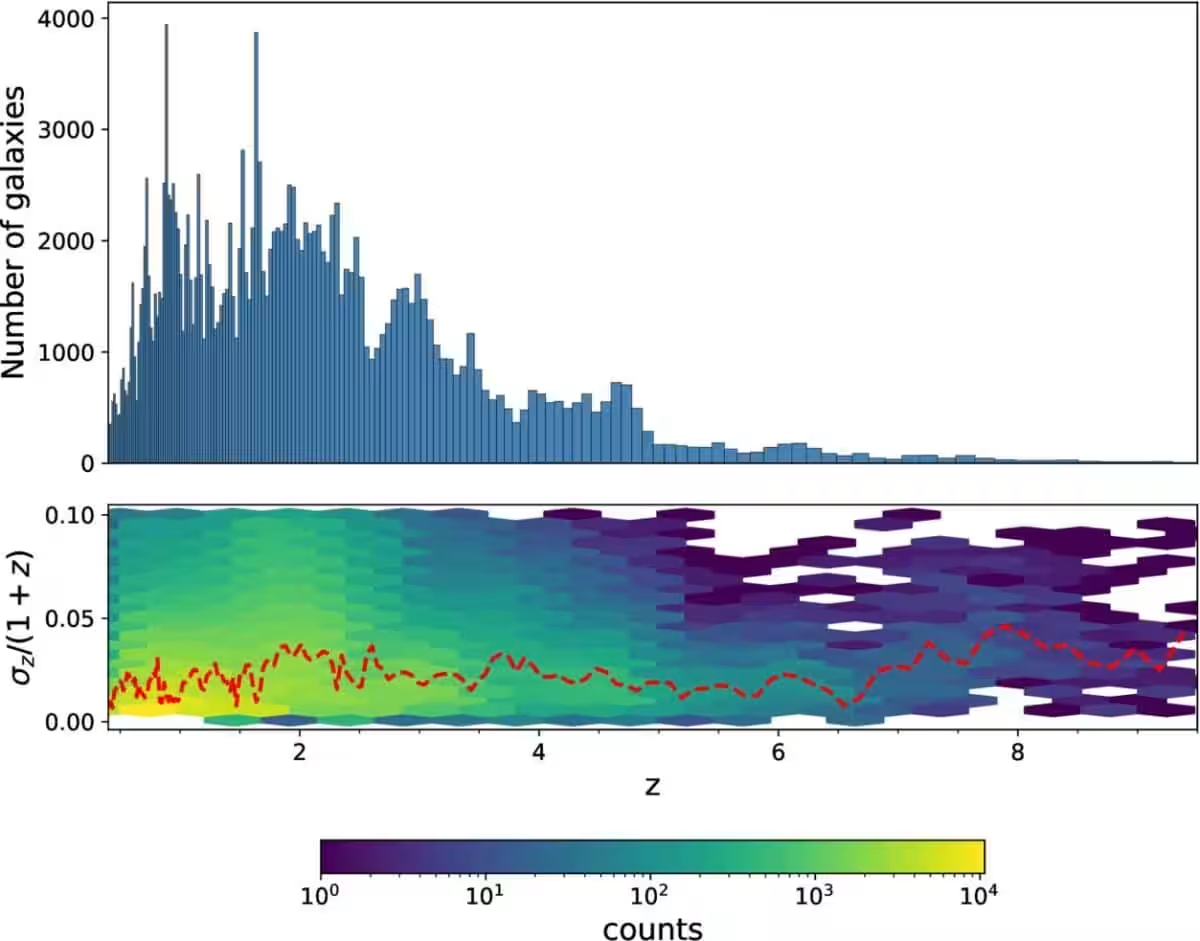
The survey data, including galaxy catalogs, cosmic density maps, and an animated video of the web’s evolution, have been released to the public. Mobasher emphasizes that this open-access approach continues the tradition of COSMOS, allowing other astronomers to study the universe’s structure independently.
Unveiling the Universe’s Formative Years
JWST’s precise measurements have opened a new window on the universe’s formative years. Hatamnia notes that the telescope can now observe the cosmic web when the universe was only a few hundred million years old, providing access to details previously unreachable.
“JWST has completely changed our view of the universe, and COSMOS-Web was designed from the start to give us the wide, deep view we need to see the cosmic web,” noted Hatamnia.
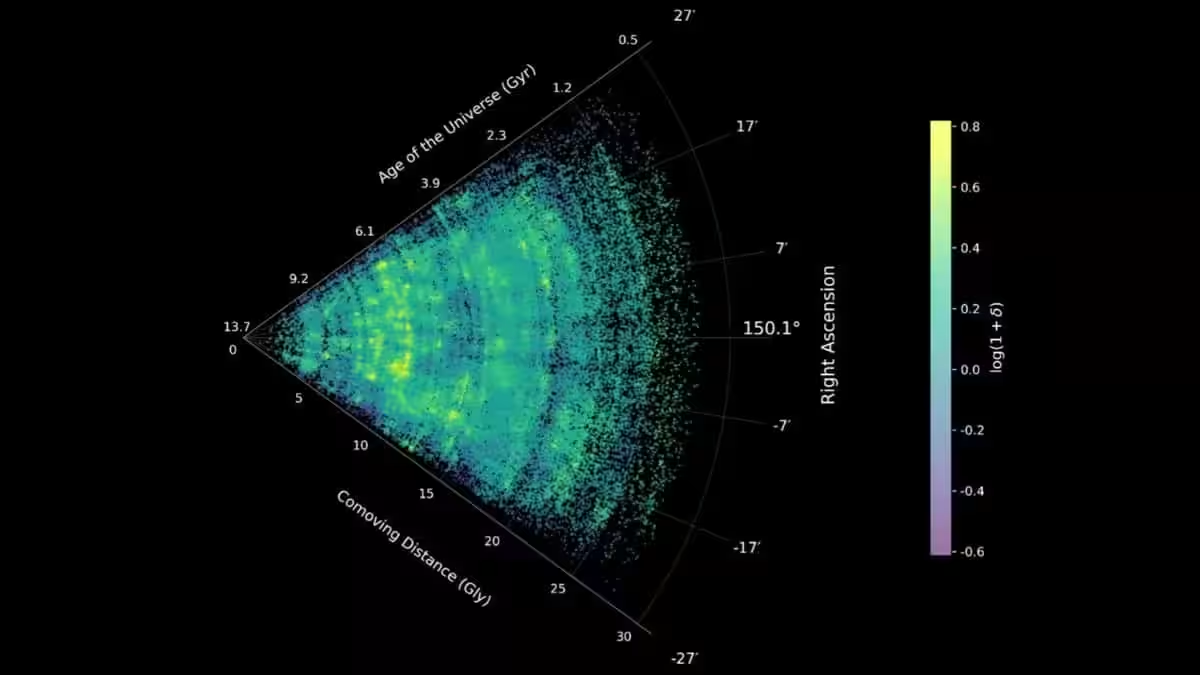
By combining high-resolution imaging, deep surveys, and international collaboration, JWST and COSMOS-Web have created the most detailed view yet of the universe’s hidden structure. Researchers say this achievement sets a new benchmark for studying the architecture of the cosmos.
This article has been fact checked for accuracy, with information verified against reputable sources. Learn more about us and our editorial process.
Last reviewed on .
Article history
- Latest version
Reference(s)
- “~mobasher.” <https://faculty.ucr.edu/~mobasher/>.
- “COSMOS-Web.” COSMOS <https://cosmos.astro.caltech.edu/page/cosmosweb>.
- Hatamnia, Hossein., et al. “Large-scale Structure in COSMOS-Web: Tracing Galaxy Evolution in the Cosmic Web up to z ∼ 7 with the Largest JWST Survey.” The Astrophysical Journal, vol. 1002, no. 2, May 6, 2026, pp. 192 American Astronomical Society, doi: 10.3847/1538-4357/ae5bac. <https://iopscience.iop.org/article/10.3847/1538-4357/ae5bac>.
Cite this page:
- Posted by Farah Siddiqui