Archaeologists Discover Rare 2,000 Year Old Celtic Coin Hoard Hidden Beneath Sports Field
Construction workers at a new fire station site have uncovered a hidden hoard of ancient coins, shedding new light on the location’s historical past.
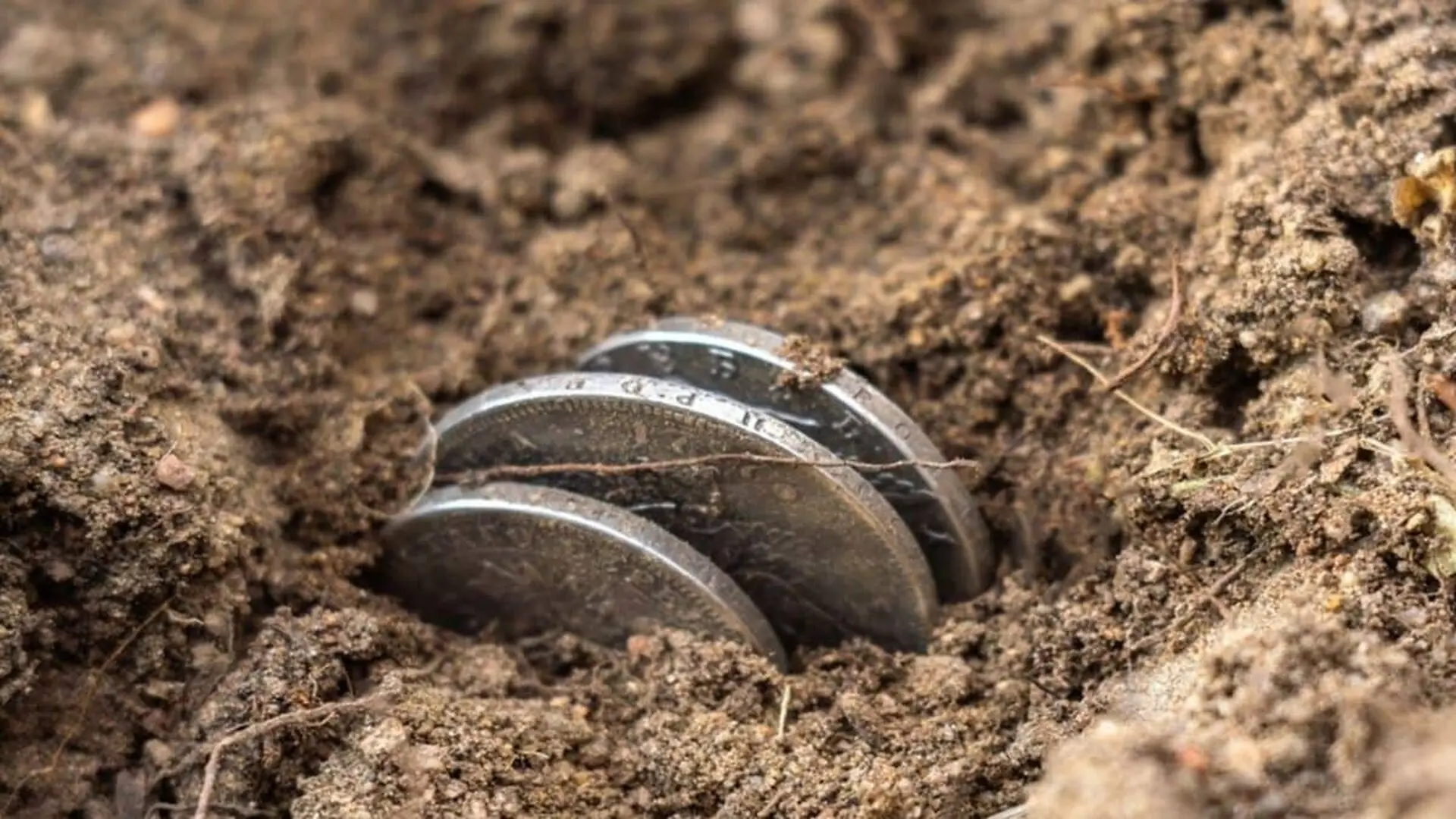
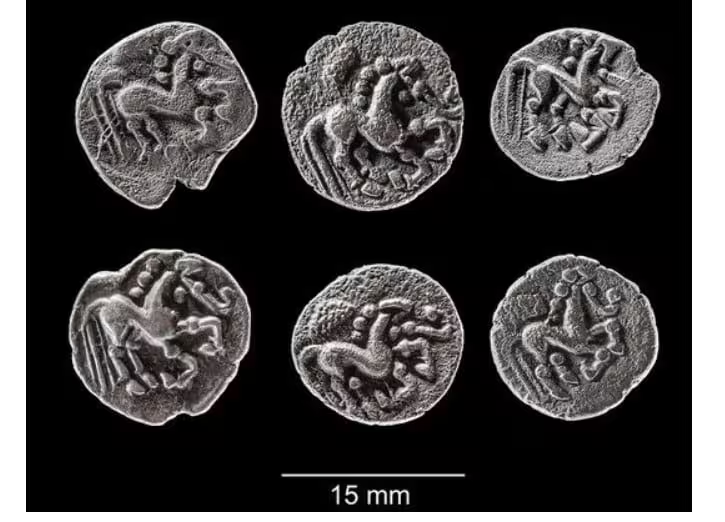
Archaeologists working near a future fire station in the town of Singen, Thuringia, have successfully reconstructed a significant historical find: a dispersed hoard of 11 Celtic silver coins. Although the artifacts were scattered across a 19-by-5-foot area by centuries of agricultural plowing, precise site documentation allowed researchers to confirm that the items were deposited together more than 2,000 years ago.
The discovery began in the summer of 2025 during an assessment by the Thuringian State Office for Heritage Management and Archaeology. Excavation director Ronny Krause initially identified several stray coins, but an expanded search conducted in August 2026 revealed the full extent of the cache. The coins have been identified as Prague-type quinarii, which date to the 1st century B.C.E. Prior to this find, only about 80 such specimens were known to exist within the state of Thuringia.
Recovering History from Displaced Artifacts
Because no remnants of a ceramic vessel or box were found, experts believe the coins were likely stored in an organic container that decayed over the millennia. By analyzing the precise spatial distribution of the silver pieces, the heritage office classified the find as a “closed find.” This designation is critical in archaeology, as it indicates a complete, singular deposit that remains contextually intact despite the physical disturbance caused by modern machinery.
The site also yielded a diverse array of artifacts from various historical periods, including a Roman denarius from the late 2nd century C.E., an early medieval glass bead, a fragmented iron knife, a silver coin from the mid-1500s, and a button from a 19th or 20th-century Prussian uniform. This layered history highlights the area’s long-term utility, but the Celtic hoard remains the most significant discovery in terms of understanding regional economic activity.
Tracing Ancient Trade and Craftsmanship
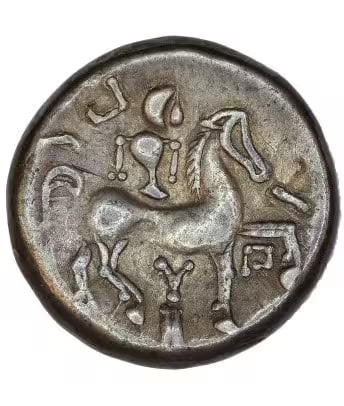
Researchers suggest the coins likely originated from a mint in the Gotha area, strengthening links to other regional centers like the Steinsburg in southern Thuringia. These findings provide valuable data for mapping ancient trade routes and understanding the reach of Celtic economic networks. According to the World History Encyclopedia, Celtic currency production began in the early 3rd century B.C.E., initially drawing inspiration from Greek models before evolving into the highly stylized designs—often featuring horses—that characterize the region’s unique numismatic tradition.
While the specific motivations for the burial of the Singen hoard remain speculative, archaeologists noted that Celtic coin deposits were sometimes associated with ritualistic offerings, as seen in other European sites where coins were discovered alongside sacrificial remains. For now, the Singen hoard serves as a testament to the importance of systematic excavation, which allowed archaeologists to preserve the integrity of the find even after the original container had long since vanished.
This article has been fact checked for accuracy, with information verified against reputable sources. Learn more about us and our editorial process.
Last reviewed on .
Article history
- Latest version
Reference(s)
- “Link11 - CAPTCHA.” <https://denkmalpflege.thueringen.de/aktuelles/medieninformation/detailseite/keltischer-muenzschatz-am-singer-berg-in-stadtilm-singen-ilm-kreis>.
- Cartwright, Mark. “Celtic Coinage - World History Encyclopedia.”, March 4, 2021 https://www.worldhistory.org#organization <https://www.worldhistory.org/Celtic_Coinage/>.
Cite this page:
- Posted by Vikram Desai