Archaeologists Just Unsealed a 600 Year Old Peruvian Tomb Containing a Mysterious Red Skull
Archaeologists in Peru have uncovered a sealed 15th-century tomb, revealing mysterious artifacts that challenge our understanding of those buried within.
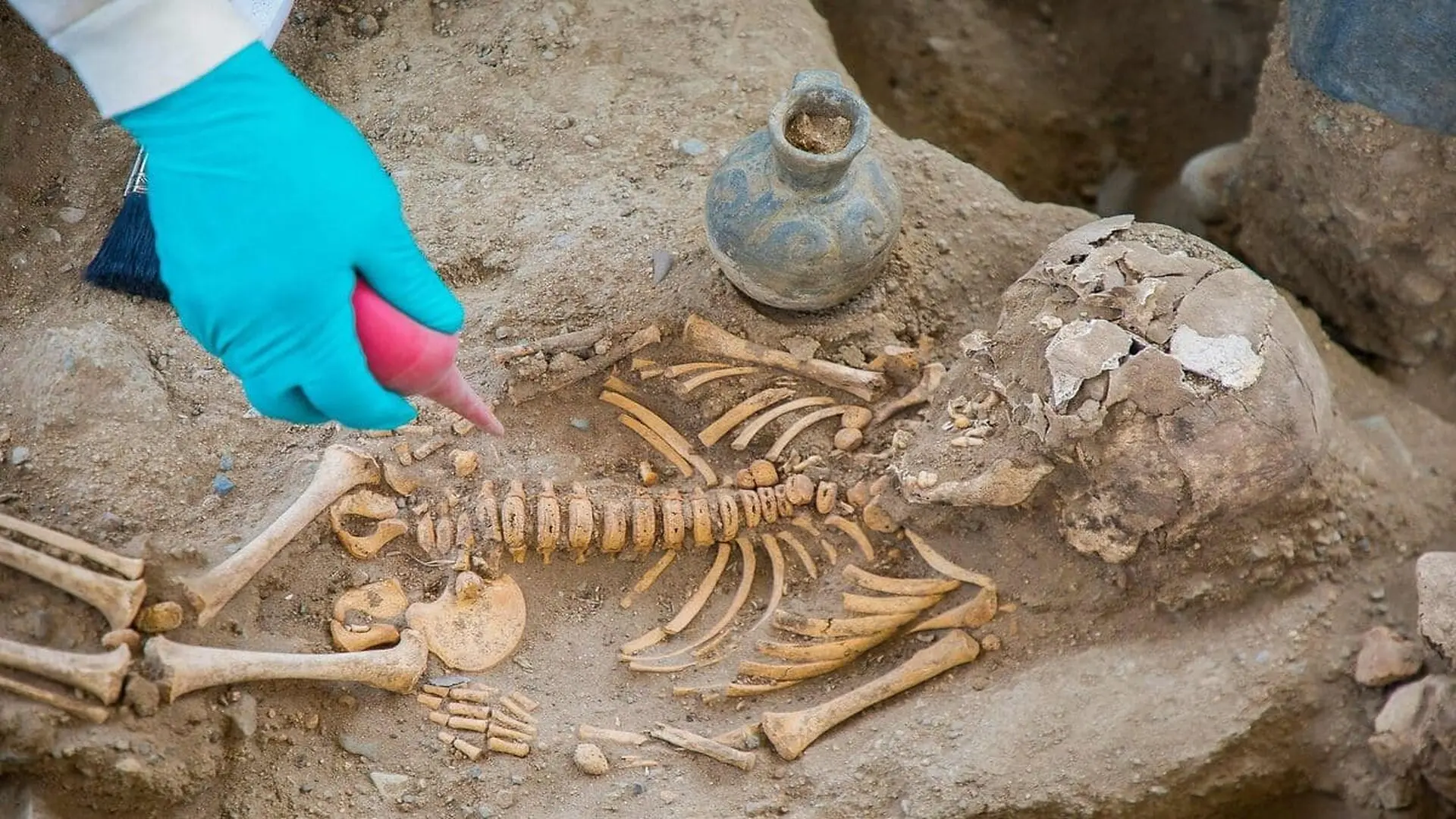
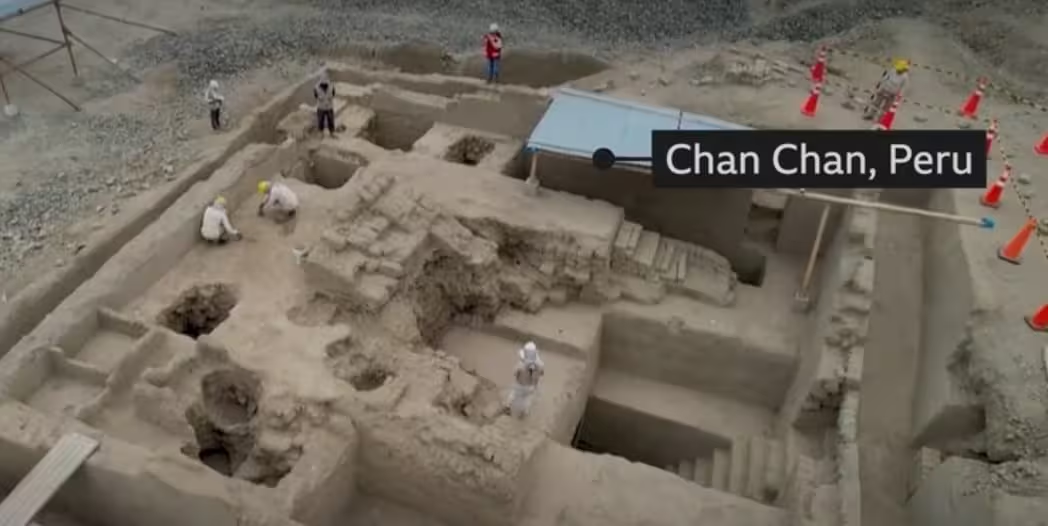
Archaeologists working at the sprawling desert ruins of Chan Chan in Peru have uncovered a remarkably well-preserved burial chamber that remained sealed for nearly six centuries. The site, situated within the Utzh An walled complex, offers an unprecedented window into the funerary customs of the Chimú civilization, which dominated the region before falling to the Inca Empire in the late 1400s.
While the ancient capital has been a subject of study for more than a century, this particular funerary platform managed to evade the looters who systematically cleared out most other high-status tombs in the area. The find provides researchers with a pristine, undisturbed record of how the Chimú elite prepared their dead for the afterlife.
A Vault of Pre-Columbian Wealth
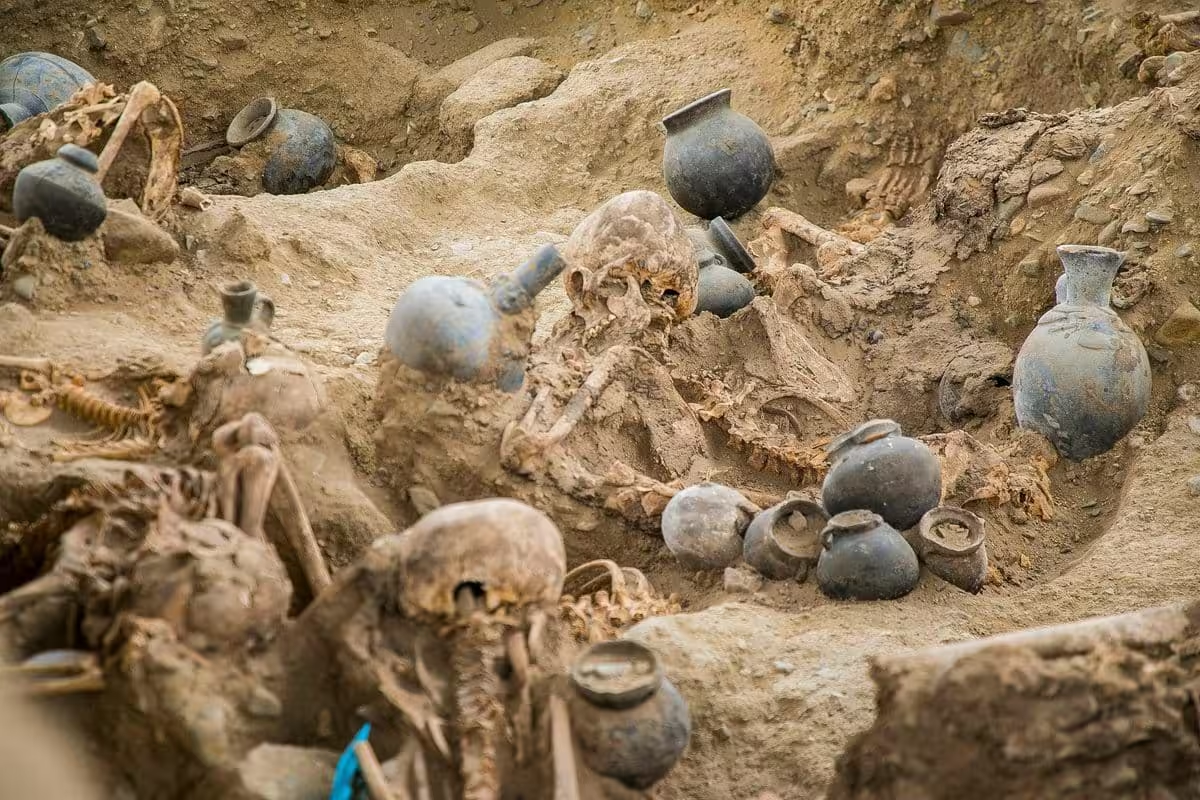
The excavation revealed a trove of artifacts, including intricate metal weapons, copper objects, gold jewelry, beads, and preserved textiles. As noted by Peru’s Andina news agency, the site was clearly dedicated to high-ranking members of society. The central chamber, a subterranean space measuring roughly four feet wide and 16 feet tall, was accessible via an eight-foot staircase.
Lead archaeologist Jorge Meneses characterized the find as a milestone for Peruvian archaeology, noting to the BBC that it marks the first time a funerary platform of this caliber has been found with its main chamber completely sealed for nearly 600 years.
The Mystery of the Crimson Remains
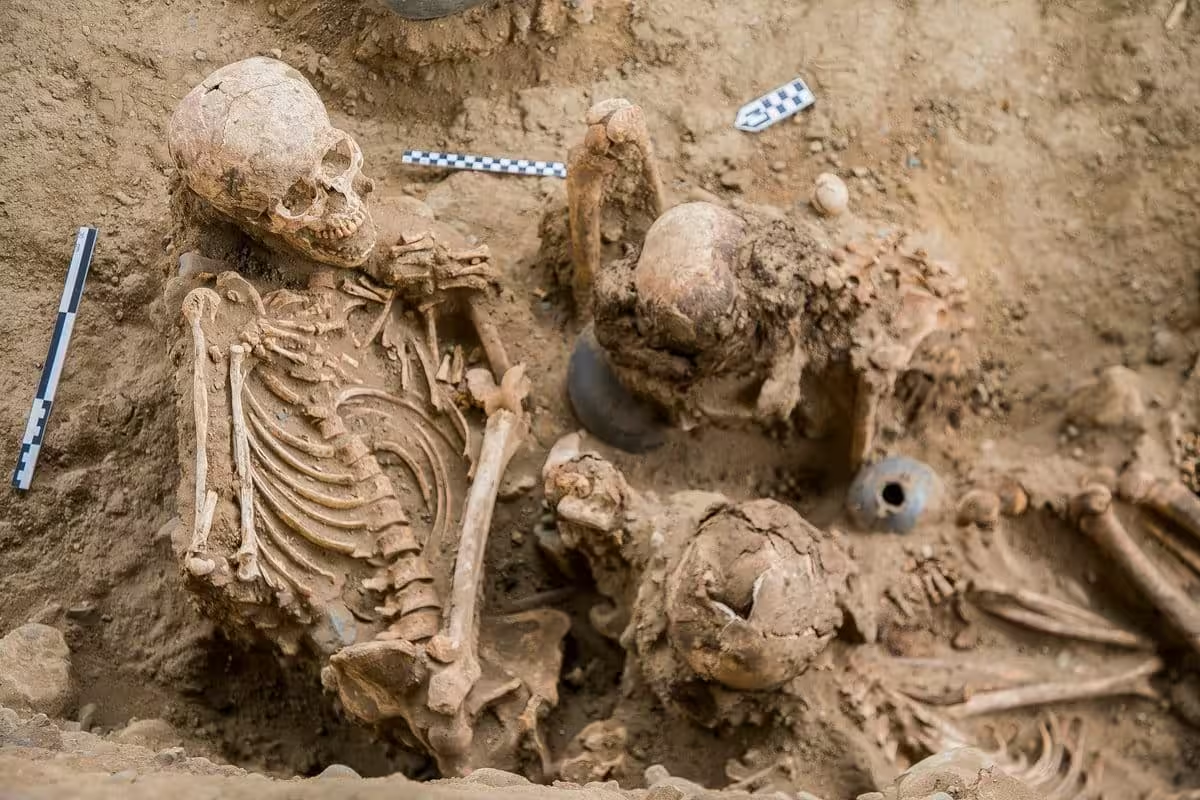
Among the most striking discoveries within the central chamber was a skull coated in a vivid, blood-red pigment. Experts identify the substance as cinnabar, a mercury sulfide mineral prized by Central Andean cultures for its brilliant color. According to archaeologist Henry Gayoso Rullier, who spoke with The Art Newspaper, cinnabar was a versatile material used to decorate everything from ceremonial masks and pottery to the bodies of warriors.
The tomb contained a total of 38 human remains distributed across the central chamber and adjacent rooms. Some of these skeletons exhibited signs of secondary burial or missing bones, suggesting that the Chimú practiced complex ancestral rites where the remains of the deceased were curated and handled long after their initial internment.
Insights Into a Lost Imperial Power
Chan Chan stood as a testament to engineering and political influence, serving as the seat of a desert kingdom that thrived between 900 CE and the late 15th century. As the largest adobe city in the pre-Columbian Americas, its survival in a hyper-arid landscape was dependent on sophisticated hydraulic networks that channeled scarce water resources across the desert.
Historical tradition suggests that each successive Chimú king commissioned the construction of his own palace compound, which typically housed a dedicated burial platform. While the identity of the individual buried at the heart of this newly excavated site remains unknown, the discovery is being hailed for its ability to illuminate the social and ritual structures of the period.
“This discovery provides,” noted Ari Caramanica, an anthropologist at Vanderbilt University, “a nearly complete picture of a context of intense meaning centered on an elite individual—the node of power around which choreographies of the living and dead would have been directed.”
This article has been fact checked for accuracy, with information verified against reputable sources. Learn more about us and our editorial process.
Last reviewed on .
Article history
- Latest version
Reference(s)
- Andina, Agencia. “Peru: Funerary platform with 38 high-status individuals uncovered at Chan Chan.”, September 8, 2026 Agencia Andina <https://andina.pe/agencia/noticia-peru-funerary-platform-with-38-highstatus-individuals-uncovered-at-chan-chan-1090968.aspx>.
- “Ancient tomb found in Peru in a largely undisturbed state.”, September 9, 2026 <https://www.bbc.com/news/videos/c07lpd9dgzdo>.
- <https://independent.academia.edu/HenryLuisGayosoRullier/CurriculumVitae>.
- Valdés, Constanza. “600-year-old funerary platform discovered in Peru.”, September 18, 2026 The Art Newspaper - International art news and events <https://www.theartnewspaper.com/2026/09/18/funerary-platform-discovered-peru-chan-chan-chimu>.
- fullerra, “Bio.”, May 8, 2026 Vanderbilt University <https://as.vanderbilt.edu/anthropology/bio/ari-caramanica/>.
Cite this page:
- Posted by Vikram Desai