Rare T. Rex Trackway Discovered by High School Teacher Reveals How the King of Dinosaurs Walked
Paleontologists are using rare fossilized footprints to uncover dynamic insights into prehistoric animal behavior that skeletons alone cannot reveal.
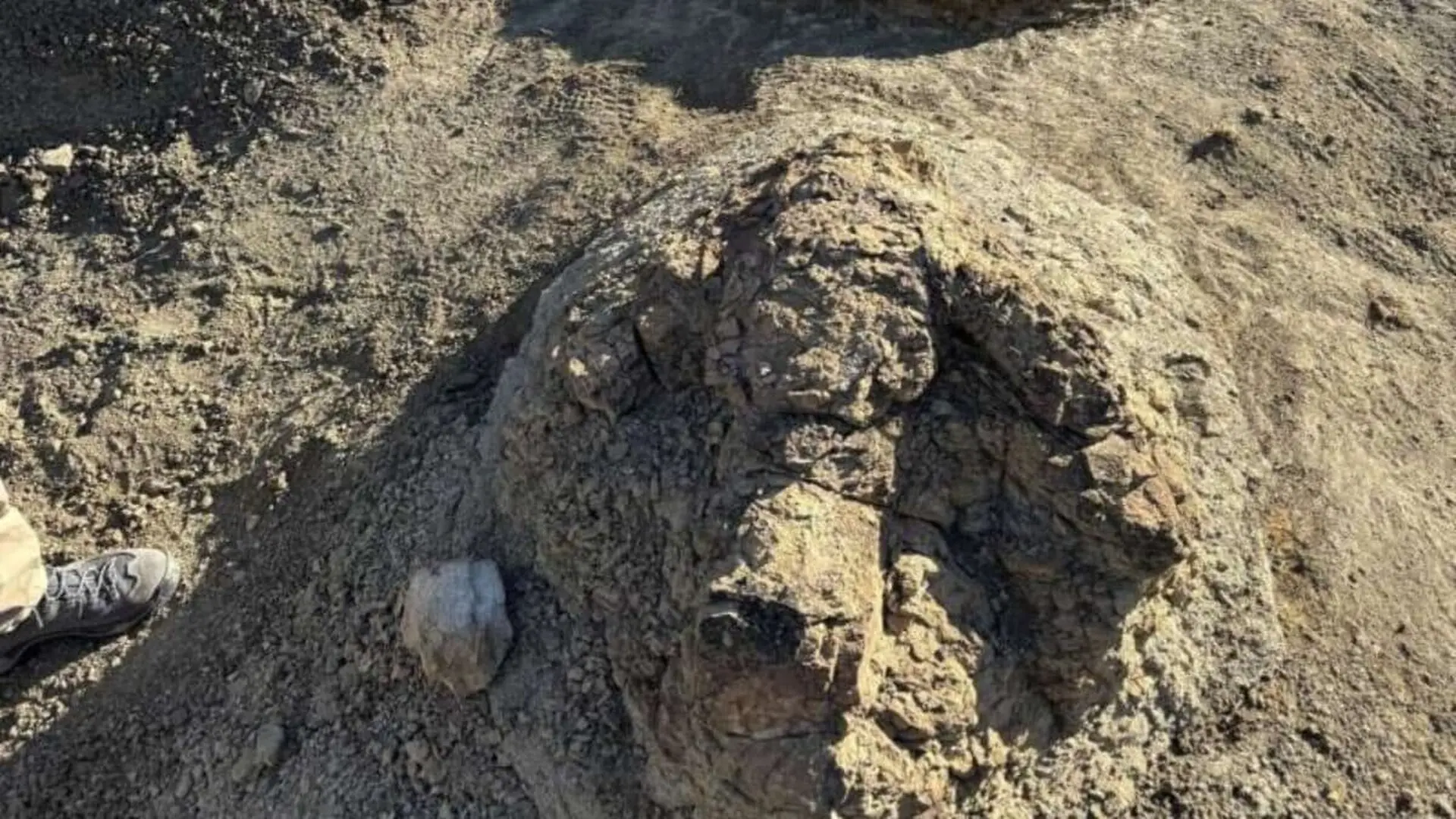
Paleontologists have identified what appears to be the first complete trackway ever left by an adult Tyrannosaurus rex. Stretching across 23 feet (7 meters) of terrain in North Dakota, the sequence of four three-toed impressions provides a rare window into the movement of the iconic apex predator approximately 66.5 million years ago. The research, conducted by a team from the Denver Museum of Nature & Science and Liverpool John Moores University, has been detailed in the Journal of Vertebrate Paleontology.
A Rare Glimpse Into Ancient Behavior
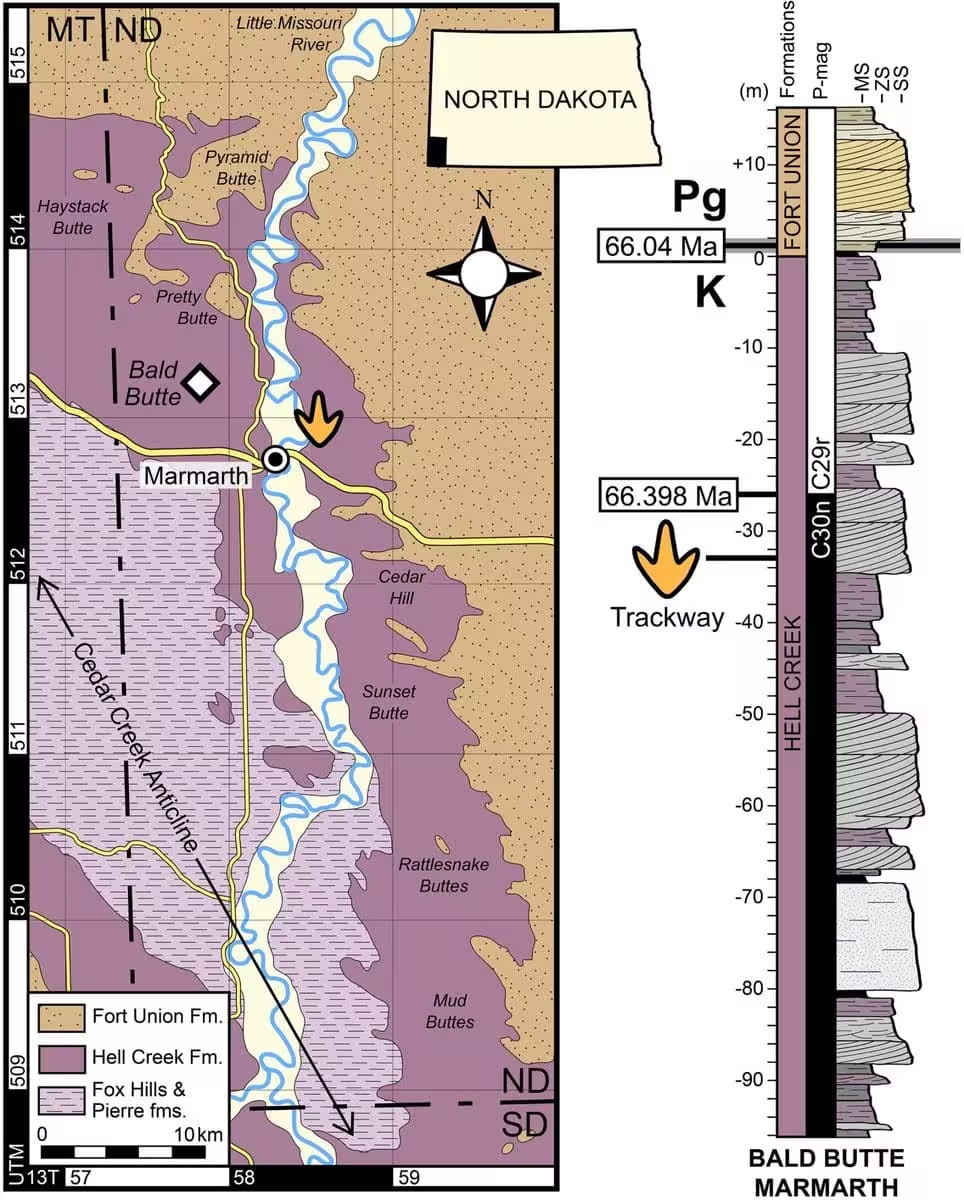
While isolated footprints attributed to T. rex have been documented previously, a continuous series of tracks is an extraordinary find for researchers. These specific prints were unearthed in 2025 within the Hell Creek Formation, a region near Marmarth, North Dakota, known for its rich fossil record. Administered by the U.S. Forest Service, the site yielded four distinct prints, each measuring roughly 3 feet (0.9 meters) in length.
Tyler Lyson, senior curator of vertebrate paleontology at the Denver Museum of Nature & Science, noted that while skeletal remains offer insights into anatomy, trackways provide a direct record of behavior. According to Lyson, the ability to follow an individual predator as it traversed its prehistoric environment is exceptionally rare for the species.
Precision Digital Reconstruction
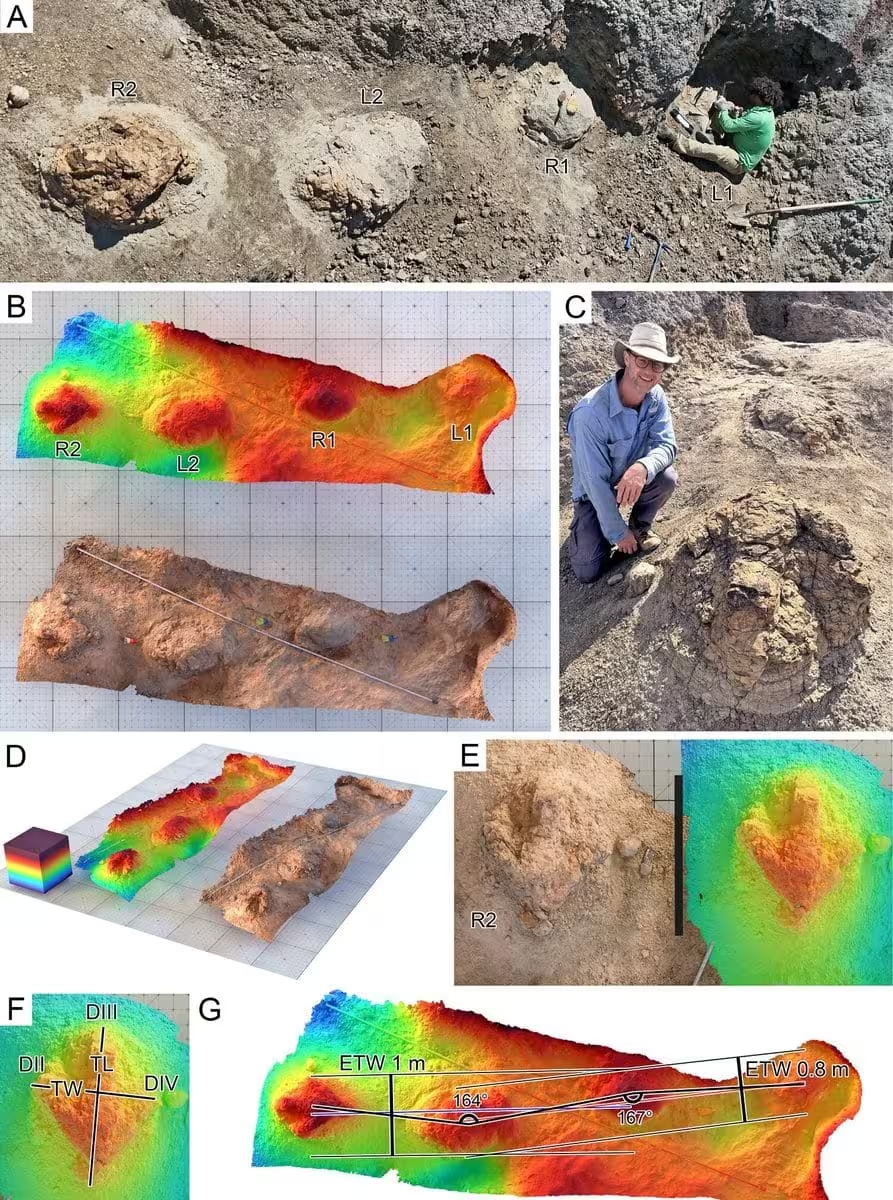
The study highlights how modern technology bridged the gap between field research and remote analysis. The trackway, consisting of two left and two right footprints with a stride of roughly 13 feet (4 meters), suggests the dinosaur was traveling at a speed of 3.5 to 4.5 mph (5.6 to 7.2 km/h), comparable to a brisk human walk. Because the prints show signs of significant weathering, the team has cautioned that these velocity estimates are approximate.
To preserve the data, Evan Tamez-Galvan utilized high-resolution 3D surface scanning on-site. This allowed lead author Peter Falkingham, a paleobiology professor at Liverpool John Moores University, to examine the impressions with immense detail despite being thousands of miles away. By importing these digital models into virtual reality, the team was able to visualize the tracks as if they were standing directly over them in the field.
From Classroom to Field Discovery
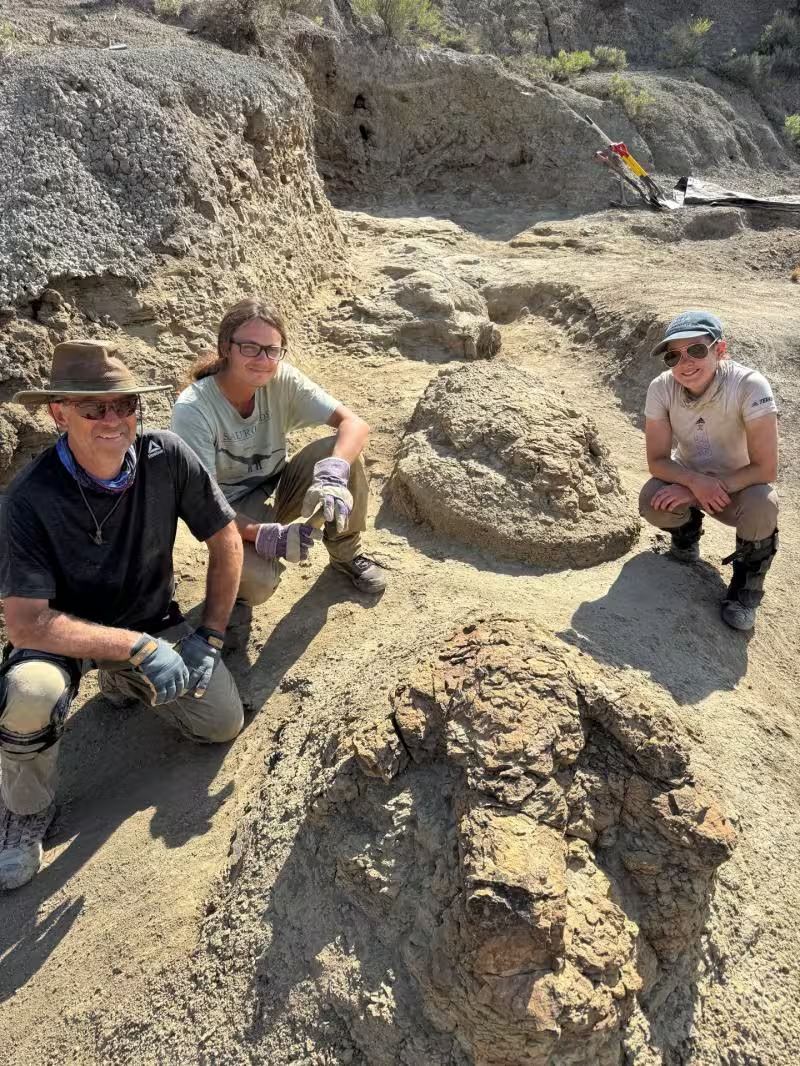
The site was initially discovered by Kent M. Hups, a teacher at Northglenn High School who also served as a co-author on the study. Reflecting on the find, Hups emphasized that the discovery was a direct result of curiosity and the careful observation he often encourages in his own students. The research team, which also included Antoine Bercovici, identified the tracks as likely belonging to an adult T. rex based on their massive scale, the specific morphology of the toes, and the prevalence of other T. rex remains found in the surrounding strata.
Plans are currently underway to recover three of the footprints from the site via helicopter later this fall. These fossils will be transported to the Denver Museum of Nature & Science for further preservation and study, with the institution expected to provide updates on the recovery process throughout the coming winter months.
This article has been fact checked for accuracy, with information verified against reputable sources. Learn more about us and our editorial process.
Last reviewed on .
Article history
- Latest version
Cite this page:
- Posted by Hassan Raza