Scientists Discover The Fattest Ancient Squid Fossil Ever Found In Wyoming
Paleontologists have discovered a bizarre, squid-like Jurassic creature that defies classification and looks unlike anything else in the fossil record.
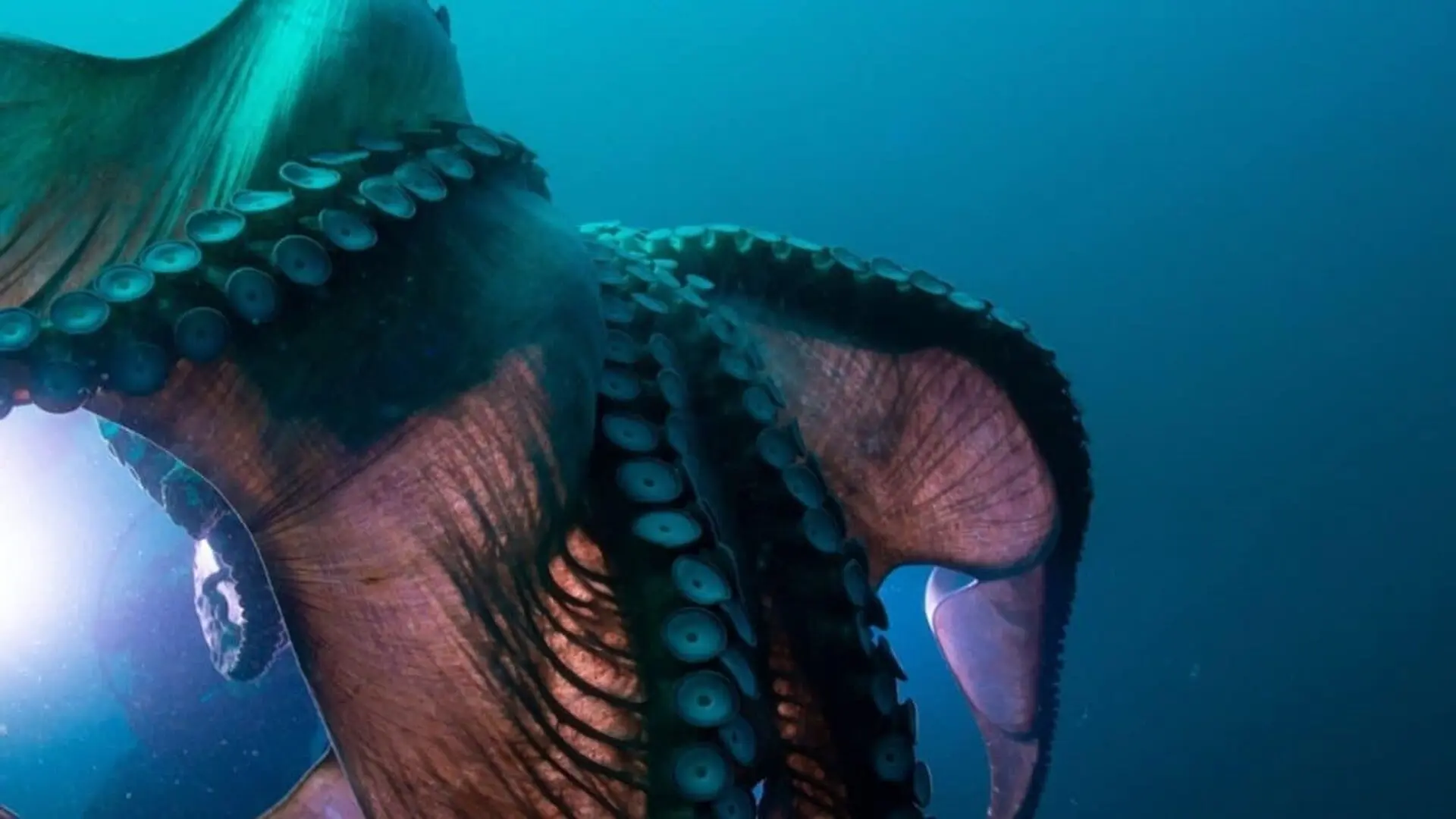
Paleontologists have identified a previously unknown species of ancient marine predator, Wyoteuthis linsterorum, which swam through the inland seas of North America roughly 160 million years ago. The discovery, detailed in the journal Papers in Palaeontology, highlights a creature that stands out for its unique physical stature, earning it the reputation as the most robust belemnite ever documented.
An Unusual Discovery in the Sundance Formation
Belemnites, an extinct group of cephalopods related to modern squid and octopuses, are among the most common fossils found worldwide. Typically, researchers uncover only the animal’s bullet-shaped internal skeleton, known as a rostrum or guard. In Wyoming’s Sundance Formation, where these fossils are abundant, they are often colloquially referred to as “squid butts.”
While standard specimens from the region typically measure between 5 and 10 centimeters in length and only 1 to 2 centimeters in width, Wyoteuthis linsterorum is significantly more substantial. Its rostrum is approximately 10 centimeters long but reaches an impressive 6 centimeters in width. Researchers estimate that the living animal, including its arms, would have spanned roughly 60 centimeters, or two feet.
A Long-Awaited Classification
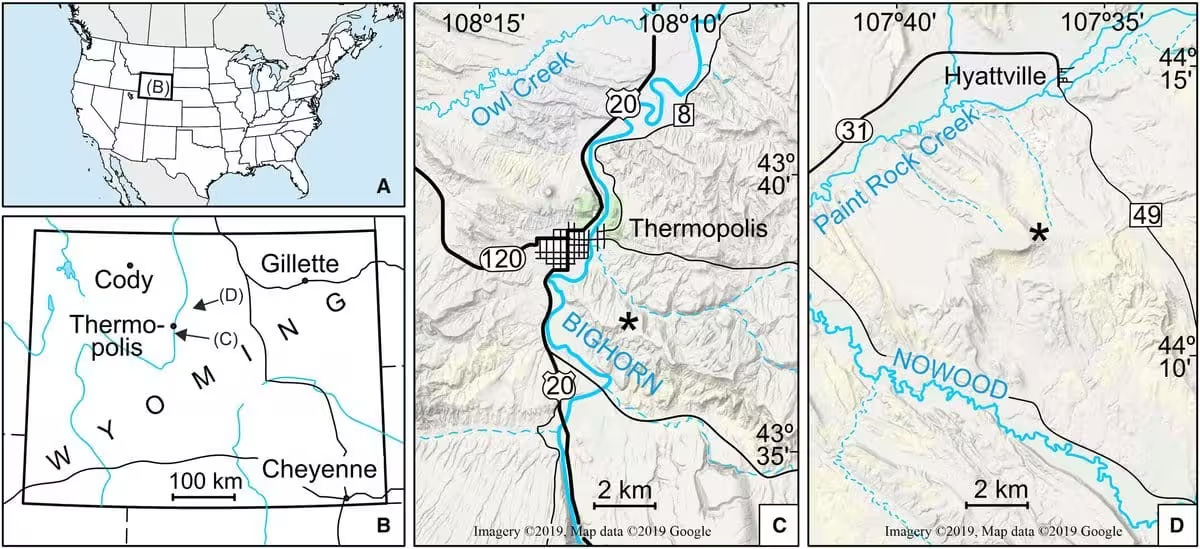
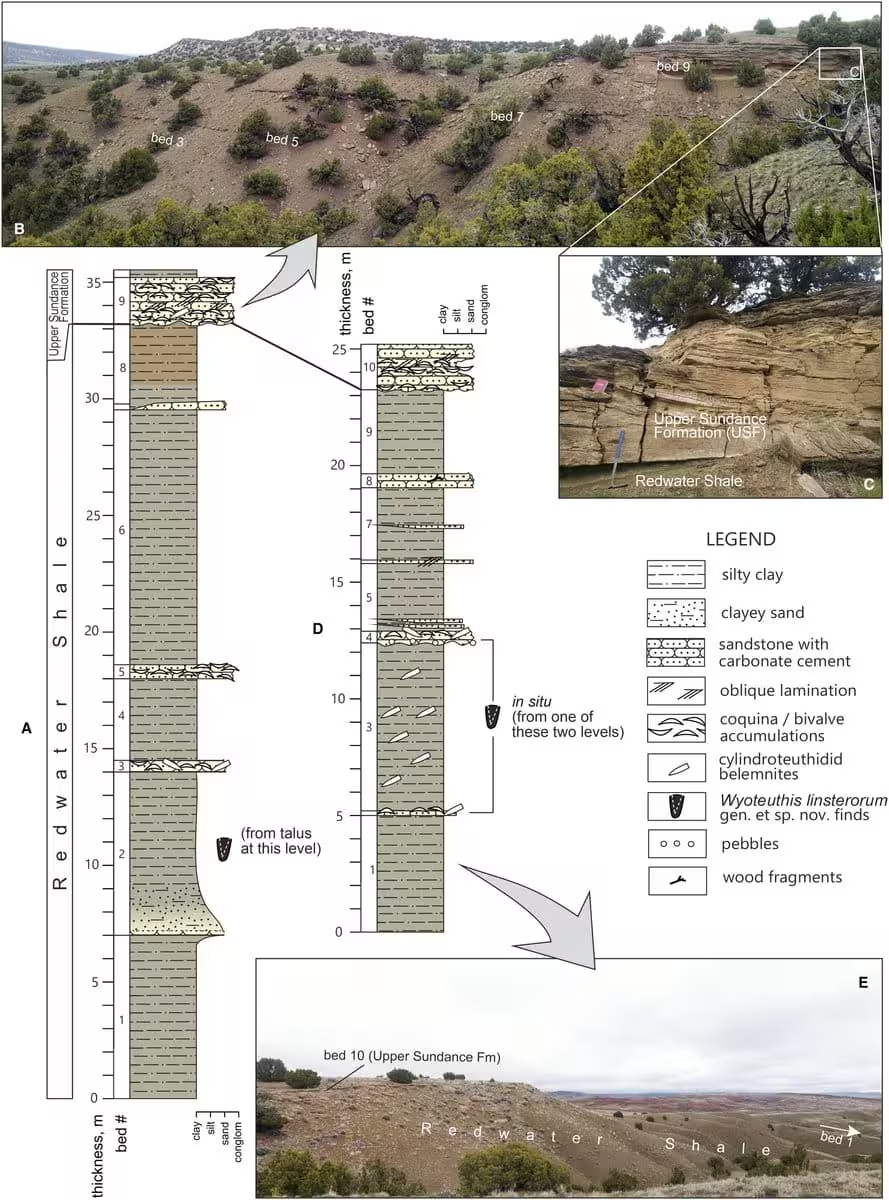
The path to describing this species spans nearly three decades. The first specimen was identified in the late 1990s by Dr. Burkhard Pohl, founder of the Wyoming Dinosaur Center, but it remained unstudied for years due to its anomalous features. A second specimen, discovered by collector Cliff Linster near Ten Sleep, Wyoming, in 2019, provided the necessary evidence to define the species. The genus name Wyoteuthis translates to “a squid from Wyoming,” while the species name honors the Linster family.
Paleontologist Bill Wahl noted that the fossil stood out immediately from the thousands of other specimens in the region. Jessica Lippincott, a co-author of the study, remarked that despite her years of experience with local belemnites, this discovery was entirely unique.
Evolutionary Insights and Ecological Niche
Using computed tomography (CT) scanning, the research team examined the internal morphology of the fossils without causing damage. The scans revealed an unexpected link to an ancient belemnite family previously thought to have gone extinct millions of years before Wyoteuthis linsterorum existed.
Alexey Ippolitov, a specialist in the group based at Victoria University of Wellington, suggested that the creature’s massive size may have provided a significant predatory advantage. He noted that the animal might have hunted smaller, co-occurring belemnites, much like modern squids that exhibit opportunistic feeding behaviors, including cannibalism.
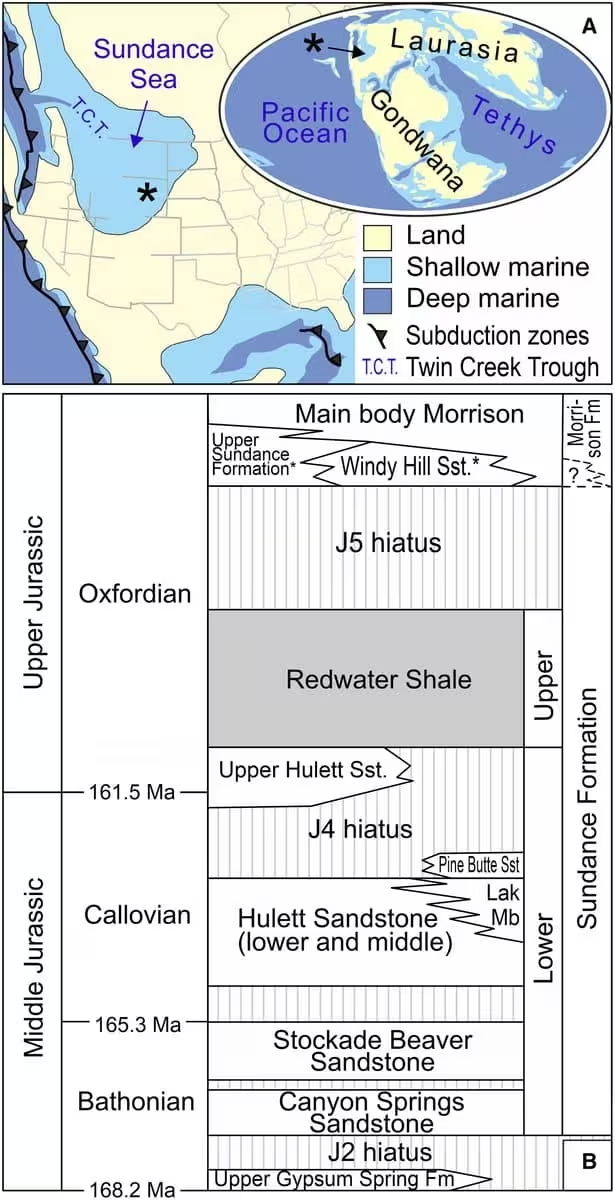
Dr. Dean Lomax, an Honorary Research Fellow at The University of Manchester, described the rarity of the find as potentially indicative of a highly specialized ecological role, suggesting that such creatures may have occupied a very narrow niche in the prehistoric Sundance Sea.
This article has been fact checked for accuracy, with information verified against reputable sources. Learn more about us and our editorial process.
Last reviewed on .
Article history
- Latest version
Reference(s)
- Ippolitov, Alexey P.., et al. “‘The big chunky belemnite’: a new relict megateuthidid from the Oxfordian (Late Jurassic) of Wyoming,
USA , and its place in the evolutionary history of the group.” Papers in Palaeontology, vol. 12, no. 5, September 9, 2026 Wiley, doi: 10.1002/spp2.70123. <https://onlinelibrary.wiley.com/doi/10.1002/spp2.70123>. - <https://www.researchgate.net/scientific-contributions/Burkhard-Pohl-2148502334>.
- <https://www.researchgate.net/profile/William-Wahl>.
- <https://independent.academia.edu/JessicaLippincott>.
- <https://www.researchgate.net/profile/Alexey-Ippolitov>.
- “Dean Lomax.” Research Explorer The University of Manchester <https://research.manchester.ac.uk/en/persons/dean-lomax/>.
Cite this page:
- Posted by Hassan Raza