The Ancient Survival Strategy That Helped Crocodiles Outlive The Dinosaurs
Crocodiles survived the asteroid impact that killed the dinosaurs, and a new study suggests their preference for warm climates may have been the key.
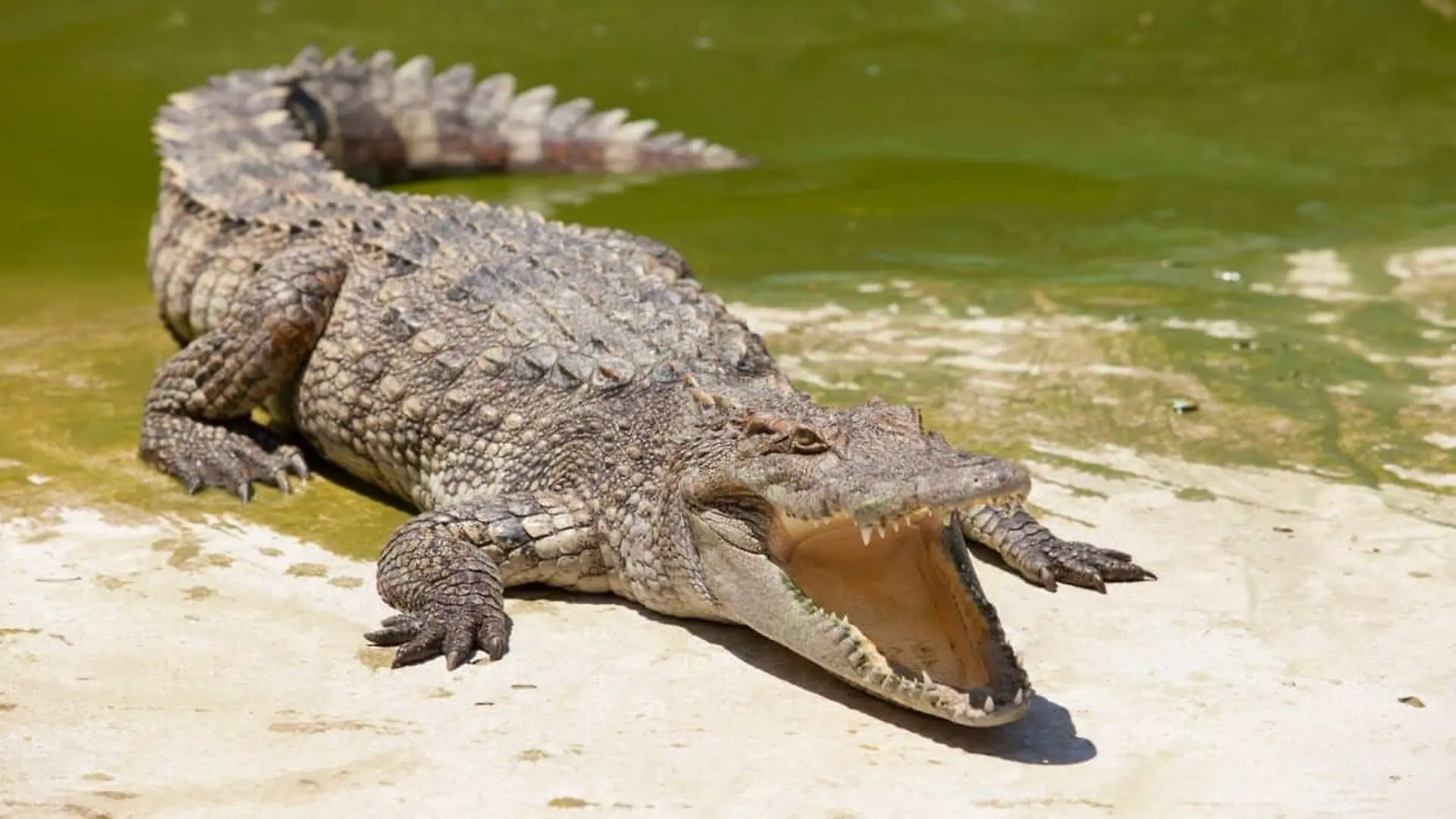
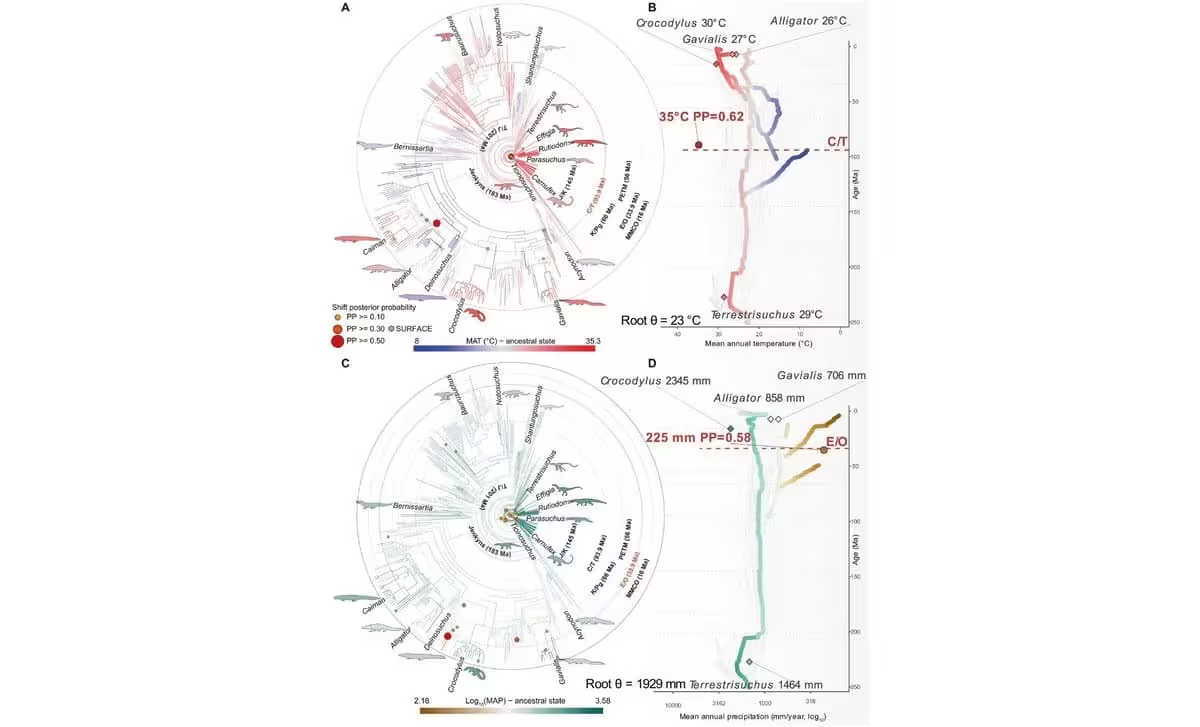
For more than 250 million years, the ancestral line of modern crocodiles has maintained a steadfast, enduring relationship with the planet’s warmer regions. A study published on October 21, 2026, in the journal Science Advances reveals that these reptiles, known collectively as Pseudosuchia, largely bypassed the process of adapting to colder environments. Instead, they relied on a strategy of migrating alongside shifting climate zones, consistently tracking the tropical and subtropical conditions they preferred.
A Quarter-Billion Years of Climatic Loyalty
The research, spearheaded by vertebrate paleontologist Alfio Alessandro Chiarenza of University College London, represents a massive undertaking in evolutionary data analysis. The team synthesized information from an evolutionary tree comprising over 400 species, alongside more than 7,000 fossil records, 130,000 modern environmental data points, and 52 distinct climate reconstructions spanning 245 million years.
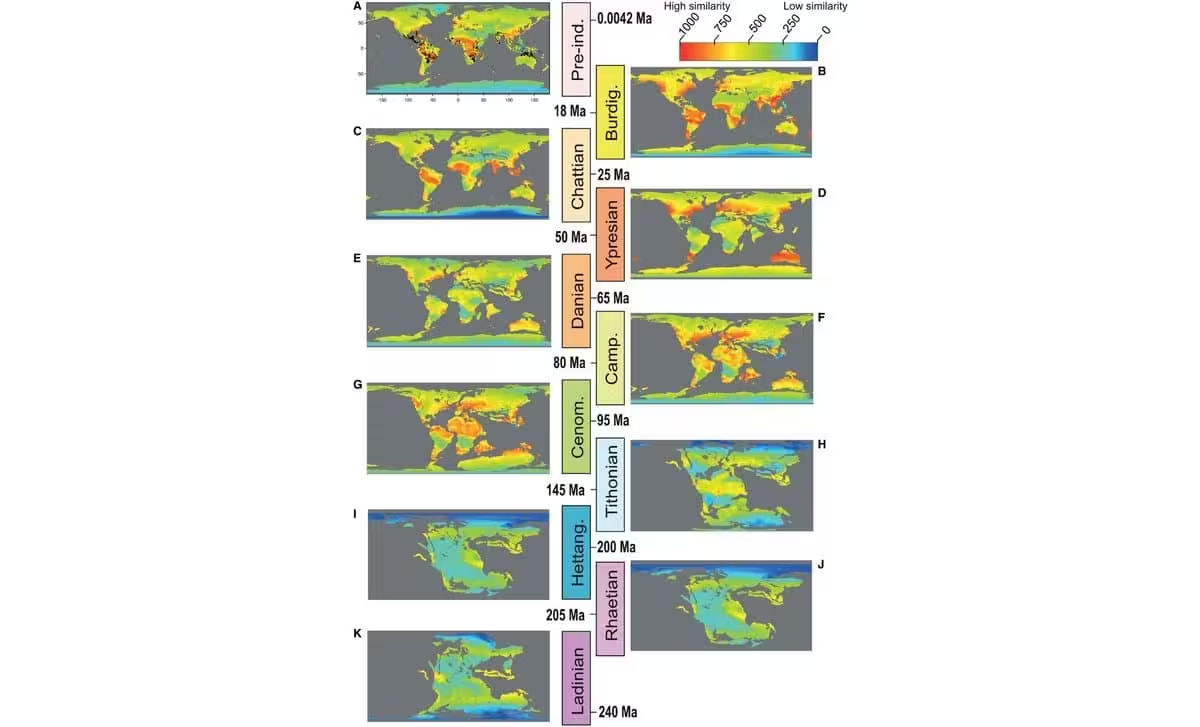
The data suggests a phenomenon defined by scientists as climatic niche conservatism. Rather than evolving the biological machinery required to thrive in frigid temperatures, Pseudosuchia simply expanded their range toward the poles during warmer geological eras and retreated toward the equator when global temperatures dipped. During the Eocene epoch, roughly 50 million years ago, this preference saw their relatives flourishing in regions as far north as Canada and Europe, as well as in the Antarctic.
While their climatic preferences remained rigid, their physical forms were incredibly diverse. Long before the rise of the dinosaurs, these creatures dominated various ecological niches. Some, like the nine-meter-long Fasolasuchus, were apex terrestrial predators, while others like Simosuchus were herbivorous. Still others, such as Poposaurus, evolved a bipedal gait that superficially mirrored that of certain dinosaurs. Despite these radical anatomical departures, the group never abandoned their reliance on warmth.
Survival in the Wake of the Chicxulub Impact
The resilience of the Pseudosuchia lineage was put to its ultimate test 66 million years ago, when the Chicxulub asteroid struck the Yucatán Peninsula. The resulting impact winter—a period of darkness and cooling caused by atmospheric debris—wiped out approximately 75% of life on Earth. Yet, crocodile ancestors endured.
The new study suggests that their geographic distribution was a key component of their survival. Climate simulations indicate that tropical and subtropical zones likely served as climatic refuges. Even with significant drops in solar radiation, these equatorial belts remained warm enough to sustain the survivors of the impact.
Beyond geography, the biology of these reptiles likely provided an additional buffer. Modern crocodilians are ectothermic, meaning they possess significantly lower metabolic energy requirements than the warm-blooded dinosaurs they outlived. Furthermore, their ability to enter states of dormancy—such as aestivation to survive heat and drought, or brumation to endure cold—provided them with a critical physiological advantage during the resource-scarce post-impact period.
While the study stops short of claiming that location alone guaranteed the survival of every species, it highlights a compelling intersection between evolutionary history and environmental persistence. As noted in a previous study involving several of the same authors, non-avian dinosaurs faced a much harsher reality as their suitable habitats contracted under the strain of global cooling. For the crocodile lineage, the story of survival is one of maintaining an ancient, ancestral preference for the warmth of the tropics, even when the world around them shifted violently.
This article has been fact checked for accuracy, with information verified against reputable sources. Learn more about us and our editorial process.
Last reviewed on .
Article history
- Latest version
Reference(s)
- <https://www.ucl.ac.uk/mathematical-physical-sciences/news/2024/nov/meet-staff-dr-alfio-alessandro-chiarenza-royal-society-newton-international-fellow>.
- Chiarenza, Alfio Alessandro., et al. “Climatic niche conservatism shapes the macroevolution, extinction, and survivorship of crocodile-line archosaurs.” Science Advances, vol. 12, no. 43, October 23, 2026 American Association for the Advancement of Science (AAAS), doi: 10.1126/sciadv.aeg2217. <https://www.science.org/doi/10.1126/sciadv.aeg2217>.
- Chiarenza, Alfio Alessandro., et al. “Asteroid impact, not volcanism, caused the end-Cretaceous dinosaur extinction.” Proceedings of the National Academy of Sciences, vol. 117, no. 29, June 29, 2020, pp. 17084-17093. National Academy of Sciences, doi: 10.1073/pnas.2006087117. <https://www.pnas.org/doi/full/10.1073/pnas.2006087117>.
Cite this page:
- Posted by Hassan Raza