Did Comets Actually Seed Life on Earth New Models Suggest the Theory May Be Wrong
New research suggests that comets may not have seeded life on Earth after all, as atmospheric heat and dilution likely destroyed vital organic ingredients.
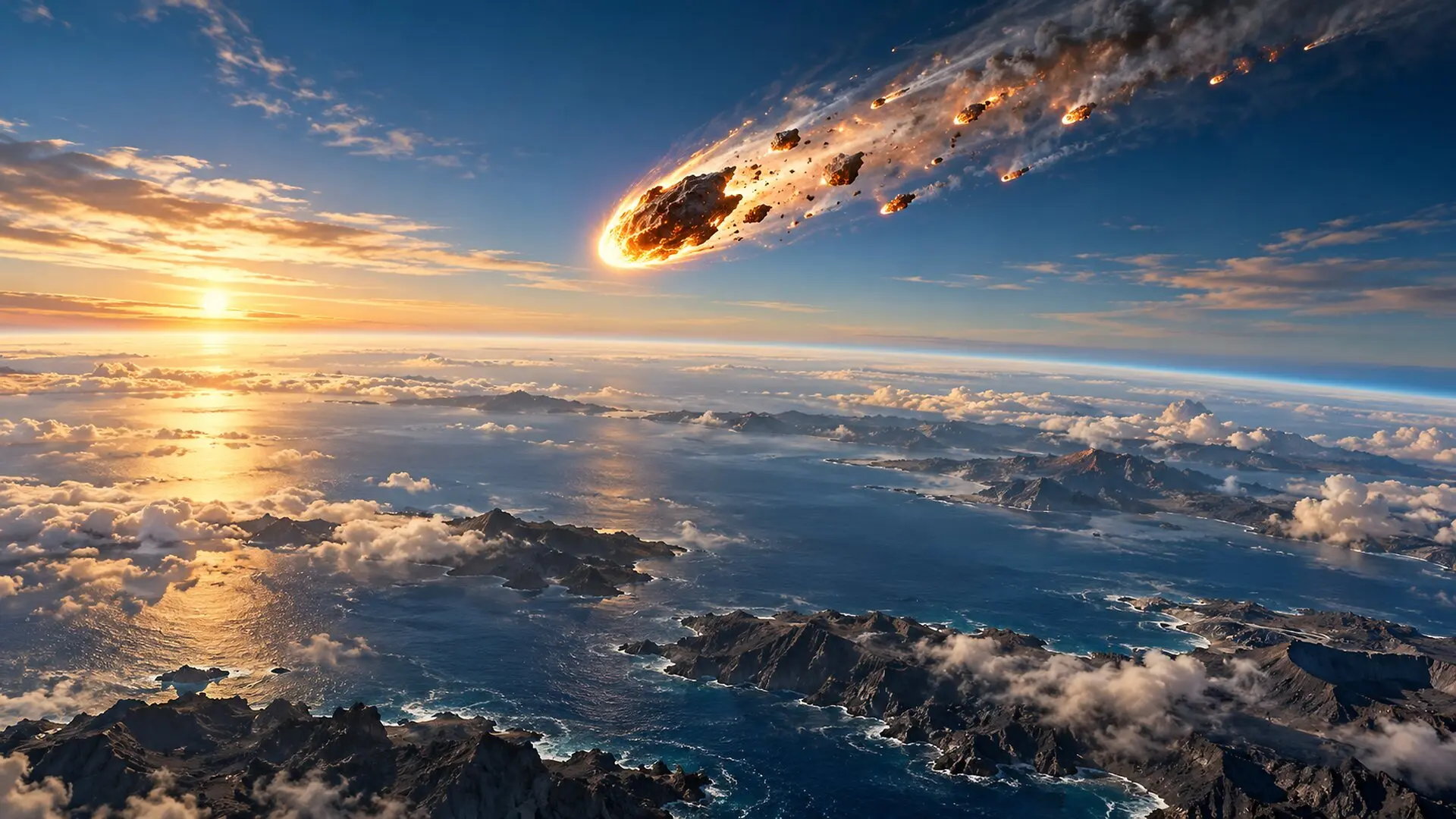
The long-standing hypothesis that comets acted as celestial delivery trucks, depositing the essential chemical building blocks of life onto a young Earth, may be significantly more flawed than once thought. A new computational study suggests that the extreme rigors of atmospheric entry and the subsequent rapid dilution of materials make it highly unlikely that comets could have provided the concentrated chemical feedstocks necessary to kickstart biology.
The research, led by the University of Cambridge and published in Scientific Reports, utilized sophisticated modeling of comet populations, atmospheric physics, and chemical stability. By focusing on hydrogen cyanide (HCN)—a molecule widely considered a vital precursor for the synthesis of sugars, lipids, and nucleotides—the team examined whether comets could realistically deliver these components in sufficient densities to support prebiotic chemistry.
“It’s kind of a romantic idea, but our results suggest it’s highly unlikely,” said Dr. Richard Anslow, the study’s lead author based at Cambridge’s Institute of Astronomy. He noted that the challenge isn’t just surviving the violent impact, but maintaining a high enough concentration of chemicals in a specific location for reactions to actually occur.
The Physics of Atmospheric Failure
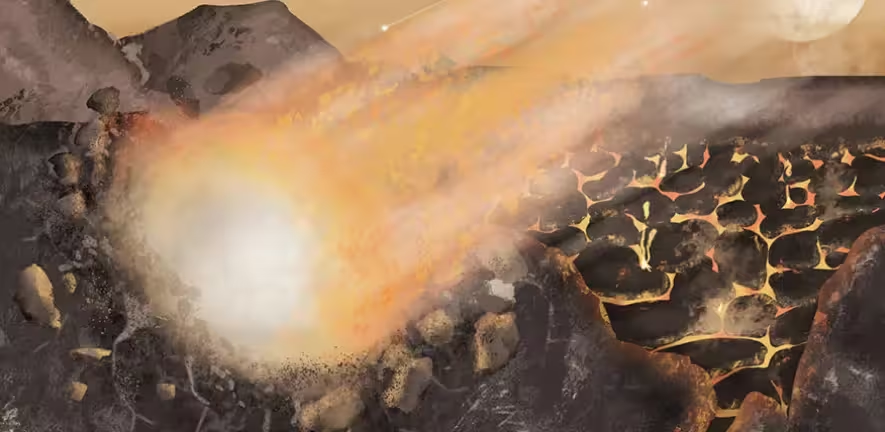
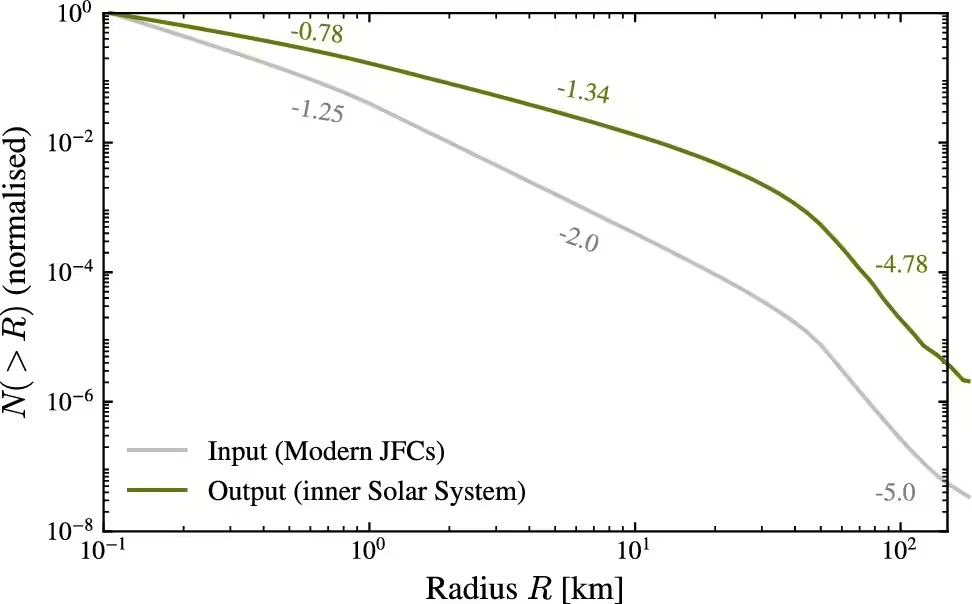
To evaluate the viability of this delivery system, researchers simulated the journeys of a million primordial comets originating from the distant regions beyond Neptune. These models tracked how the objects would heat, deform, and fragment as they pierced Earth’s atmosphere. The team found that atmospheric entry creates a difficult trade-off: while slower, shallower impacts are gentler on the delicate organic molecules, the atmosphere itself acts as a filter that disrupts or destroys many of the very bodies that would have been most likely to deliver their cargo intact.
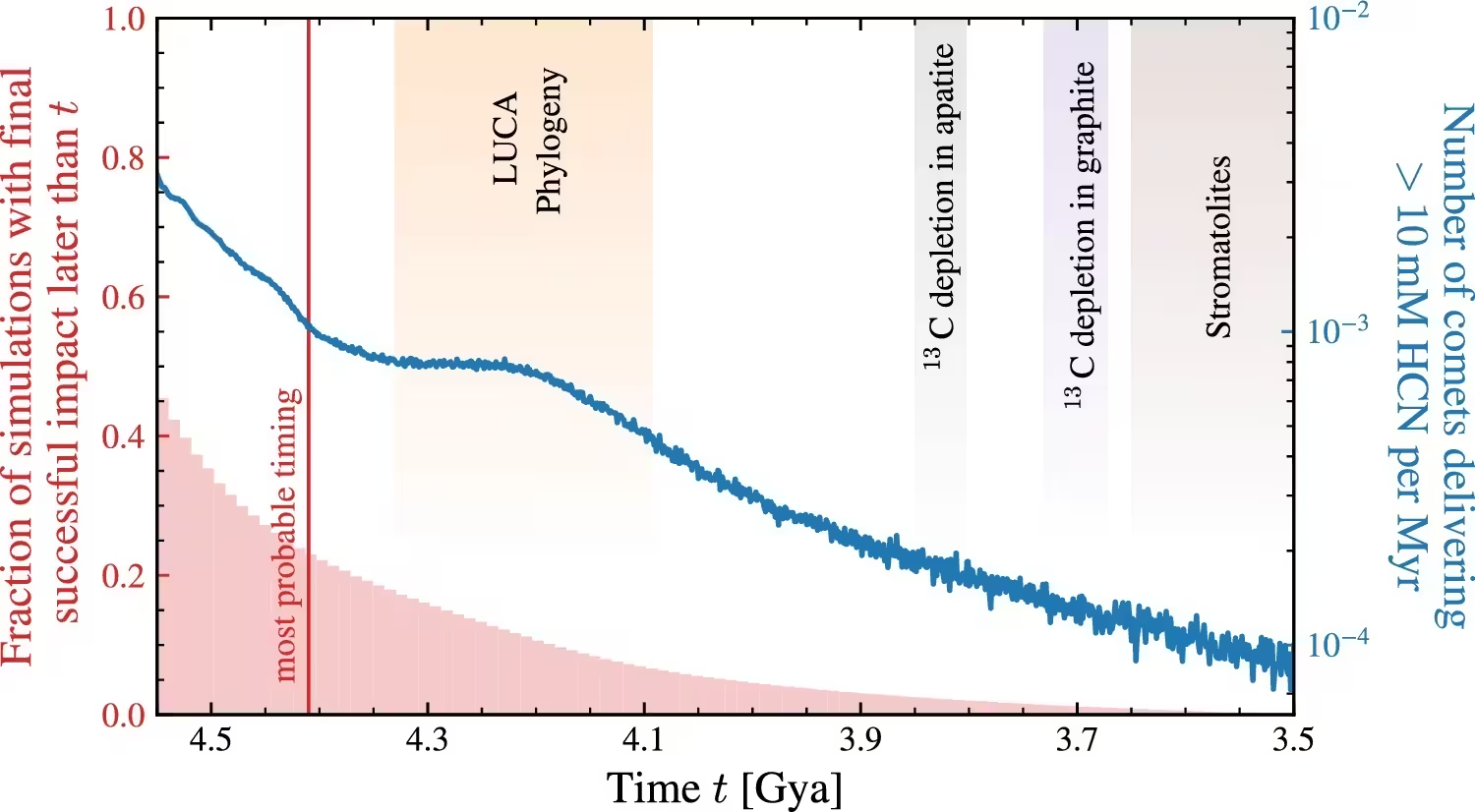
In over 100,000 simulated bombardment scenarios, more than half failed to deliver even a modest, benchmark concentration of hydrogen cyanide to a land-based site. Furthermore, when such a delivery did occur, it was largely confined to the earliest periods of Earth’s history, more than 4 billion years ago. As the frequency of these impacts waned, the odds of a comet successfully depositing usable, concentrated chemistry on a landing site dropped precipitously.
A Dilution Dilemma
Even in instances where a comet survived the atmospheric passage, the researchers found that environmental factors likely neutralized the benefits. The study accounted for the dilution of HCN into water reservoirs, such as crater lakes or early oceans. Because chemical reactions require specific concentration thresholds to proceed toward complex biological molecules, the rapid dispersion of material across a landscape or into large volumes of water would likely have rendered the delivered ingredients inert.
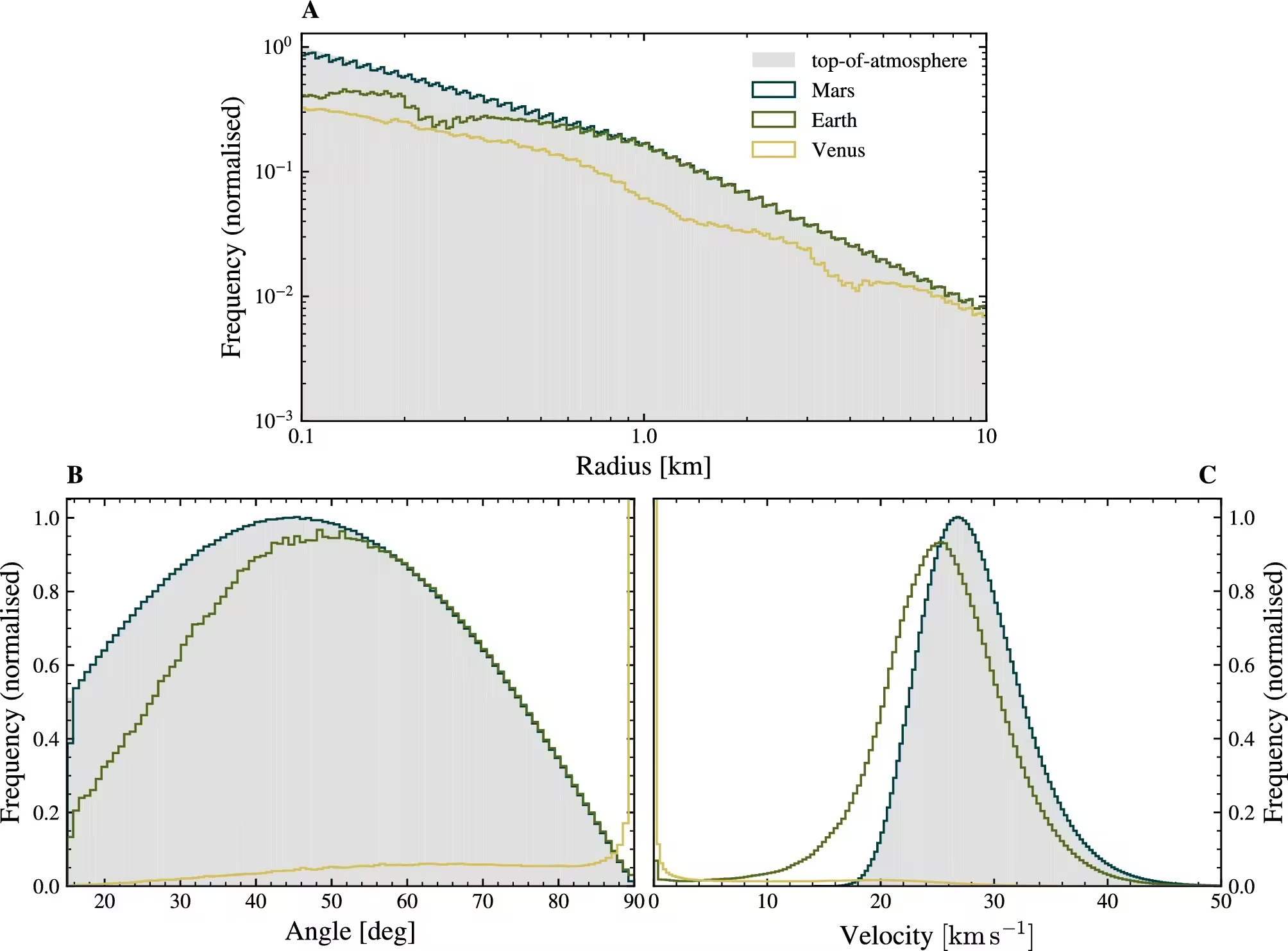
The team also extended their model to look at our planetary neighbors. They discovered that Mars, with its thinner atmosphere and lower impact velocities, presented a more favorable environment for the intact delivery of comet-borne chemicals compared to Earth. Conversely, the dense, crushing atmosphere of Venus proved to be an even more hostile barrier, effectively destroying most incoming cometary material before it reached the surface.
Reframing Origins
While this study casts doubt on the efficiency of cometary delivery, the researchers emphasize that it does not provide a definitive answer for how life began. Science is currently weighing multiple pathways, including the potential for chemical precursors to form directly on Earth through terrestrial processes or through chemistry triggered by asteroid impacts. Weakening the cometary hypothesis simply shifts the focus toward these alternative, potentially more localized or sustained mechanisms.
“The unresolved question is which environments can supply concentrated, reactive ingredients repeatedly enough for the chemistry leading toward life to proceed,” the team concluded. As humanity continues to search for life beyond our Solar System, understanding the nuances of planetary atmosphere and orbital mechanics will be critical in determining which rocky worlds possess the right conditions for the cosmic ingredients of life to actually find their target.
For further reading on the origins of life and planetary chemistry:
- Constraining the survival of HCN during cometary impacts (Icarus, June 2025)
- The atmospheric entry of cometary impactors (Monthly Notices of the Royal Astronomical Society, April 2025)
- Can comets deliver prebiotic molecules to rocky exoplanets? (Proceedings of the Royal Society A, 2023)
This article has been fact checked for accuracy, with information verified against reputable sources. Learn more about us and our editorial process.
Last reviewed on .
Article history
- Latest version
Reference(s)
- “University of Cambridge.” University of Cambridge <https://www.cam.ac.uk/>.
- Anslow, Richard. “Cometary impacts an unlikely pathway towards the origins of life on Earth - Scientific Reports.”, vol. 16, no. 1, October 28, 2026, pp. 31688 Nature, doi: 10.1038/s41598-026-74214-y. <https://www.nature.com/articles/s41598-026-74214-y>.
- “Home | Institute of Astronomy.” <https://www.ast.cam.ac.uk/>.
- McDonald, Catriona H.., et al. “Constraining the survival of HCN during cometary impacts.” Icarus, vol. 441, November 1, 2025, pp. 116704 Elsevier BV, doi: 10.1016/j.icarus.2025.116704. <https://doi.org/10.1016/j.icarus.2025.116704>.
- <https://academic.oup.com/mnras/article/539/1/376/8098221>.
- Anslow, R. J.., et al. “Can comets deliver prebiotic molecules to rocky exoplanets?.” Proceedings of the Royal Society A: Mathematical, Physical and Engineering Sciences, vol. 479, no. 2279, November 15, 2023 The Royal Society, doi: 10.1098/rspa.2023.0434. <https://doi.org/10.1098/rspa.2023.0434>.
Cite this page:
- Posted by Aisha Ahmed