Scientists Successfully Rewind the Molecular Age of 80 Year Old Human Cells by 60 Years
A breakthrough cell reprogramming method reveals how aging markers can be reversed, offering new insights into the mechanisms behind cellular rejuvenation.
A team of researchers has successfully turned back the biological clock of human cells, effectively transforming cells derived from an 80-year-old donor into neural tissue that exhibits the molecular profile of a person under the age of 20. This breakthrough, led by neurobiologist Oliver Brüstle at the University of Bonn, suggests that the aging process is not necessarily a one-way street at the cellular level.
A Direct Path to Cellular Rejuvenation
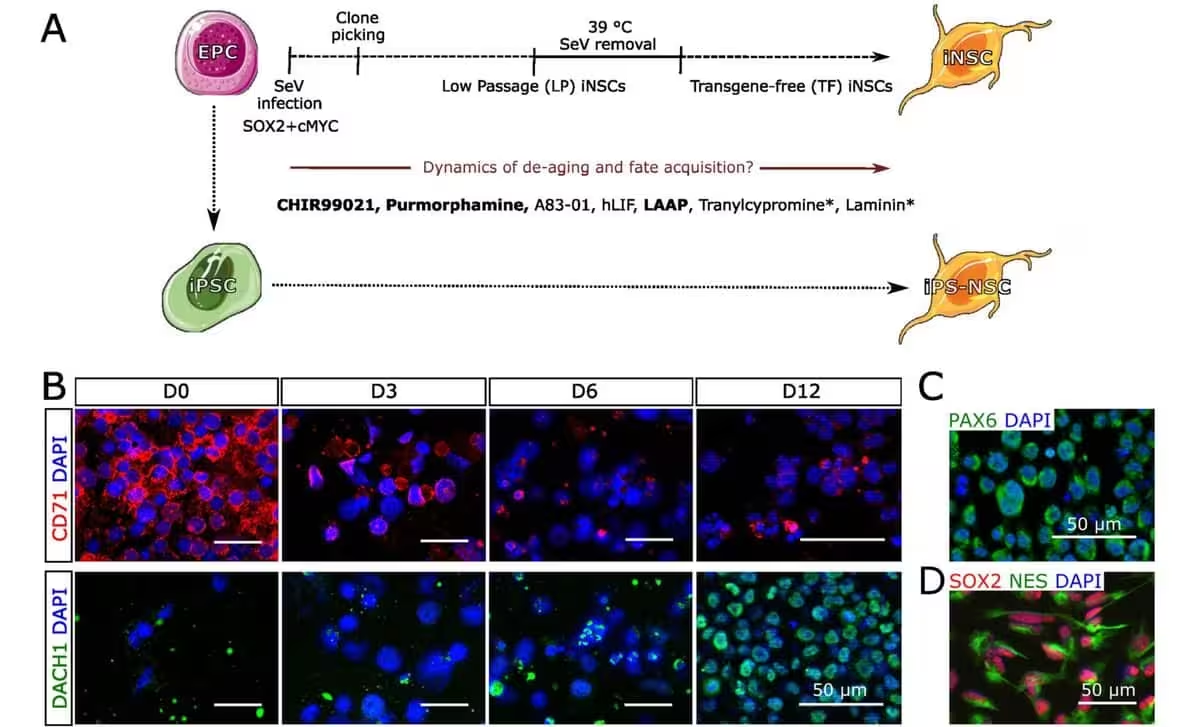
Traditional methods of cellular reprogramming usually involve pushing specialized cells back into a pluripotent stem cell state before guiding them toward a new identity. However, Brüstle and his colleagues employed a different strategy. By utilizing transcription factors—proteins that act as genetic switches—the team directly converted blood cell precursors into neural stem cells, bypassing the pluripotent intermediate stage entirely.
The research, published in Aging Cell, builds on earlier work where the group successfully generated induced neural stem cells (iNSCs) from blood. By avoiding the typical “reset” to pluripotency, the researchers were able to witness the process of rejuvenation unfold in slow motion over a period of more than 100 days.
“In our current study, we focused on a different phenomenon: namely, the observation that cells become significantly rejuvenated during reprogramming,” Brüstle noted. “We also know that this epigenetic rejuvenation ensures that the cells actually behave like young cells.”
Unlocking the Molecular Clock
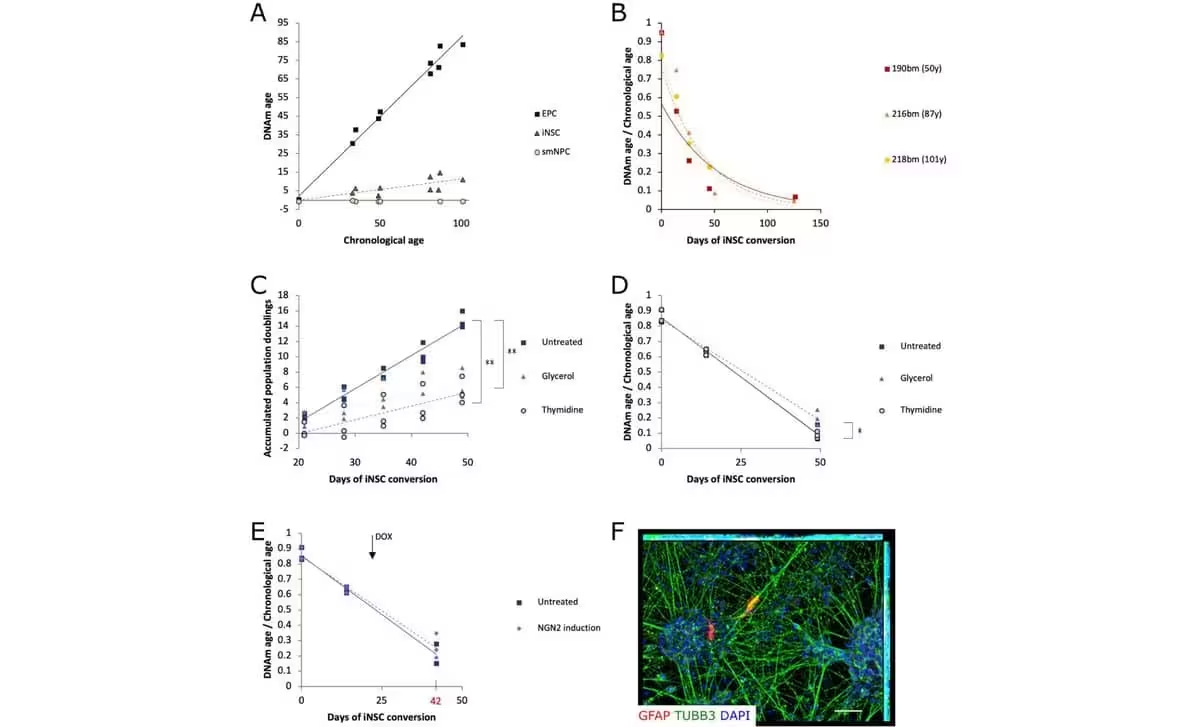
To quantify these changes, the scientists tracked DNA modifications—a “molecular clock” that marks the biological age of a cell. Over the course of approximately 50 days, the cells underwent a dramatic transformation, losing the markers associated with advanced age and effectively shedding about 60 years of molecular wear and tear.
The benefits of this transformation went beyond mere data points on a clock. The reprogrammed cells showed marked improvements in health, including reduced mitochondrial toxicity, a common sign of cellular aging. Crucially, the team discovered that this rejuvenation was independent of cell division; even when they inhibited the cells from multiplying, the rejuvenation process continued, suggesting that the shift is a fundamental epigenetic event rather than a byproduct of rapid growth.
New Hope for Age-Related Disease
The ability to derive young, functional neural stem cells from the blood of elderly individuals opens new doors for regenerative medicine. Many neurodegenerative conditions are intrinsically linked to the aging of the nervous system. By demonstrating that we can strip away the molecular markers of age, researchers are creating a pathway to better understand and potentially treat these diseases.
This study confirms that the epigenetic landscape of a cell is far more malleable than previously understood. By managing the transition to a new cell type directly, science may have found a reliable way to sustain healthy, youthful cellular function even in the presence of advanced biological age.

This article has been fact checked for accuracy, with information verified against reputable sources. Learn more about us and our editorial process.
Last reviewed on .
Article history
- Latest version
Reference(s)
- “Oliver Brüstle.” Universität Bonn <https://www.uni-bonn.de/en/research-and-teaching/research-profile/transdisciplinary-research-areas/tra-3-life-and-health/members-directory/oliver-brustle>.
- Berg, Lea Jessica., et al. “Protracted Fate Acquisition and Epigenetic De‐Aging During Induced Neural Stem Cell Conversion of Human Blood Cells.” Aging Cell, vol. 25, no. 10, October 3, 2026 Wiley, doi: 10.1111/acel.70751. <https://onlinelibrary.wiley.com/doi/10.1111/acel.70751>.
Cite this page:
- Posted by Elizabeth Taylor