Scientists Just Discovered a Bizarrely Chunky Jurassic Squid That Stood Out From the Crowd
Paleontologists have discovered a mysterious new Jurassic marine creature in Wyoming that defies classification and challenges our understanding of ancient seas.
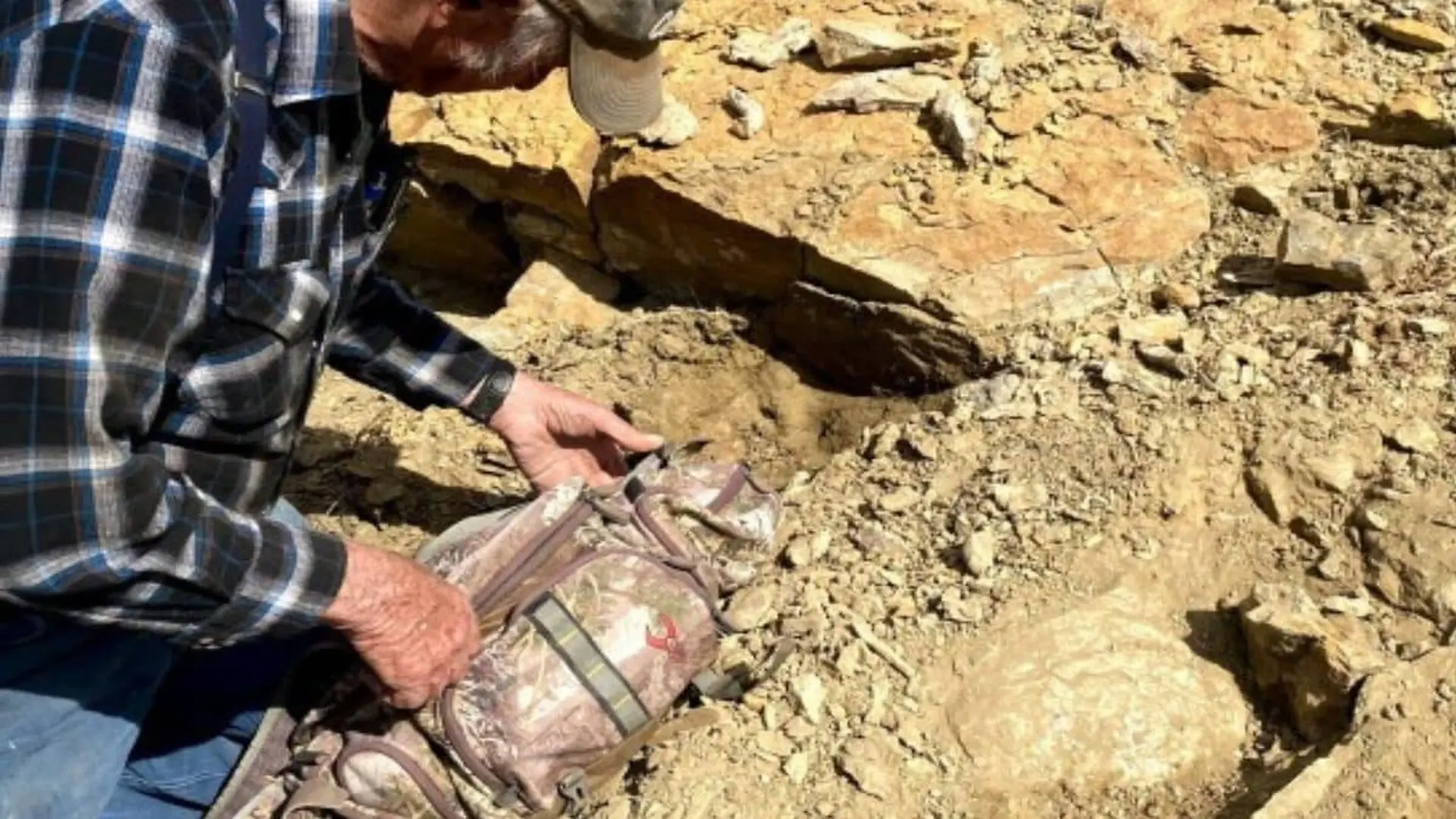
Paleontologists have identified a robust, squid-like creature that navigated the inland seas of Wyoming approximately 160 million years ago. Named Wyoteuthis linsterorum, the species stands out in the fossil record for its remarkably thick internal shell, earning it a reputation as one of the most heavy-set belemnites ever discovered.
The discovery is based on two specimens recovered from the Redwater Shale Member of the Sundance Formation, a region once submerged under prehistoric waters. These creatures belong to the belemnites, a diverse and extinct group of cephalopods related to modern squid and octopuses that were prolific during the Jurassic period.
The species was officially documented in Papers in Palaeontology, with its name serving as a tribute to Cliff Linster, a dedicated fossil collector who helped uncover one of the specimens before his death earlier in 2026.
Anatomical Anomalies of the Jurassic Cephalopod
While belemnites shared a basic body plan with today’s squid—including ten appendages and an internal shell—the composition of their anatomy was distinct. These creatures possessed a rostrum, or guard, made of durable calcite, which is the component most frequently preserved in geological strata. While standard belemnite fossils from Wyoming typically measure between 50 and 100 millimeters in length, Wyoteuthis defied these proportions.
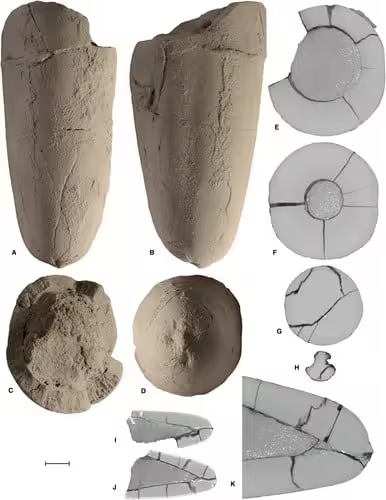
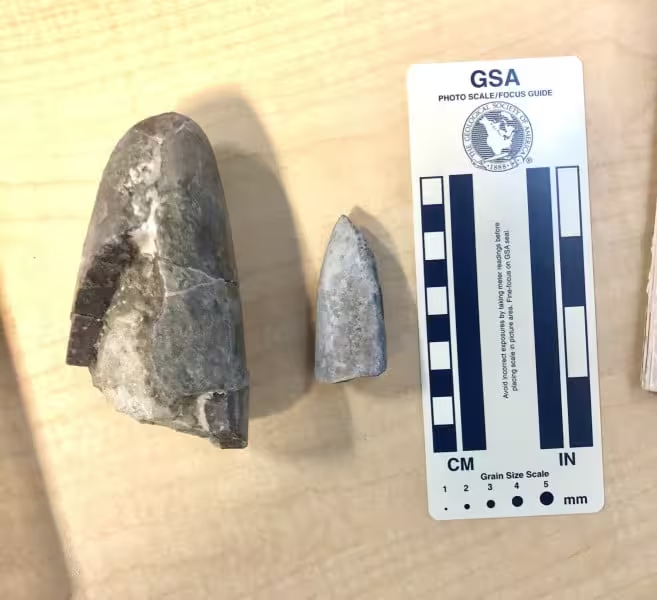
Lead researcher Alexey Ippolitov and his team noted that the rostrum of the new species reached a width of 60 millimeters at the anterior end, making it the thickest of its kind on record. Despite the damage to the recovered fossils, experts estimate the original length of the rostrum to have been between 160 and 175 millimeters. Wyoming-based paleontologist Bill Wahl, who contributed to the research, noted that the specimen was so distinct that it appeared to stand apart from the standard fossil assemblage of the region.
A Compact and Sturdy Physique
Despite its impressive girth, Wyoteuthis was not a behemoth in terms of overall stature. Calculations regarding the creature’s total size—including its arms—suggest it reached lengths of only 55 to 60 centimeters (about 22 to 24 inches). Researchers characterize the animal as a “chunky but short” cephalopod, noting that its density was not matched by a large body length.
The extreme rarity of these fossils in the highly productive Sundance Formation suggests that Wyoteuthis may have occupied a specialized ecological niche, potentially favoring distinct habitats or hunting specific prey that set it apart from its more common contemporaries.
An Evolutionary Survivor
The discovery provides a unique window into the Megateuthididae family, a lineage that famously produced the largest known belemnites in history. While the group saw a resurgence following the Toarcian extinction event—a period defined by significant ocean oxygen loss—most of its members faded away by the Middle Jurassic as other belemnite lineages rose to prominence.
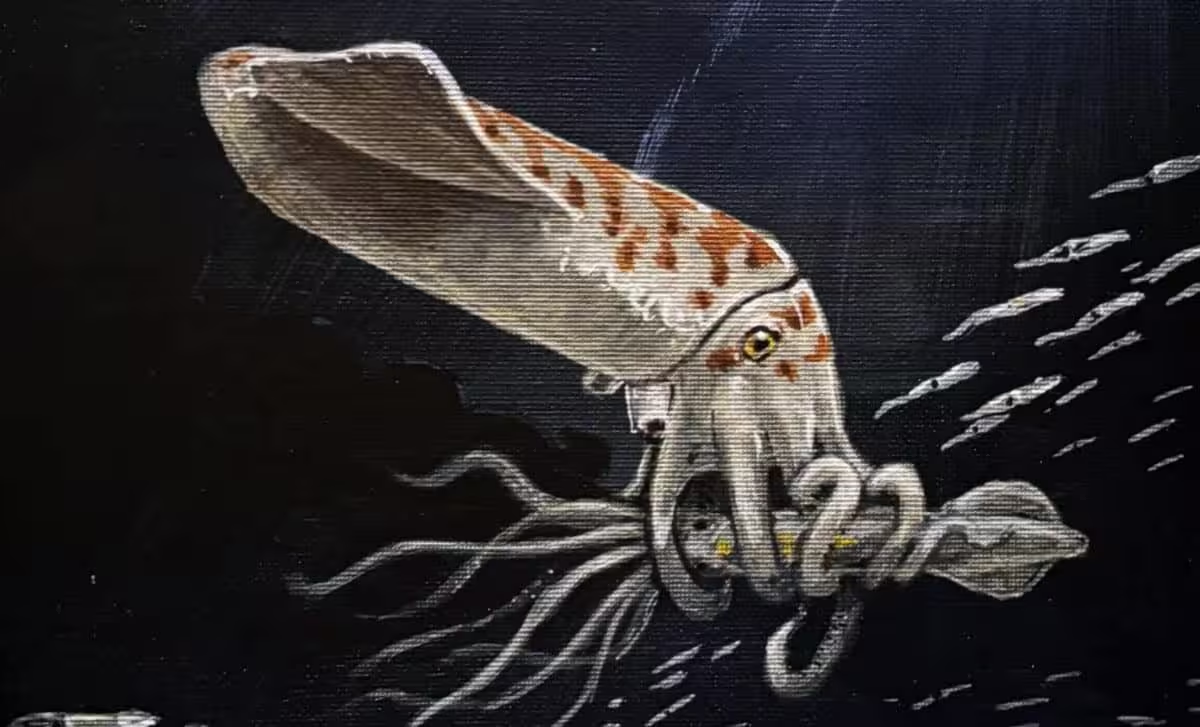
Wyoteuthis represents a fascinating holdover, described by researchers as a “portly survivor” that persisted long after its kin had vanished from the fossil record. Though only two specimens have been identified, they offer vital evidence of a lineage that defied the evolutionary trends of the Jurassic.
This article has been fact checked for accuracy, with information verified against reputable sources. Learn more about us and our editorial process.
Last reviewed on .
Article history
- Latest version
Reference(s)
- Ippolitov, Alexey P.., et al. “‘The big chunky belemnite’: a new relict megateuthidid from the Oxfordian (Late Jurassic) of Wyoming,
USA , and its place in the evolutionary history of the group.” Papers in Palaeontology, vol. 12, no. 5, September 9, 2026 Wiley, doi: 10.1002/spp2.70123. <https://onlinelibrary.wiley.com/doi/10.1002/spp2.70123>. - “ORCID.” <https://orcid.org/0000-0003-1612-0376>.
- <https://www.researchgate.net/profile/William-Wahl>.
- Manchester, University. ““Peculiar” new species of Jurassic squid found in Wyoming.”, September 10, 2026 University of Manchester <https://www.manchester.ac.uk/about/news/peculiar-new-species-of-jurassic-squid-found-in-wyoming/>.
Cite this page:
- Posted by Divya Iyer