The Secret CIA Mission That Used A Fake Mining Ship To Haul A Soviet Sub From The Abyss
During the Cold War, the US launched a secret mission to salvage a sunken Soviet submarine using a fake mining vessel. Discover the untold operation here.
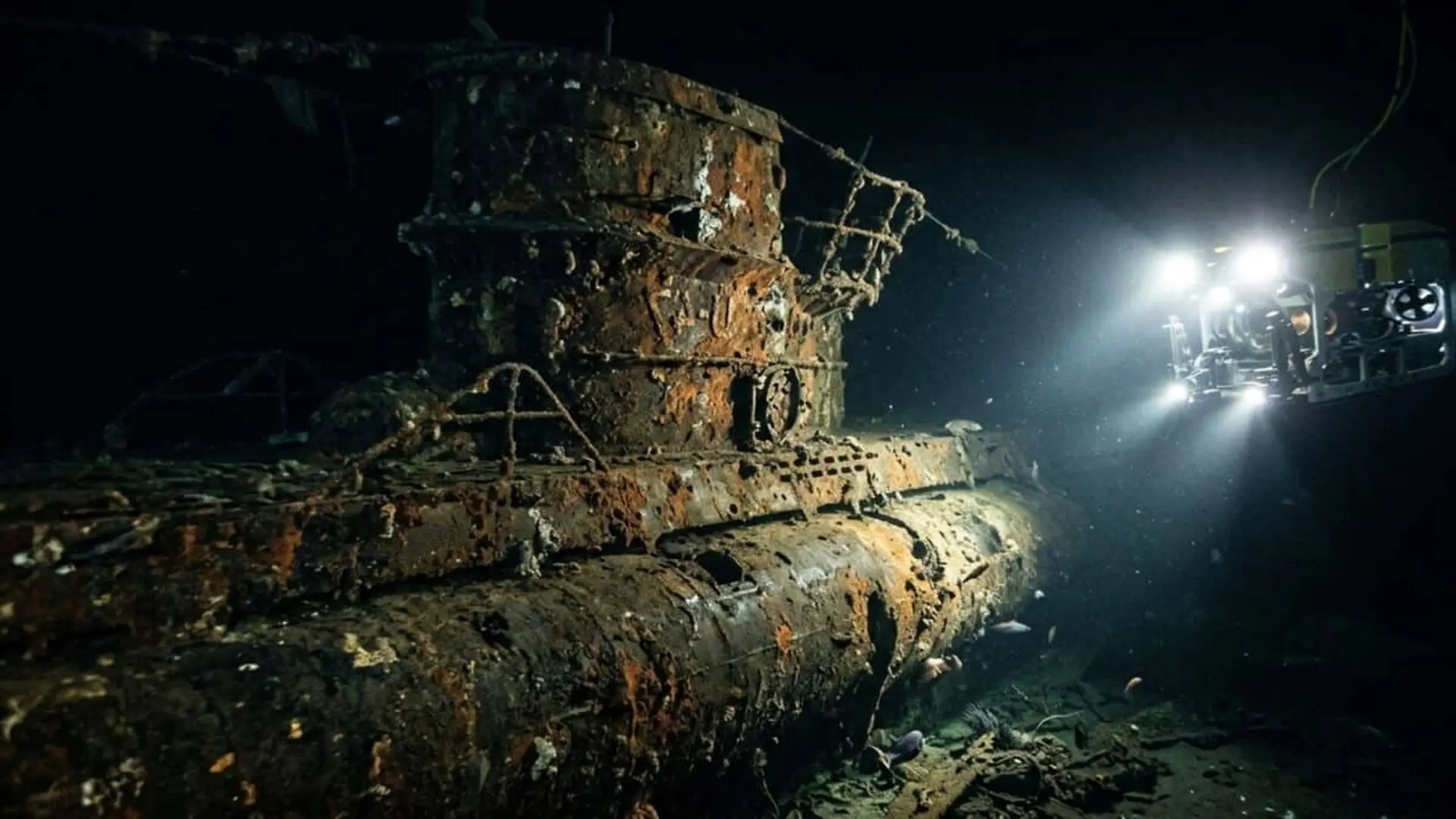
During the summer of 1974, a massive vessel commissioned by billionaire Howard Hughes patrolled the North Pacific under the pretense of deep-sea mining. While Soviet ships circled the area, scrutinizing the operation, they remained oblivious to the true objective: a daring CIA salvage mission from the abyssal depths, nearly 16,500 feet (5,000 meters) below. This high-stakes endeavor, dubbed Project Azorian, stands as one of the most audacious engineering feats of the Cold War.
The mission was a partial success, resulting in the recovery of a small portion of a sunken Soviet submarine. Inside the wreckage, American teams discovered the remains of six Soviet sailors, whom they laid to rest at sea with full military honors—an act that was documented on film and, decades later, presented to the Russian government.
A Vanished Soviet Vessel
The saga began in early 1968, when the K-129, a Soviet Golf II class diesel-powered submarine equipped with three nuclear-tipped missiles, departed the Kamchatka Peninsula for a routine patrol. In March, the vessel went silent. The submarine eventually came to rest roughly 1,500 miles (2,400 kilometers) northwest of Hawaii, taking the lives of all 98 crew members.
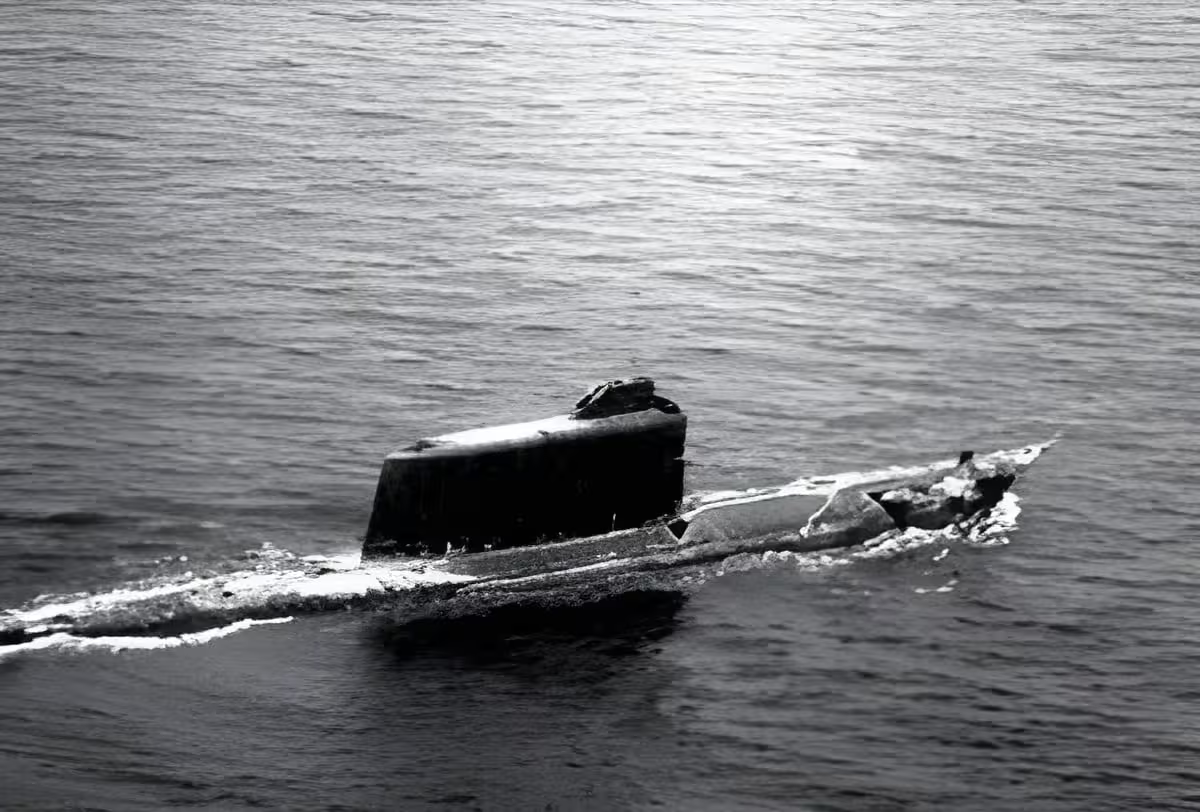
Despite a frantic two-month search by the Soviet navy, the wreckage remained elusive. It was the United States that located the sub, having tracked the acoustic signature of its destruction. In August 1968, the submarine USS Halibut deployed camera sleds to map the wreck at extreme depths. For American intelligence, the site represented a goldmine of strategic intelligence, including nuclear weaponry and decryption technology. However, lifting such a massive structure from the ocean floor was a task unprecedented in history.
An Elaborate Oceanic Ruse
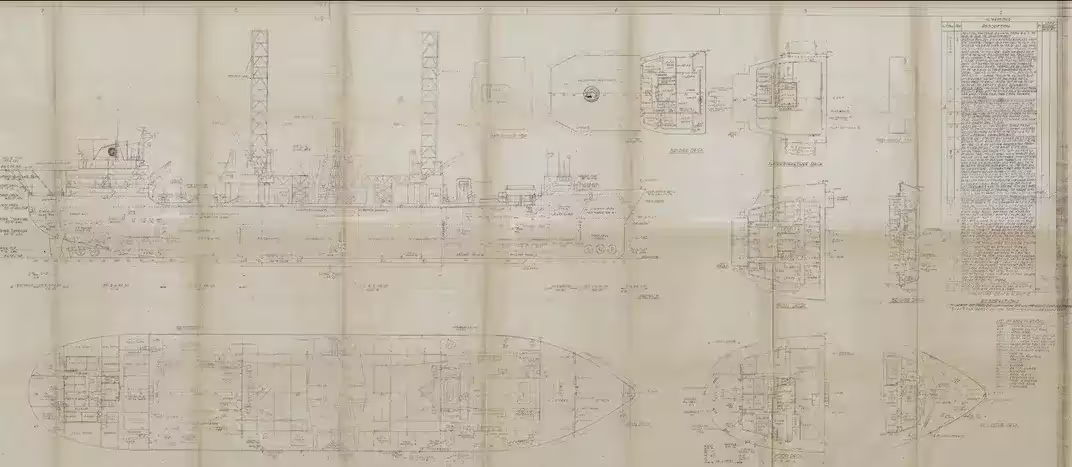
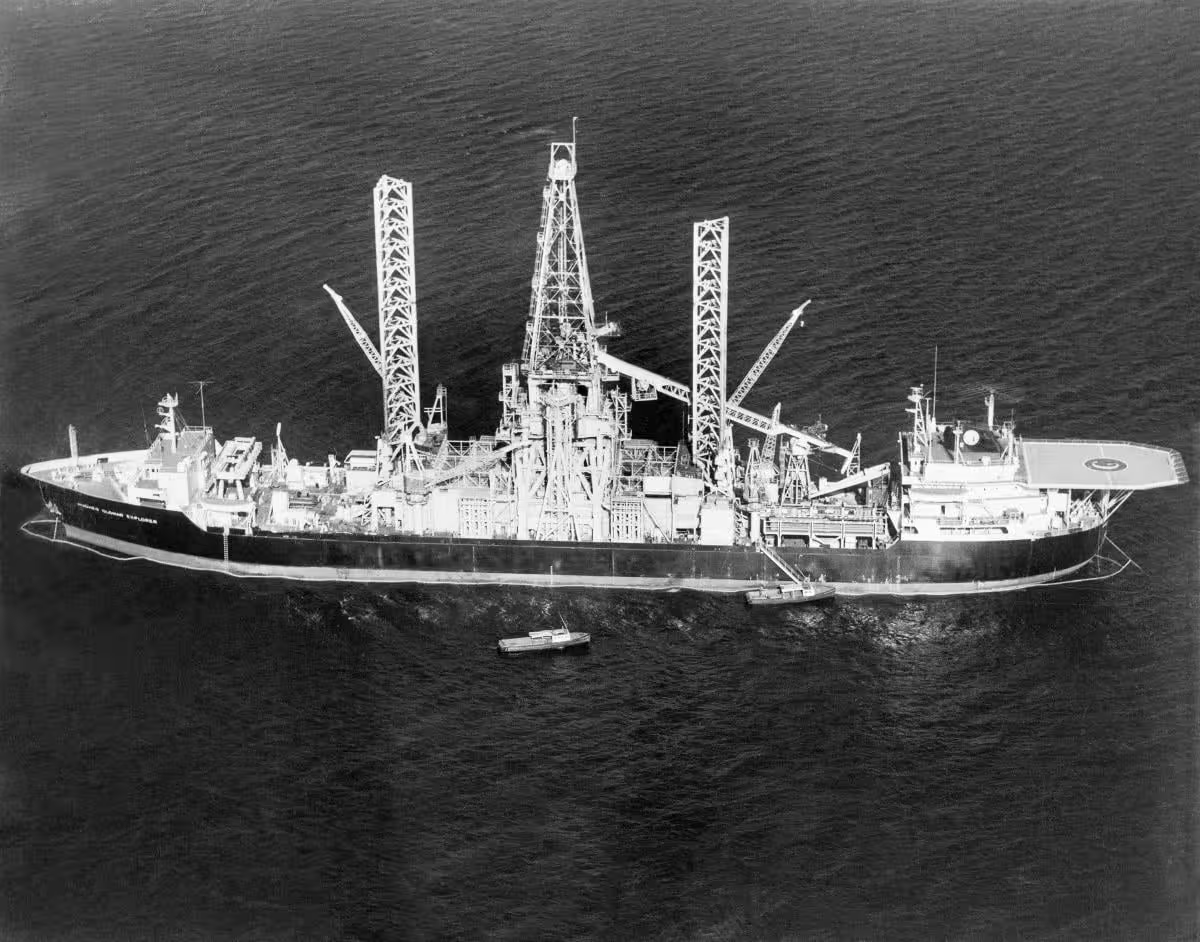
To reach the wreckage, the CIA spent six years developing the Hughes Glomar Explorer. Measuring 619 feet (189 meters), the ship provided the perfect camouflage. By framing the vessel as a pioneering deep-sea mining platform, the agency successfully obscured its true purpose from the public and foreign adversaries.
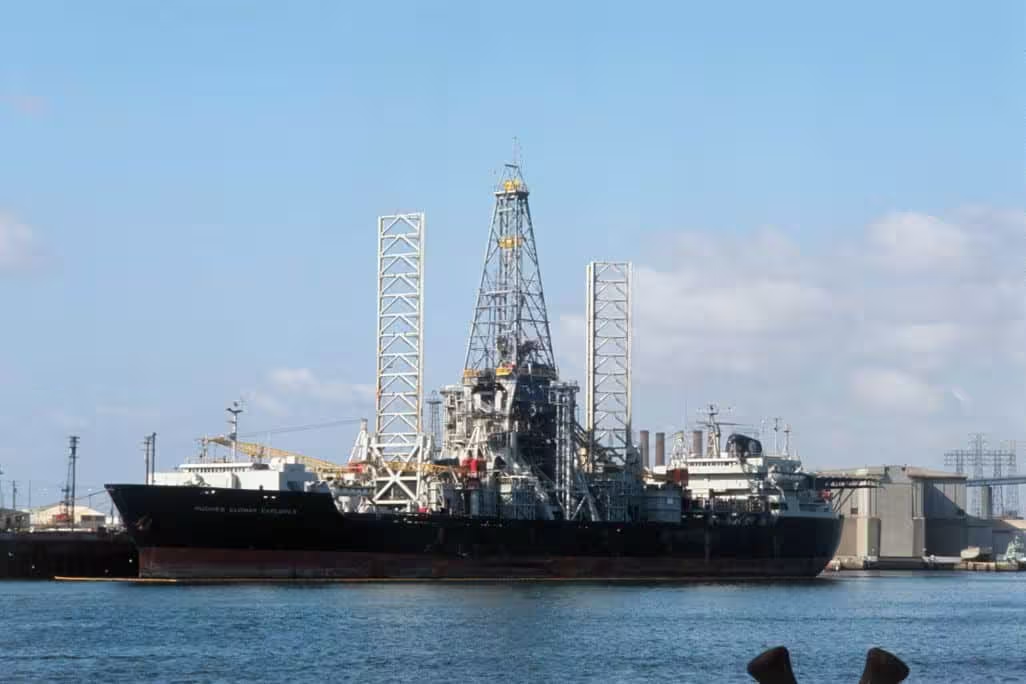
The ship featured an internal docking well, or “moon pool,” and was equipped with a massive mechanical grabber engineered by Lockheed. Known as the capture vehicle, the device was designed to be lowered on a string of heavy-duty pipe to latch onto the submarine and hoist it into the belly of the Glomar Explorer. As reported by Smithsonian magazine, no nation had previously achieved a salvage operation of this scale.
The mission launched on July 4, 1974. Throughout the operation, the crew remained on high alert, even fortifying the vessel against potential boarding attempts by Soviet surveillance ships. Declassified CIA files reveal that tension remained high for the duration of the two-month deployment.
Engineering Failure and Partial Recovery
In August, the capture vehicle successfully gripped the K-129 and lifted it from the seafloor. However, the mechanism experienced a catastrophic failure during the ascent. Several grabber arms snapped, causing the majority of the submarine—including the highly coveted missile and code sections—to fall back into the abyss. Only the bow section was successfully recovered on August 8, 1974. Despite the loss of the primary intel targets, experts such as naval historian Norman Polmar have praised the operation, telling WGBH that the sheer technical capability required to pull off the maneuver was staggering.
A planned follow-up, dubbed Project Matador, was eventually scuttled following media leaks, notably by Seymour Hersh in The New York Times in 1975.
A Final Burial at Sea
Inside the recovered bow, the crew discovered the remains of six sailors. On September 4, 1974, the crew held a burial ceremony with full military honors. Due to concerns regarding potential radiation, the bodies were interred in metal caskets. The CIA filmed the proceedings, reciting prayers in both English and Russian before committing the caskets to the deep. This footage remained a classified artifact for nearly two decades until, in 1992, CIA Director Robert Gates provided the video to Russian President Boris Yeltsin, according to US Naval Institute’s Proceedings.
The Legacy of the “Glomar Response”
Project Azorian fundamentally altered the landscape of government secrecy. When pressed for information by journalists in 1975, the CIA refused to provide details, famously stating they could “neither confirm nor deny” the existence of such records. This bureaucratic maneuver became known as the “Glomar response,” a standard still employed by US agencies today to protect sensitive intelligence.
The CIA maintained its official silence on the details of the mission until 2010, when it authorized the release of a comprehensive account through the National Security Archive. As for the vessel itself, the ship eventually transitioned to commercial oil exploration, serving for decades as the GSF Explorer before finally being sent to the scrapyard in 2015, as reported by gCaptain.
This article has been fact checked for accuracy, with information verified against reputable sources. Learn more about us and our editorial process.
Last reviewed on .
Article history
- Latest version
Reference(s)
- <https://www.smithsonianmag.com/history/during-cold-war-cia-secretly-plucked-soviet-submarine-ocean-floor-using-giant-claw-180972154/>.
- “Project Azorian: The CIA's Declassified History of the Glomar Explorer.” <https://nsarchive2.gwu.edu/nukevault/ebb305/index.htm>.
- “How The CIA Found A Soviet Sub — Without The Soviets Knowing.”, September 18, 2017 GBH <https://www.wgbh.org/news/2017-09-18/how-the-cia-found-a-soviet-sub-without-the-soviets-knowing>.
- “Project AZORIAN - CIA.” <https://cia.gov/legacy/museum/exhibit/project-azorian>.
- <https://www.usni.org/magazines/proceedings/2010/december/wake-sunken-soviet-submarine>.
- Reuters, “Drillship with a Secret Past: Former CIA Spy Ship, Hit by Oil Crash.”, September 4, 2015 gCaptain <https://gcaptain.com/drillship-built-as-cia-spy-ship-to-raise-soviet-sub-falls-victim-to-oil-crash/>.
Cite this page:
- Posted by Divya Iyer