SpaceX Just Launched a Reusable Capsule Designed to Bring Orbital Research Back to Earth
SpaceX’s Bandwagon-5 mission features a new return capsule designed to make orbital research and space-based manufacturing a commercial reality.
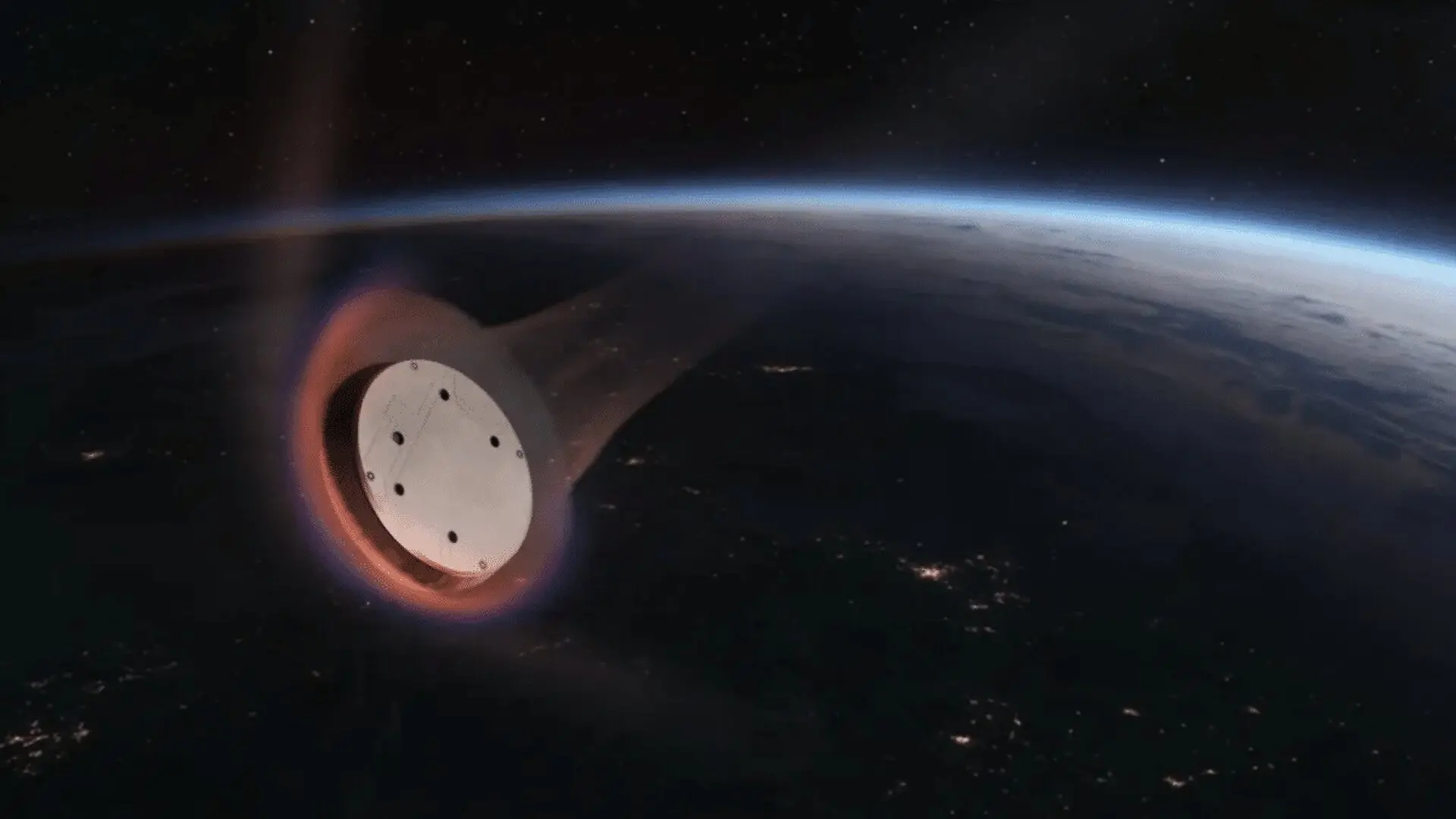
SpaceX has successfully deployed its Starfall return capsule for a second flight, marking a critical milestone in the company’s bid to streamline orbital research and in-space manufacturing. The spacecraft hitched a ride on a Falcon 9 rocket during the Bandwagon-5 rideshare mission, which lifted off from Cape Canaveral Space Force Station in Florida at 7:04 a.m. EDT on October 20, 2026.
Advancing the Capabilities of Orbital Laboratories
The mission carried a total of 32 payloads, with Starfall positioned as a central piece of infrastructure for the burgeoning space-based economy. Unlike typical satellites designed to stay in orbit until their components expire, Starfall is engineered to endure the harsh stresses of atmospheric reentry, allowing researchers to recover their samples and manufactured goods back on Earth. This capability is vital for industries that require tangible results from experiments conducted in microgravity.
The spacecraft, which first proved its flight and reentry credentials during a June 23, 2026, test, is physically compact. According to Federal Aviation Administration (FAA) environmental filings, the disk-shaped vehicle measures approximately 10.2 feet in diameter and stands 2.5 feet tall. With a total weight of about 4,600 pounds, it is designed to transport as much as 2,200 pounds of cargo, providing a dedicated space for scientists and entrepreneurs to refine high-value products.
Teams encapsulated 32 payloads ahead of Falcon 9’s launch of the Bandwagon-5 rideshare mission from Florida → https://t.co/2mTwEZE4mX https://t.co/RXL3aqOINc
— SpaceX (@SpaceX) October 17, 2026
The Growing Commercial Interest in Microgravity
The absence of gravity-driven convection and sedimentation in orbit opens doors to processes that are impossible to replicate on the ground. Research in fields like pharmaceutical development and protein crystallization has long suggested that materials produced in space may exhibit superior properties. SpaceX’s stated goal is to lower the barrier to entry for these industries, making orbital research a routine, repeatable service rather than a rare event.
During the earlier June mission, SpaceX avionics supply chain engineer Zachary Luppen highlighted the potential of this platform: “SpaceX has developed a new spacecraft called Starfall, which at its core is a microgravity lab researchers and entrepreneurs can leverage to develop their products and innovations.”
Collaborative Progress in Orbit
Starfall was not the only vehicle focused on material recovery on this mission. The Bandwagon-5 flight also hosted the W-Series 7 capsule from Varda Space Industries. Varda, a California-based firm, is actively pursuing the manufacturing of specialized pharmaceuticals in microgravity, further signaling that the commercial sector is moving toward a model of orbital production. The launch also carried Planet’s Pelican-12 Earth-observation satellite, illustrating the diverse nature of modern rideshare missions.
Falcon 9 launches the Bandwagon-5 rideshare mission to orbit from Florida https://t.co/StXyXyvdMZ
Also ReadScientists Tested Roads Made With Recycled Fishing Nets After 84 Tons Were Collected at Sea— SpaceX (@SpaceX) October 20, 2026
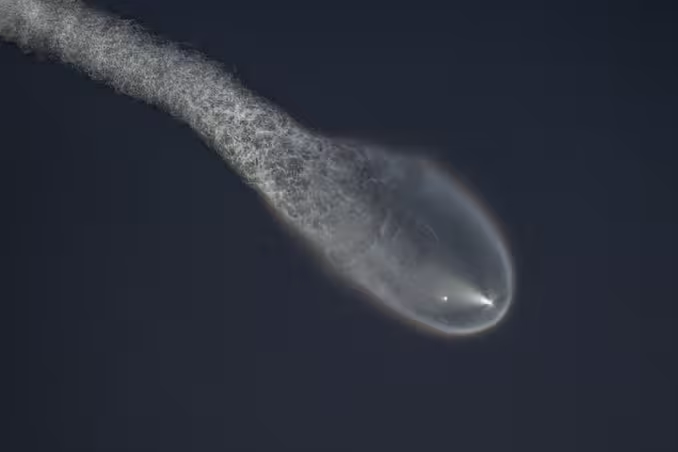
The mission launch went according to plan, with the Falcon 9’s first stage returning to Earth for a landing on the drone ship A Shortfall of Gravitas—the booster’s 19th successful recovery. Payload deployment began roughly 57 minutes after launch, with Starfall scheduled to separate from the upper stage nearly three hours into the flight.
Turning Space Innovation into Economic Viability
While the successful deployment of Starfall is a technical win, the long-term viability of the project remains tied to economic performance. Developing a reliable, cost-effective pipeline for shipping goods to and from orbit is a complex logistical challenge. Whether Starfall becomes a staple of industrial manufacturing will depend on consistent flight performance and the measurable value that space-made materials offer over their terrestrial counterparts. As SpaceX continues to refine its launch architecture, the industry will be watching to see if orbital factories can finally justify the cost of their own existence.
This article has been fact checked for accuracy, with information verified against reputable sources. Learn more about us and our editorial process.
Last reviewed on .
Article history
- Latest version
Reference(s)
- Wall, Mike. “SpaceX launches its 'Starfall' return capsule for 2nd time ever (video).”, October 20, 2026 Space <https://www.space.com/space-exploration/launches-spacecraft/spacex-starfall-return-capsule-launch-bandwagon-5-rideshare-mission>.
Cite this page:
- Posted by Divya Iyer