Physicists Propose Strange New Gravitational Phenomenon Inspired by Solar Flares
Physicists are using plasma physics to uncover how gravitational reconnection could reshape space-time and redefine our understanding of extreme gravity.
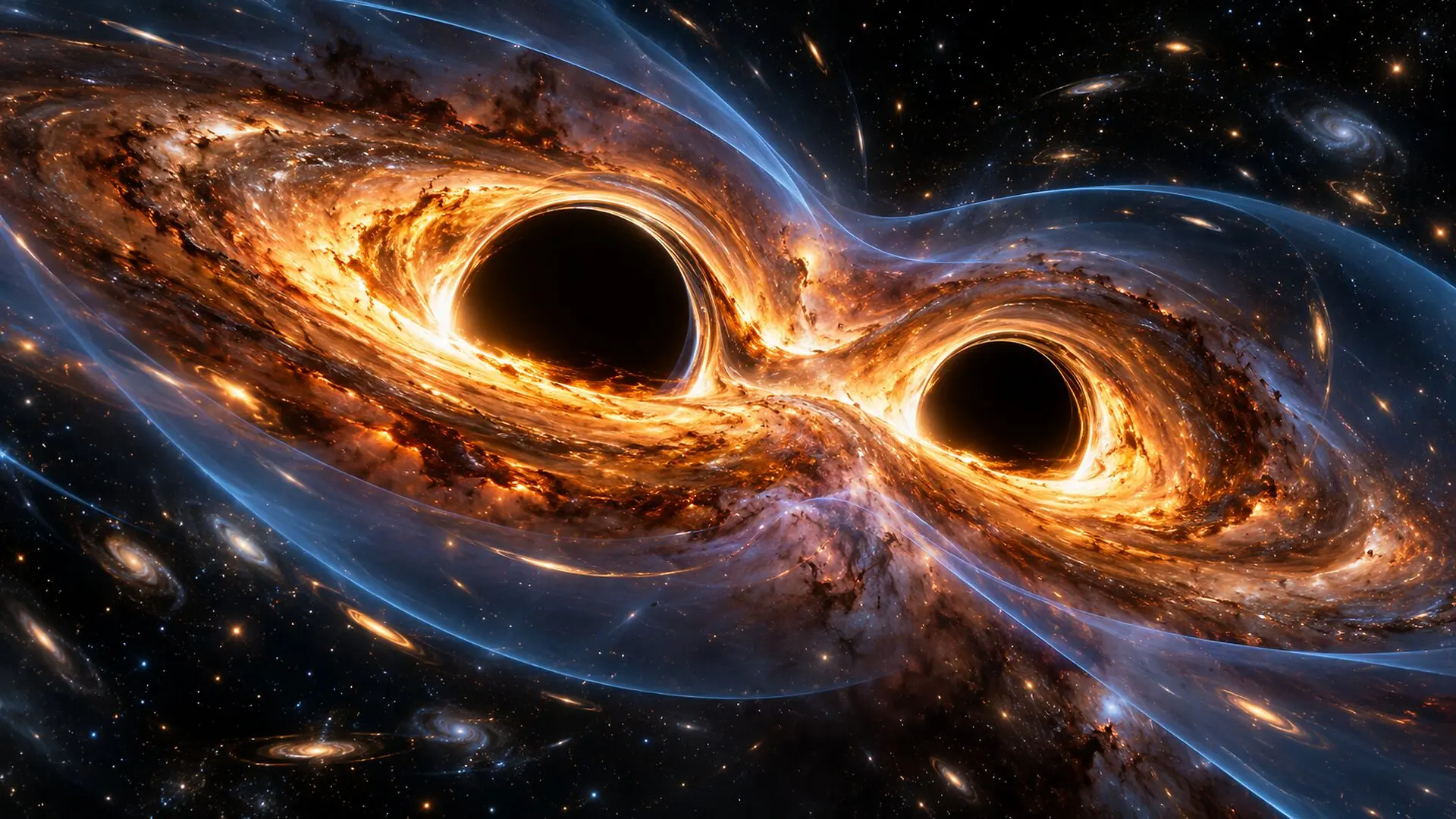
Physicists have developed a novel theoretical framework that reinterprets Einstein’s general relativity through the lens of plasma physics, potentially unlocking new ways to understand how gravity interacts with matter in the universe’s most extreme environments. By reformulating gravitational equations to mirror the behavior of magnetic fields, researchers have identified a phenomenon they term “gravitational reconnection.”
The study, published in Physical Review D, is the work of Luca Comisso from Columbia University and Felipe A. Asenjo of the Universidad Adolfo Ibáñez in Chile. While the concept remains purely mathematical for now, it provides a rigorous set of tools to describe how gravitational field structures might reorganize themselves, fundamentally changing how energy is exchanged within space-time.
Borrowing Lessons from Solar Dynamics
To understand the new model, one must look at magnetic reconnection, a process well-known in solar physics. In plasma, such as the gas found in the Sun, magnetic field lines can become twisted and stretched. When these lines break and reconnect in a different configuration, they release vast amounts of stored energy as heat and particle motion, fueling events like solar flares.
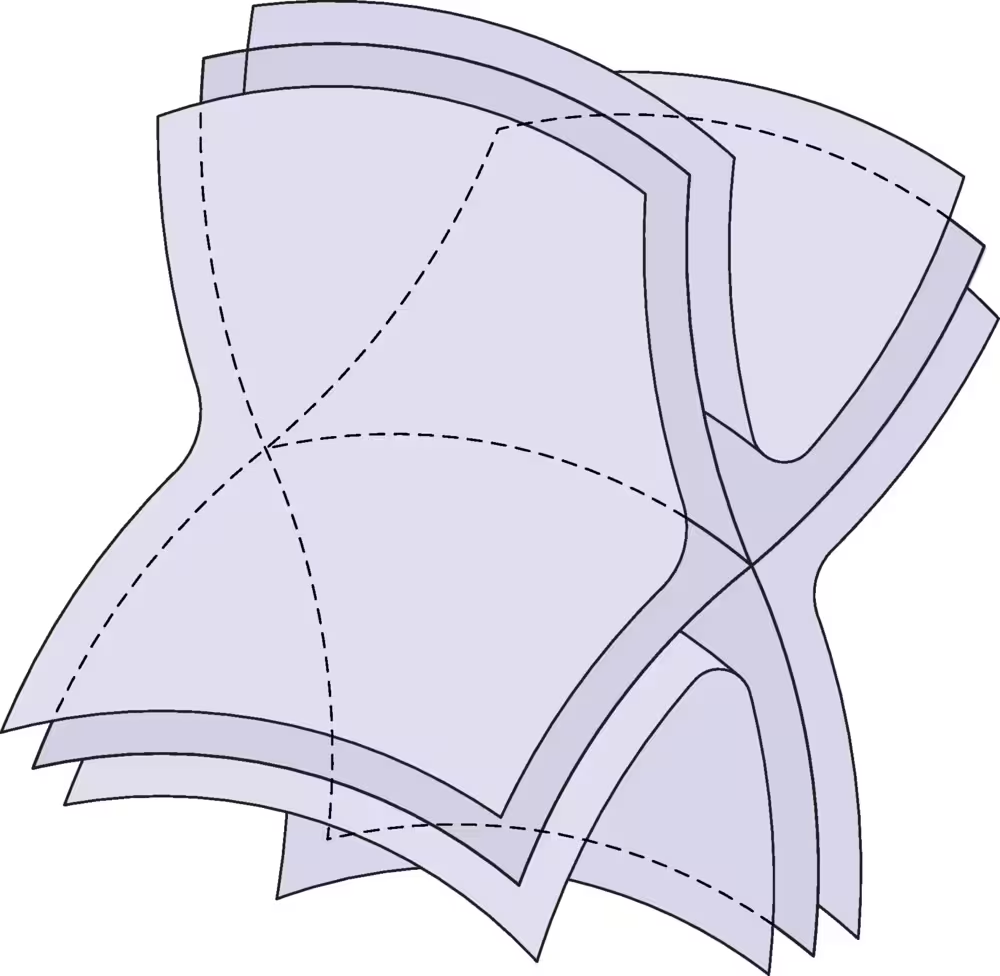
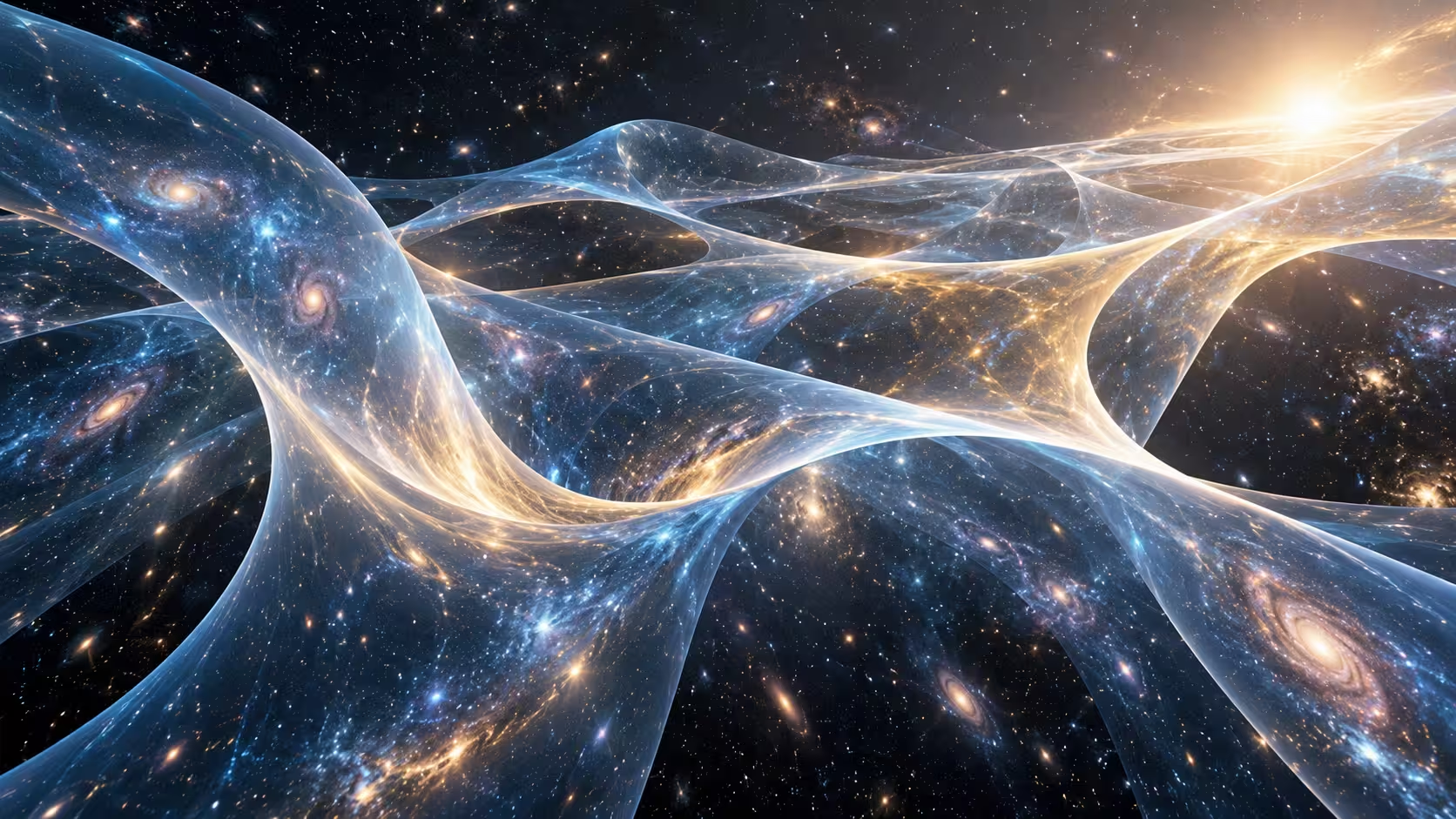
Comisso and Asenjo posited that gravity, when described using variables analogous to electric and magnetic fields, follows a similar organizational logic. In this four-dimensional space-time model, gravity is represented by “gravitational field sheets.” These are not physical materials, but mathematical structures that track the geometry of space-time. The researchers found that under specific conditions, these sheets can undergo a reconnection process, shifting their connectivity and altering the energetic landscape of the system.
Beyond the Idealized Model
This work builds upon previous research—notably a study in Physical Review Letters—that defined the “frozen-in” state of gravitational fields, where connections remain preserved as they evolve. The new study moves beyond this ideal scenario to define the criteria for when such connectivity breaks down. Crucially, the researchers emphasize that not every disruption constitutes reconnection; they have developed a mathematical distinction to separate genuine structural changes from simple slippage within the field.
By introducing metrics for the rate of gravitational flux reconnection and analyzing gravitational helicity, the authors have provided a roadmap for quantifying these events. This allows for the calculation of energy and momentum balances, offering a way to track how energy is transferred between the gravitational field and surrounding matter.
Searching for Evidence in the Cosmos
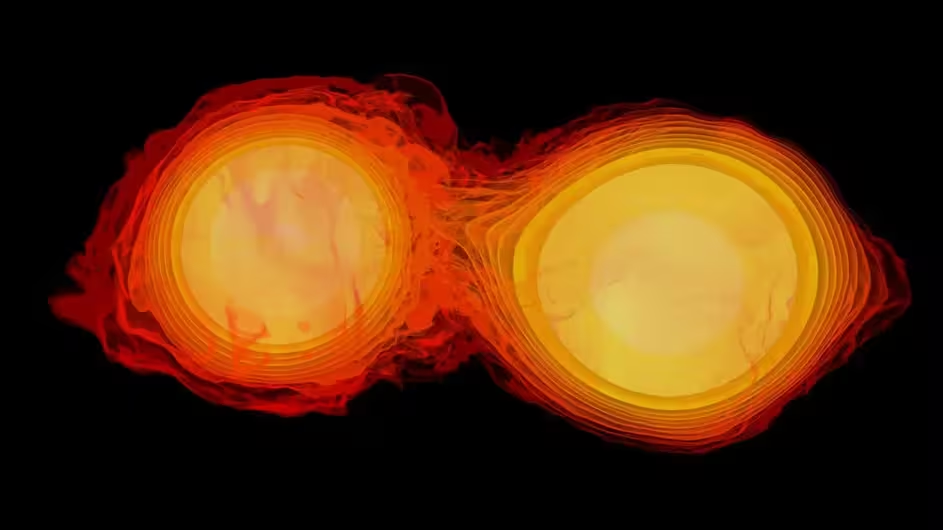
The team is careful to note that their findings do not replace Einstein’s general relativity, nor have they identified an observational signature in existing data. Instead, the framework serves as a guide for interpreting the complex, rapid changes that occur during cataclysmic events like binary black hole or neutron star mergers.
Current methods for studying these mergers often rely on massive numerical simulations. By applying this new reconnection framework to these simulations, scientists may eventually identify specific features in gravitational waves that signal a change in field connectivity. As next-generation observatories continue to refine our ability to detect ripples in space-time, the researchers believe their mathematical language will become an essential tool for parsing the chaotic dynamics of the high-gravity universe.
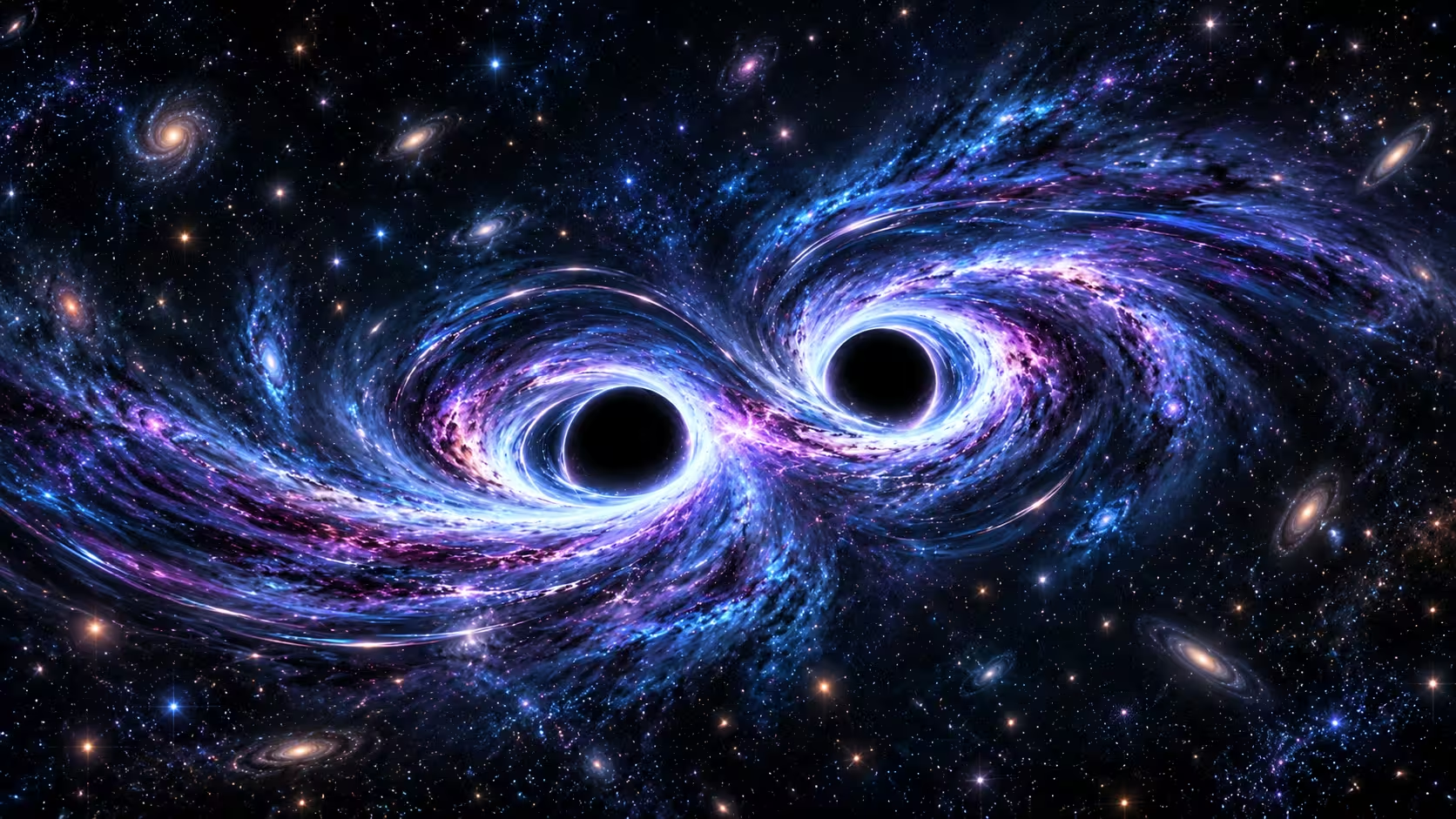
Future research will focus on identifying the specific physical triggers—such as mathematical singularities or averaged-out gravitational effects—that initiate these reconnections in real-world astrophysical settings.
This article has been fact checked for accuracy, with information verified against reputable sources. Learn more about us and our editorial process.
Last reviewed on .
Article history
- Latest version
Reference(s)
- Comisso, Luca., et al. “Reconnection of gravitational fields.” Physical Review D, vol. 114, no. 8, October 28, 2026 American Physical Society (APS), doi: 10.1103/lmqy-pf9k. <https://journals.aps.org/prd/abstract/10.1103/lmqy-pf9k>.
- Asenjo, Felipe A.., et al. “Frozen-In Gravitational Fields.” Physical Review Letters, vol. 136, no. 16, April 22, 2026 American Physical Society (APS), doi: 10.1103/6c4q-kx6f. <https://journals.aps.org/prl/abstract/10.1103/6c4q-kx6f>.
Cite this page:
- Posted by Aisha Ahmed