Astronomers Are Finding Thousands of New Worlds Hiding in the Dark Reaches of Our Solar System
New telescope technology is revealing more of our solar system’s distant, unseen population, with over 8,000 Trans-Neptunian Objects now officially cataloged.

The catalog of distant worlds residing beyond Neptune has reached a significant milestone, with the latest census documenting over 8,000 trans-Neptunian objects (TNOs). Among the most recent additions is a potential dwarf planet, 2026 ED138, which was identified using data from the Vera C. Rubin Observatory. This discovery highlights an era of rapid exploration, driven by advanced imaging technology and sophisticated orbital analysis that is effectively mapping the solar system’s mysterious outer frontier.
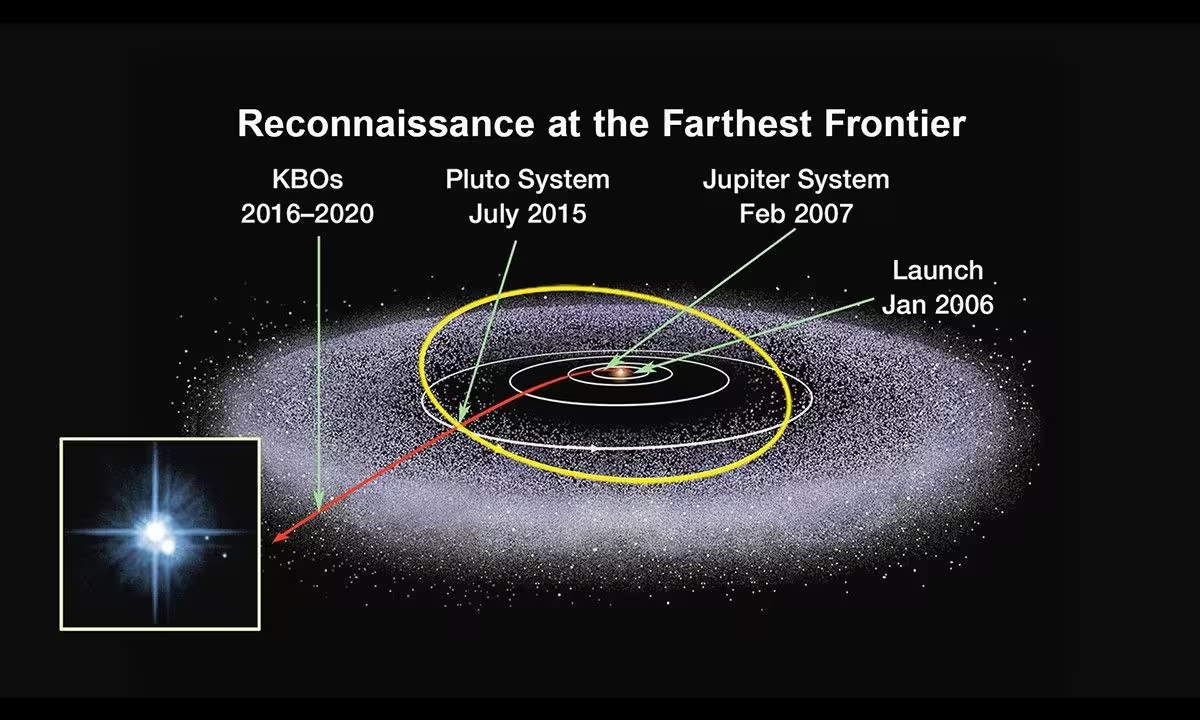
As of October 28, the NASA Jet Propulsion Laboratory Small-Body Database tracks 8,291 TNOs. While this number is substantial, it is part of a much larger, overlapping inventory of over 1.5 million minor planets. Astronomers categorize these bodies as TNOs based on their orbital distance, which extends beyond that of Neptune. This group includes a diverse range of objects, from those following stable, circular paths within the Kuiper Belt to others traveling along highly eccentric, tilted orbits.
Refining the search for dwarf planet candidates
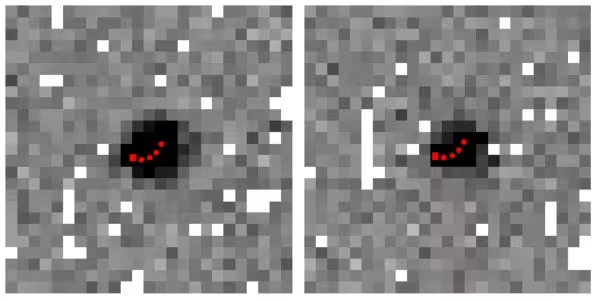
The designation of 2026 ED138 as a dwarf-planet candidate stems from its impressive size, with estimates suggesting a diameter ranging from 600 to 1,500 kilometers. Currently situated about 46 astronomical units from the Sun, the object was pinpointed by astrophysicist Matthew Holman at the Center for Astrophysics | Harvard & Smithsonian. By integrating recent data from the Rubin Observatory with archival images dating back to 2016, researchers have successfully reconstructed more than a decade of the object’s orbital path.
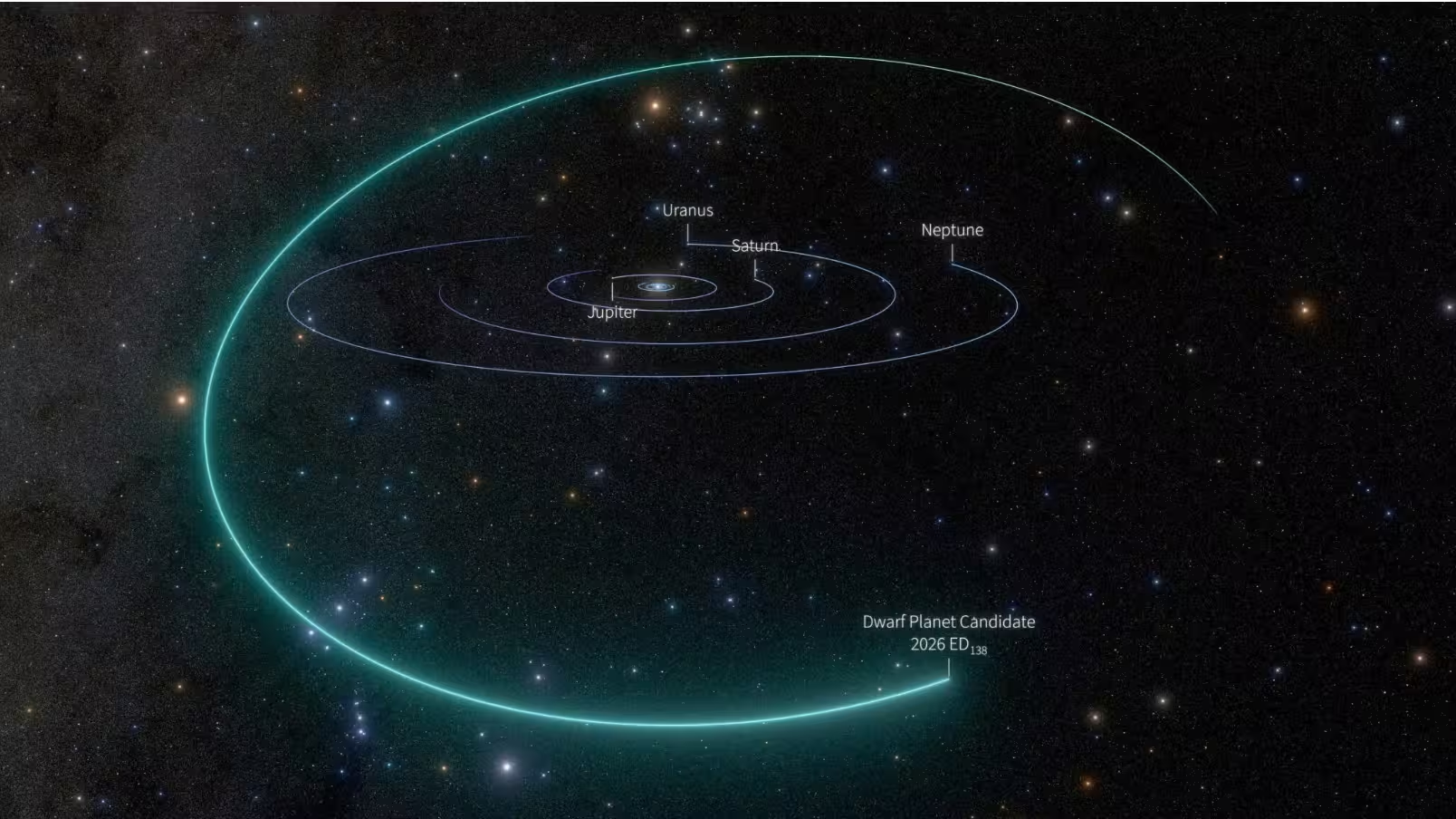
It is important to distinguish these minor planets from the five officially recognized dwarf planets: Ceres, Pluto, Eris, Haumea, and Makemake. While a new discovery can be logged in a catalog early on, verifying its physical properties—such as shape, mass, and surface composition—requires extensive follow-up observations. These findings are critical, as the size and distribution of these distant bodies offer clues into the early formation of the solar system.
Unlocking the secrets of the outer reaches
Recent survey results have provided unexpected insights into the outer solar system. In September, a joint study utilizing the Hubble Space Telescope and the James Webb Space Telescope identified 27 small, dim TNOs. The data revealed fewer small-scale objects than current models had predicted, suggesting that our understanding of how these ancient bodies evolve through collisions may need to be updated.
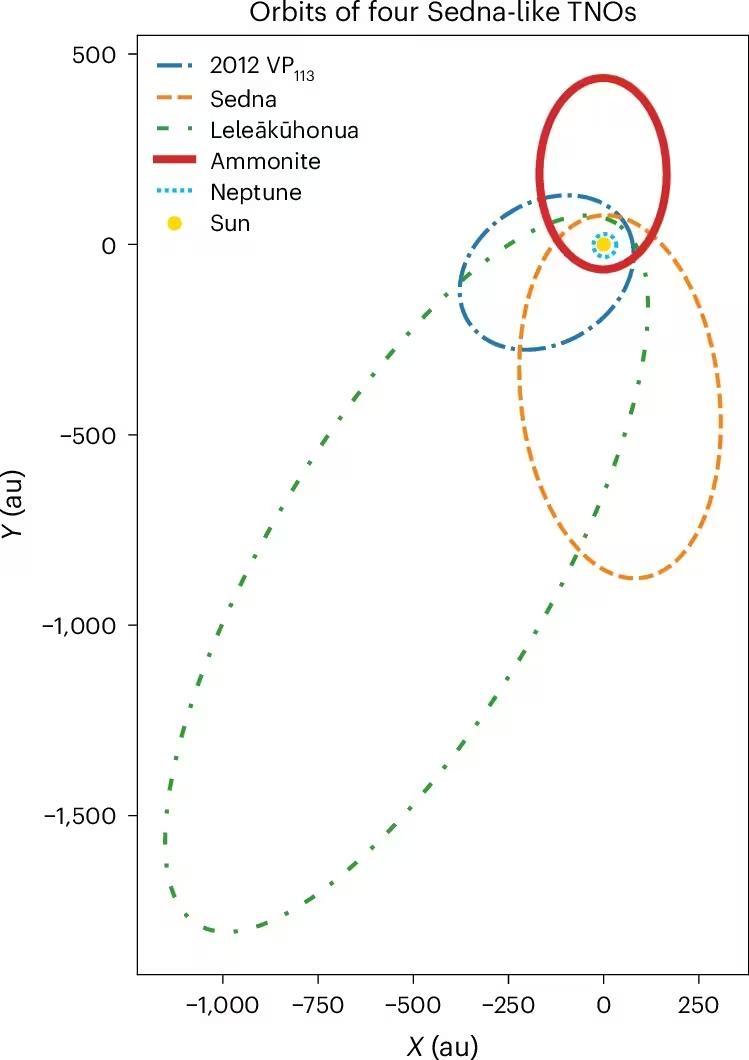
Other notable discoveries from the past year continue to challenge established theories. In July 2025, researchers announced the discovery of 2023 KQ14, nicknamed Ammonite. This object is a rare “sednoid,” characterized by an exceptionally remote orbit that never brings it closer than 66 astronomical units to the Sun. Its unique orientation provides a new test for theories regarding planetary migration and the potential influence of an unseen planet in the far reaches of our solar system.
Advanced technology fueling a new era of discovery
The pace of discovery has accelerated thanks to innovative software capable of identifying slow-moving objects in vast datasets. The Dark Energy Survey previously demonstrated this potential, cataloging hundreds of previously unknown TNOs by analyzing years of cosmological survey images. This methodology has paved the way for current projects, such as the Rubin Observatory, which aims to identify over 40,000 Kuiper Belt objects over the next decade.
Complementary efforts, such as the application of JAXA software to images from the Subaru Telescope, allow researchers to “stack” exposures to reveal faint objects that would otherwise remain hidden. Meanwhile, NASA’s Roman Space Telescope is expected to provide further depth, potentially identifying hundreds more objects through wide-field infrared observations.
As these catalogs expand, the focus shifts from simply counting objects to understanding the complex gravitational dance that shaped our solar system. By studying the orbits and characteristics of these distant populations, scientists are working to distinguish between the various influences that have defined our cosmic neighborhood, from the migration of giant planets to potential interactions with mysterious, unseen forces.
Resources for further reading
Rubin Observatory reveals its first dwarf planet candidate in our solar system
The discovery announcement explains how new observations and archival images established the orbit of 2026 ED138. (University of Washington, October 2026)
NASA’s Hubble, Webb Find Far-out Solar System Objects ‘Remember’ Past
Coordinated observations reveal 27 very small TNOs and examine what their colors and sizes suggest about planetary building blocks. (NASA, September 2026)
Discovery and dynamics of a Sedna-like object with a perihelion of 66 au
Ammonite’s unusual orbit provides a test of explanations for the solar system’s distant populations. (Nature Astronomy, July 2025)
This article has been fact checked for accuracy, with information verified against reputable sources. Learn more about us and our editorial process.
Last reviewed on .
Article history
- Latest version
Reference(s)
- “Small-Body Database Lookup.” <https://ssd.jpl.nasa.gov/tools/sbdb_lookup.html>.
- “Home | Center for Astrophysics | Harvard & Smithsonian.” <https://www.cfa.harvard.edu/>.
- staff, UW. “Rubin Observatory reveals its first dwarf planet candidate in our solar system | UW News.”, October 27, 2026 UW News <https://www.washington.edu/news/2026/10/27/rubin-observatory-new-dwarf-planet-candidate/>.
- McCoy, Marty. “NASA’s Hubble, Webb Find Far-out Solar System Objects ‘Remember’ Past - NASA Science.”, September 8, 2026 NASA <https://science.nasa.gov/missions/hubble/nasas-hubble-webb-find-far-out-solar-system-objects-remember-past/>.
- Chen, Ying-Tung. “Discovery and dynamics of a Sedna-like object with a perihelion of 66 au - Nature Astronomy.”, vol. 9, no. 9, pp. 1309-1316. Nature, doi: 10.1038/s41550-025-02595-7. <https://www.nature.com/articles/s41550-025-02595-7>.
Cite this page:
- Posted by Aisha Ahmed