Scientists Finally Map the Sun’s Hidden Magnetic Field in 3D Using Existing Data
Scientists have uncovered a long-held solar secret that could revolutionize how we predict dangerous space weather and solar storms headed for Earth.
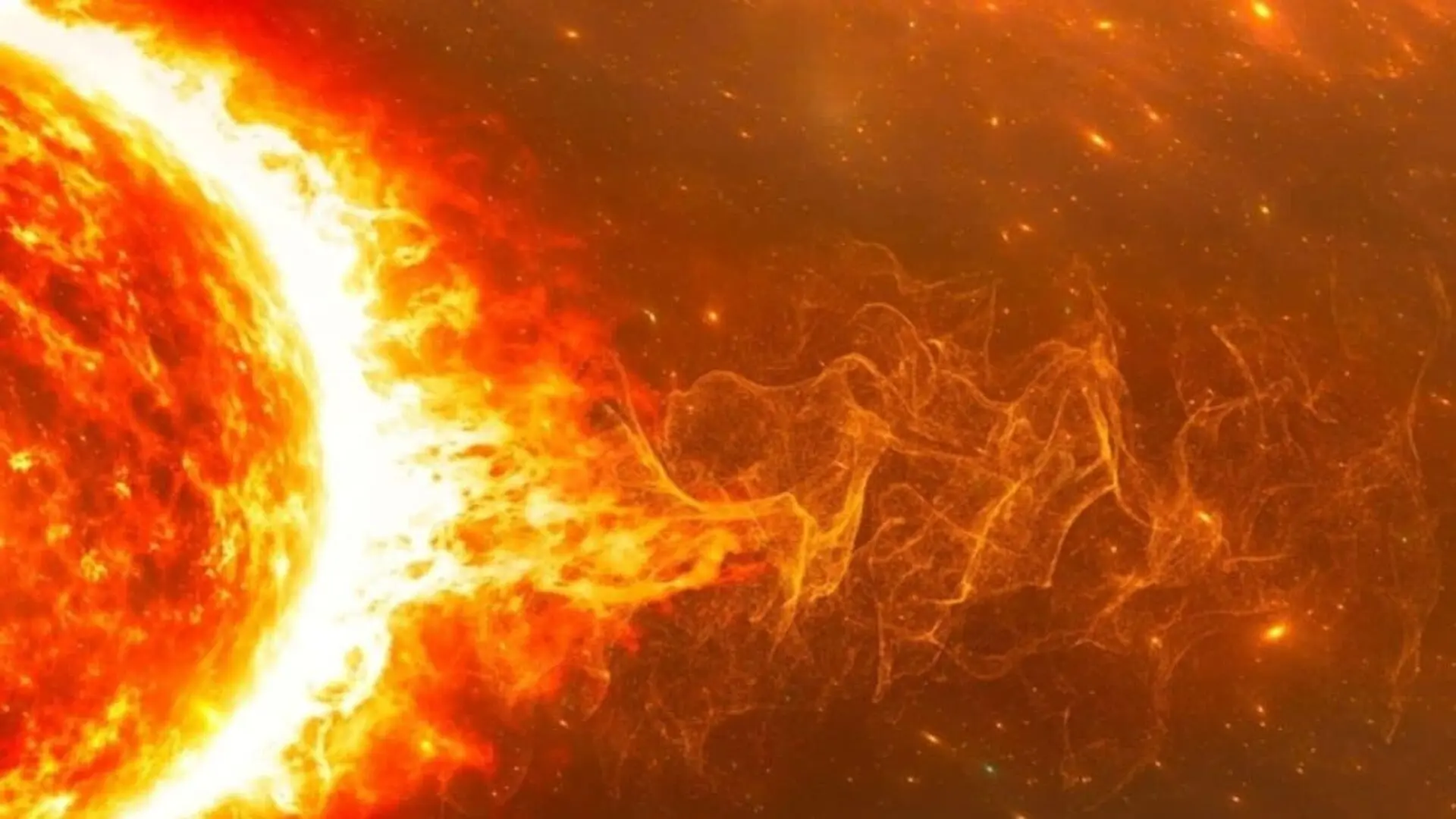
Scientists have developed a breakthrough method to visualize the Sun’s magnetic field in three dimensions, peering into the complex layers of the solar corona that extend far beyond the star’s visible surface. By extracting latent data from existing observations, researchers have finally overcome a hurdle that has limited solar physics for decades.
Decoding the Sun’s Hidden Architecture
While astronomers have long been able to monitor the solar corona—the Sun’s elusive outer atmosphere—measuring the magnetic fields that shape this environment has remained frustratingly difficult. These fields act as the primary engine for solar activity, dictating how energy moves through the corona and ultimately drives space weather. Despite their importance, determining the exact orientation and intensity of these fields was previously impossible with standard observational tools.
A collaborative team from the NSF National Center for Atmospheric Research (NSF NCAR), the National Solar Observatory (NSO), and the Southwest Research Institute recently published a study in The Astrophysical Journal Letters detailing how they successfully reconstructed these fields in 3D. Rather than commissioning new hardware, the researchers utilized a technique known as IQUD inversion to analyze data already captured by the Upgraded Coronal Multi-channel Polarimeter (UCoMP) at Hawaii’s Mauna Loa Solar Observatory.
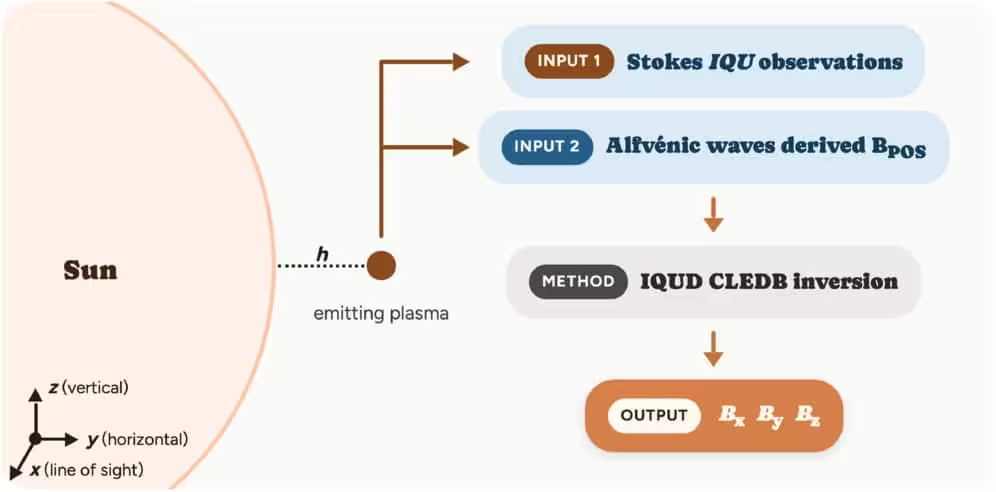
By interpreting the waves traveling through the corona, the team successfully calculated both the strength and the 3D direction of the magnetic field. They validated the approach using archival data from October 2016 and June 2022, effectively turning two-dimensional snapshots into a volumetric understanding of solar dynamics.
“These results help to overcome a major bottleneck in measuring the coronal magnetic field that has persisted for decades,” said Daniela Lacatus, an NSF NCAR researcher and study co-author.
From Data Mining to Real-Time Forecasting
The ability to map these structures holds significant implications for space weather forecasting. As the magnetic field dictates the timing and intensity of solar eruptions, having a 3D model could drastically improve our ability to protect satellites, power grids, and other critical infrastructure on Earth from solar storms.
“For the first time, we can begin to see the sun’s hidden magnetic architecture in three dimensions not by building a new type of ground or space instrument, but by decoding the light and waves already coming from the sun’s corona,” said Alin Paraschiv, the study’s lead author.
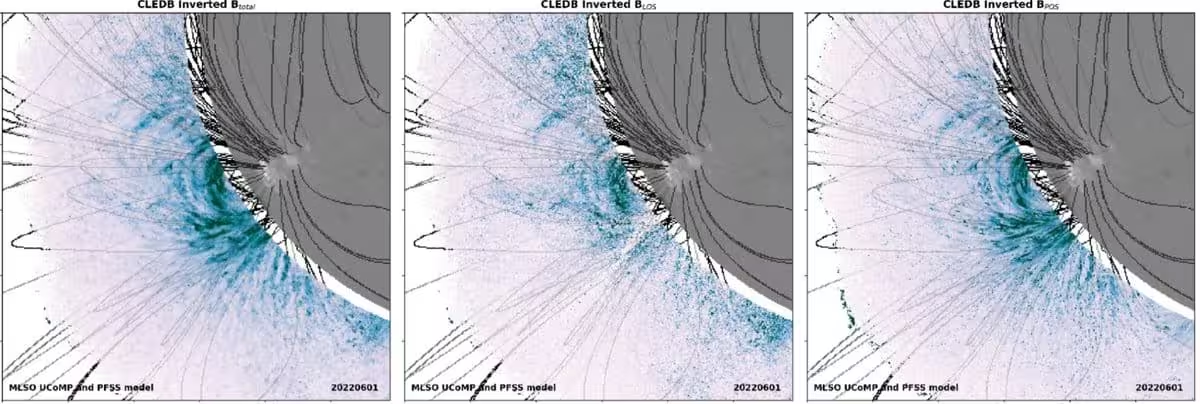
While this initial proof-of-concept is a major milestone, the researchers acknowledge that the technique requires further refinement before it can be deployed as an automated monitoring tool. Looking ahead, the team expects this method to be integrated into the forthcoming COSMO coronagraph network, which is being designed specifically to provide comprehensive observations of the Sun’s magnetic activity.
“The team has done an amazing job at demonstrating how our advanced COSMO coronagraph network—the follow-on to the current MLSO facility—will enable new observations of the sun’s magnetic field, filling a critical gap in our observations of space weather drivers,” said Tom Berger, director of the Mauna Loa Solar Observatory.
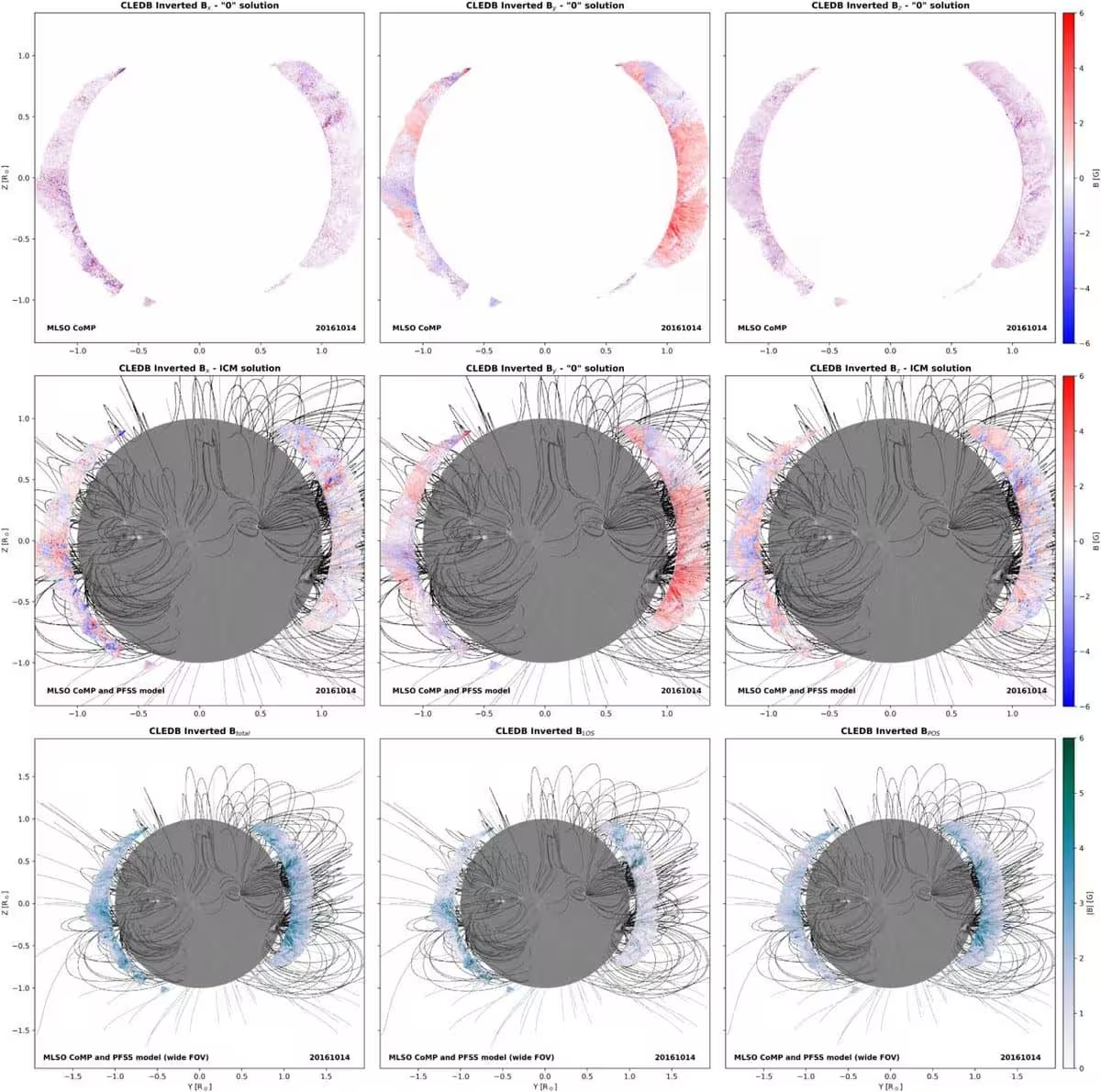
The researchers are now working to make the methodology accessible to the broader scientific community, inviting peers to test and apply the process to other existing datasets. With the core mechanism now validated, the next phase involves scaling these 3D reconstructions to better anticipate the volatile behavior of our host star.
“We’ve proved the method can work and now we just need to make it broadly available to the community,” Lacatus said.
This article has been fact checked for accuracy, with information verified against reputable sources. Learn more about us and our editorial process.
Last reviewed on .
Article history
- Latest version
Reference(s)
- “Coronal magnetic fields in 3D | NCAR & UCAR News.”, August 11, 2026 <https://news.ucar.edu/133098/coronal-magnetic-fields-3d>.
Cite this page:
- Posted by Aisha Ahmed