Archaeologists Are Reburying Costa Rica’s Famous Ancient Stone Spheres To Save Them
Over 300 mysterious stone spheres have been discovered in Costa Rica. Explore why researchers are finally excavating these ancient monoliths and their origins.
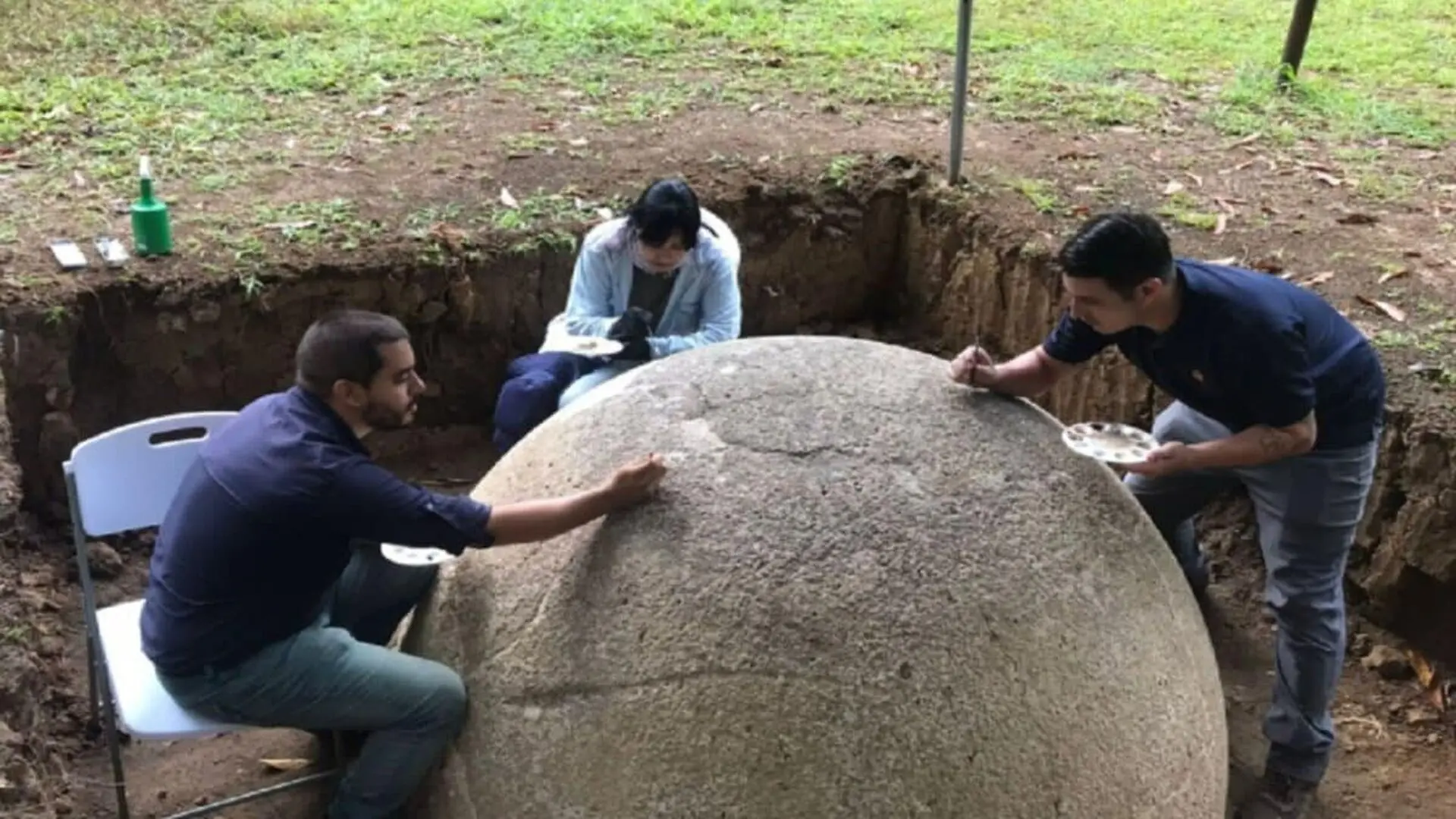
Archaeologists working in Costa Rica have completed a delicate preservation mission, excavating and stabilizing six monumental stone spheres located in the Diquís Delta. The collaborative effort, led by experts from the National Museum of Costa Rica (MNCR) and the National Institute of Anthropology and History (INAH), marks a significant step in safeguarding these enigmatic artifacts, which have faced mounting environmental threats.
The Diquís Delta and the nearby Isla del Caño serve as the heartland for these stone petrospheres, with more than 300 specimens documented across the region. These monoliths are the defining legacy of the Diquís culture, an advanced society that flourished in the Rio Grande de Térraba Valley between 800 and 1500 AD, during what researchers classify as the Chiriquí Period.
During their zenith, the Diquís people developed sophisticated political and economic systems, constructing permanent settlements characterized by paved areas, burial mounds, and large structures made from rounded boulders. Their artisans were equally skilled, producing intricate works in gold, bone, and ceramics, while the stone spheres themselves were strategically placed in public plazas or along the pathways leading to the homes of the ruling elite.
Battling Environmental Degradation
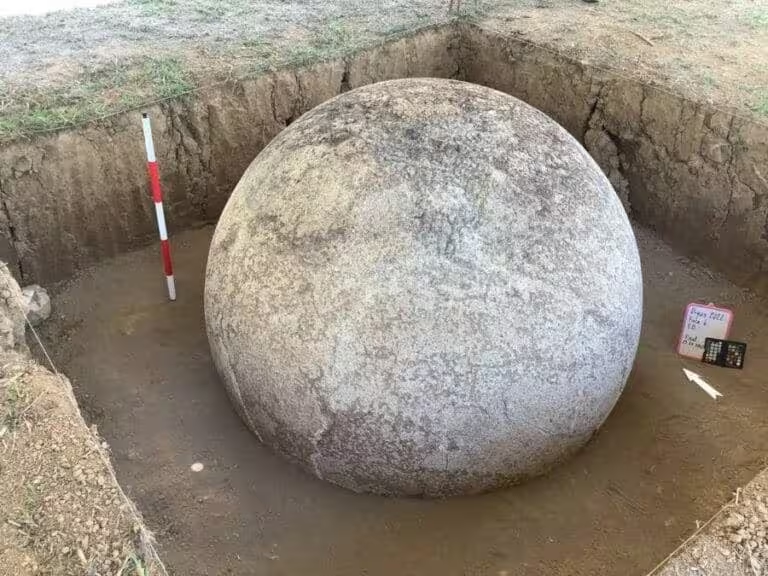
The current conservation efforts were concentrated at the Finca 6 archaeological site in the Osa canton. Over time, the spheres at this location have suffered structural damage. Researchers identified a combination of factors behind this decay, ranging from the inherent mineral composition of the rock itself to the persistent impact of humidity and the physical trauma caused by extreme weather events, including frequent hurricanes and tropical storms that scour the delta.
To combat this, Isabel Medina-González of ENCRyM-INAH and her team implemented a rigorous restoration protocol. The initial phase focused on cleaning the surfaces and stabilizing the stone using patches of lime-sand mortar. This process was designed to reinforce the outer layers of the spheres, providing a protective shell against further environmental weathering.
Strategic Reburial for Long-Term Protection
In a counterintuitive move, the researchers opted to rebury the spheres once the stabilization work was complete. Rather than exposing the artifacts to the elements, the team encased them in a specialized protective system consisting of geotextile fabric topped with layers of sand and gravel.
According to Javier Fallas of the MNCR, this approach was chosen because it creates a controlled micro-environment. “We have verified that this allows a homogenisation of temperature and humidity that avoids contact with the acidity of the clay soil and prevents the growth of vegetation in the vicinity,” Fallas explained. By isolating the artifacts from the surrounding soil chemistry and shielding them from direct rainfall and temperature fluctuations, the team hopes to ensure these cultural treasures remain intact for future generations.
This article has been fact checked for accuracy, with information verified against reputable sources. Learn more about us and our editorial process.
Last reviewed on .
Article history
- Latest version
Cite this page:
- Posted by Vikram Desai